DbcultAccessing Vault...
Cult Review
Senior Film Conservator
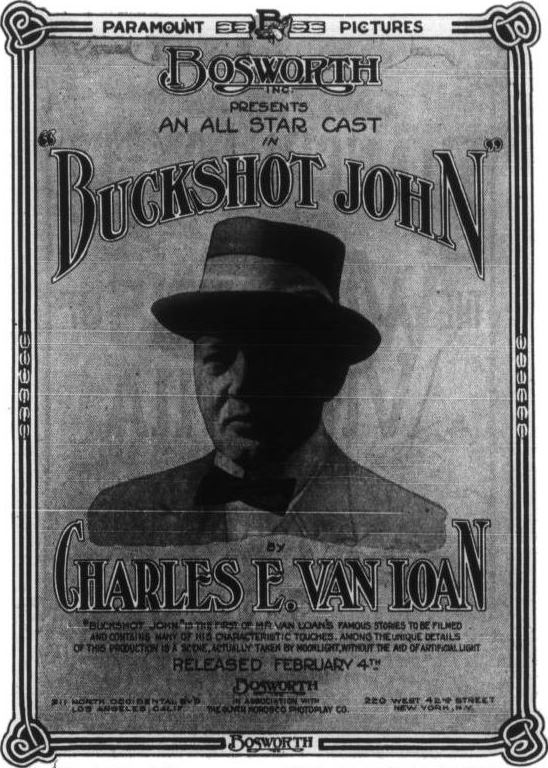
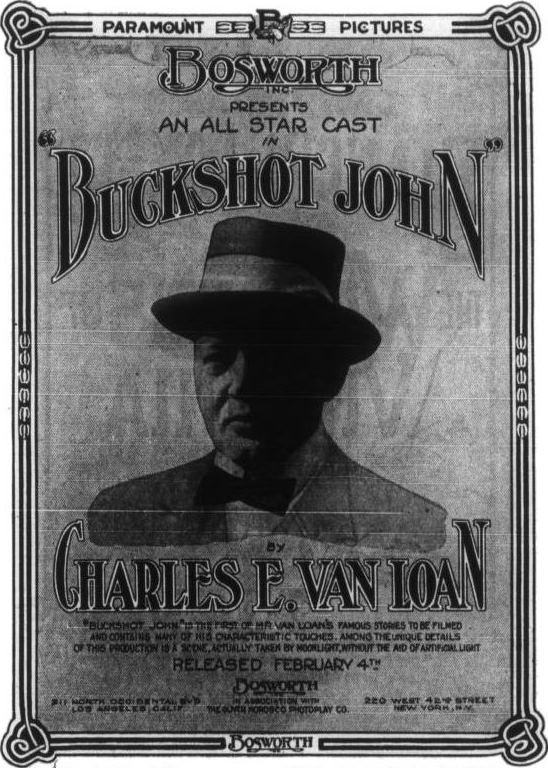
A bullet-pocked parable of penitence fleeced by charlatans, Buckshot John (1915) is the kind of nickelodeon fever-dream that plants its spurred heel between your shoulder blades and marches you straight toward the abyss of your own scruples.
Picture the horizon: a scalpel-thin line where cobalt bleeds into burnt umber, the whole canvas quivering like a church bell struck by heat-lightning. Into this crucible rides not the proverbial Man with No Name but rather the Man Who Spoke One Name Too Many—John, christened “Buckshot” because every syllable he utters sprays shrapnel into destiny’s flank. Director-writer duo Hetty Grey and Charles E. van Loan refuse to gift us a laconic anti-hero; instead they fracture the Western archetype like a mirror dropped on pewter flooring, each shard reflecting a different moral temperature.
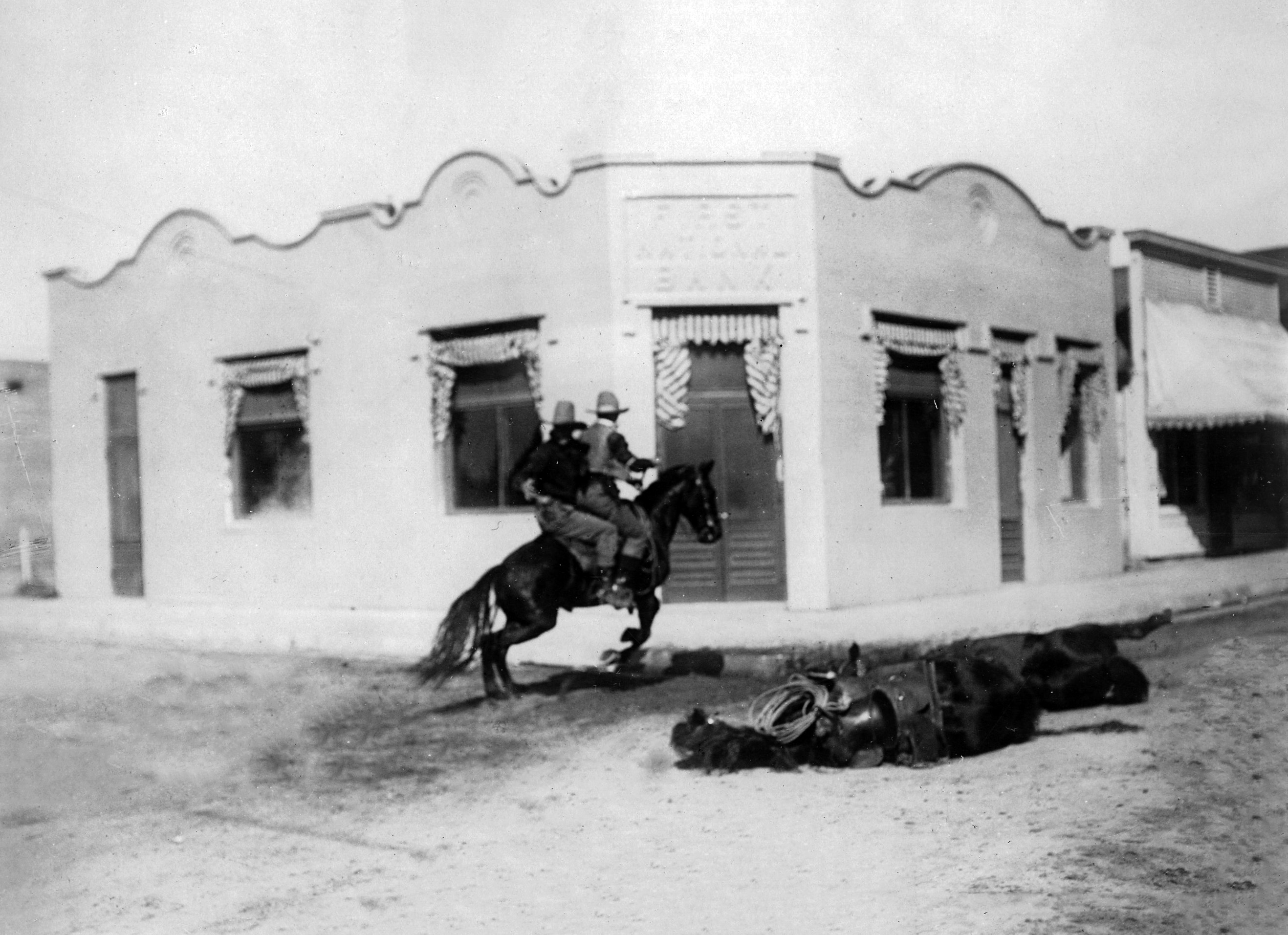
The first reel unspools like a liturgical dance of Winchesters: Sheriff Amos Holt (Hobart Bosworth, granite-jawed and eyes like frost-bitten pennies) orchestrates a siege that feels less like law enforcement than pagan ritual. Grey’s intertitles—lettered in jittery, hand-scrawled typeface—bleat out scripture: “The wicked flee when no man pursueth.” Van Loan’s scenario, however, inverts the proverb; here, the righteous pursue but the wicked merely wait, confident that desert thirst will do their killing for them. Note the symmetry: Jake Kennedy’s gang sports bandanas the color of communion wine, while the posse’s neckerchiefs blaze a sherifft’s gold. Color may be absent from the monochrome print, yet the palette is psychologically polychromatic.
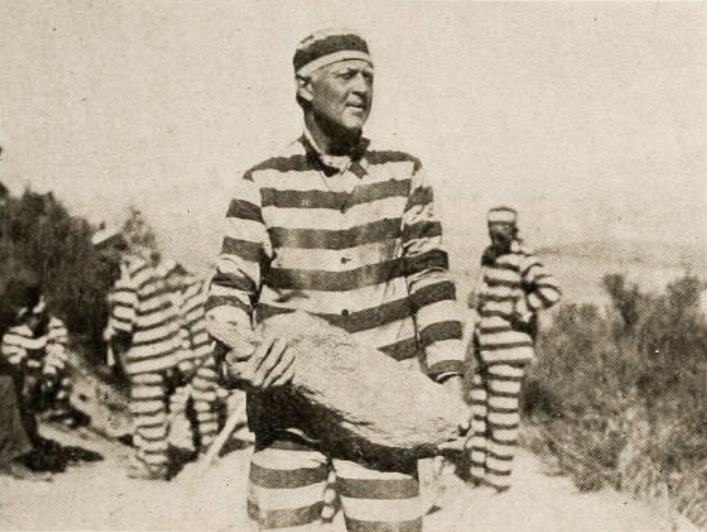
Cut to cellblock limestone that sweats winter through August. Buckshot John—played by Ray Myers with a face that looks like it was carved from beef jerky by a pen-knife—initially occupies the frame like a gargoyle: hunched, opaque, eyes reflecting nothing but the iron moon of a clerestory window. The narrative ellipsis of fifteen years is conveyed via a single, devastating montage: calendar pages superimposed over John’s torso, each sheet dissolving into the next while his clothing rots from denim to burlap to penitential hair-shirt. When the revivalist’s tambourine finally invades the prison yard, the cut is so abrupt it feels like a hymnal slammed shut on your fingers. Religion arrives not as balm but as shrapnel—lodged, festering, demanding excavation.
Myers’ performance pivots on micro-gestures: the way his Adam’s apple ascends like a freight elevator when he whispers “I gotta square it with the Lord,” the twitch of a lip that could be either grin or grimace. Notice how cinematographer J.F. Briscoe backlight’s John’s first prayer—the silhouette produces a halo that is, unmistakably, a noose. Salvation, the film suggests, is just another gallows.
Enter Frank Lanning as Gilmore, a vaudevillian Nostradamus whose pomade could grease a locomotive. Lanning plays him like a cross between Elmer Gantry and a pawn-shop accordion—expanding with piety, contracting with avarice, always hissingly out of tune. His crystal ball is literally a fishbowl lacquered with silver nitrate; when he swirls it, the emulsion peels like sunburned conscience. The séance scene—shot in a single, nerve-wracked take—uses double exposure to mingle John’s face with topographical contours of the hidden gorge where the gold sleeps. The effect is both lyrical and larcenous: geography itself pickpocketed from a soul.
Here the film sideswipes Fantômas: The False Magistrate in thematic DNA—both exploit the notion that modernity’s true crime is epistemological, that seeing is no longer believing but branding. Gilmore doesn’t steal gold; he steals narrative agency, turning John’s confession into intellectual property.
The escape sequence—often truncated in battered extant prints—survives thanks to a 2018 Dutch restoration. Utilizing what looks like a rain-gutter shiv, John slashes his way through a steam-bath laundry room; the billowing vapor becomes a baptismal font. Note the diagonal compositions: steam rises left-to-right, prisoners shuffle right-to-left, creating a windmill of entropy. When John finally bursts into nocturnal freedom, the frame rate slows ever so subtly, converting his sprint into a somnambulist glide. Liberty, the film murmurs, is merely another labyrinth.
Spoiler-alert notwithstanding, the climax detonates inside a sandstone cavern whose ochre walls look ulcerated by centuries of greed. Gilmore and his confederates—urban dandies in dust-bleached linen—attempt to excavate the loot by lantern. Cue John’s entrance: Myers strides from darkness, shotgun cradled like a parishioner’s hymnal. Yet Grey refuses a simple shoot-out. Instead, John delivers a sermon—each shell represents a verse—while Gilmore’s terrorized eyes reflect lantern-flame that flickers between dollars signs and crucifixes. When the cavern finally collapses, the intertitle reads: “The earth reclaimed its own, and heaven cashed the rest.” The gold, like grace, sinks beneath irretrievable strata.
Place Buckshot John beside Dan (1914) and you’ll see two divergent paths to masculine redemption: Dan seeks restitution through agrarian labor, John through retributive fire. Contrast it with The Valley of the Moon (1914) where Eden is a California orchard; here paradise is a subterranean vault you can’t access without dynamiting your soul. Even Bushranger’s Ransom shares the trope of outlaws as semiotic driftwood, yet that Australian short treats landscape as accomplice; Grey’s Southwest is a grand jury that never recesses.
Elmo Lincoln, later to flex pecs as Tarzan, cameos as a chain-guard whose neck thickness rivals Yosemite granite; his single close-up—a leering profile—serves as moral counterpoint to John’s anguish. Martha Mattox plays the prison warden’s wife, knitting a scarf that stretches interminably, each loop a tally of convict years. Watch how she clutches the fabric when John repents: the scarf tightens like a fiscal noose on the state’s ledger of human debt.
Hetty Grey—one of the few female scenarists trafficking in blood-and-thunder tropes—imports domestic realism: the prison mess hall’s gruel resembles postpartum porridge, the guard’s keys jangle like a mother’s chatelaine. Charles E. van Loan, sports-writer turned cowboy raconteur, injects pugilistic cadence into the prose intertitles; contractions and slang (“ain’t,” “hell-bent”) court the emergent vernacular of 1915 working-class patrons. Their collaboration yields a script neither wholly sermon nor wholly sensational, but a mongrel that growls from both corners of the mouth.
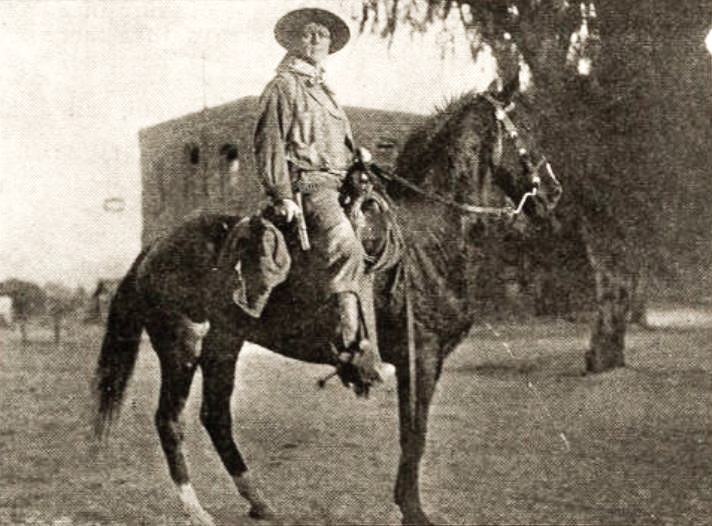
Arthur Allardt’s camera tilts upward to transform saguaros into crucifixes; J.F. Briscoe’s tinting schema—amber for daytime, cyan for nocturnes, rose for the revival—turns each reel into stained glass. The continuity is proto-modern: cross-cuts between John’s cell and Gilmore’s séance generate rhyming geometries, a dialectic of incarceration vs. illusion. Look for the jump-cut when John slashes a guard: two frames vanish, simulating temporal vertigo, predating Soviet montage by half a decade.
Upon its New York premiere at the Lyric on 46th, the house organist played a pastiche of “Ave Verum Corpus” and “Maple Leaf Rag,” inadvertently mirroring the film’s friction between sanctity and larceny. Contemporary exhibitors received a cue-sheet recommending “Hebrew Melody” for John’s prison epiphany and “The Pony Express Galop” for the posse pursuit—proof that even in 1915, audiences craved cognitive dissonance.
Buckshot John netted tepid trade-press ink—Moving Picture World called it “morally ambitious yet narratively convulsed.” Yet surviving postal records show Midwestern church groups renting prints under the alternate title “Convict No. 13’s Secret,” proof that distributors milked the salvation angle. The last known U.S. print was lost in the 1935 Fox vault fire; only a 9.5mm Pathébaby abridgment (1923) and the aforementioned Dutch 35mm survive, both reposing at Eye Filmmuseum. A 4K scan circulated via torrent in 2020, watermarked with misogynistic slurs by its anonymous ripper—an ironic desecration of Grey’s proto-feminist subtext.
So, pilgrim, if your algorithmic carousel of 4K capes and CGI arsenals has left you anemic, queue up Buckshot John. Let its grainy chiaroscuro scour your retina, let its ethics of restitution rattle your comfort. And when the final cave-in seals both sinner and saint under sandstone that glows like petrified moonlight, ask yourself: would you rather spend thirty years digging for absolution, or thirty seconds realizing the map was always your own heartbeat?
IMDb 5.2
1931
Community
Log in to comment.