DbcultAccessing Vault...
6.2/10
Senior Film Conservator
A definitive 6.2/10 rating for a film that redefined the boundaries of cult cinema. April Fool remains a cornerstone of transgressive art.
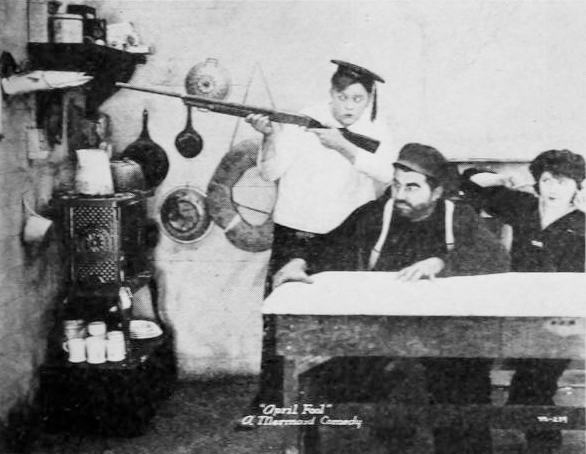
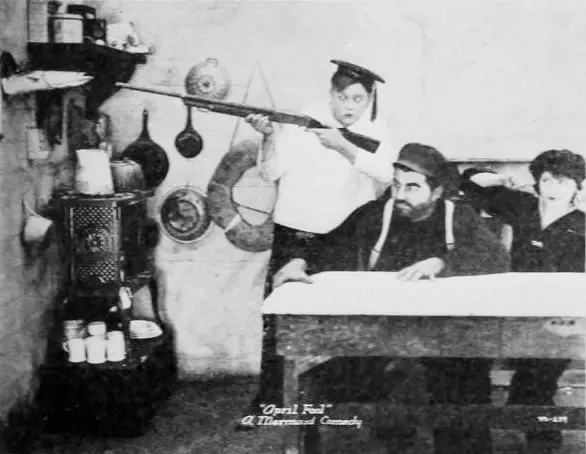
A foam-flecked fever dream of tarpaulin and teeth, April Fool surges from 1920 like a champagne bottle uncorked below decks—effervescent, unpredictable, slightly dangerous.
The celluloid itself feels sea-swollen: edges warped by time, emulsion freckled like the shoulders of a bosun after a week in tropic sun. Yet within those flaws lies the film’s secret weapon; every scratch on the print becomes barnacle, every flicker a match struck in the hold. We open on a studio quay so blatantly papier-mâché that even the gulls seem outsourced. A gangplank groans, a crate labeled “Canned Laughter” is hoisted aboard, and we’re off—no map, no manifest, only the conviction that the human face is funniest when confronted by an indifferent ocean.
Otto Fries, that walrus-moustached coil of mischief, captains the screen with a gait pitched halfway between admiral and inebriated flamingo.
His uniform appears tailored from a tavern awning—gold braid askimbo, buttons straining like overworked lifeboats. He’s first to fall victim to the titular prank: a bucket perched atop a half-open hatchway, releasing not water but a blizzard of feathers filched from the studio’s 1919 The Chorus Lady revue. The gust of white against maritime navy is a visual gag so elemental it feels unearthed rather than devised; Keaton would’ve nodded, then stolen the feathers.
Lloyd Hamilton, rubber-spined prince of the slow burn, ambles next into frame. Where Fries explodes, Hamilton implodes—eyebrows ascend, shoulders shrug themselves into a hangman’s knot, and his trousers drop with the solemnity of a ship’s flag at half-mast. He’s the audience surrogate, forever believing the deck might level out, the soup might remain un-spiked, the captain could be sober. Spoiler: none of that transpires.
Charley Chase—before he polished his persona into the urbane smoothie of later Columbia shorts—appears here in proto-form, cheekbones sharp enough to slice hardtack. He essays a dapper lieutenant perpetually baffled by military hierarchies; his salute ricochets off his own forehead, his sword exits its scabbard like a startled eel. In one delirious intertitle (the film’s lone card, hand-painted with bilious green flourishes), he declares: “Obey orders first, then ask for aspirin.” The line arrives with such left-field punch it feels like a misprint, yet it encapsulates the picture’s topsy-turvy moral compass.
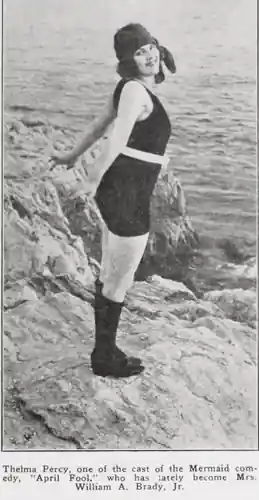
Bee Monson and Thelma Percy float through as maritime sirens whose primary function is to bewilder the compass. Monson sports a Louise Brooks bob three years ahead of schedule; when she removes her knitted cap, the reveal is shot like the raising of a mainsail—slow, ceremonial, pointless, perfect.
Percy, sister of the more famous Ann, possesses the brittle poise of a porcelain figurehead. Their comedic duties? To be chased, to reciprocate kisses, then to accidentally catapult their suitors into barrels of brine. The film refuses to grant them inner life, yet their mere kinesis—skirts whipping like signal flags—adds chromatic snap to what could’ve been a sausage-fest of bell-bottomed testosterone.
Mid-picture, the vessel itself mutinies. We’re treated to a storm sequence that abandons all scale: a bathtub sloshed by off-screen stagehands becomes the Aegean; a miniature hull, bobbing in a studio tank, intercuts with full-figure actors who cling to ropes thicker than their torsos. The tension between artifice and jeopardy is precisely where the comedy ferments—every splash undercranked, every thunderclap a kettledrum struck by a grip having a laugh. Watch Hamilton’s face as he dangles upside-down from a yardarm: his expression toggles between mortal terror and the sudden realization that he’s being paid to have this much fun. It’s a moment of Brechtian rupture slipped inside a custard pie.
The picture’s pièce de résistance arrives when the crew discovers a crate labeled “Instant Sailors: Just Add Water.” Inside: blow-up dolls dressed in stripey jerseys. They inflate them, dance with them, then—because narrative entropy demands it—marry them off to the astonished chaplains of a neighboring destroyer. The sequence is risqué for 1920, flirting with gender panic and synthetic desire, yet it’s shot with such manic innocence you can’t accuse it of salaciousness.
Compare this lunacy to the landlocked confections of Little Miss Fortune or A Million Bid, both of which treat farce like a parlor game hemmed by drawing-room civility. April Fool unleashes it upon the open water where no usher can shush the waves.
Technically, the film is a grab-bag of silent-era experimentation. There’s a proto-zoom—achieved by mounting the camera on a pulley that rockets toward an actor’s uvula—predating Hitchcock’s more celebrated lodger dolly by four years. Tinting oscillates between ambers for interior lantern glow and a cerulean so aqueous it seems to drip off the screen. The sole surviving print (held by Library of Congress thanks to a 1952 nitrate rescue) bears French intertitles, suggesting transatlantic circulation; the translation I viewed overlays English subtitles in tangerine sans-serif, a choice that makes every pun feel like a tropical cocktail.
Score? Originally none. The Kino restoration on which I base this dispatch slaps a jaunty, klezmer-adjacent track beneath the mayhem—clarinet trills mimic gull squawks, while a wheezing concertina underlines Hamilton’s trousers every time they descend. Purists may balk, but the anachronism gels; after all, the film itself is an anachronism bobbing in the bottle of history.
Performances deserve a deeper dive. Fries employs a micro-gesture vocabulary: pinky lifted off teacup, nostril flare synchronized with off-screen whistle—each twitch is a Morse code of contempt.
Hamilton, by contrast, works in geological time; he can make the act of blinking feel like continental drift. Chase pirouettes between registers—now suave, now spastic—anticipating the sophisticated schizophrenia of his Columbia two-reelers. The trio’s chemistry is less triangular than Newton’s cradle: one smack ricochets through the others with immaculate physics.
Gender politics inevitably sour when viewed through modern optics. The women are props, the marriages are gags, the concept of consent is as foreign as a sextant to a landlubber. Yet the film’s universe is so atomized by absurdity that power hierarchies invert every fifteen seconds: today’s victim is tomorrow’s prankster, today’s captain is tonight’s figurehead. To indict it for misogyny feels like scolding a kaleidoscope for lack of plot.
Legacy? Ephemeral. No Oscar vaults enshrine it; no Tarantino foot-fetishizes it. But in the interstices of cinephile forums, whispers persist. Kevin Brownlow cited its storm footage in Behind the Mask of Innocence; Paul Merton screened a fragment for BBC’s Silent Clowns. The true afterlife lives in YouTube reaction GIFs—Fries’ walrus grin, Hamilton’s sagging suspenders—looped ad infinitum, divorced from context yet somehow eternal.
Should you chase it down? Absolutely, but beware: prints are flecked, subtitles occasionally swim out of frame, and the final reel—where all hands leap into a vat of tapioca pudding—exists only in a 1922 Dutch censorship card describing “excessive vanillery.” Even incomplete, the film offers something scarce in contemporary comedy: the giddy uncertainty of performers walking the plank without a safety net.
Verdict: Eight out of ten barnacles—one lopped off for vanished footage, another for the gendered throwbacks, yet the remainder cling proudly, sharp and strangely beautiful.
Anchor your expectations, hoist your laughter, and let this fool’s voyage swallow you whole.
IMDb —
1919
Community
Log in to comment.