DbcultAccessing Vault...
Cult Review
Senior Film Conservator
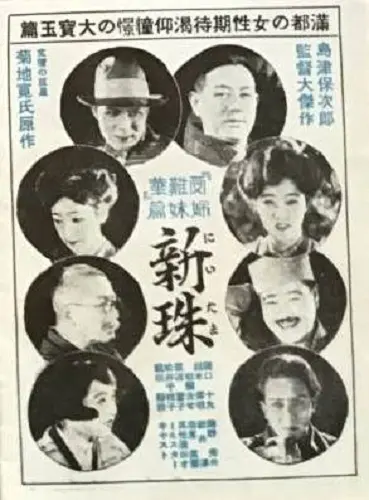
Aratama is not a film for the casual viewer. If you are looking for the fluid, visual poetry that defined later Japanese cinema, you will not find it here. This 1925 production is primarily for historians and those obsessed with the evolution of the screenplay, specifically the early output of Kōgo Noda. For everyone else, it is a static, often tedious experience that feels more like a photographed stage play than a piece of cinema.
The film works as a document of the Taisho era’s social anxieties, but it fails as a dynamic narrative. You should watch it if you are specifically tracking the development of the Shochiku Kamata 'house style' or the transition of Japanese literature to the screen. You should skip it if you have no patience for the primitive, unmoving camera work of the mid-1920s.
This film works because: It provides a clear look at how early Japanese cinema relied on established literary prestige to gain middle-class respectability.
This film fails because: The direction is visually stagnant, refusing to move the camera even when the emotional weight of a scene demands a closer look.
You should watch it if: You are a completist of Kōgo Noda’s writing career or a scholar of 1920s Japanese social history.
The biggest hurdle for Aratama is its own source material. Kan Kikuchi was a giant of the Japanese literary scene, and in 1925, film directors were often too intimidated by such prestige to actually direct. The result is a film that feels subservient to the word. Instead of showing us the 'rough spirit' of the characters through action or framing, the film leans on long, expository intertitles. It is a common pitfall of early adaptations, but here it feels particularly restrictive.
While contemporary Western films like The French Doll were experimenting with more fluid editing to convey internal states, Aratama remains locked in a wide shot. The actors, including the usually reliable Utako Suzuki, are forced to use broad gestures to communicate across the static frame. It creates a distance between the audience and the story that the film never manages to bridge.
For those who know Kōgo Noda as the man who helped Yasujirō Ozu refine the 'pillow shot' and the minimalist family drama, Aratama is a fascinating, if frustrating, starting point. You can see the seeds of Noda’s interest in domestic friction and the quiet tragedies of the home. However, the dialogue—or what we see of it through titles—is heavy-handed. There is none of the subtextual grace that would define his later work.
The pacing is glacial. Scenes often start too early and end too late, a symptom of a production that hasn't yet mastered the rhythm of the edit. Compared to the energetic pacing found in something like A Broadway Cowboy from the same decade, Aratama feels stuck in a previous century. It is a reminder that Japanese cinema’s rapid modernization in the 1930s was preceded by a very stiff, very awkward adolescence.
Denmei Suzuki is perhaps the only reason to stay focused. He has a naturalism that most of the cast lacks. While Hideo Fujino and others seem to be playing to the back row of a theatre, Suzuki understands that the camera, even a stationary one, captures more than the eye. His performance offers a hint of the 'modern' Japan that Shochiku was trying to market—sleek, slightly rebellious, and physically capable.
Aratama is a historical curiosity rather than a piece of living entertainment. It suffers from a reverence for its literary roots that prevents it from becoming a real movie. While it captures a specific moment in Japanese social history, it does so with all the excitement of a lecture. Unless you are writing a thesis on Kōgo Noda or the Kamata studio, your time is better spent elsewhere. It is a stiff, formal exercise that proves that having a great writer and a great cast doesn't matter if the director is afraid to move the camera.
IMDb —
1924
Community
Log in to comment.