DbcultAccessing Vault...
5.6/10
Senior Film Conservator
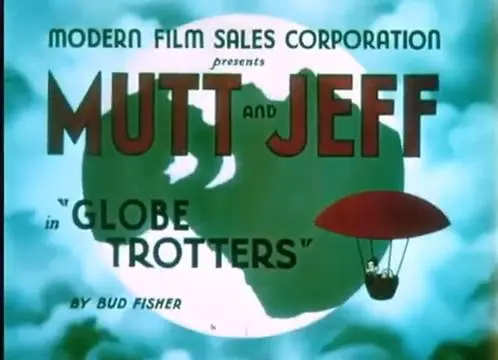
A definitive 5.6/10 rating for a film that redefined the boundaries of cult cinema. The Globe Trotters remains a cornerstone of transgressive art.
Short answer: yes, but only as a historical fossil. If you are looking for a cohesive narrative or modern polish, you will be disappointed, but for those who find beauty in the primitive scratches of early celluloid, it is essential viewing.
This film is for the animation historian and the lover of vaudevillian slapstick; it is absolutely not for anyone who requires high-fidelity visuals or a sensitivity to modern cultural depictions.
1) This film works because it captures the unrefined, chaotic energy of the early 20th-century comic strip, translating static panels into a fever dream of movement.
2) This film fails because its repetitive structure lacks a narrative payoff, feeling more like a collection of gag reels than a structured journey.
3) You should watch it if you want to witness the literal foundation of American character animation and the birth of the 'buddy comedy' dynamic in film.
The Globe Trotters is a fascinating study in mechanical crudeness. When we look at the work of Charles R. Bowers and Bud Fisher, we aren't looking at the fluid, lifelike movements of the later Disney era. We are looking at a struggle between the artist and the frame. Every movement feels earned, every jitter of the line a testament to the labor-intensive 'slash system' of animation that predated the more efficient cel animation.
In one specific scene, Mutt and Jeff attempt to cross the ocean in a vessel that defies every known law of buoyancy. The way the water is rendered—as a series of jagged, rhythmic lines—creates a sense of unease that modern CGI could never replicate. It feels tactile. It feels dangerous. It works. But it’s flawed.
The pacing is relentless. Unlike the slower, more character-driven moments in The Nickel-Hopper, The Globe Trotters moves with a frantic desperation. It’s as if Fisher was afraid that if the characters stopped moving for even a second, the audience would realize how thin the plot actually was. This creates a tone of kinetic anarchy that is both exhausting and exhilarating.
At the heart of the film is the relationship between Mutt and Jeff. It is a relationship built on a foundation of casual cruelty and opportunistic partnership. Mutt is the tall, overbearing strategist whose plans invariably lead to disaster, while Jeff is the pint-sized catalyst for chaos. This dynamic would go on to influence everything from Laurel and Hardy to the modern sitcom.
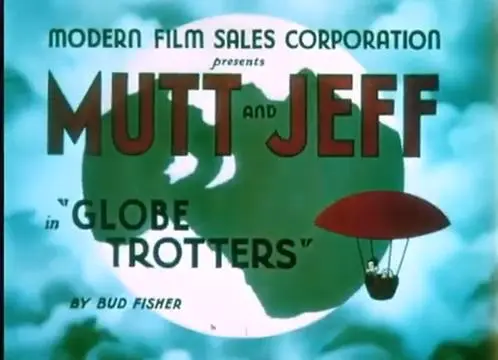
There is a moment early in their travels where Mutt uses Jeff’s small stature to navigate a tight space, showing a total lack of regard for Jeff’s physical safety. It’s a brutally simple bit of physical comedy. It reminds me of the cynical humor found in Felix Puts It Over, where the world is not a playground, but a series of traps to be avoided or exploited.
The acting, if you can call it that in an animated context, is all in the silhouettes. Fisher understood that for these characters to work on the big screen, their shapes had to be instantly recognizable. The contrast between Mutt’s verticality and Jeff’s squat frame provides a visual rhythm that carries the film through its weaker segments.
The cinematography of an animated short from 1916 is a strange thing to analyze, yet the 'camera' in The Globe Trotters is surprisingly active. There are attempts at forced perspective and scale that were revolutionary for the time. When the duo reaches a new country, the background art—though sparse—attempts to convey a sense of 'otherness' that, while culturally problematic by today's standards, shows an ambition to expand the world of the film.
Compare this to the live-action framing in The Yankee Girl or the domestic intimacy of Baby Mine. While those films were bound by the physical limits of the set, The Globe Trotters was only limited by what Fisher could draw. This freedom is evident in the way the characters interact with the edge of the frame, often appearing to almost fall out of the movie itself.
However, the lack of a musical score in its original form (often replaced by live piano) means the film relies entirely on visual timing. In some sequences, the timing is impeccable—a punch lands exactly when the eye expects it. In others, the action becomes a muddled mess of black ink and white space. It is a raw, unedited glimpse into the birth of a medium.
Does The Globe Trotters hold up for a modern audience?
Strictly speaking, no. If you watch this looking for entertainment in the way we consume it today, you will find it repetitive and visually jarring. However, if you watch it as a piece of archaeological cinema, it is fascinating. It shows us what people laughed at when the world was first beginning to see itself through a lens. It is a rough draft of the 20th century.
Pros:
- Historic importance as one of the first major animated successes.
- Inventive use of the frame and character silhouettes.
- A window into the early 20th-century American psyche.
Cons:
- Primitive animation can be difficult on the eyes for extended periods.
- Cultural depictions that have aged poorly.
- Repetitive slapstick that loses its punch after the first ten minutes.
The Globe Trotters is a chaotic, messy, and vital piece of cinematic history. It isn't 'good' by modern standards of storytelling, but it is 'important' in the way a cave painting is important. It represents the moment when the line between the drawing and the audience began to blur. Bud Fisher wasn't just making a cartoon; he was building an empire. While films like A Woman of Impulse explored the depths of human emotion, Fisher was busy exploring how many ways a tall man could hit a short man with a mallet. There is a place for both in the history of film. The Globe Trotters is a loud, ink-splattered reminder that cinema started with a bang, a laugh, and a very long walk across a flat world.
IMDb 5
1925
Community
Log in to comment.