DbcultAccessing Vault...
Cult Review
Senior Film Conservator
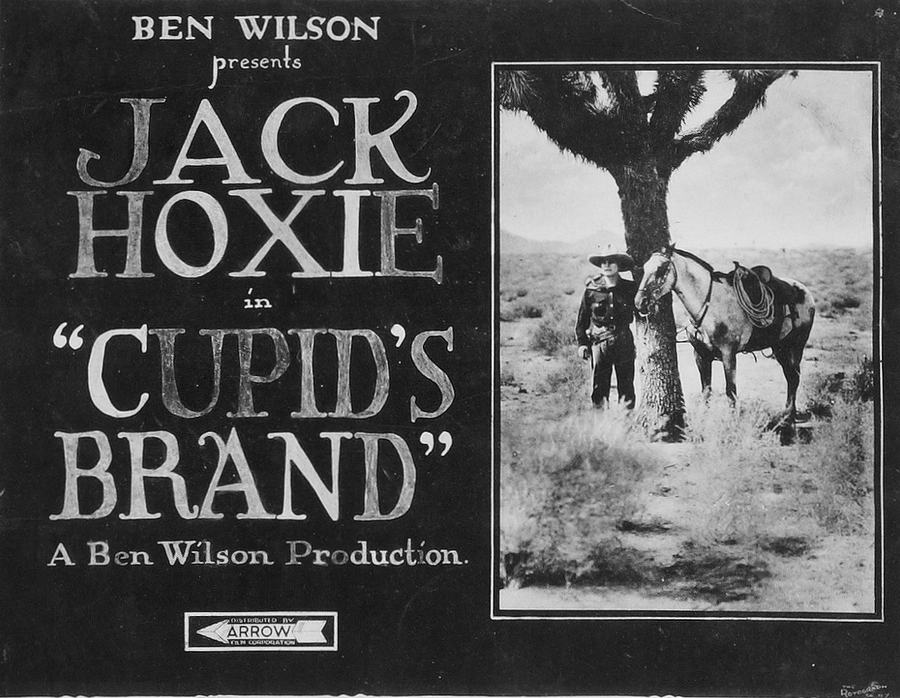
A crucible of sun, sin, and celluloid
The first thing that strikes you about Cupid’s Brand is its refusal to flatter the eye with postcard vistas. Instead, director A.T. Van Sicklen smears the frame with ochre dust, letting each grain scratch the emulsion like guilt incarnate. The western town—nameless, half-erased—skulks on the edge of nowhere, a few splintered boardwalks and a saloon whose swinging doors croak on rusty hinges. This is not the mythic Monument Valley of Fordian grandeur; it is a purgatorial strip where morality dissolves faster than whiskey in a tin cup.
Warton’s silhouette enters in chiaroscuro: a hat brim tilted to eclipse half his face, the other half lit by a merciless key light that excavates every prison-issued scar. Jack Hoxie plays him with the economy of a man who has learned words are contraband; his silence weighs more than dialogue. When he finally speaks—offering Devlin and Crowder a cigarette lit with a match struck on his boot heel—the gesture feels sacramental, a communion of the damned.
The counterfeiting montage that follows is a masterclass in tactile cinema. Copper plates gleam like idols; ink rolls across them with the languor of crude oil. Close-ups of hands—trembling, calloused—turn the crime into an artisanal rite. Van Sicklen lingers on the bogus coins spilling across a tabletop, their counterfeit shimmer rhyming with the desert’s fool’s-gold mirage outside. The moral irony is subtle yet seismic: what is a frontier economy but a grand collective delusion, minted faith minted false?
Enter Sheriff Cushing—William Dyer’s hawk-eyed embodiment of sanctioned avarice. His badge flashes once, like a struck match, then settles into predatory dusk. Notice how Dyer plants his boots: heels together, toes apart, a ballet of dominion. He offers protection the way a spider offers silk: glistening, adhesive, terminal. When the triumvirate demurs, the sheriff’s smile collapses into a slit as thin as a wheat stalk. The subsequent vendetta is staged not with galloping bravado but with the cold deliberation of a ledger balancing death on its columns.
The hanging sequence—lit by torchlight whose flames lick the screen orange—unspools like a medieval passion play. The nooses, hemp thick and cruelly intimate, are checked with bureaucratic care. A townsman’s child, eyes wide as communion wafers, clutches a rag doll; the camera catches her incredulous stare, making the spectator complicit in the carnival of justice. Just as the planks creak to spring the trap, thunder of hooves: a stampede of mustangs careens through town, manes whipping like battle flags. In the chaos, our trinity vanishes into the night-robed desert, leaving behind boots, chains, and the metallic aftertaste of hubris.
What follows is a pursuit across a landscape that feels Martian in its hostility. Cinematographer Wilbur McGaugh shoots the wasteland at high noon, shadows shrunk to merciless stabs beneath the feet. The horizon quivers, a liquid mirage; every mesa looms like a broken verdict. Yet within this austerity blooms an odd tenderness—Warton sharing canteen water mouth-to-mouth with the wounded Devlin, a gesture so raw it feels pre-Babel, language before syllables. Their eventual survival is less triumph than erosion: the desert abrades their guilt until only the bare mineral of instinct remains.
Mignon Anderson appears fleetingly as Rose, a mail-trapped seamstress whose gaze holds the weary clarity of someone who has stitched every sinners’ secret into petticoats. She offers Warton a thimble of whiskey and a warning: “Brands heal before hearts do.” The line, tossed off like a sock on a clothesline, reverberates through the final reel, echoing the film’s title—love’s cauterizing iron, searing yet curative.
Comparative cinephiles will detect DNA strands from Held Up for the Makin’s in the film’s poker-faced parody of capitalist shenanigans, and a spectral whisper of The Wildcat in its anarchic refusal of genre piety. Yet Cupid’s Brand stakes its own sun-scorched territory: a morality tale where Cupid’s arrow is forged of base metal and pointed at the viewer.
Technical footnote: The surviving 35 mm print, housed at the Eye Filmmuseum, bears scuffs that resemble bullet grazes. These imperfections, rather than detracting, augment the film’s existential abrasion. The tinting—amber for interiors, cyan for nights—shifts like mood swings, culminating in a final crimson wash that makes the desert appear to hemorrhage.
In the last shot, the three anti-heroes tramp into an ocean of dunes, backs to camera, footprints the only testament. No triumphant crescendo, merely the wind’s serrated whisper. It is an ending that refuses catharsis, leaving you stranded between contempt and compassion, a limbo as wide as the Mojave. You exit the film branded—ink of doubt etched into your own tender hide—reminded that in the frontier of conscience, every coin, like love, is counterfeit until proven otherwise.
Verdict: a sun-faded pearl of silent-era nihilism, equal parts poisoned chalice and communion wine. Seek it out before the last print crumbles into nitrate dust.
IMDb 6.2
1927
Community
Log in to comment.