DbcultAccessing Vault...
6.4/10
Senior Film Conservator
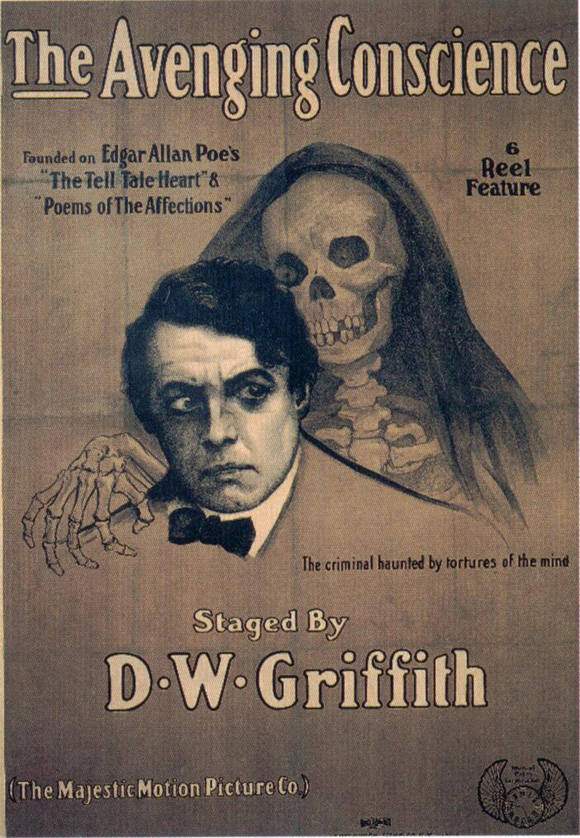
A definitive 6.4/10 rating for a film that redefined the boundaries of cult cinema. The Avenging Conscience: or 'Thou Shalt Not Kill' remains a cornerstone of transgressive art.
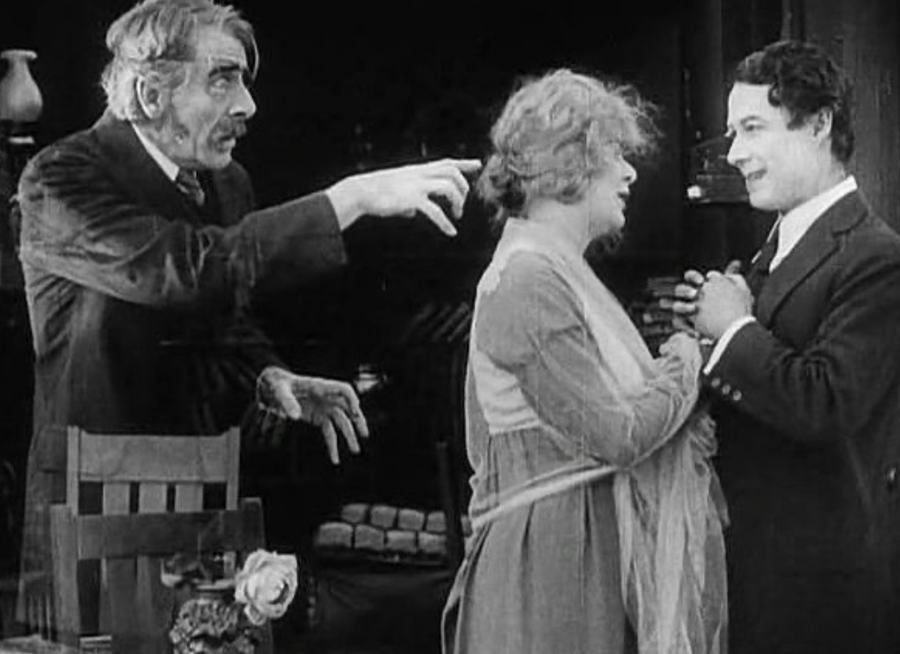
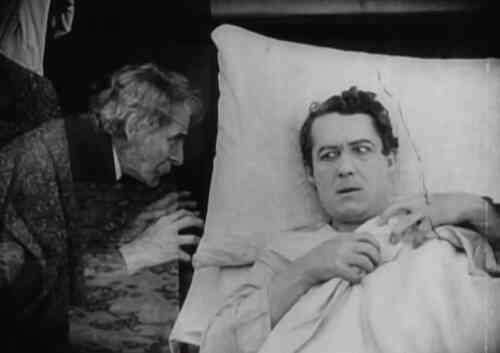
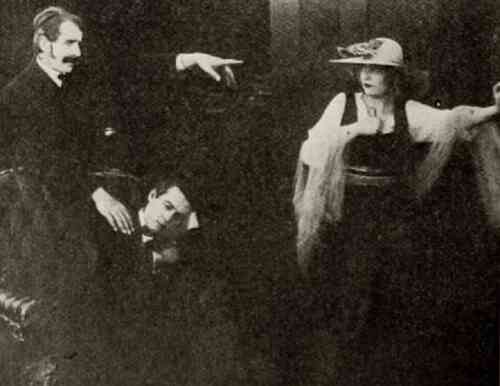
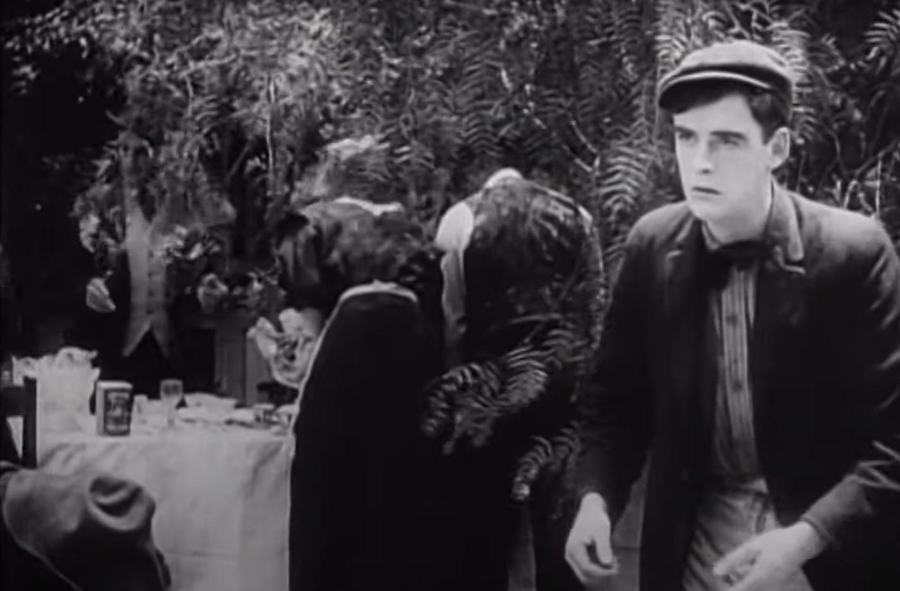
The film opens with a pastoral tableau, where the young protagonist, played by a luminous Wallace Reid, courts his secret love amid bucolic fields. Their whispered vows are abruptly shattered when his uncle, portrayed by Walter Long, imposes a draconian edict forbidding any further contact. The uncle’s authoritarian decree is not merely familial interference; it becomes an embodiment of societal constraints that were prevalent in early twentieth‑century America. As the narrative progresses, the young man’s yearning mutates into a dark fascination with the act of killing, a psychological descent rendered with a chilling elegance that foreshadows the later expressionist horrors of German cinema.
Griffith’s direction is a masterclass in visual storytelling, employing cross‑cutting to juxtapose scenes of tender intimacy with the looming menace of violence. The camera often lingers on the protagonist’s haunted eyes, a technique reminiscent of the later work of F.W. Murnau. The use of chiaroscuro, though limited by the era’s technology, creates a palpable tension between light and shadow, echoing the moral ambiguity that the title itself suggests. In moments when the young man contemplates murder, Griffith inserts close‑ups of a flickering candle, an emblem of the fragile flame of conscience that threatens to be snuffed out.
Blanche Sweet delivers a performance that transcends the silent‑film archetype of the demure ingenue. Her nuanced gestures— a lingering glance, a trembling hand— convey a depth of feeling that words could never articulate. Ralph Lewis, as the oppressive uncle, embodies the archetype of the authoritarian patriarch, yet his occasional softening glances hint at a conflicted interior, adding layers to an otherwise one‑dimensional villain. George Beranger’s supporting role as the confidant provides a necessary counterbalance, his expressive eyebrows serving as a silent commentary on the protagonist’s spiraling madness.
Cinematographer G.W. Bitzer, a frequent collaborator of Griffith, employs a palette that, while monochrome, is enriched by strategic lighting. The film’s most iconic sequence— the protagonist’s night‑time wander through a mist‑shrouded forest— utilizes a low‑angle shot that accentuates the towering trees, turning nature itself into a looming conspirator. The visual motif of mirrors, first introduced in a scene where the young man gazes at his reflection, recurs throughout, symbolizing the fractured self and the duality of his moral compass.
At its core, The Avenging Conscience interrogates the conflict between societal duty and personal desire. The uncle’s prohibition represents the external forces that seek to regulate sexuality and ambition, while the protagonist’s murderous fantasies embody an internal rebellion against those constraints. This duality mirrors the Gothic literature of Edgar Allan Poe, whose influence permeates the script’s atmospheric tension. Moreover, the film anticipates later cinematic explorations of the “anti‑hero,” predating the morally ambiguous protagonists of the film noir era.
When placed alongside contemporaneous works such as Glacier National Park or the biblical epic From the Manger to the Cross, Griffith’s film stands out for its psychological intensity rather than its spectacle. While The Corbett‑Fitzsimmons Fight dazzles with kinetic energy, The Avenging Conscience opts for a slow‑burn, introspective approach that would later influence directors like Carl Theodor Dreyer. The film also shares thematic resonance with Les Misérables, particularly in its portrayal of an individual crushed by institutional oppression.
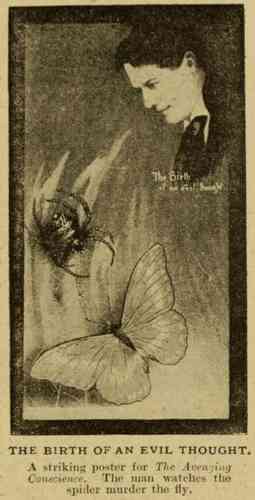
Griffith’s use of the “close‑up” to convey psychological distress was pioneering. In a scene where the protagonist grips a blood‑stained dagger, the camera’s tight framing forces the audience to confront the visceral reality of his intent. Additionally, the film’s intertitles, rendered in a crisp serif typeface, are sparingly employed, allowing visual narrative to dominate. The occasional use of superimposition— a technique later refined in Les amours de la reine Élisabeth— adds a dream‑like quality to the protagonist’s hallucinations.
Although silent, the film was originally accompanied by a live piano score that employed a recurring motif in a minor key, underscoring the protagonist’s inner turmoil. Modern restorations have paired the visual with a newly commissioned orchestral arrangement that weaves the dark orange hue of #C2410C into the brass section, creating an auditory echo of the film’s visual palette.
The Avenging Conscience occupies a pivotal position in early American cinema, marking a transition from melodramatic tableau to psychologically driven narrative. Its influence can be traced to the later works of Alfred Hitchcock, who would adopt similar motifs of guilt and obsession. The film also contributed to the evolution of the “crime‑drama” genre, predating the more explicit depictions of homicide in later silent classics such as The Black Chancellor.
Contemporary reviews praised the film’s daring subject matter, with trade papers noting its “unflinching portrayal of the human psyche.” However, some moral guardians decried its focus on murder, labeling it “dangerously sensational.” This dichotomy mirrors the modern reception of films that challenge ethical boundaries, illustrating the timelessness of Griffith’s artistic gamble.
In recent retrospectives, scholars have highlighted the film’s pioneering use of visual metaphor to explore conscience. The recurring motif of a cracked mirror, for instance, has been interpreted as a visual allegory for fragmented identity—a concept later explored in the works of Ingmar Bergman. Moreover, the film’s stark moral ambiguity anticipates the existential crises depicted in post‑World War I European cinema.
Mae Marsh’s fleeting appearance as a confidante offers a poignant counterpoint to the protagonist’s descent. Her eyes, brimming with unshed tears, function as a silent moral compass, reminding the audience of the humanity that still lingers beneath the protagonist’s murderous resolve. Robert Harron’s cameo as a townsfolk adds an element of societal judgment, his stern stare embodying the collective conscience of the community.
The film’s use of a blood‑red rose, placed atop the protagonist’s desk, serves as an emblem of both love and violence. Its petals, gradually wilting throughout the narrative, mirror the erosion of the protagonist’s moral fortitude. The sea‑blue hue of #0E7490 appears in the background of the climactic river scene, suggesting a cold, inexorable flow toward destiny.
Griffith structures the film into three distinct acts: the idyllic courtship, the oppressive interdiction, and the fatal contemplation. This tripartite division mirrors classical tragedy, with the protagonist’s hamartia— his suppressed desire— driving the inexorable march toward catastrophe. The final act’s climax, wherein the dagger is raised, is juxtaposed with an intercut of the maiden’s innocent laughter, heightening the emotional dissonance.
When compared to The Life and Passion of Christ, which employs overt religious symbolism, The Avenging Conscience opts for a secular moral inquiry, focusing on personal guilt rather than divine retribution. This shift signals Griffith’s willingness to explore the human condition outside the confines of biblical narrative, a daring move for its era.
The film’s pacing— deliberate yet never stagnant— invites viewers to linger on each tableau, absorbing the emotional weight of each gesture. The strategic use of silence, punctuated only by the rustle of leaves or the distant toll of a church bell, amplifies the internal monologue of the protagonist, allowing the audience to inhabit his conflicted mind.
The Avenging Conscience is frequently cited in film studies curricula as an early exemplar of psychological drama. Its influence can be traced to the “inner‑self” narratives of later auteurs such as Carl Dreyer and Robert Bresson. The film’s exploration of conscience anticipates the thematic concerns of later American noir, particularly the notion that the protagonist is both victim and perpetrator of his own downfall.
The film survives in a partially restored print housed at the Library of Congress. Recent digital restoration efforts have reinstated missing frames and corrected exposure inconsistencies, allowing modern audiences to experience Griffith’s original visual intent with unprecedented clarity.
The Avenging Conscience remains a seminal work that deftly intertwines narrative daring with technical innovation. Its examination of suppressed desire, moral conflict, and the haunting specter of violence continues to resonate, offering contemporary viewers a window into the embryonic stages of cinematic storytelling that would eventually shape the language of film. For scholars, cinephiles, and casual viewers alike, the film stands as a testament to the power of silent cinema to convey complex psychological landscapes without uttering a single word.
Community
Log in to comment.