DbcultAccessing Vault...
Cult Review
Senior Film Conservator
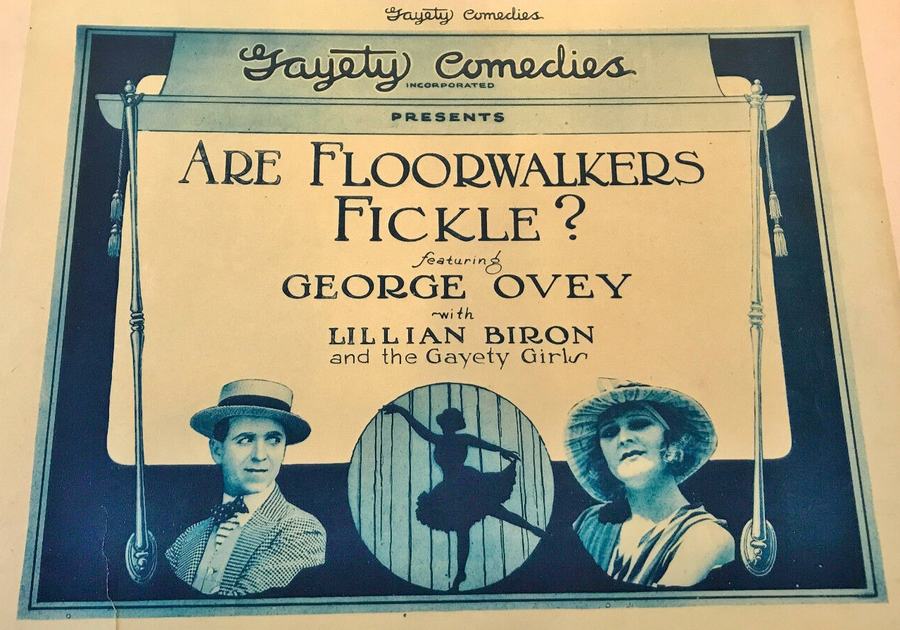
In the grand tapestry of early cinema, where narratives often hinged on exaggerated gestures and the potent language of the unspoken, certain films emerge as more than mere historical curiosities; they resonate with an almost timeless relevance. Frank Roland Conklin’s "Are Floorwalkers Fickle?" is precisely such a film, a delightful and surprisingly nuanced exploration of human perception, class dynamics, and the often-turbulent path of romance amidst the bustling backdrop of a burgeoning urban landscape. Released in an era when the department store was not just a place of commerce but a vibrant social arena, a microcosm of societal aspirations and anxieties, this picture leverages its setting to brilliant effect, crafting a tale that is both intimately personal and broadly observational. It asks a question that, despite its seemingly quaint title, delves into the very heart of human interaction: can we truly discern sincerity from mere professional courtesy?
At its core, the film introduces us to Arthur, portrayed with a captivating blend of earnestness and understated charm by George Ovey. Arthur is the quintessential floorwalker: impeccably dressed, perpetually polite, and possessed of an almost preternatural ability to navigate the labyrinthine aisles of the grand emporium, guiding lost souls and soothing frayed nerves. His role demands an almost theatrical performance of geniality, a boundless wellspring of helpfulness extended to every patron, regardless of their social standing or disposition. This professional requirement, however, becomes the very crucible for the film’s central conflict, as his widespread attentiveness is misinterpreted as a lack of singular devotion. Ovey’s performance is a masterclass in silent-era subtlety, conveying Arthur’s internal struggles and genuine affection through nuanced facial expressions and posture rather than broad pantomime. He embodies the quiet dignity of a man caught between the demands of his profession and the desires of his heart.
Opposite Ovey, Lillian Biron shines as Elsie, a salesgirl whose vivacity and independent spirit make her a compelling heroine. Elsie is not a damsel in distress; she is a woman of agency, her heart aflutter with nascent affection for Arthur, yet equally quick to judge what she perceives as his wavering loyalties. Biron imbues Elsie with a delightful blend of vulnerability and resilience, her eyes conveying a spectrum of emotions from hopeful adoration to wounded pride. Her character serves as the audience’s emotional anchor, allowing us to experience the frustrations and joys of a budding romance complicated by societal expectations and simple misunderstandings. The dynamic between Ovey and Biron is electric, a testament to their individual talents and their collective ability to create believable, endearing characters without uttering a single word. Their chemistry is a silent symphony of longing and confusion, making their eventual connection all the more satisfying.
Conklin's narrative prowess lies in his ability to construct a plot that, while seemingly lighthearted, touches upon deeper societal anxieties. The department store, with its clear hierarchy of staff and customers, becomes a potent symbol for the class distinctions that permeate the narrative. Elsie, a working-class woman, observes Arthur’s seemingly preferential treatment of wealthy female patrons – a necessity of his job – through the lens of her own insecurities and societal position. This creates a compelling dramatic tension, as Arthur’s professional obligations are continually at odds with Elsie’s emotional needs. The film subtly critiques the superficiality of appearances, suggesting that outward displays of courtesy can easily be mistaken for deeper attachments, thereby posing a universal question about the true nature of fidelity and commitment.
The plot, while straightforward, is expertly executed. A series of escalating misunderstandings, often triggered by Arthur’s unavoidable interactions with various customers, fuels Elsie’s growing suspicion. One particularly memorable sequence involves a formidable, aristocratic dowager who misplaces a priceless heirloom within the sprawling store. Arthur, ever the diligent employee, is tasked with assisting her, his focused attention on the search misinterpreted by Elsie as a burgeoning romance. This central misunderstanding serves as the catalyst for the film's climax, where Arthur's unwavering integrity and commitment to his duty, ironically, become the very means by which he proves his true devotion to Elsie. The resolution is both heartwarming and cleverly constructed, demonstrating that true character shines through adversity, and that genuine love can overcome the most persistent of misinterpretations.
The direction is precise, utilizing the visual storytelling techniques of the era to maximum effect. Conklin masterfully employs close-ups to convey emotional intensity and wide shots to establish the grandeur and chaotic energy of the department store. The pacing is brisk, propelling the narrative forward with a charming momentum that keeps the audience engaged. Intertitles are used judiciously, providing necessary exposition without disrupting the visual flow, allowing the actors’ performances to carry the emotional weight. The cinematography, even in its simplicity, effectively captures the bustling atmosphere and the subtle nuances of human interaction within this vibrant setting. It’s a testament to the skill of the filmmakers that such a seemingly simple premise yields such rich emotional depth.
"Are Floorwalkers Fickle?" also serves as a fascinating historical document, reflecting the societal norms and anxieties of its time. The burgeoning consumer culture, the changing roles of women in the workforce, and the eternal dance between social classes are all subtly woven into the fabric of the story. It speaks to a universal human experience: the desire to be seen, understood, and loved for who we truly are, beyond the roles we play or the uniforms we wear. This thematic resonance is what elevates the film beyond a mere period piece, granting it an enduring appeal that transcends the specificities of its production era.
In terms of cinematic kinship, "Are Floorwalkers Fickle?" shares thematic echoes with several other films of its time, particularly those exploring the complexities of romance and social standing. One might draw parallels to the quiet dignity found in the struggles depicted in films like Bill Apperson's Boy, where individual character shines through humble circumstances. The societal pressures and misunderstandings that drive the narrative here also find resonance in the intricate romantic dramas of the era, such as An American Widow or Bought and Paid For, both of which delve into the trials and tribulations of love tested by external forces. The innocent misinterpretations that fuel much of the comedic and dramatic tension in Conklin's film are reminiscent of the delightful confusions at the heart of The Little Runaway, where identity and circumstance conspire to create delightful chaos. The film avoids the more overt action or peril seen in features like Flirting with Death or Facing Death on the Blumlisalp, opting instead for a more interior, character-driven conflict, yet the stakes for the characters' emotional well-being feel just as high.
The film's examination of the human condition, particularly the struggle against external perceptions, connects it to the more philosophical silent dramas like Until They Get Me, albeit with a far lighter touch. Even the contemplation of fate and circumstance, though presented humorously here, has echoes in the more serious explorations found in films like Das schwarze Los. The challenges faced by characters in their professional lives, and how these intersect with their personal aspirations, can also be seen in a film such as Mules and Mortgages, which, despite its rural setting, shares a common thread of individuals striving for recognition and stability.
Ultimately, "Are Floorwalkers Fickle?" is a testament to the enduring power of silent cinema to tell compelling stories with emotional depth and universal appeal. It is a film that, despite its age, feels remarkably fresh and relevant, reminding us that the human heart, with all its complexities and contradictions, remains a constant source of fascination. Lillian Biron and George Ovey deliver performances that are not only historically significant but genuinely moving, anchoring a narrative that is both entertaining and thought-provoking. Conklin’s direction ensures that the film never descends into mere farce, instead maintaining a delicate balance between humor and heartfelt drama.
For those unfamiliar with the charms of early silent films, "Are Floorwalkers Fickle?" offers an accessible and thoroughly enjoyable entry point. It’s a film that speaks to the timeless themes of love, loyalty, and the often-comical journey we undertake to truly understand one another. It reaffirms that even in a world devoid of spoken dialogue, the language of the heart can be articulated with profound clarity and resonant emotion. The film doesn't just ask if floorwalkers are fickle; it invites us to consider if our own perceptions, clouded by circumstance or expectation, might just be the most fickle thing of all. A delightful cinematic experience, highly recommended for anyone seeking a glimpse into the sophisticated storytelling capabilities of the silent era.
IMDb 5.7
1929
Community
Log in to comment.