DbcultAccessing Vault...
Cult Review
Senior Film Conservator
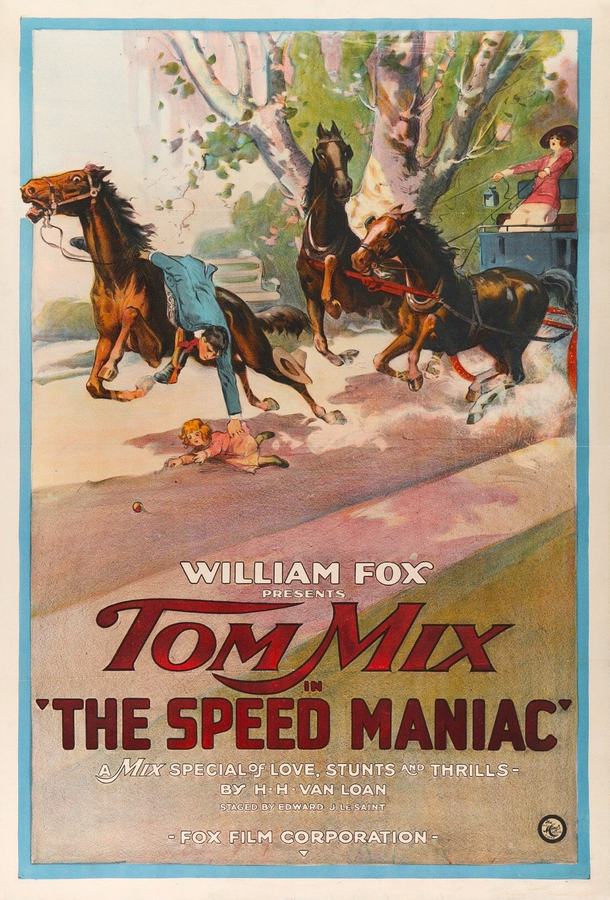
The year 1919 stood as a temporal threshold, a moment where the dust of the American frontier began to settle beneath the relentless advancement of the internal combustion engine. In this crucible of modernization, The Speed Maniac emerges not merely as a piece of celluloid entertainment, but as a socio-cultural document capturing the friction between the atavistic West and the burgeoning industrial metropolises. Directed with a surprisingly kinetic eye, the film serves as a vehicle for the burgeoning stardom of Buck Jones, whose transition from rancher to racer mirrors the national psyche’s shift from horsepower to actual horsepower.
Unlike the more traditional Western narratives found in Bill Settles Down, The Speed Maniac ventures into the labyrinthine streets of San Francisco, a city rendered here as both a land of opportunity and a den of sophisticated thievery. The protagonist, Billy Porter, is the quintessential American archetype: the self-taught visionary whose mechanical aptitude is matched only by his moral rectitude. When he is swindled upon his arrival, the film avoids the pitfalls of simple melodrama, instead opting for a gritty exploration of urban survival that feels remarkably contemporary.
The introduction of the McClusky family provides the film's emotional marrow. Jim, the 'lame newsboy,' and his father, 'Knockout' McClusky, represent the marginalized casualties of the urban machine. Their friendship with Billy is not merely a plot device but a profound commentary on class solidarity. While films like A Bit of Jade dealt with the frivolities of the upper crust, The Speed Maniac dwells in the sweat-soaked gyms and the stark reality of the prize-fighting circuit. The training sequences are captured with a documentary-like fervor, emphasizing the physicality that was a hallmark of the era's action cinema.
The narrative stakes escalate when the anticipated bout against 'Tiger' Doran is compromised. The drugging of Knockout McClusky is a trope that speaks to the perceived corruption of the city—a place where even the purity of sport is tainted by the machinations of the unscrupulous. Billy’s decision to enter the ring himself is the film’s first great climax. It serves as a literalization of the man-against-the-system conflict. Jones, with his rugged physique, brings a visceral authenticity to the boxing scenes that far outshines the stagey choreography typical of the late 1910s.
Central to the film’s thematic architecture is Billy's improved automobile engine. In 1919, the car was the ultimate symbol of autonomy and progress. By making Billy an inventor, the screenwriters H.H. Van Loan and Denison Clift elevate him from a mere 'cowboy in the city' to a pioneer of the new age. This mechanical obsession provides a fascinating contrast to the spiritual and historical weight seen in contemporary epics like Rasputin, the Black Monk. Where the latter looks backward at the crumbling of old-world empires, The Speed Maniac looks forward to the assembly line and the open road.
The revelation that John B. Prescott, the automobile magnate, is Billy’s long-lost father adds a layer of Sophoclean irony to the proceedings. This is not just a reunion of blood, but a reconciliation of the two halves of the American dream: the rugged individualism of the West and the corporate power of the East. The film suggests that the vigor of the wilderness is necessary to revitalize the stagnant wealth of the city. Prescott is not just a father; he is the architect of the world Billy wishes to conquer. This subtext of paternal legacy is handled with a subtlety that avoids the overbearing sentimentality of Captain Swift.
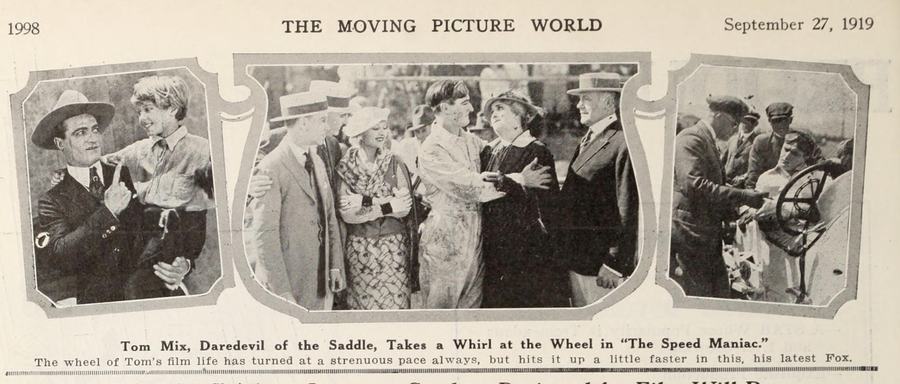
The film’s denouement is a masterclass in silent era tension. The automobile race is filmed with a bravado that belies the technical limitations of the time. Using mounting cameras and rapid-fire editing, the sequence achieves a sense of momentum that rivals the chariot race in the later *Ben-Hur*. As Billy steers his creation toward the finish line, the film synthesizes all its disparate threads: the technical prowess of his engine, the physical endurance learned in the boxing ring, and the romantic impetus provided by Pearl Matthews.
Pearl, played with a spirited grace by Eva Novak, is more than a mere trophy. Her introduction—a sequence involving runaway horses—is a clever nod to the fading era of equine transport. Billy’s rescue of her marks his final mastery over the 'old' world before he dominates the 'new' one with his motorcar. Their chemistry provides a necessary warmth to a film that is otherwise preoccupied with steel and leather. It is a romance forged in the heat of competition, far removed from the tragic operatics of J'accuse! or the exoticism of Thais.
Visually, The Speed Maniac utilizes the natural light of the California coast to create a high-contrast aesthetic that underscores the film's moral dualism. The shadows of the San Francisco alleys are deep and menacing, while the racetrack is bathed in a blinding, optimistic sun. The inclusion of Tom Mix in the cast—himself a titan of the genre—adds a layer of meta-textual authority to the production, signaling to the audience that they are witnessing a changing of the guard in Western heroism.
The pacing of the film is relentless, living up to its title without sacrificing character development. The writers have managed to weave together disparate genres—the Western, the sports drama, the industrial thriller, and the family romance—into a cohesive whole. This narrative density is a testament to the sophistication of late-1910s screenwriting, which was beginning to move away from the episodic nature of earlier shorts toward the complex structures we recognize today. Even when compared to the stylized European cinema of the time, such as The She Devil, The Speed Maniac stands out for its raw, unapologetic energy.
Ultimately, The Speed Maniac is a celebration of the American can-do spirit at the dawn of the Roaring Twenties. It captures a world in motion, where the only sin is standing still. Buck Jones delivers a performance of remarkable clarity, grounding the high-concept plot in a believable human struggle. The film reminds us that while technology may change—from the blueprints of a 1919 engine to the digital landscapes of today—the fundamental human desires for recognition, family, and love remain the constant fuel of our collective journey.
For the modern viewer, this film is a window into a vanished world, a San Francisco of cobblestones and early steel, a West that was still a living memory. It is a essential viewing for anyone interested in the evolution of the action hero and the cinematic language of speed. In the pantheon of silent cinema, it deserves a place alongside the greats for its sheer audacity and its unwavering belief in the transformative power of the machine and the man behind it.
IMDb 5.9
1921
Community
Log in to comment.