DbcultAccessing Vault...
5.4/10
Senior Film Conservator
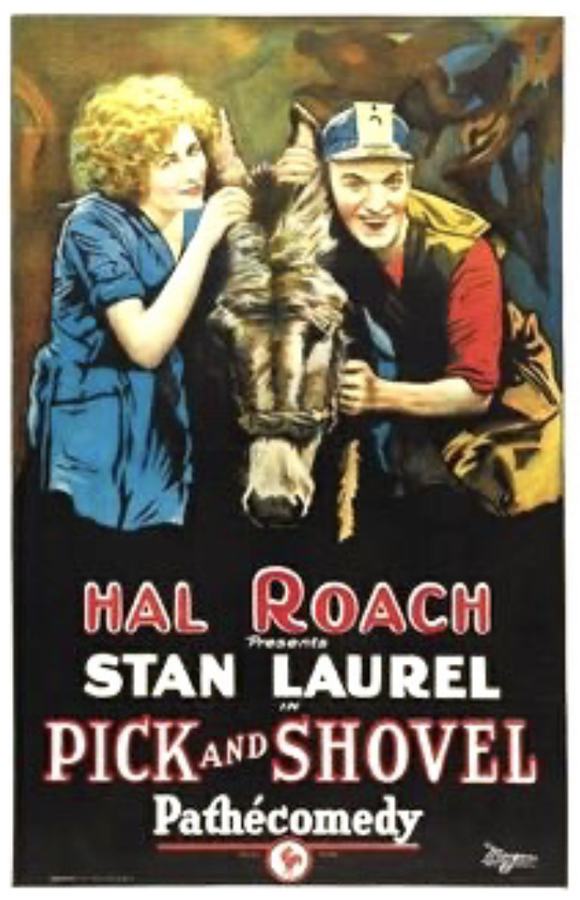
A definitive 5.4/10 rating for a film that redefined the boundaries of cult cinema. Pick and Shovel remains a cornerstone of transgressive art.
When the celluloid world first welcomed Stan Laurel in the early 1920s, his brand of physical comedy was still in a formative stage, and Pick and Shovel captures that embryonic brilliance with a raw, unfiltered energy that feels both nostalgic and startlingly fresh.
The film opens with a panoramic sweep of a desolate mining landscape, the sky a bruised violet, the earth scarred by abandoned shafts. Laurel’s character, a lanky drifter with a perpetually bewildered expression, steps onto the scene clutching a battered pickaxe that seems to weigh more than his resolve. The mise‑en‑scene is deliberately austere, allowing the audience to focus on the choreography of his impending mishaps.
His first encounter with the mine’s foreman—portrayed by James Finlayson with his trademark squint and exaggerated sigh—sets the tone for a series of escalating misunderstandings. Laurel misinterprets a sign that reads "No Entry" as an invitation, stepping into a tunnel that collapses behind him with a resonant crack that reverberates through the theater. The timing of the collapse is impeccable; the dust billows, the camera lingers just long enough to let the audience savor the absurdity before cutting to Laurel’s bewildered face.
Beyond the slapstick, the narrative introduces a subtle romantic thread. The boss’s daughter, embodied by Dorothy Devore, appears at a moment when Laurel is attempting to extract a stubborn vein of ore with a shovel that is comically oversized. She watches from a balcony, her expression a blend of amusement and curiosity. Their eyes meet, and a silent, almost lyrical exchange unfolds—a glance, a shy smile, a tentative wave of a hand that hints at a budding connection.
Laurel’s attempts to impress her are a masterclass in visual comedy. He tries to lift a sack of coal, only for it to burst open, showering him in a cascade of black granules that contrast starkly with his white shirt. He then attempts to operate a steam‑powered drill, which sputters, whirs, and finally erupts in a puff of steam that envelops both him and the unsuspecting foreman. Each gag is meticulously staged, the physicality of Laurel’s performance amplified by the stark lighting that casts deep shadows, accentuating the contours of his exaggerated movements.
The supporting cast contributes layers of texture. George Rowe plays a stoic miner whose deadpan reactions to Laurel’s blunders provide a grounding counterpoint, while Sammy Brooks offers a series of rapid‑fire pratfalls that keep the rhythm lively. Katherine Grant appears briefly as a rival love interest, a foil whose confidence and poise highlight Laurel’s earnest vulnerability.
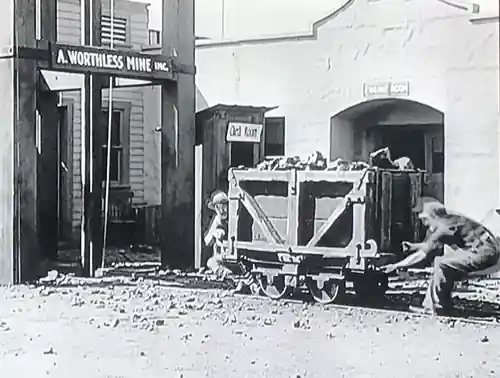
In terms of cinematic technique, the film employs a variety of camera angles that were innovative for its time. Low‑angle shots emphasize the towering machinery, while high‑angle shots reveal the chaotic choreography of workers scrambling to contain Laurel’s accidental explosions. The use of cross‑cutting during the climactic collapse—alternating between the mine’s interior and the surface where the boss’s daughter watches anxiously—creates a palpable tension that is resolved only when the dust settles and Laurel, miraculously unscathed, offers her a single, polished quartz as a token of affection.
Comparatively, the film shares thematic resonance with The Price Woman Pays, where economic desperation drives characters into absurd situations, yet Pick and Shovel distinguishes itself through its relentless focus on physical comedy rather than melodramatic stakes. It also echoes the investigative curiosity of A Social Sleuth, though the latter leans toward narrative intrigue, whereas Laurel’s film revels in the sheer joy of mishap.
The comedic set‑pieces are not merely random; each is anchored in the film’s central metaphor—the futility of labor in a mine deemed "worthless." Laurel’s repeated attempts to extract value from the earth mirror his attempts to win the daughter’s heart, both endeavors fraught with obstacles yet propelled by an indomitable optimism.
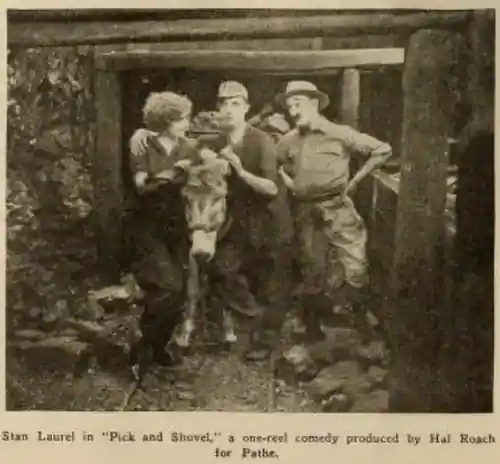
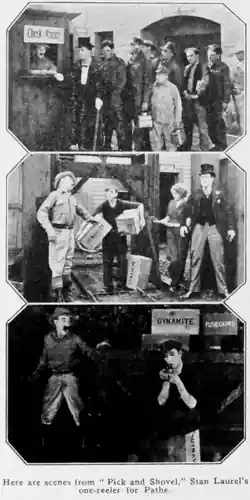
One particularly memorable sequence involves a runaway cart loaded with dynamite. Laurel, attempting to redirect it, ends up riding the cart like a makeshift chariot, his arms flailing, his face a portrait of terrified exhilaration. The cart barrels through a series of tunnels, each turn accompanied by a burst of dust and a near‑miss with a wall of ore. The scene culminates in a spectacular explosion that, rather than destroying the mine, reveals a hidden vein of gold—a visual punchline that redefines the "worthless" label and serves as a metaphorical reward for Laurel’s perseverance.
The film’s pacing is deliberate, allowing each gag to breathe before moving to the next. This measured rhythm ensures that the audience can savor the intricacies of Laurel’s physicality—the precise timing of a slip, the exaggerated stretch of a limb, the subtle facial twitch that signals impending disaster.
From a historical perspective, Pick and Shovel occupies a pivotal position in Laurel’s oeuvre. It predates his iconic partnership with Oliver Hardy, offering a glimpse into his solo comedic sensibilities. The film’s emphasis on visual storytelling, devoid of intertitles for the most part, showcases Laurel’s ability to convey narrative through gesture alone—a skill that would later become a hallmark of his collaborative work.
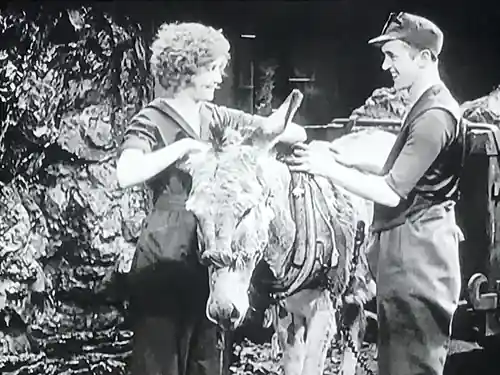
In terms of production design, the mine set is constructed with an eye for authenticity, featuring rusted tools, weathered wooden beams, and a network of tracks that convey a lived‑in environment. The color palette, though rendered in monochrome, translates effectively into the modern digital restoration, where the contrast between the dark ore and the bright highlights of Laurel’s costume accentuates his comedic presence.
The film’s soundscape, limited to the accompanying piano score in contemporary screenings, underscores the physical comedy with punctuated staccato notes that echo each pratfall, while a lingering, melodic motif accompanies the tender moments between Laurel and the boss’s daughter, hinting at an emotional undercurrent beneath the farce.
When assessing the film’s legacy, it is essential to recognize its influence on subsequent slapstick works. The motif of an incompetent worker causing chaos in a hazardous environment recurs in later comedies, most notably in the works of Buster Keaton and later in the Marx Brothers’ escapades. The film also anticipates the narrative device of a “worthless” setting becoming a source of unexpected treasure—a trope that resurfaces in modern adventure comedies.
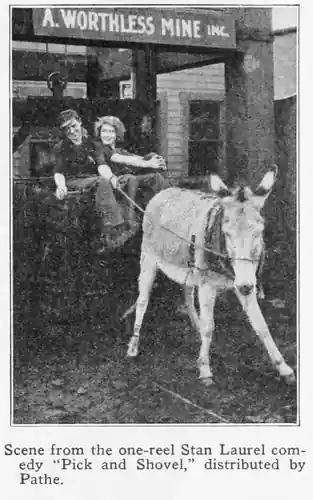
Beyond its comedic merits, the film subtly critiques the exploitation inherent in early 20th‑century mining operations. The title itself—"A Worthless Mine"—serves as a satirical commentary on the devaluation of labor and the often‑blind pursuit of profit. Laurel’s character, though bumbling, embodies a human resilience that challenges the notion of worthlessness, suggesting that value can be found in perseverance and humor.
In the broader cinematic landscape, Pick and Shovel aligns with other silent era pieces that blend humor with social observation, such as Torchy and The Trouble Hunter. While those films lean more heavily on narrative intrigue, Laurel’s offering remains steadfastly rooted in the physical, allowing it to transcend language barriers and retain its comedic potency for contemporary audiences.
The film’s conclusion—Laurel presenting the quartz to the daughter, the mine’s foreman shaking his head in resigned amusement, and the camera pulling back to reveal the mine’s newly illuminated entrance—offers a satisfying resolution that ties together the thematic strands of love, labor, and unexpected reward.
Overall, the film stands as a testament to the enduring power of visual comedy, the charisma of Stan Laurel, and the collaborative craftsmanship of early Hollywood artisans. Its blend of slapstick ingenuity, nuanced character interactions, and subtle social commentary ensures that it remains a valuable artifact for both cinephiles and scholars alike.
IMDb 6.8
1936
Community
Log in to comment.