DbcultAccessing Vault...
6.2/10
Senior Film Conservator
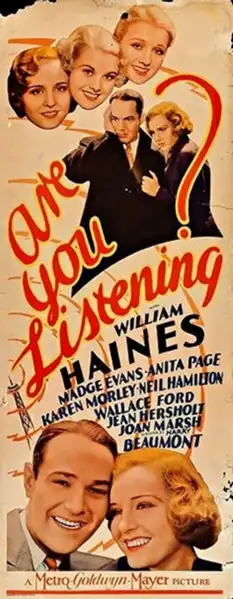
A definitive 6.2/10 rating for a film that redefined the boundaries of cult cinema. Are You Listening? remains a cornerstone of transgressive art.
You should definitely watch this today if you like movies where the tension just keeps ratcheting up until you feel a bit sick. It is perfect for anyone who likes pre-code cinema that doesn't play by the rules. If you hate movies where the main character is kind of a loser who makes one bad choice after another, you’ll probably want to skip this one.
I went into this thinking it was going to be another light William Haines comedy. He usually plays the smart-aleck who gets the girl and wins the game. But man, this is not that movie.
The whole thing feels very claustrophobic. Most of it happens in these cramped radio booths or messy apartments that look like nobody has cleaned them in a week. It captures that 1930s clutter perfectly.
Haines plays Bill, a guy who is basically the king of the radio station. He’s got the snappy dialogue down, but you can tell he’s miserable. His wife, Alice, is played by Karen Morley and she is written to be just... the worst. She’s mean and nagging, which is a bit of a cliché, but it makes the central accident feel so much heavier.
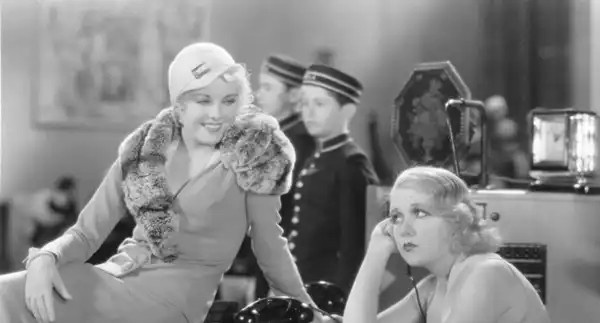
There is this one scene in their apartment that just stuck with me. They are fighting, and it’s not a movie fight—it’s that ugly, realistic kind of shouting. Bill shoves her, and she falls. The way the camera stays on her for a second too long is really uncomfortable.
She hits her head on the bedpost. It’s not some grand cinematic death. It’s just... sudden. And quiet. The silence in that room after all the yelling actually made my ears ring a bit.
Bill doesn't call the cops. He panics. That’s the most human part of the whole film. He does exactly what a scared, selfish person would do. He tries to hide it and goes to work like nothing happened.
But here is the catch. He works at a radio station. And pretty soon, the news of the "murder" starts breaking over the very microphones he manages. It is such a clever way to build dread.
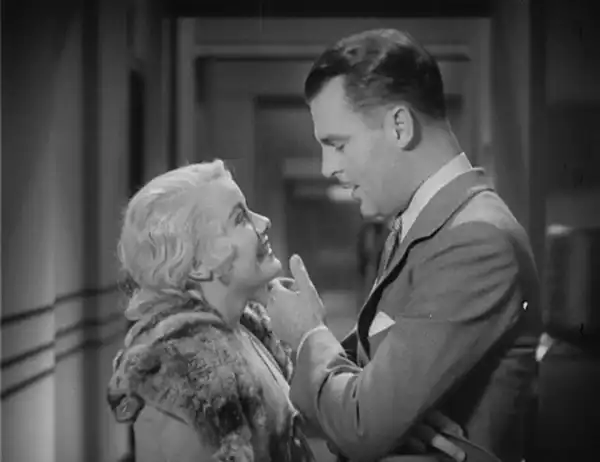
I found myself watching Haines' hands a lot. He’s shaking. He keeps touching things on his desk and moving them an inch to the left, then back again. It’s a great bit of acting that feels like it wasn't even in the script. It’s just a guy falling apart in real time.
The middle part of the movie is basically a chase, but it’s a chase through sound. Everywhere he goes, a radio is playing. It’s like the ghost of his wife is haunting him through the airwaves. You start to realize how loud the world was becoming back then.
There is a scene in a car where the radio is just blaring descriptions of him. He looks out the window and sees people just walking their dogs, totally unaware that the voice coming out of their windows is talking about the guy right next to them. It’s really spooky stuff for 1932.
I think the movie gets a little messy when it tries to bring in the supporting cast. Madge Evans is fine as the love interest, but their relationship feels a bit rushed compared to the heavy stuff with the wife. It’s like the movie remembered it needed a "good girl" halfway through and just threw her in there.
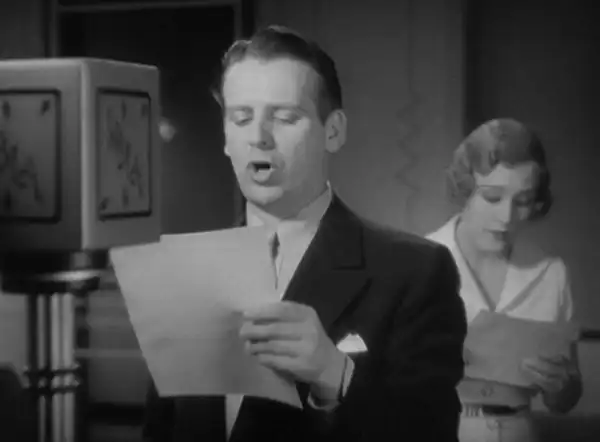
"You can't stop the airwaves, Bill. They're everywhere."
That line isn't actually in the movie, but it should have been. That is how the movie feels. Like you are being chased by invisible voices. It reminds me a bit of the intensity in Hearts Aflame, where the environment itself feels like it's trying to kill the characters.
Wallace Ford is in this too, playing Bill’s brother. He’s always good for a bit of energy. He has this way of talking where he never finishes a sentence because his brain is already on the next three things. It adds to the frenetic energy of the station.
I noticed a weird mistake in the background of one of the street scenes. There’s a guy in a hat who just stops and stares at the camera for a solid four seconds. Nobody edited it out. It’s those little things that make these old movies feel so alive. They didn't have time to be perfect.
The pace is weirdly fast. It’s only about 70 minutes long. By the time you realize how much trouble Bill is in, the movie is already over. It doesn't give you time to breathe or think about the plot holes, which is probably for the best.
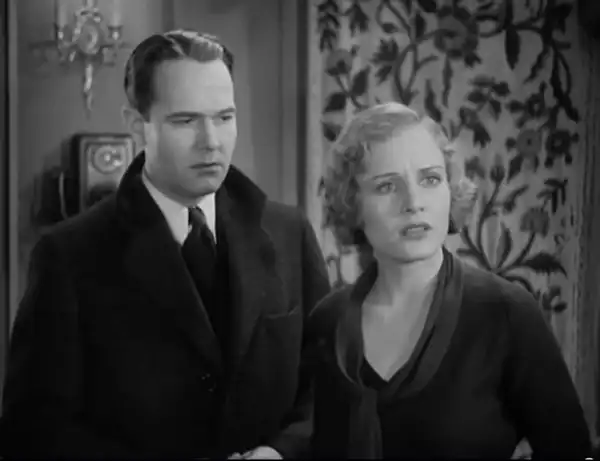
I’ve seen a lot of these early talkies, like The Roaring Road, but they usually feel like plays. This one feels like a movie. The camera moves. The sound is used as a weapon. It’s very modern in that way.
The ending is... well, it's a bit of a downer. But it has to be. You can't really come back from what he did. Even if it was an accident, the lying makes it a crime. The final shot of his face is just haunted. He looks like he hasn't slept in a year.
If you enjoy the grit of The Black Book, you might appreciate the shadows here. It’s not quite noir yet, but you can see the edges of it forming in the corners of the radio booth.
One thing that annoyed me was the music. It’s very tinkly and happy in some parts that really shouldn't be. I guess they didn't know how to score a thriller yet. They just used whatever was in the library. It’s a bit distracting when you’re watching a guy lose his mind.
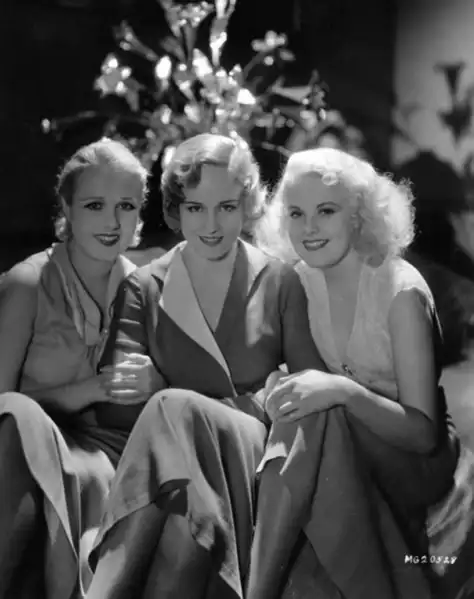
Also, Hattie McDaniel has a tiny part. She’s great as always, but she’s on screen for like a minute. I wish they gave her more to do. The movie is full of these great character actors who just pop in and out.
Is it a masterpiece? Probably not. The writing gets a bit soapy toward the end. But for a movie about the early days of radio, it’s surprisingly mean-spirited and dark. I like that about it. It doesn't try to make you feel good.
It makes you want to turn off your phone and sit in the dark for a while. Just to make sure nobody is broadcasting your secrets to the whole city.
Anyway, go find a copy. It’s a short watch. Just don't expect to feel very happy when the credits roll. It’s a sweaty, nervous little film that deserves more eyes on it than it gets these days.
IMDb —
1918
Community
Log in to comment.