DbcultAccessing Vault...
Cult Review
Senior Film Conservator
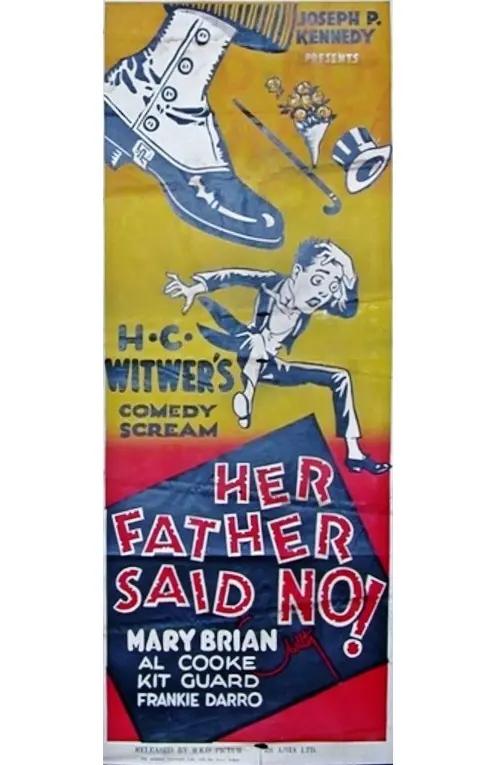
Is 'Her Father Said No' a hidden gem from the past, or a relic best left untouched by modern sensibilities? Short answer: for those with a fondness for early cinematic comedies and a tolerance for dated tropes, this film offers a surprisingly endearing, if somewhat predictable, experience. It's a charming diversion. This is a film for viewers who appreciate the foundational elements of romantic comedy, enjoy seeing early Hollywood talent at work, and can overlook a script that sometimes prioritizes contrivance over genuine narrative depth. Conversely, if you seek intricate plots, complex character studies, or a brand of humor entirely divorced from its historical context, 'Her Father Said No' may not be your cinematic cup of tea.
Early cinema often gets a bad rap for being inaccessible or overly simplistic, but this picture, despite its age, manages to deliver a straightforward narrative with a surprising amount of heart. It works. But it’s flawed. The immediate hook of class conflict and forbidden love is universally appealing, even when presented through a lens nearly a century old.
This film works because of its clear character motivations and the undeniable chemistry between its leads, which transcends the era's common acting limitations.
This film fails because its comedic beats often rely on broad, predictable gags that haven't aged gracefully, and its resolution feels more convenient than earned.
You should watch it if you appreciate the foundational elements of romantic comedy, enjoy seeing early Hollywood talent at work, and can overlook a script that sometimes prioritizes contrivance over genuine narrative depth.
At its core, 'Her Father Said No' is a classic narrative of love against all odds, filtered through the specific social anxieties of its time. We are introduced to Danny Martin, a young man whose world is defined by the grit and struggle of the boxing ring. His chance encounter with Charlotte Hamilton, a figure of effortless elegance and privilege, immediately sets the stage for a clash of worlds. Their initial flirtation, born from a broken down roadster, is a delightful meet-cute that feels both era-appropriate and timeless.
The film quickly establishes the central conflict: John Hamilton, Charlotte's father, embodies a rigid class consciousness, viewing Danny's profession not just with disapproval, but with outright contempt. This isn't merely a father protecting his daughter; it's a social gatekeeper vehemently rejecting anything that doesn't fit his narrow definition of respectability. Danny's subsequent decision to abandon his career for Charlotte is a grand romantic gesture, a testament to the power of love over profession, but also a pragmatic pivot that allows the plot to evolve into its most comedic phase.
The transition from a gritty boxing drama to a farcical health resort comedy is abrupt, yet effective in shifting the film's tone. The resort, designed for 'obese millionaires,' becomes the perfect crucible for the film's satirical elements, with Hamilton and his foppish prospective son-in-law, Penrod, unwittingly becoming Danny's clients. Their discomfort and disgust at the treatments provide the film's most overt laughs, highlighting the absurdity of their privilege when confronted with methods designed to 'cure' their excesses. The final resolution, where Hamilton begrudgingly accepts the eloped couple, feels less like a genuine change of heart and more like a defeated surrender to the inevitable, a common, if slightly unsatisfying, trope in early comedies.
While the narrative arc is predictable, its execution is often charming, buoyed by the energetic performances and a clear understanding of what makes a romantic comedy tick. It might not reinvent the wheel, but it certainly keeps it rolling.
The success of any romantic comedy, especially one from this era, hinges significantly on the charisma of its leads, and 'Her Father Said No' largely delivers. Danny O'Shea, as the earnest prizefighter Danny Martin, exudes a rough-hewn charm that makes his character immediately sympathetic. His portrayal effectively balances the physical demands of a boxer with the tender vulnerability of a man in love. Observe his facial expressions during the rigged fight scene; the subtle shift from determination to bewildered disappointment is palpable, conveying more than any dialogue could.
Mary Brian, as Charlotte Hamilton, is equally compelling. She brings a spirited independence to a role that could easily have been a passive damsel in distress. Her chemistry with O'Shea is undeniable, lending credibility to their whirlwind romance. A standout moment is her subtle eye-roll when her father, played by John Steppling, launches into another tirade against Danny, a small gesture that speaks volumes about her character's frustration and burgeoning rebellion. Brian skillfully navigates the societal expectations of her character while subtly pushing against them.
Speaking of John Steppling, his performance as the curmudgeonly John Hamilton is a masterclass in comedic indignation. He embodies the rigid class snob with such conviction that his eventual humiliation at the health resort is all the more satisfying. His physical comedy, particularly his reactions to the bizarre health treatments, is genuinely amusing and forms the backbone of the film's second act humor. His transformation from furious patriarch to resigned father is abrupt, yes, but Steppling sells the defeat with a weary sigh that almost makes it believable.
The supporting cast, including Frankie Darro and Gene Stone in smaller roles, contribute to the film’s lively atmosphere. While their characters are not deeply explored, they serve their purpose in accentuating the main players' dilemmas or providing additional comedic beats. The ensemble, though often broad in their performances, works cohesively to maintain the film's lighthearted tone, ensuring that even the moments of conflict never feel truly dire.
Given the film's vintage, the direction of 'Her Father Said No' (often attributed to the collective vision of its writers, H.C. Witwer and Al Boasberg, in the absence of a singular credited director for such early productions) is surprisingly adept at visual storytelling. The filmmakers effectively contrast the two worlds Danny inhabits: the stark, often dimly lit boxing gym, emphasizing the harsh realities of his profession, versus the bright, opulent settings of the Hamilton estate, which speak of privilege and societal polish. This visual dichotomy is crucial in establishing the central conflict without heavy exposition.
The cinematography, typical of the era, relies on relatively static camera work, yet it is used effectively to frame comedic situations. For instance, the wider shots at the health resort allow for the chaotic physical comedy of Hamilton and Penrod's treatments to unfold naturally within the frame, capturing multiple reactions simultaneously. There's a particular scene where Hamilton is forced into an absurd exercise, and the camera holds steady, allowing the full scope of his discomfort and the surrounding attendants' bemusement to play out. Close-ups are sparingly used, but when they appear, such as on Charlotte's face when her father dismisses Danny, they effectively convey emotional impact.
The tone of the film is consistently lighthearted, even during moments of perceived dramatic tension. This is a deliberate choice, ensuring that 'Her Father Said No' never veers into melodrama, opting instead for a charming, if sometimes simplistic, romantic comedy. The pacing, while not as frenetic as modern films, is surprisingly brisk for its time, moving the plot along efficiently from one comedic set piece to the next. The film avoids lingering too long on any single scene, maintaining a steady, enjoyable rhythm.
To dismiss 'Her Father Said No' as merely a dated relic would be to overlook its surprising narrative efficiency and the understated social commentary woven into its comedic fabric. While not groundbreaking in its visual language, it utilizes the tools available to craft a clear and engaging story, proving that effective filmmaking doesn't always require elaborate techniques.
The pacing of 'Her Father Said No' is one of its more commendable attributes. For an early cinematic production, it moves with a surprising alacrity, preventing any scene from overstaying its welcome. The narrative transitions, though sometimes abrupt, serve to keep the audience engaged, constantly introducing new comedic situations or advancing the romantic entanglement. The shift from the boxing ring to the aristocratic barbecue, then to the farcical health resort, happens with a deliberate, almost episodic, speed that suits the lighthearted tone. This rapid progression ensures that the film never feels bogged down by its own contrivances, instead relying on the momentum of its plot points to carry the story forward.
The film’s thematic depth, while not overtly complex, offers intriguing glimpses into societal norms of the era. The most obvious theme is the clash between social classes and the prejudices that accompany them. John Hamilton's disdain for Danny's profession isn't just personal; it's a commentary on the rigid class structures where a 'prizefighter' simply doesn't belong in the same social stratum as a 'Hamilton.' This class conflict is portrayed with a comedic touch, but its underlying truth resonates even today, albeit in different manifestations.
An unconventional observation is the film’s portrayal of the health resort, ostensibly for 'obese millionaires,' feels less like a period piece and more like a satirical jab at wellness culture, predating our modern obsession by decades. It subtly critiques the excesses of the wealthy and their often-absurd attempts to 'fix' themselves, a commentary that feels oddly prescient. It's a testament to the writers, H.C. Witwer and Al Boasberg, that they injected such a relevant, if subtle, satire into what is primarily a romantic comedy.
Furthermore, the theme of personal sacrifice for love is central to Danny's character arc. His decision to abandon boxing for Charlotte speaks to the perceived necessity of conforming to societal expectations, or at least to the demands of a formidable father-in-law. While romantic, it also highlights the pressures individuals faced in making choices that would be deemed 'acceptable' by their social circles. The film, in its simple charm, manages to touch upon these deeper currents without ever losing its comedic footing, a delicate balance that is often difficult to achieve.
Yes, 'Her Father Said No' is worth watching today, especially for specific audiences. It offers a fascinating glimpse into early Hollywood filmmaking and the nascent stages of the romantic comedy genre. While some of its humor and narrative conventions are undeniably dated, the film's core appeal — charming leads, a clear conflict, and a satisfying, if predictable, resolution — remains intact. It's not a film that will redefine your cinematic experience, but it is a pleasant and historically significant diversion.
For film historians, genre enthusiasts, or anyone curious about the evolution of romantic narratives on screen, it provides valuable context. The performances are engaging, particularly from Danny O'Shea and Mary Brian, whose chemistry transcends the limitations of early sound film. It is a testament to the enduring power of simple, well-told stories, even when wrapped in the stylistic packaging of a bygone era. Don't expect a modern blockbuster; expect a charming, if quaint, piece of cinema history.
'Her Father Said No' is not a film that will shake the foundations of cinema, nor is it a forgotten masterpiece. What it is, however, is a surprisingly delightful and efficient piece of early romantic comedy. It captures the simple pleasures of a forbidden romance and the comedic potential of class clash with earnest charm. While its humor and narrative beats are firmly rooted in its time, there's an undeniable warmth to its execution and a genuine charisma in its lead performances that makes it more than just a historical curiosity. It's a testament to the enduring appeal of certain storytelling fundamentals that even a film from this far back can still elicit smiles and provide a gentle, engaging escape.
If you approach it with an open mind and an appreciation for the era, 'Her Father Said No' offers a rewarding, if undemanding, viewing experience. It's a film that reminds us that while cinematic techniques evolve, the human desire for connection, laughter, and a happy ending remains timeless. It’s a solid example of its genre, and one that holds up better than many of its contemporaries. Go in expecting classic charm, not contemporary complexity, and you’ll find much to enjoy in this quaint, yet spirited, tale.
IMDb 5.1
1934
Community
Log in to comment.