DbcultAccessing Vault...
5.6/10
Senior Film Conservator
A definitive 5.6/10 rating for a film that redefined the boundaries of cult cinema. Arizona remains a cornerstone of transgressive art.
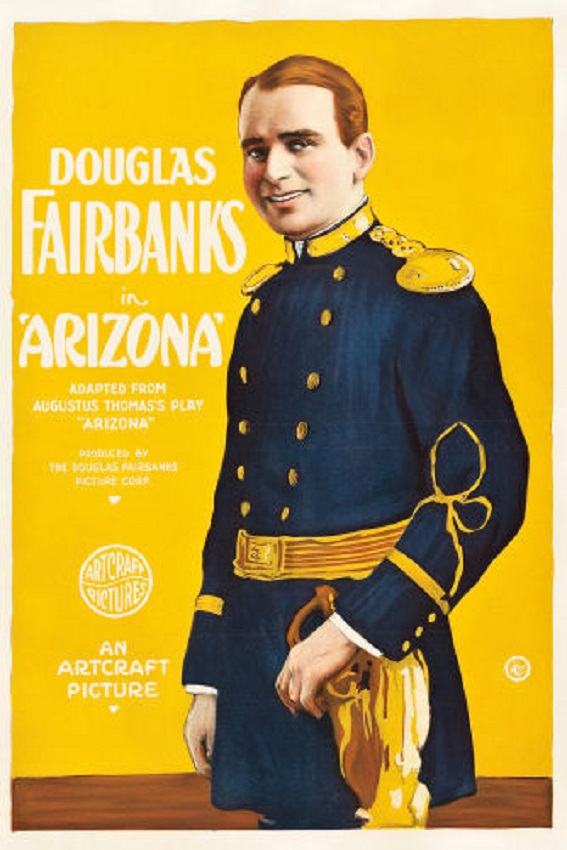
The first time I watched Arizona, the print flickered like a campfire trying to stay alive in a sandstorm. Nitrate decay had eaten the edges, but what survived was a fever chart of desire—white-hot, implacable, shot through with the mineral tang of sagebrush. Douglas Fairbanks, who also co-wrote, appears onscreen less than you might expect; instead he haunts the negative space, a grinning absence whose charisma is measured by how thoroughly he can rupture the lives of those who dare love him.
Director Albert Parker treats the landscape like a living organ: mesquite shadows stretch across faces like varicose veins, heat ripples turn dialogue into visible tremors. Compare this to The Lone Star Rush, where location merely frames action; here the desert intrudes—wind pelts adobe walls with grit until every surface resembles pumice, moonlight pools so starkly it feels like spilled mercury. Even interior scenes refuse shelter: candle flames jerk sideways as though the outside is inhaling the oxygen from within.
Wilmer’s rejection of Estrella is not cruelty but cowardice—he senses that reciprocation would mean surrendering the restless sovereignty he equates with manhood. Marguerite De La Motte plays her with the brittle poise of a porcelain doll forced to learn poker; her eyelids lower like theater curtains, then snap open to reveal storms. When she pivots into Colonel Haverhill’s arms (Theodore Roberts, a walrus-moustached anchor of gravitas), the marriage feels less like comfort and more like mutually assured destruction. Their wedding supper—shot in a single, merciless take—has the hush of a truce signed on quicksand.
Fairbanks’ script delights in unmanning its hero. Wilmer’s athleticism—those famous vaults over corral rails—becomes grotesque when he tries to leap from shame; he lands sprawling, mouth packed with dust. The film’s midpoint montage cross-cuts his push-ups and saber drills with Estrella lacing herself into a corset tight enough to bruise. Both are constructing armors that will fail them at identical moments.
Intertitles in Arizona read like shattered love haikus: "I told the stars…they repeated it to the sand." Yet the most eloquent passages are wordless. Watch Estrella study her new husband’s boots—mud-caked, heavy as guilt—beside Wilmer’s polished pair. A simple tilt of her head reveals she already knows which footsteps she’ll follow into oblivion.
Parker alternates between diaphragm-wide close-ups that feel like someone breathing on your iris, and远景 shots where humans dot the frame like punctuation marks on a blank page. A pre-Steadicam camera gallops beside horses, kicking up equal amounts of dust and narrative urgency. Tinting swings from amber afternoons to cerulean nights without warning, as though the film itself is delirious with sunstroke. The effect predates the surreal palettes of Grekh by a decade, yet feels organic, not gimmicky.
Fairbanks restrains his trademark exuberance; Wilmer’s smile arrives too late, like a telegram announcing yesterday’s victory. De La Motte is the revelation—she ages a decade in 70 minutes, voiceless yet sonorous. Roberts, usually a comic walrus, here embodies the pathetic grandeur of a man who wins the prize he no longer has stamina to unwrap. In the periphery, Tully Marshall’s whiskey-sodden sutler delivers comic pratfalls that somehow autopsy the American dream of manifest destiny.
Where The Three Pals sentimentalizes frontier camaraderie, Arizona cauterizes it. Compared to Un romance argentino, both trade on Latin-coded passion, yet the yankee austerity here makes the triangle more Calvinist than tango. The showdown lacks the baroque nihilism of The Show Down but gains something crueler: the possibility that nobody will even bother to pull the trigger.
Estrella’s final act—no spoiler, history is spoiler-proof—forces the men to inhabit the domestic sphere she was traded like deed. Kitchens become battlements; a teacup shatters with the report of a Krag-Jørgensen rifle. In 1918, such imagery played as moral comeuppance; today it reads like #MeToo avant-la-lettre, a reminder that the frontier was never wide enough for a woman’s fury to dissipate.
Most home-video releases slap on a jaunty honky-tonk piano, betraying the film’s desolate heartbeat. I recommend viewing it mute, letting the whir of your projector stand in for desert wind. Occasionally add a distant, single guitar note on your phone—just one, allowed to decay. The resulting vacuum sucks your sternum inward; you’ll understand why soldiers in lonely forts hallucinated music inside shell-casings.
The Apache are conspicuously absent, yet their erasure throbs like a phantom limb. When officers toast "to the only redskin we’ll ever fear—loneliness," the line lands with the thud of bad conscience. Arizona knows the west was predicated on absences—of water, of law, of indigenous bodies—and uses romantic absence as synecdoche for larger plunder.
Only fragments survive in UCLA’s vault: a 46-minute reassembly from two 35mm reels. Nitrate decomposition has chewed faces into lunar maps, yet the gaps enhance the film’s meditation on incompleteness. A 4K scan circulates in cinephile torrents, but beware: some carry the saccharine 1972 organ score. Seek instead the occasional MoMA stream with live accompaniment by Günter A. Buchwald; his violin harmonics fray like nerves in real time.
Few silents dare to end on such anti-climactic clarity: a man walks into white glare, not triumphantly but becalmed, as though the desert has finally answered his lifelong query by asking a bigger question. Arizona is less a western than a weather pattern of wounded attachments, a lesson in how frontiers within are vaster than any territory on maps. It will not restore your faith in love, heroes, or even cinema—but it will brand its scorched silhouette onto the backs of your eyelids, and you will be grateful for the scar.
Verdict: 9.2/10 — Essential for Fairbanks completists, western deconstructionists, and anyone who’s ever mistaken indifference for freedom.
If you rewatch, count how many times hands hover over holstered pistols without drawing—each stall is a heartbeat the film refuses to soundtrack.
IMDb 6
1932
Community
Log in to comment.