DbcultAccessing Vault...
Cult Review
Senior Film Conservator
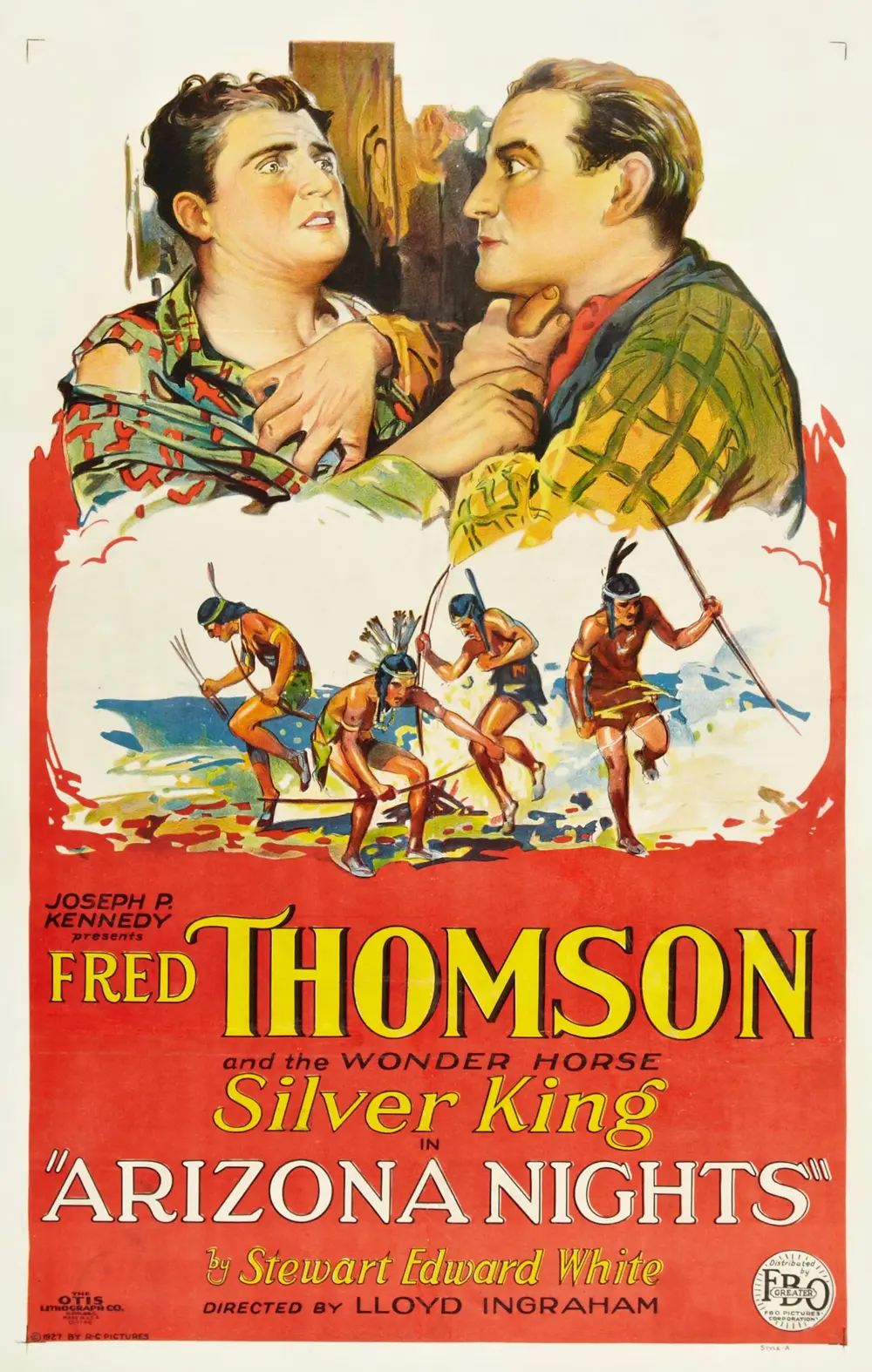
Is Arizona Nights a forgotten gem or a relic best left in the dust of cinematic history? For those with a keen interest in the foundational elements of the Western genre and the silent film era, it is, surprisingly, a worthwhile, if imperfect, journey back to a simpler, yet equally complex, era of storytelling.
This film carves out its niche not through revolutionary techniques, but through a commitment to character-driven deceit and the stark, moral landscape of the frontier. It is absolutely for viewers who appreciate the narrative nuances possible without dialogue and who can forgive the occasional pacing quirk inherent to films of its vintage. However, if you demand fast-paced action, modern production values, or a narrative that doesn't require some interpretive effort, then Arizona Nights might prove a challenging watch.
Arizona Nights plunges us into a world defined by the machinations of Jeff Decker, a villain whose intellect is as sharp as any desert thorn. Decker’s grand scheme for Coldwater is a masterclass in layered deceit, a narrative tapestry woven with threads of economic exploitation, psychological terror, and outright fraud. He doesn't just want to take; he wants to dismantle and rebuild Coldwater in his own image, financially and socially.
The film’s plot, penned by Hal Conklin and Stewart Edward White, demonstrates a surprising sophistication for its time. Decker, portrayed with a sinister charm by J.P. McGowan, orchestrates a series of raids on the town, not for plunder in the traditional sense, but to create an atmosphere of fear. This fear is a commodity, driving down the value of property and, crucially, the horses that are the lifeblood of any frontier community. His partnership with Red Dog, an Indigenous leader, adds a potent, if often problematic by modern standards, dimension to his power, leveraging pre-existing tensions for his own gain.
The introduction of the fake gold strike is a particularly cunning stroke, a classic Western trope twisted into a tool of deception. It preys on the desperate hope of miners like Fred Coulter, played by Fred Thomson, who becomes an unwitting participant in Decker’s plan to buy up horses. This narrative thread highlights the moral ambiguity of the frontier, where the line between enterprise and exploitation is constantly blurred. The added layer of Decker’s desire for Ruth Browning (Nora Lane) injects a personal, almost predatory, element into his villainy, suggesting a man who believes he can simply take whatever he desires.
Fred’s journey from unwitting pawn to hero is the film's emotional anchor. His gradual realization of Decker’s duplicity is handled with a subtlety often missing in early cinema, relying on visual cues and the escalating tension rather than overt exposition. The climax, with Fred attempting to rally a besieged town against an impending attack he knows is orchestrated from within, is genuinely compelling. It works. But it’s flawed.
In the silent era, acting was an art of exaggerated gesture and expressive facial contortion, yet the cast of Arizona Nights manages to convey genuine emotion and character depth, often with remarkable restraint. Fred Thomson, a real-life cowboy and rodeo champion, brings an undeniable authenticity to his role as Fred Coulter. His physicality is natural, his movements on horseback fluid and believable, which grounds the character in the rugged reality of the West. Thomson’s earnestness shines through, making his character’s slow awakening to Decker’s treachery all the more impactful. He’s not a brooding anti-hero; he’s a good man caught in a bad situation, and his performance sells that simplicity effectively.
J.P. McGowan, as the villainous Jeff Decker, is perhaps the film's most compelling performance. He embodies a calculated menace, a man who doesn’t need to shout to exert control. There’s a quiet intensity in his gaze, a subtle smirk that hints at the layers of his deceit. One particular scene, where Decker observes the desperate townspeople selling their horses, his face a mask of detached satisfaction, speaks volumes without a single intertitle. He is a more nuanced antagonist than many of his silent-era counterparts, relying on cunning rather than brute force. This makes him truly memorable, even unsettling.
Nora Lane, as Ruth Browning, brings a necessary softness and vulnerability to the harsh landscape. Her expressions convey concern and resilience, particularly as the raids intensify and Decker’s intentions become clearer. While her character is somewhat archetypal – the damsel in distress with a spark of independence – Lane infuses Ruth with enough spirit to make her more than just a prize to be won. The supporting cast, including Lottie Williams and William Courtright, provide solid, if less defined, performances that fill out the world of Coldwater. And of course, no discussion of a Fred Thomson Western is complete without acknowledging Silver King, his magnificent horse, who is practically a co-star, executing stunts with grace and intelligence. The bond between man and horse is palpable, a silent testament to their partnership.
Director J.P. McGowan (who also plays Decker) demonstrates a clear understanding of the Western genre’s visual language, even in its nascent stages. The cinematography, though black and white and constrained by the technology of the 1920s, effectively captures the vastness and isolation of the Arizona landscape. Wide shots of the open range and the dusty town of Coldwater establish a strong sense of place, emphasizing the vulnerability of the settlers against both nature and human malevolence. The use of natural light, particularly in outdoor scenes, adds an authentic texture to the film, enhancing its realism.
McGowan’s direction of the action sequences, while not as frenetic as later Westerns, is competent. The raids, though often brief, convey their intended terror through quick cuts and the panicked reactions of the townspeople. The film also excels in building tension through more subtle means. For instance, the recurring visual of Decker and Red Dog meeting in secret, framed against the desolate backdrop, underscores the conspiratorial heart of the narrative. This visual shorthand is crucial in silent cinema, and Arizona Nights employs it effectively, relying on composition and expression to tell much of the story.
However, the film occasionally suffers from a somewhat static camera, a common trait of the era. While this allows for clear staging of action and character interactions, it sometimes limits the dynamic visual storytelling that modern audiences expect. Despite these limitations, McGowan's double duty as director and antagonist likely gave him a unique insight into the film's core conflict, allowing him to shape the narrative with a singular vision. The film's most potent ‘action’ sequences are not the raids themselves, but the silent, calculating gazes exchanged between conspirators, a testament to McGowan's dual role.
The pacing of Arizona Nights is undeniably a product of its time. Silent films often embraced a more deliberate rhythm, allowing audiences to absorb the visual information and intertitles without the constant barrage of dialogue. For contemporary viewers, this can sometimes feel slow, particularly in the initial setup where Decker’s plan is meticulously laid out. The film takes its time to establish the stakes, the characters, and the oppressive atmosphere hanging over Coldwater. This deliberate pace, however, allows for a deeper immersion into the narrative, giving the audience space to piece together Decker's complex scheme alongside Fred.
The tone oscillates between a classic Western adventure and a psychological thriller. There's the clear-cut heroism of Fred Thomson's character, the romance with Nora Lane, and the thrill of horseback chases. But beneath this surface, a darker current runs. The pervasive sense of dread that permeates Coldwater is almost a character in itself, a testament to Decker’s insidious influence. The film successfully maintains this dual tone, preventing it from becoming either purely lighthearted or overly grim. The tension is palpable. Then it ebbs.
One unconventional observation is how the film uses the very silence of its medium to amplify the sense of isolation and vulnerability. Without spoken dialogue, the sounds of the frontier – the wind, the thud of hooves, the distant cries – are left to the audience's imagination, making the visual cues of a raid or a clandestine meeting feel all the more impactful. This is a film that demands active viewing, rewarding those who lean in to interpret its visual language and absorb its quiet intensity.
Arizona Nights stands out for its intricate, multi-layered villainous plot. It’s a silent Western that prioritizes psychological manipulation and economic sabotage over simple banditry. The film's antagonist, Jeff Decker, is remarkably complex for the era. Fred Thomson's authentic cowboy presence also adds a distinct charm. It's a fascinating look at early Western narrative sophistication.
Short answer: yes, but with a caveat. Arizona Nights is undeniably a product of its time, carrying both the strengths and weaknesses of silent cinema. For film historians, Western enthusiasts, or anyone curious about the evolution of narrative in early Hollywood, it offers significant value. It’s a surprisingly complex plot for a 1927 film, demonstrating that even without dialogue, intricate storytelling was a priority. The villain, Jeff Decker, is genuinely cunning, a refreshing departure from more one-dimensional antagonists.
However, it demands patience. The pacing is slower than modern films, and the acting style, while effective for its era, might feel overly dramatic to some. It’s not a film to casually put on in the background. It requires engagement, an appreciation for the art of visual storytelling, and a willingness to immerse oneself in a bygone cinematic language. If you can meet it on its own terms, Arizona Nights offers a rewarding glimpse into the foundational myths of the American West, filtered through the lens of silent-era craftsmanship. It's a film that reminds us that compelling narratives don't always need sound to resonate.
Arizona Nights is more than just a historical curiosity; it’s a surprisingly robust silent Western that punches above its weight in terms of narrative complexity and villainous depth. While it certainly wears its age, manifesting in a deliberate pace and some dated conventions, its core story of an intricate scheme unraveling in the dusty, moral landscape of the frontier remains compelling. J.P. McGowan’s dual role as director and the cunning antagonist Jeff Decker is particularly noteworthy, imbuing the film with a focused, sinister energy that elevates it beyond many of its contemporaries.
This is a film that rewards patient viewing and an appreciation for the foundational elements of cinema. It’s not a film that will redefine your understanding of the Western genre, but it will certainly deepen your appreciation for its early manifestations. For those willing to engage with its silent language and historical context, Arizona Nights offers a solid, if sometimes slow, journey into a world of deceit, heroism, and the enduring spirit of the American West. It’s a worthwhile watch for the cinephile, a testament to silent storytelling, and a solid example of how a compelling villain can drive an entire narrative. It’s not perfect, but it endures.
IMDb —
1917
Community
Log in to comment.