DbcultAccessing Vault...
Cult Review
Senior Film Conservator
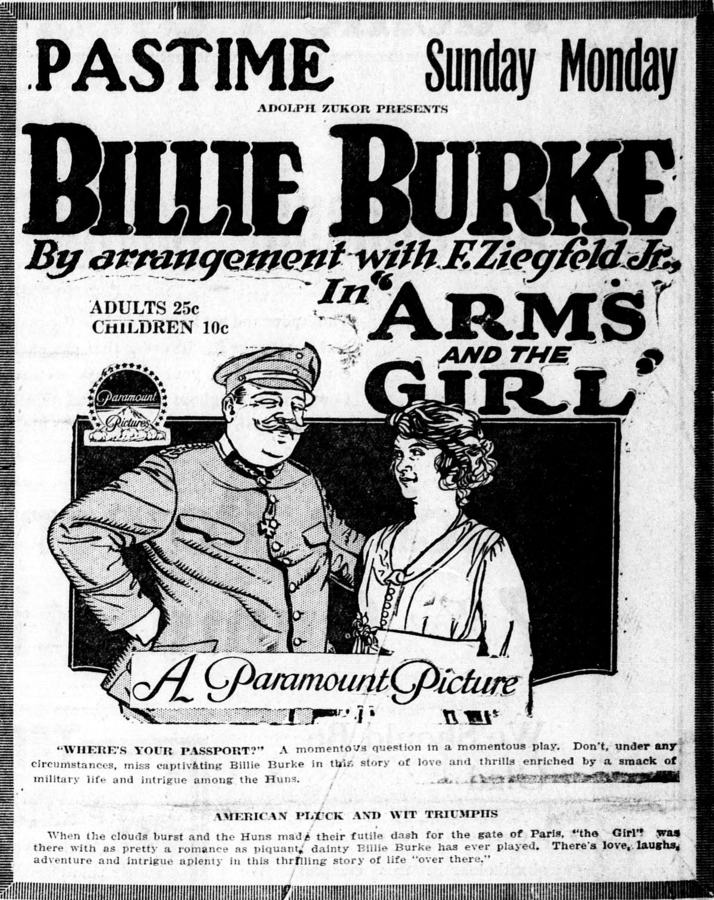
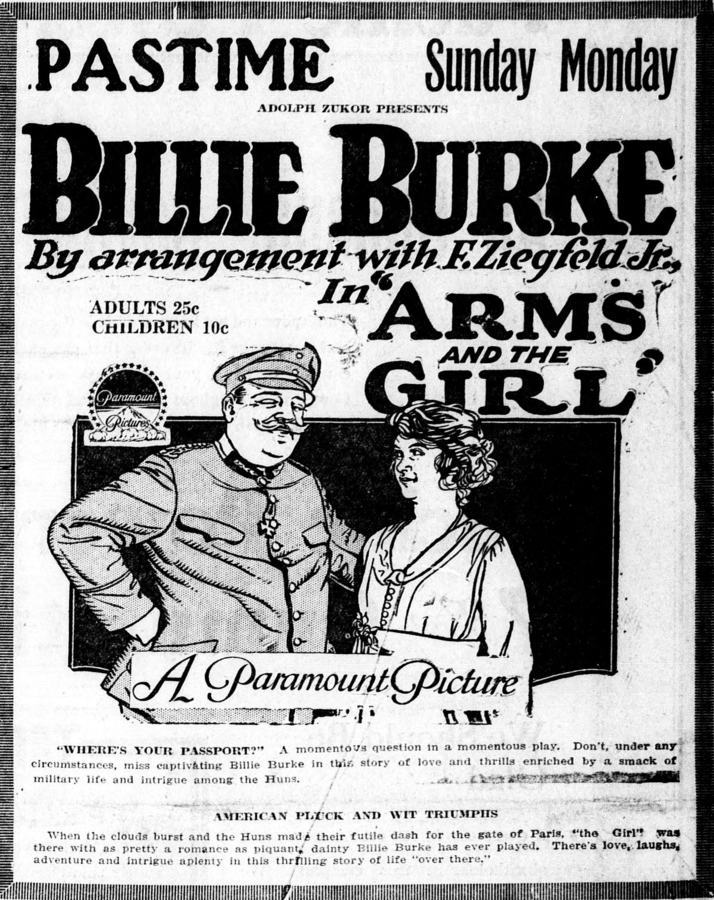
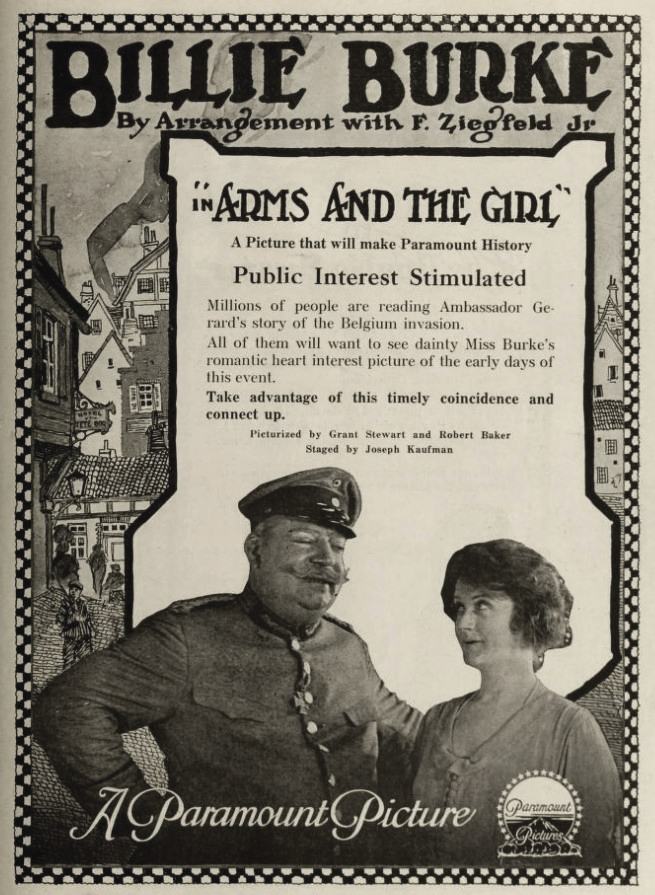
The tapestry of early cinema often weaves tales of grand romance, daring adventure, and the profound impact of global conflict on individual lives. In Arms and the Girl, a compelling silent drama from 1917, these threads converge with remarkable synergy, delivering a narrative that is both a thrilling wartime escapade and a poignant exploration of love forged in the crucible of chaos. As the Great War erupts, casting its long, dark shadow across Europe, we meet Ruth Sherwood, an American tourist whose idyllic European sojourn abruptly transforms into a harrowing struggle for survival. Stranded in the picturesque, yet suddenly perilous, Belgian village of Beaupre, Ruth's initial predicament is merely a prelude to a series of events that will test her resilience, challenge her perceptions of love, and ultimately redefine her destiny. The film masterfully captures the abruptness with which ordinary lives were upended by the cataclysmic events of World War I, forcing its protagonist into a world far removed from her privileged American existence.
Ruth's descent into peril is swift and unforgiving. Her passport, her sole tangible link to safety and identity in a foreign land, is snatched by Olga Karnovitch, a cunning Russian spy desperate to evade the advancing German forces. This act of brazen theft, a moment of incidental espionage, inadvertently seals Ruth's fate, leading to her immediate apprehension by the German military. The transition from bewildered tourist to suspected enemy alien is stark, highlighting the indiscriminate nature of wartime suspicion. Stripped of her identification and thrust into the harsh reality of military custody, Ruth faces an uncertain and terrifying future. The film effectively conveys the chilling efficiency of the German occupation and the profound vulnerability of civilians caught in the crossfire. It's a stark reminder that in times of war, personal freedoms and even basic human rights can vanish in an instant, leaving individuals at the mercy of forces beyond their control.
Just as the specter of a death sentence looms large, an unexpected glimmer of hope appears. Among her German captors, Ruth recognizes Eugene, a figure from her past in New York, where he had served as a head waiter. This serendipitous encounter, a remarkable coincidence in the vast machinery of war, proves to be her salvation. Eugene, remembering Ruth from his former life, intercedes on her behalf, leveraging whatever influence he possesses to commute her sentence. This pivotal moment underscores the film's nuanced portrayal of humanity, suggesting that even amidst the rigid structures and brutal necessities of war, individual acts of kindness and recognition can pierce through the prevailing animosity. It’s a testament to the enduring power of personal connection, even across the chasm of enemy lines, and a dramatic turning point that pivots Ruth's narrative from inevitable tragedy to precarious survival. The unexpected benevolence from a former acquaintance, now an adversary, adds layers of moral complexity to the unfolding drama.
The respite, however, is fleeting. Ruth's path soon intertwines with that of Wilfred Ferrers, a fellow American citizen staying at her hotel, who finds himself in an equally dire predicament. Accused by the Germans of being a Russian spy, a charge he vehemently denies, Ferrers is summarily sentenced to death. His plight is desperate, a stark embodiment of the arbitrary justice meted out in occupied territories. The film skillfully builds tension around Ferrers's impending execution, presenting him as an innocent caught in a deadly bureaucratic snare. His situation mirrors Ruth's earlier brush with death, escalating the stakes and setting the stage for her next, even bolder, intervention.
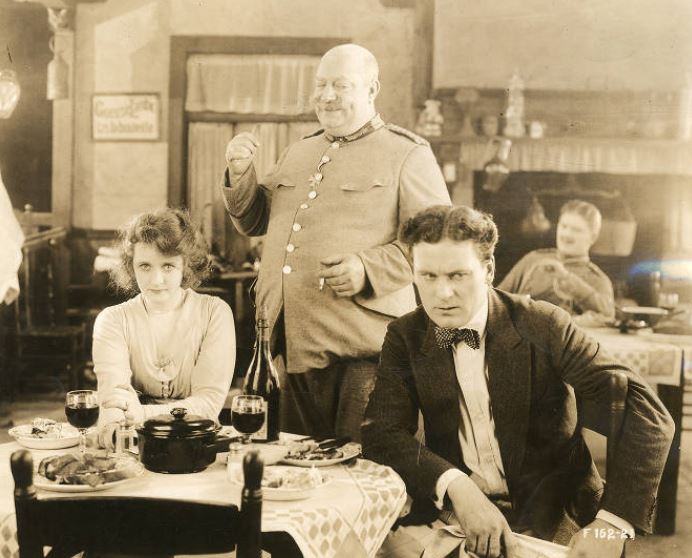
Witnessing Ferrers's imminent demise, Ruth is propelled into a spontaneous act of extraordinary courage. Without a moment's hesitation, she steps forward and declares Ferrers to be her fiancé. This audacious claim is not born of romantic love, but rather a profound, empathetic response to injustice, a desperate gambit to save a seemingly innocent man. Her quick thinking and unwavering resolve are truly remarkable. The Germans, perhaps swayed by the perceived sentimentality of a wartime wedding, and particularly by the unexpected compassion of their general, accept her declaration. The general, surprisingly moved by the apparent devotion, orders the local burgomaster to marry the pair immediately, sealing their fates in a bond forged not of affection, but of necessity and survival. This twist introduces a darkly comedic, yet deeply poignant, element to the unfolding drama, highlighting the absurdity and human element that can exist even within the grim machinery of war. It's a testament to Ruth's resourcefulness, turning a desperate lie into a strategic maneuver for life.
Thus, in a bizarre and wholly unexpected turn of events, Ruth and Ferrers are united in matrimony under duress. The wedding, stripped of all romantic pretense, becomes a stark symbol of their shared predicament and Ruth's incredible bravery. This forced union, a mere formality designed to circumvent a death sentence, sets the stage for a fascinating exploration of the nature of relationships. What begins as a strategic alliance quickly evolves, albeit subtly, into something more profound. The initial awkwardness and the underlying tension of their situation create a unique dynamic between them, forcing them to rely on each other in ways neither could have anticipated. The film deftly portrays the fragile beginnings of a bond forged in the most unconventional of circumstances, far removed from the societal expectations of courtship and marriage. This arranged 'marriage' becomes the unexpected bedrock for their future, an ironic twist of fate that propels the narrative forward with considerable emotional weight.
The arrival of Ruth's actual fiancé, Jack Martin, introduces a dramatic inflection point. His appearance, initially expected to offer relief and resolution, instead serves as a stark contrast to the harrowing experiences Ruth has endured. Martin, portrayed with an insensitivity that borders on callousness, seems utterly incapable of grasping the gravity of Ruth's ordeal or appreciating the courageous choices she has made. His self-absorbed focus and lack of empathy, particularly in light of her forced marriage and near-death experiences, paint him as profoundly ill-suited to her newfound strength and independence. This character, rather than a rescuer, becomes an antagonist to Ruth's emotional growth, highlighting the chasm that has opened between them during her time in Beaupre. His presence forces Ruth to confront the true nature of their relationship, or rather, the lack thereof, in a way that mere distance never could have.
It is in this stark comparison that Ruth experiences a profound realization. Martin's insensitivity acts as a harsh mirror, reflecting the hollowness of their bond. The love she once believed she felt for him, a comfortable and perhaps complacent affection, is revealed to be utterly extinguished. The trials and tribulations of her time in Beaupre, coupled with the unexpected bond she has formed with Ferrers, have irrevocably changed her. She has grown, matured, and developed a resilience that Martin simply cannot comprehend or appreciate. This pivotal moment of self-discovery is crucial, marking Ruth's transition from a passive victim of circumstance to an active agent in her own emotional life. The film subtly suggests that true love is often forged not in ideal conditions, but in shared hardship and mutual respect, a stark contrast to the superficiality of her engagement to Martin. Her heart, once committed, now belongs to a different, more authentic possibility.
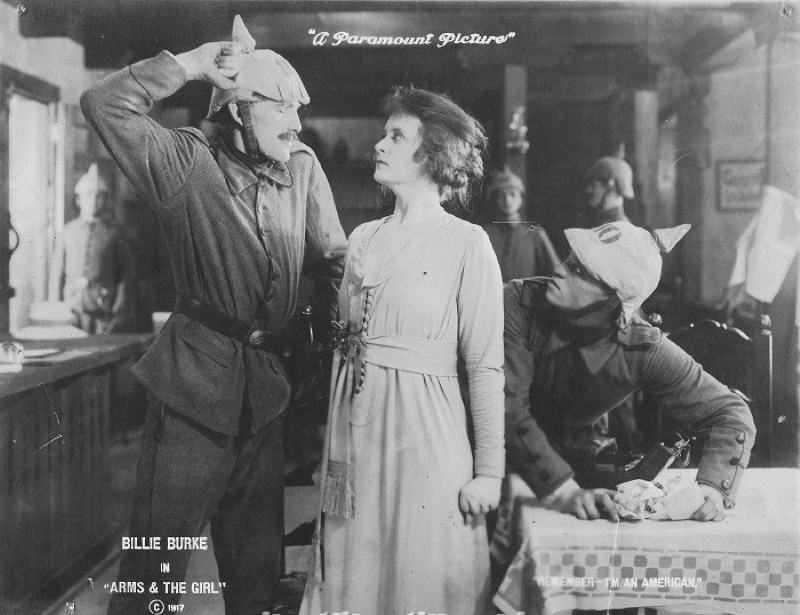
With her emotional landscape irrevocably altered, Ruth and Ferrers embark on a thrilling escape from the German-occupied village. This sequence is a masterclass in silent film suspense, building tension through clever staging, dynamic performances, and the palpable threat of discovery. Their flight is not merely a physical journey to freedom but a shared experience that solidifies their nascent connection. Each obstacle overcome, each moment of shared peril, deepens their reliance on and admiration for one another. The frantic dash through enemy lines, the clandestine movements, and the constant threat of recapture serve as a powerful catalyst for their burgeoning romance. It is during this perilous odyssey that the forced marriage transcends its transactional origins, blossoming into a genuine partnership. The thrill of their escape is inextricably linked to the emotional stakes, making every narrow evasion and every desperate sprint resonate with profound personal significance. This is where their true bond is tested and cemented, far from the prying eyes of society or the demands of a pre-war life.
As they finally achieve their hard-won freedom, the culmination of their journey is the mutual realization of genuine affection. The ironic circumstances that forced them together — a stolen passport, a death sentence, and a lie — have unexpectedly led them to true love. Both Ruth and Ferrers discover that the profound connection forged in the crucible of war and survival is far more authentic and deeply felt than any pre-existing romantic notions. Their love story, unconventional and born of duress, becomes a testament to the unpredictable nature of human connection and the remarkable capacity for love to emerge from the most unlikely of scenarios. The film concludes not just with an escape from physical danger, but with the liberation of their hearts, finding solace and belonging in each other after a whirlwind of fear and uncertainty. Their shared ordeal has stripped away superficialities, revealing a profound and undeniable bond.
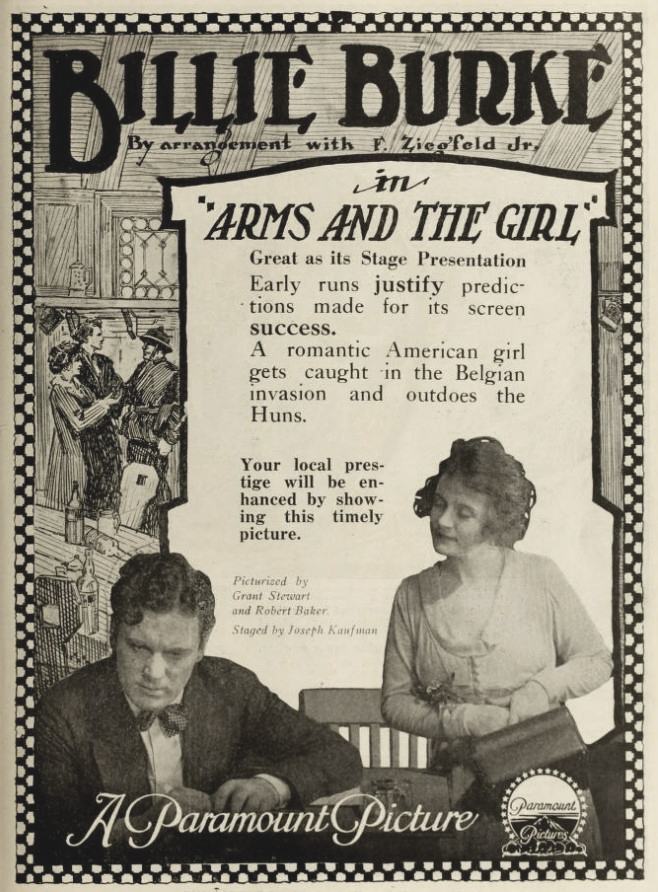
At the heart of Arms and the Girl is the captivating performance of Billie Burke as Ruth Sherwood. Burke, already a celebrated stage actress and emerging film star, brings a delightful blend of vulnerability, wit, and steel to her role. Her portrayal of Ruth's transformation from a sheltered American socialite to a resourceful, self-possessed woman is nuanced and compelling. Without the aid of spoken dialogue, Burke relies on expressive facial gestures and fluid body language to convey Ruth's fear, determination, compassion, and eventual love. Her eyes, in particular, are incredibly articulate, communicating volumes of unspoken emotion. She imbues Ruth with an active agency, showing her as a character who makes choices and takes risks, rather than merely reacting to events. This portrayal was particularly progressive for its time, showcasing a female protagonist who is not just a damsel in distress, but a proactive heroine. Her performance anchors the film, making Ruth's extraordinary journey feel deeply personal and utterly believable. Fans of her later work, such as Glinda the Good Witch in 'The Wizard of Oz,' might be surprised by the dramatic depth she exhibits here, demonstrating her versatile talent early in her cinematic career.
Opposite Burke, Thomas Meighan delivers a strong, understated performance as Wilfred Ferrers. Meighan, known for his charismatic screen presence, effectively conveys Ferrers's quiet strength and inherent decency. He portrays a man unjustly accused, facing death with a stoic resignation that makes Ruth's intervention all the more impactful. His chemistry with Burke is palpable, evolving from initial strangers in peril to genuine partners in love and escape. Meighan's subtle reactions and his portrayal of Ferrers's growing admiration and affection for Ruth are crucial in making their unconventional romance believable. Together, they create a dynamic duo whose shared ordeal transforms into a profound connection, making their ultimate declaration of love feel earned and authentic. Meighan's ability to communicate complex emotions with minimal overt gestures was a hallmark of effective silent film acting, and he shines here as the accidental hero.
The narrative prowess behind Arms and the Girl can be attributed to its talented team of writers: Charles E. Whittaker, Robert M. Baker, and Grant Stewart. They skillfully crafted a plot that is rich in dramatic irony, suspense, and emotional depth. Their ability to weave together elements of wartime drama, mistaken identity, forced romance, and thrilling escape into a cohesive and engaging story speaks volumes about their understanding of cinematic storytelling in the silent era. The pacing is expertly managed, with moments of high tension interspersed with character development, ensuring the audience remains invested in Ruth and Ferrers's fate. The writers understood how to maximize the impact of intertitles, using them not just for dialogue but also to convey crucial narrative exposition and emotional beats, guiding the audience through the intricate twists and turns of the plot. Their collaboration resulted in a script that, even without spoken words, tells a compelling and universally relatable story of finding love and courage in the most unlikely of circumstances. The intricacies of the plot, from Olga's initial theft to the general's sentimentality, showcase a keen understanding of dramatic construction.
Beyond the personal drama, the film expertly uses the backdrop of World War I not as a mere spectacle of conflict, but as a powerful catalyst for human transformation. The war is not glorified; rather, it serves as a crucible that tests the characters' moral fiber, forcing them to confront their deepest fears and discover hidden strengths. It's a nuanced portrayal that emphasizes the human cost and the unexpected opportunities for compassion and connection that can arise even in the most brutal of times. The film focuses on the personal stories unfolding against the grander canvas of global conflict, making the war feel immediate and impactful without resorting to graphic battle scenes. This approach allows the audience to connect with the characters on a deeply emotional level, understanding their struggles and triumphs within a context of immense historical significance. It highlights how the extraordinary circumstances of war can reveal the true essence of humanity, both its darkness and its profound capacity for light. This focus on personal narrative amidst global upheaval is a common thread in wartime cinema, but Arms and the Girl executes it with particular grace.
The film’s exploration of love and choice is particularly compelling. Initially, Ruth is engaged to Jack Martin, a relationship that, while seemingly conventional, proves to be shallow and ultimately unfulfilling. Her forced marriage to Ferrers, born of necessity, ironically becomes the pathway to genuine affection. This challenges traditional notions of romantic love, suggesting that true connection can blossom in the most unconventional of ways, often under duress. Ruth's realization that her love for Martin has died is a powerful moment of self-discovery, emphasizing her agency in choosing her own emotional path, even when external circumstances dictate her marital status. This theme resonates with other films of the era that explored societal constraints on women, though perhaps less directly than a film like Syndens datter (Daughter of Sin) or The Desire of the Moth, which often delved into the moral and social dilemmas faced by women. In Arms and the Girl, Ruth's choice, though initially compelled, becomes an affirmation of her true desires, showcasing a proto-feminist sensibility where a woman's heart ultimately guides her destiny, even when society or war attempts to dictate it. Her journey is one of emotional liberation, finding a love that truly sees and values her resilience.
As a product of early American cinema, Arms and the Girl holds a significant place in film history. It reflects the anxieties and hopes of a nation grappling with its involvement in a global conflict, offering audiences a blend of escapism and relevant drama. Its enduring appeal lies in its timeless themes of courage, resilience, and the unpredictable nature of love. The film's technical execution, typical of the silent era, relies on strong visual storytelling, expressive performances, and well-crafted intertitles to convey its narrative. It stands as a testament to the power of early filmmakers to create compelling and emotionally resonant stories without the benefit of synchronized sound. Its legacy is that of a charming, adventurous, and surprisingly profound silent classic that continues to captivate audiences with its unique blend of wartime intrigue and heartfelt romance. The film's ability to transcend its historical context and speak to universal human experiences solidifies its status as a memorable piece of cinematic heritage.
In conclusion, Arms and the Girl is far more than a historical curiosity; it is a vibrant, engaging piece of cinema that offers both thrilling entertainment and thoughtful commentary. Its compelling plot, anchored by Billie Burke's superb performance and the strong contributions of Thomas Meighan and the writing team, ensures its place as a standout silent film. The story of Ruth Sherwood and Wilfred Ferrers, forced into a marriage by the ravages of war only to discover a genuine, enduring love, remains a powerful testament to the human spirit's capacity for adaptation, courage, and finding connection in the most improbable of circumstances. It's a reminder that even in the darkest hours, love, in its many unexpected forms, can ultimately triumph. This film is a compelling journey, a testament to the enduring power of narrative, and a delightful discovery for anyone interested in the rich history of storytelling on screen.
IMDb 6
1916
Community
Log in to comment.