DbcultAccessing Vault...
5.9/10
Senior Film Conservator
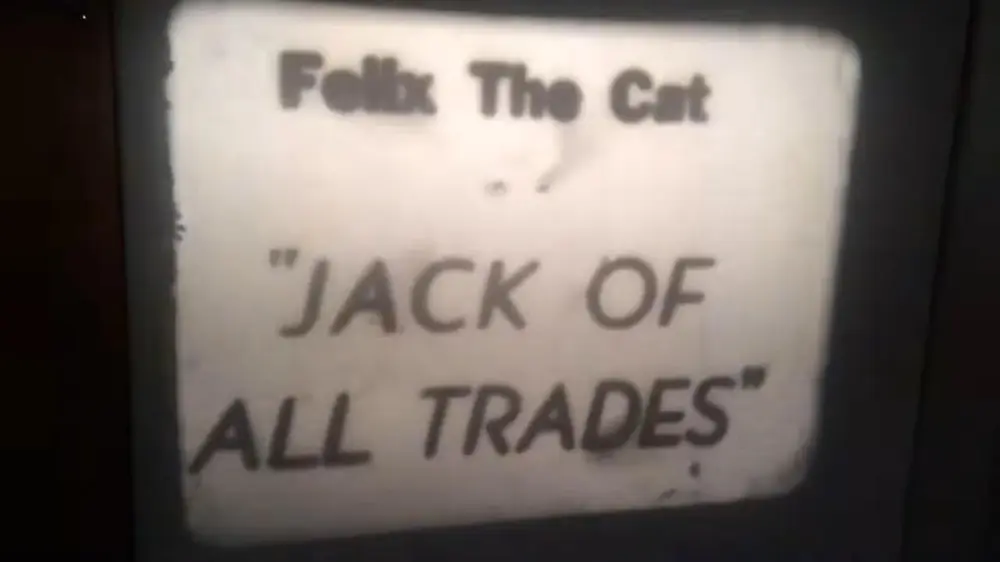
A definitive 5.9/10 rating for a film that redefined the boundaries of cult cinema. Jack from All Trades remains a cornerstone of transgressive art.
Should you invest ten minutes in a century-old cartoon today? Short answer: yes, but only if you value historical context over narrative complexity. This film is for the animation historian and the lover of pre-code surrealism; it is decidedly not for those who require high-definition spectacle or nuanced character arcs.
This film works because it treats the laws of physics as mere suggestions, allowing the protagonist to solve economic problems through visual puns and spatial manipulation. This film fails because it relies heavily on the 'nagging wife' trope, which feels remarkably dated even when compared to other films of the era like Mind the Paint Girl. You should watch it if you want to witness the birth of visual shorthand that would eventually define the entire Golden Age of American animation.
Jack from All Trades is absolutely worth watching if you are interested in the evolution of visual comedy. Unlike the grounded athleticism found in The Busher, this short allows its lead to transcend physical limits. It is a lean, mean example of early 20th-century storytelling that prioritizes the 'gag' above all else. If you can look past the flickering frame rates and the silent-era tropes, you will find a character who is more resilient and inventive than most modern CGI creations.
In the world of Otto Messmer, money isn't just a currency; it's a catalyst for madness. The film opens with a domestic scene that feels familiar to anyone who has seen Adam's Rib, though translated into the frantic language of ink and paint. Felix is 'bawled out'—a phrase that carries the weight of a thousand silent-era intertitles—and sent into the world to provide. What follows is not a job search, but a series of reality-bending experiments.
The brilliance of Messmer’s direction lies in the economy of line. Felix doesn't just walk; he vibrates with a nervous energy that mirrors the economic anxieties of the post-WWI era. When he attempts to 'make money,' he doesn't use tools. He uses his own body. In one standout scene, his tail becomes a question mark, then a hook, then a lever. This isn't just a gag; it is a profound statement on the malleability of the self in the face of capitalism. It reminds me of the raw desperation seen in Man of Might, but played for laughs instead of thrills.
The pacing is relentless. There is no dead air. Every second is packed with a visual idea. This is where Messmer shines, proving that you don't need the sweeping scope of Wilhelm Tell to captivate an audience. You just need a cat, a problem, and a disregard for the vacuum of space.
Messmer was working with incredibly limited technology, yet the 'cinematography'—if we can call it that in animation—is surprisingly dynamic. He uses the frame as a stage, but he isn't afraid to break the fourth wall or have Felix interact with the edges of the screen. This meta-commentary was decades ahead of its time. While a film like Dangerous Waters relied on practical effects and location shooting, Messmer created an entire ecosystem out of nothing but black ink and white paper.
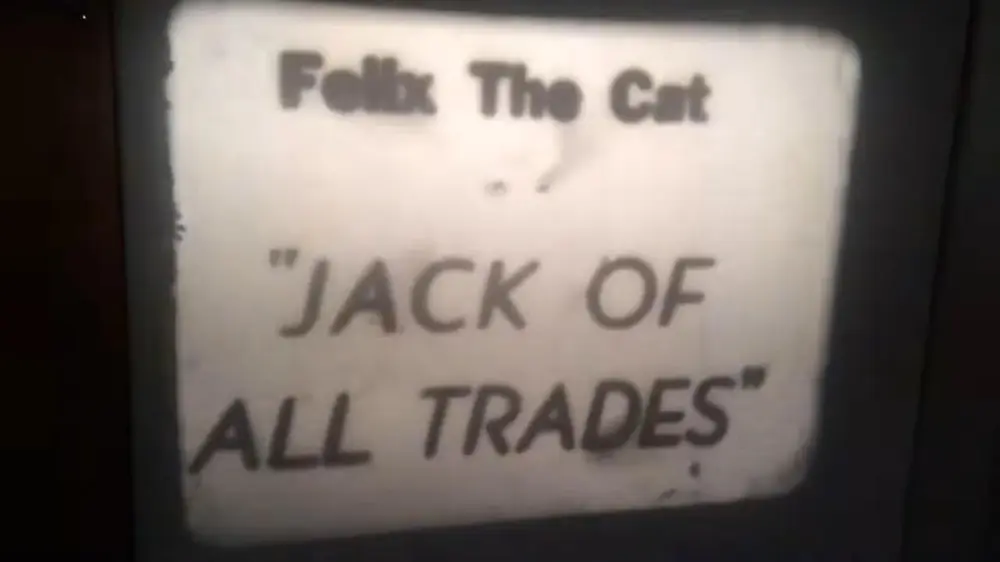
The tone is a strange mix of cynicism and whimsy. Felix is a bit of a jerk, honestly. He is selfish, lazy, and only motivated by the threat of domestic exile. This makes him a much more interesting protagonist than the squeaky-clean icons that would follow a decade later. He has more in common with the rough-and-tumble characters of Huntin' Trouble than he does with Mickey Mouse. There is a grit here that is often ignored by historians who pigeonhole early animation as 'children's fare.'
If there is a flaw, it is the repetitive nature of the gags. By the third 'ingenious method,' the audience might find their attention wavering. Unlike the structural integrity of To a Finish, which builds to a crescendo, Jack from All Trades feels like a series of vignettes loosely tied together by a thin premise. It works. But it's flawed. The lack of a strong secondary character—other than the briefly seen wife—means Felix has no one to bounce his energy off of, making the experience feel slightly solitary.
Pros:
Cons:
When we look at other films from this period, like Greased Lightning, we see a similar obsession with speed and mechanical ingenuity. However, Messmer does something different. He internalizes the machine. Felix doesn't need a car; he becomes the car. This level of abstraction is what separates this short from the live-action melodramas of the day, such as A Daughter of the Law. While live-action was busy trying to capture reality, Messmer was busy dismantling it.
There is also a thematic connection to Boys Will Be Boys, specifically in the way the protagonist navigates adult responsibilities with a childlike lack of foresight. Felix is a 'Jack from all trades' but a master of none, much like the characters we see in Stranded. He is a drifter in his own home, a man—or cat—without a plan, surviving on pure instinct.
Jack from All Trades is a fascinating, if slightly dusty, relic of a time when animation was still discovering its own power. It lacks the polish of later Disney works, but it possesses a raw, anarchic spirit that is often missing from the sanitized cartoons of today. It is a cynical, funny, and deeply weird look at the lengths a character will go to avoid a real job. Final Verdict: A vital piece of animation history that proves a good gag never truly dies.
"Felix is the original hustler, a character born from the inkwell to remind us that when reality gets too heavy, we should just redraw the floor."
IMDb 4.6
1928
Community
Log in to comment.