DbcultAccessing Vault...
5.8/10
Senior Film Conservator
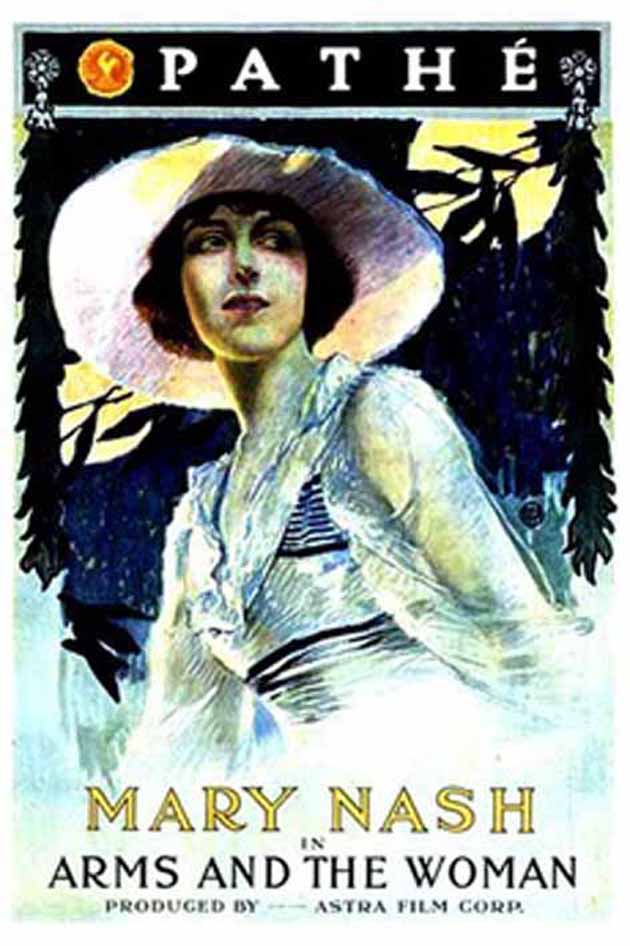
A definitive 5.8/10 rating for a film that redefined the boundaries of cult cinema. Arms and the Woman remains a cornerstone of transgressive art.
In the vast, often overlooked archives of early cinema, certain films whisper tales that transcend their immediate narrative, offering a poignant mirror to the societal currents of their era. Such is the case with 'Arms and the Woman', a 1916 production that, despite its relative obscurity today, stands as a compelling artifact of a tumultuous period. Directed with a nuanced hand and brought to life by the evocative screenplay of Ouida Bergère, this film delves into themes of immigration, the profound impact of global conflict, and the indomitable spirit of its female protagonist. It’s a narrative tapestry woven with threads of hope, disillusionment, and the relentless pursuit of identity in a world on the brink of seismic change. For those accustomed to the bombast of modern blockbusters, returning to the silent era requires a recalibration of cinematic sensibilities, but the rewards are often profound, revealing a mastery of visual storytelling that speaks volumes without uttering a single word.
The narrative commences with Rozika, a Hungarian girl whose voice is as captivating as her aspirations are grand. She is not merely a singer; she embodies the artistic soul, a conduit for emotion and cultural heritage. Her decision to emigrate to the United States, alongside her brother Young Carl, is a familiar trope in early 20th-century cinema, yet here it is imbued with a particular urgency. Their journey represents more than just a physical relocation; it is a symbolic severance from an old world teetering on the precipice of war, towards a new land promising boundless opportunities and a fresh start. The initial scenes, though perhaps constrained by the technological limitations of the time, are instrumental in establishing Rozika’s character – her innate optimism, her vulnerability, and the quiet strength that will eventually define her. The portrayal of the immigrant experience, even in its nascent cinematic form, resonates deeply, highlighting the courage required to uproot one's life and plant new seeds in unfamiliar soil. It calls to mind the broader historical context, where millions sought refuge and prosperity in America, each carrying their own unique hopes and fears.
Upon their arrival, the film subtly yet effectively portrays the challenges of assimilation. The cacophony of a new language, the alien customs, and the sheer scale of American urbanity must have been overwhelming for characters like Rozika and Carl. It is within this crucible of adjustment that Rozika encounters Trevor, a figure who offers her not just companionship, but a sense of belonging. Their courtship and subsequent marriage serve as a foundational element of the story, symbolizing the successful integration of the immigrant into the American social fabric. Mary Nash, in the role of Rozika, delivers a performance that, even through the lens of time and the absence of spoken dialogue, conveys a remarkable depth of emotion. Her expressive eyes and gestures communicate a spectrum of feelings, from the initial blush of romance to the deepening anxieties that will later plague her. Her performance is a masterclass in silent film acting, where every movement and facial expression must carry the weight of dialogue.
The true dramatic pivot of 'Arms and the Woman' arrives with the ominous rumble of the Great War. This global conflict, which began in Europe in 1914, inevitably cast its long shadow across the Atlantic, impacting American society even before the nation's official entry into the fray. For Rozika and Trevor, the war is not a distant headline but a looming threat that infiltrates their personal lives, transforming their nascent happiness into a crucible of difficult choices and unforeseen hardships. The film, in its depiction of this 'predicament,' explores the multifaceted ways war can unravel the fabric of individual lives. It could be Trevor's conscription, leading to separation and fear; it could be the economic destabilization that threatens their livelihood; or it could be a moral dilemma, a test of their loyalty and values in a world demanding sacrifice. Ouida Bergère's screenplay, while silent, manages to articulate these complex pressures through carefully constructed scenes and character interactions, relying on the visual language of cinema to convey the weight of these societal and personal burdens.
The title itself, 'Arms and the Woman', is particularly evocative. 'Arms' clearly refers to the instruments of war, the military conflict that engulfs the world. 'The Woman' refers to Rozika, whose journey from a hopeful immigrant to a woman grappling with the devastating consequences of war forms the emotional core of the narrative. This juxtaposition highlights the profound vulnerability of individuals, particularly women, caught in the maelstrom of global events. Unlike films such as 'The Independence of Romania', which might focus on the grander geopolitical canvas of war, 'Arms and the Woman' grounds its exploration in the intimate, domestic sphere, showcasing how the macrocosm of conflict inevitably impacts the microcosm of personal lives. This focus on the human cost, rather than the political machinations, gives the film an enduring resonance.
One of the most fascinating aspects of 'Arms and the Woman' for contemporary viewers is the presence of a young Edward G. Robinson in an uncredited role. While his iconic persona as a tough-talking gangster was still years away, this early appearance offers a rare glimpse into the formative stages of a legendary career. It's a testament to the film's historical value, allowing us to trace the origins of an actor who would later define an entire archetype. Even in a minor capacity, one can imagine the nascent intensity and presence that would eventually characterize his performances. For film historians and enthusiasts, identifying these early appearances is like finding a hidden gem, providing context to the trajectory of an actor's craft. It reminds us that even the most towering figures in cinema began with humble, often uncredited, beginnings.
Beyond Nash’s central performance, the supporting cast, including Carl Harbaugh, H. Cooper Cliffe, Robert Broderick, Rosalind Ivan, Lumsden Hare, and Suzanne Willa, contribute to the film’s rich tapestry. Each actor, operating within the stylistic demands of silent cinema, utilizes exaggerated yet purposeful gestures and facial expressions to convey their characters' inner lives. The chemistry between Nash and H. Cooper Cliffe (presumably Trevor) is crucial to establishing the emotional stakes of their marriage, making their subsequent predicament all the more impactful. The director, working from Bergère's script, demonstrates a keen understanding of visual storytelling. The use of mise-en-scène, from the cramped quarters of immigrant life to the more stately settings, effectively communicates social strata and emotional states. Lighting, a vital tool in silent films, is employed to heighten drama, casting shadows that mirror the characters' internal struggles or illuminating moments of hope with a gentle glow. The pacing, often a challenge in silent features for modern audiences, is surprisingly adept, allowing the narrative to unfold with a compelling rhythm that keeps the viewer engaged without feeling rushed or unduly protracted.
Ouida Bergère’s contribution as the writer cannot be overstated. In an era when female screenwriters were carving out significant niches, her work on 'Arms and the Woman' showcases a perceptive understanding of human drama and societal forces. Her ability to craft a narrative that speaks to the immigrant experience, the complexities of marriage, and the far-reaching consequences of war, all within the constraints of the silent medium, is commendable. The screenplay likely relied heavily on clear character motivations and dramatic irony, allowing the audience to infer deeper meanings from the actions portrayed on screen. This narrative precision is what elevates the film beyond a simple melodrama into a more substantive commentary on its times. Comparing it to a film like 'The Turmoil', which also explored societal upheaval, 'Arms and the Woman' focuses more intimately on the specific challenges faced by a woman navigating both personal and global crises.
At its heart, 'Arms and the Woman' is a profound exploration of resilience, particularly that of its female protagonist. Rozika's journey is not merely one of geographical migration but also of personal transformation. She is forced to confront adversity head-on, adapting to new circumstances and finding strength in the face of profound challenges. This makes the film a compelling study of womanhood in an era undergoing significant shifts, mirroring the broader societal conversations about women's roles during and after the Great War. The war itself serves as a relentless antagonist, not a character, but an omnipresent force that dictates fate and compels difficult choices. It forces Rozika to question her assumptions about peace, security, and the very nature of her marriage. The film, in its quiet power, suggests that the true battles are often fought not on distant fields, but within the confines of the human heart and home. This introspective approach distinguishes it from more overtly nationalistic or action-oriented war dramas of the period.
The film also subtly critiques the idealized vision of America as a land of unblemished opportunity. While it offers hope, it also presents the harsh realities that can intrude upon even the most earnest aspirations. The dream of a new life is shown to be fragile, susceptible to the whims of global politics and economic instability. This nuanced portrayal adds a layer of realism that prevents the narrative from devolving into simplistic idealism. It's a powerful reminder that the 'American Dream' has always been a complex and often arduous pursuit, particularly for those who arrive from distant shores. The film's ability to tackle such weighty themes without the benefit of spoken dialogue is a testament to the expressive power of silent cinema, relying on visual cues, intertitles, and the actors' performances to convey its intricate messages. Its narrative echoes the struggles of many who sought a better life, only to find that even paradise has its serpents.
For modern audiences, engaging with a silent film like 'Arms and the Woman' offers a unique opportunity to connect with the foundational artistry of cinema. It demands a different kind of viewership, one that is attuned to visual nuance, physical expression, and the evocative power of musical accompaniment (which, if available, would have originally guided the audience's emotional response). The absence of spoken dialogue forces a deeper engagement with the film's aesthetic and thematic content, allowing for a more personal interpretation of its narrative beats. While it may not possess the sprawling scope of a film like 'The Corbett-Fitzsimmons Fight', which captured a singular historical event, 'Arms and the Woman' offers a window into the everyday struggles and triumphs of individuals caught in extraordinary times.
The film's continued existence, even in a potentially fragmented or restored form, is a tribute to the dedicated efforts of archivists and film preservationists who recognize the invaluable cultural legacy held within these early cinematic works. It reminds us that cinema is not merely entertainment but a vital historical record, capturing the anxieties, aspirations, and evolving social landscapes of past generations. To watch 'Arms and the Woman' today is to embark on a journey back in time, to witness the nascent stages of an art form, and to appreciate the enduring power of human stories told through the magic of moving images. It’s a compelling argument for the ongoing relevance of silent cinema, proving that even without sound, these films can speak volumes, resonating with themes that remain timeless and universally understood. It stands as a testament to the power of early filmmaking to articulate complex human experiences, demonstrating that the foundation of cinematic storytelling was built on profound emotional depth and visual ingenuity.
In conclusion, 'Arms and the Woman' is far more than a historical curiosity; it is a vital piece of cinematic heritage. Its exploration of immigration, the personal toll of war, and the resilience of the human spirit remains profoundly relevant. For those willing to venture beyond the familiar rhythms of contemporary film, this silent masterpiece offers a rich and rewarding experience, illuminating the enduring power of storytelling through light and shadow. It solidifies its place not just as a film featuring an early Edward G. Robinson, but as a significant work in its own right, showcasing the artistry and social consciousness of early 20th-century American cinema. Its quiet narrative force, compelling performances, and poignant themes ensure its continued, albeit rediscovered, importance in the grand tapestry of film history.
IMDb 7.1
1921
Community
Log in to comment.