DbcultAccessing Vault...
Cult Review
Senior Film Conservator
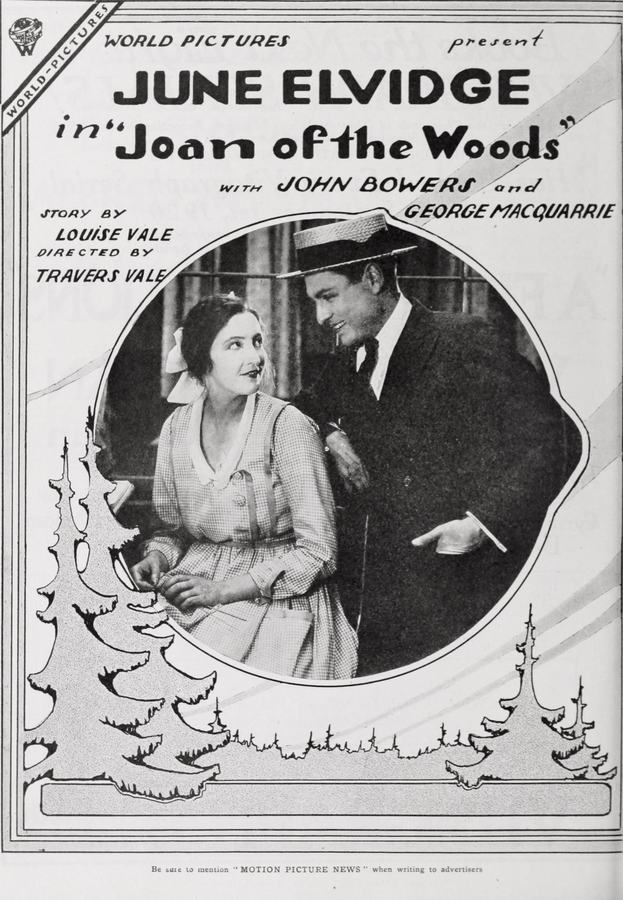
The year 1918 stood as a precipice in cinematic history, a moment where the burgeoning language of the silver screen began to move beyond mere spectacle into the profound depths of human psychology. Joan of the Woods, directed with a certain rustic gravitas, serves as a quintessential example of the era's fascination with the moral dichotomy between nature and civilization. While many contemporary viewers might dismiss the plot's reliance on coincidence, such a perspective ignores the structural necessity of fate in early 20th-century storytelling. Like the intricate puzzles found in The Dead Secret, this film utilizes secrets and physical tokens—specifically the cross—to navigate the labyrinth of social hierarchy and familial obligation.
The film opens with a sequence that feels almost mythological. Philip Wentworth, portrayed with a brooding intensity by John Bowers, is not merely a man on a hunting trip; he is a soul in exile. The woods are presented not as a dangerous wilderness, but as a liminal space where the rigid structures of the city—and the law—do not apply. When he meets Joan Travers, played with a luminous, fragile grace by the ensemble, the cinematography leans heavily into the bucolic aesthetic. This introduction of the 'wild girl' trope reminds one of the titular character in Fanchon, the Cricket, though Joan’s trajectory is far more tragic.
The transition to the city is jarring, a deliberate stylistic choice that mirrors Joan’s own disorientation. The city is a place of shadows, sharp angles, and moral decay. Here, Philip’s regression into his old habits is not just a character flaw but a symptom of the environment. The film critiques the urban elite, showing how their 'refined' lives are often built on a foundation of discarded promises. The mistress, a role handled with icy sophistication by June Elvidge, represents the artifice of the city—a stark contrast to the organic sincerity of the forest-born Joan.
One of the most poignant segments of the film involves the upbringing of the second Joan. After her mother succumbs to a broken heart—a diagnosis that silent cinema treated with the same clinical weight as pneumonia—the child is taken in by a pawnbroker and his wife. This subplot offers a fascinating glimpse into the socio-economic underbelly of the period. The pawnbroker’s shop, filled with the discarded remnants of other people’s lives, serves as a metaphor for Joan herself: a precious object lost in a sea of misfortune. This thematic resonance is shared with Tears and Smiles, where the innocence of childhood is constantly threatened by the grinding gears of poverty.
The performance of Dore Davidson as the pawnbroker provides a much-needed warmth to the narrative. In a world where the biological father has ascended to the heights of the judiciary, it is the man who deals in 'pledges' and 'debts' who truly understands the value of a human soul. This irony is not lost on the audience; the man who judges others in court is the one who has failed his most basic moral duty, while the man who profits from others' desperation provides the only true sanctuary.
As the narrative shifts to the next generation, the introduction of Norman Dicks (Al Hart) adds a layer of modern anxiety. His failure in college and subsequent enlistment in the Navy reflect the era's concerns about the 'softness' of the younger generation. The Navy is presented as a corrective force, a way to forge a man out of a boy. However, before he can be 'fixed' by the military, he falls into a secret marriage with the younger Joan. This secrecy is the engine of the third act's tragedy. It creates a vacuum of support that leads directly to the death of their child.
The depiction of Joan’s struggle as a single mother while her husband is at sea is harrowing. The film does not shy away from the visceral reality of hunger and exhaustion. This is where Joan of the Woods transcends the typical melodrama of its time. It becomes a social document, highlighting the lack of a safety net for women in the early 20th century. Her arrest for the 'murder' of her child—really a death by neglect forced by circumstance—is a scathing indictment of a society that punishes the victim for the crimes of the system. This level of social critique is reminiscent of the darker undertones in La capanna dello zio Tom, where systemic injustice is the primary antagonist.
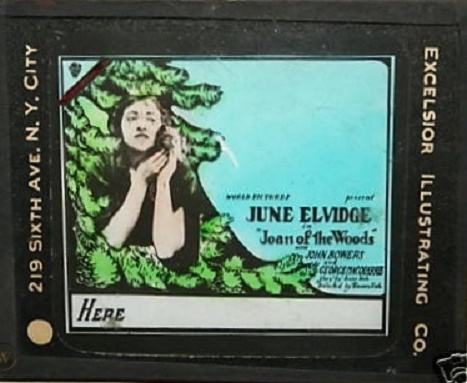
The climax in Judge Wentworth’s courtroom is a masterclass in silent film tension. The lighting shifts, casting long, judgmental shadows across the bench. Philip Wentworth, now an old man whose face is a map of suppressed guilt, must look upon this 'criminal' woman. The discovery of the cross—the physical manifestation of his past sins—acts as a lightning rod. In that moment, the legalistic facade crumbles. The judge is judged. The film brilliantly uses this scene to bridge the gap between his youthful indiscretion and his current position of power.
While some might find the sudden reunion and the return of Norman from the Navy to be overly convenient, it serves as the necessary 'catharsis' for an audience that had endured eighty minutes of escalating misery. The reunion is not just a family coming together; it is the restoration of the natural order that was disrupted when Philip first left the woods. The cyclical nature of the story—starting in the woods, moving through the city, and ending with a return to the truth—provides a satisfying, if lachrymose, resolution.
Louise Vale’s writing deserves significant credit for weaving these disparate threads together. The pacing is deliberate, allowing the emotional weight of each abandonment to settle before moving to the next tragedy. Visually, the film utilizes the limited technology of 1918 to great effect. The use of double exposures and expressive close-ups helps to convey the internal states of the characters, particularly during the elder Joan’s descent into grief. This technical sophistication puts it on par with other high-budget productions of the era, such as The Silent Master or the episodic intrigue of Beatrice Fairfax Episode 8: At the Ainsley Ball.
The performances are universally strong for the period. Emma Tansey provides a grounded presence that anchors the more fantastical elements of the plot. John Bowers, who would later find fame in the early sound era before his own tragic end, demonstrates the range that made him a matinee idol. His portrayal of Wentworth is nuanced; he isn't a mustache-twirling villain, but a man of weak character who is eventually redeemed by his own conscience. This complexity makes the final reconciliation feel earned rather than merely scripted.
In the vast sea of silent cinema, many films like Joan of the Woods have been relegated to the footnotes of history. This is a profound loss. The film offers more than just a melodramatic plot; it provides a window into the anxieties of an era caught between the Victorian past and the modern future. It explores themes of class, gender, and the fallibility of the law with a sincerity that is often missing from contemporary cinema. While it shares DNA with the 'lost identity' tropes of The Lost Express, its focus is firmly on the emotional landscape of its characters.
For the modern cinephile, Joan of the Woods is a rewarding experience. It demands that we slow down and engage with its visual language, its heightened emotions, and its unwavering belief in the possibility of redemption. It is a reminder that while the settings and costumes of our stories may change, the fundamental human struggle—the search for love, the pain of betrayal, and the hope for a second chance—remains eternal. Whether compared to the whimsical Gräfin Küchenfee or the stark realism of Bjørnetæmmeren, this film stands as a testament to the power of the silent image to move the heart and provoke the mind. It is a haunting, beautiful, and ultimately hopeful piece of art that deserves a place in the pantheon of early cinema.
Reviewed by the Editorial Staff at The Silent Archive.
IMDb —
1918
Community
Log in to comment.