DbcultAccessing Vault...
Cult Review
Senior Film Conservator
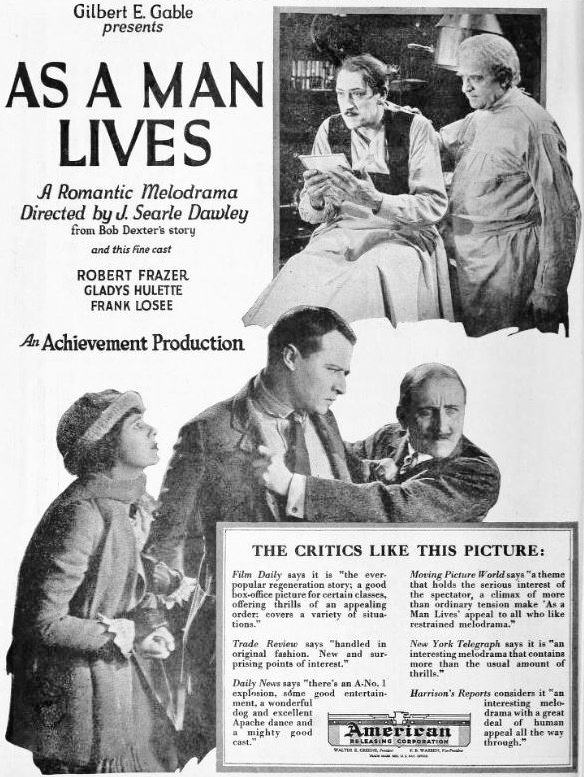
Stepping into the cinematic world of As a Man Lives is akin to unearthing a forgotten treasure from the silent era, a poignant and morally intricate narrative that, despite its venerable age, resonates with an astonishing contemporary relevance. This film, a testament to the storytelling prowess of William Dudley Pelley and Bob Dexter, embarks on a profound exploration of privilege, consequence, and the arduous path to redemption, all framed through the tumultuous journey of its central figure, Sherry Mason. It is a work that deftly peels back the layers of human character, revealing the corrosive effects of unbridled self-indulgence and the transformative power of genuine moral awakening. The canvas upon which this drama unfolds is rich with societal commentary, contrasting the glittering, yet ultimately hollow, world of the affluent with the quiet integrity found in more humble environs.
At the heart of this compelling narrative stands Sherry Mason, portrayed with nuanced conviction by Robert Frazer. Mason is introduced as the quintessential scion of wealth, a young man whose existence is a perpetual tableau of leisure and indulgence. His every whim is catered to, his every desire sated, fostering a superficiality that borders on the pathological. He is a character initially devoid of genuine depth, a mere reflection of his considerable fortune, his charm a polished veneer masking a profound internal emptiness. This portrayal of a privileged youth adrift, unmoored by responsibility, offers a stark mirror to societal archetypes that persist even today. Frazer’s ability to convey this initial arrogance, coupled with an underlying, almost imperceptible vulnerability, is a remarkable feat for an actor of his time, laying the groundwork for the character’s inevitable, and much-needed, metamorphosis.
The catalyst for Mason’s initial disruption, and indeed his eventual spiritual reckoning, arrives in the form of Nadia Meredith, brought to life with understated power by Kate Blancke. Nadia is the antithesis of Mason’s world – the daughter of a humble bookseller, she embodies a quiet dignity, an intellectual curiosity, and an unwavering moral compass that instantly sets her apart. Her world, though materially modest, is rich in integrity and genuine human connection, a stark contrast to the transactional relationships that define Mason’s gilded existence. When Mason, smitten by her unique allure, proposes marriage, it is not merely a romantic gesture but an attempt to graft himself onto a source of purity he instinctively recognizes he lacks. Yet, Nadia’s refusal is not born of social standing or a lack of attraction, but from a deeper, more unsettling perception. She discerns within him an "evil streak," a nascent malevolence lurking beneath his superficial charm and wealth-induced ease. This moment is pivotal, a testament to Nadia’s profound discernment and a damning indictment of Mason’s unexamined character. It is a rare instance in early cinema where a female character’s intuition is not only acknowledged but validated as a powerful, transformative force, an almost prescient warning that Mason tragically dismisses.
Nadia’s rejection, a wound to his inflated ego and a challenge to his unassailable sense of entitlement, propels Mason into a downward spiral. Disillusioned and perhaps seeking an escape from the uncomfortable truth Nadia’s insight exposed, he absconds to Paris. This journey across the Atlantic is not one of self-discovery but rather an accelerated descent into moral compromise, facilitated by his father's "crooked business partner." This character, whose influence is subtly insidious, acts as a dark mirror, reflecting and amplifying Mason’s own latent moral weaknesses. The Parisian sojourn, far from being a romantic escapade, quickly devolves into a labyrinth of illicit dealings and ultimately, a tragic entanglement in a murder. This sequence underscores the rapid erosion of Mason's character, demonstrating how unchecked privilege, when coupled with morally dubious company, can lead to devastating consequences. The "evil streak" Nadia once perceived now manifests in tangible, life-altering ways, forcing Mason to confront the very real repercussions of his choices. This dramatic shift from carefree playboy to desperate fugitive is handled with a commendable sense of urgency and despair, pulling the audience into Mason's rapidly unraveling world.
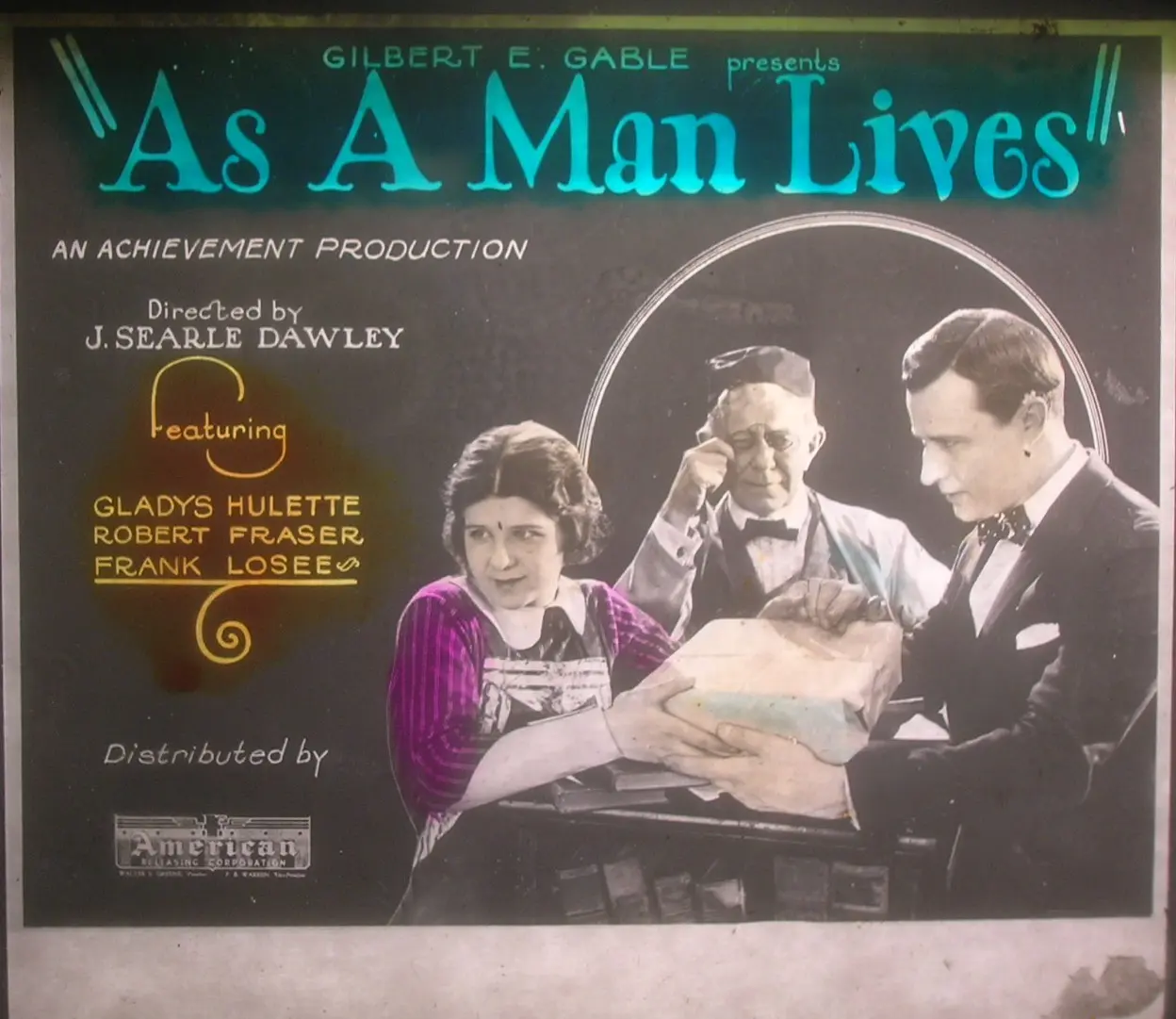
The narrative then orchestrates Mason’s frantic flight back to the United States, a return not of triumph but of desperation. His once-privileged existence is now shattered, replaced by the grim reality of a life on the run, shadowed by guilt and the specter of justice. It is under these dramatically altered and profoundly humbling circumstances that fate, with its often-cruel but ultimately redemptive hand, orchestrates a second encounter with Nadia. This reunion is the emotional and thematic fulcrum of As a Man Lives. No longer the arrogant suitor, Mason is now a man stripped bare of his former trappings, forced to confront his past transgressions and the profound impact they have had on his life. The "entirely different set of circumstances" are not merely external; they reflect an internal transformation, however nascent, within Mason himself. This poignant confrontation forces both characters, and by extension the audience, to grapple with questions of forgiveness, redemption, and the enduring power of a love that once seemed impossible.
The film’s exploration of themes is particularly resonant. It delves deeply into the concept of personal accountability, asserting that wealth and social standing cannot shield one indefinitely from the consequences of one's actions. Mason’s journey is a powerful allegory for the idea that true worth is not inherited but forged through moral trials and self-reflection. The stark contrast between Mason's initial opulence and Nadia's principled poverty highlights the film's nuanced critique of class distinctions, suggesting that integrity and character far outweigh material possessions. This thematic depth allows As a Man Lives to transcend its melodramatic structure, elevating it to a more profound commentary on the human condition. One might draw parallels to the moral dilemmas faced in a film like All the World to Nothing, where characters also confront the emptiness of material pursuits, or the socio-economic critiques found in The Girl by the Roadside, which similarly explores the chasm between different social strata.
The performances are uniformly strong, anchoring the narrative with emotional authenticity. Robert Frazer’s transformation from a dissolute playboy to a humbled, seeking man is compelling to watch. He communicates Mason's internal turmoil and gradual moral awakening with subtle gestures and expressions, a challenging task in the silent film medium. Kate Blancke, as Nadia, is the film's moral core. Her portrayal is one of quiet strength and unwavering conviction, making her character not just a love interest but a formidable force of conscience. The chemistry between Frazer and Blancke, though often fraught with tension, is palpable, lending credibility to their complex relationship. Supporting roles by Tiny Belmont, Jack Baston, Gladys Hulette, Alfred E. Wright, and Frank Losee, particularly Losee as the "crooked business partner," add crucial texture to the narrative, each contributing to the film’s rich tapestry of characters. The way Losee embodies the cynical opportunism of his character provides a stark contrast to Nadia's idealism, effectively highlighting Mason's moral crossroads.
William Dudley Pelley and Bob Dexter’s screenplay is a masterclass in dramatic construction, building tension incrementally and orchestrating moments of profound emotional impact. The pacing, while characteristic of the era, never drags, propelled forward by the rapid escalation of Mason’s circumstances. The narrative avoids simplistic moralizing, instead allowing Mason’s experiences to speak for themselves, guiding him (and the audience) towards an understanding of genuine remorse and the possibility of atonement. The inclusion of the Parisian murder plotline is a stroke of genius, serving not merely as a dramatic device but as a crucible that tests the very limits of Mason's character and forces him into a direct confrontation with the consequences of his careless choices. In this regard, the film shares a thematic thread with the pursuit of justice and the weight of past deeds seen in films like La morte che assolve, where characters are similarly forced to confront the inescapable shadow of their past actions.
Visually, As a Man Lives utilizes the cinematic language of its time with considerable skill. While specific details of cinematography are often lost to the mists of time for many silent films, one can infer from the narrative structure that the contrasts between the opulent settings of Mason's early life and the grittier, more desperate locales of his flight would have been deliberately emphasized. The visual juxtaposition of the vibrant, perhaps dangerous, Parisian backdrop against the eventual, more subdued American settings would have played a significant role in conveying Mason’s internal and external journey. The use of close-ups, particularly in moments of emotional intensity, would have been crucial for Frazer and Blancke to convey their characters’ complex feelings without dialogue. The film’s ability to communicate such a nuanced moral tale through purely visual means, supplemented by intertitles, speaks volumes about the artistry of silent cinema. The very nature of a character's transformation, driven by internal conflict and external pressure, is a recurring motif in cinema, much like the character arcs in The Broken Melody or the moral awakening in The Racing Strain, where individuals are tested and changed by life's unexpected turns.

IMDb —
1918
Community
Log in to comment.