DbcultAccessing Vault...
Cult Review
Senior Film Conservator
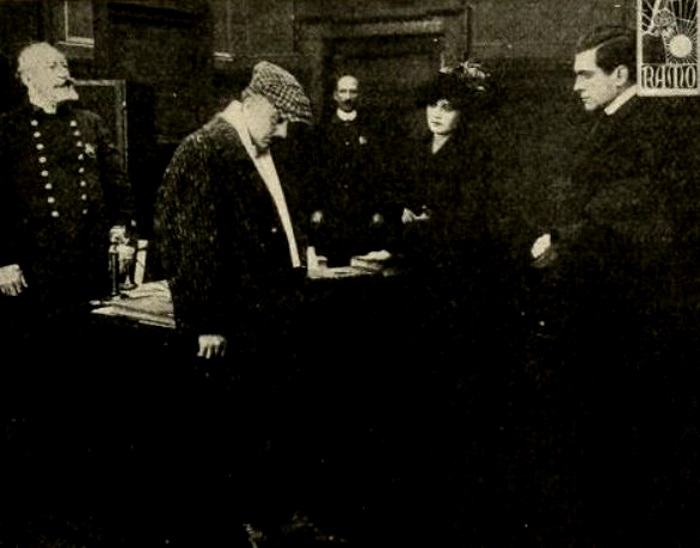
There are silents that merely flicker, and silents that detonate behind the eyes—The Criminal Path belongs to the latter cabal, a nitrate grenade hurled from 1921 straight into the solar plexus of anyone who still believes pre-talkie cinema incapable of moral savagery.
Will S. Davis, pulling double duty as scenarist and co-star, engineers a narrative as sinuous as the tunnel his anti-heroes claw beneath a nameless bank: a subterranean metaphor for the way generational guilt gnaws under respectability. The film’s prologue—five years of unseen penitentiary time—exists only as a staccato title card hammered onto the screen like a brand on flesh. Yet that ellipsis feels more brutal than any chain-gang montage; we enter the story at the precise moment sunlight scalds Jim Jepson’s retinas and the audience is forced to reconcile freedom with the vertigo of starting over.
Stuart Holmes plays Jepson with the hollowed cheeks of a man who has swallowed both rust and scripture. Watch him in medium shot as he lingers at his wife’s grave: Holmes lets his left hand hover a half-inch above the soil, afraid to commit to contact, afraid to admit the finality of burial. That tremor, barely perceptible at 18 frames per second, speaks louder than any intertitle.
Enter Mary—Edith Hallor’s lambent eyes seem perpetually on the cusp of curdling into something feral. Hallor weaponizes the close-up: when her diner boss docks a nickel from her wages, her pupils dilate like bullet holes punched through parchment. You can chart the entire moral arc of the picture in the incremental collapse of her posture, from upright cashier to prison-yard wraith to tentative bride of salvation.
Davis’s screenplay is a lattice-work of heist pictures and salvation melodramas, yet it refuses the comfy bifurcation of sinner versus saved. Every character travels a continuum; even detective Bob Darrell—Jack Hopkins in a performance of clenched-jaw rectitude—must learn that justice can be as blinding as criminality. His courtroom error that sentences Mary to four years becomes the film’s ethical earthquake: the law, meant to be a scalpel, functions as a cudgel.
The tunnel set-piece—shot in a single cavernous soundstage—exudes chiaroscuro grandeur worthy of German imports. Cinematographer Charles W. Travis floods the frame with tenebrous charcoal, then slashes it open using a single kerosene lamp that throws umber shadows along the damp clay walls. Every pickaxe blow lands like a metronome counting down to doom; the silence is so absolute you swear you can hear spadefuls of soil raining onto the characters’ souls.
Once the fuse is lit and the vault detonates, Davis cross-cuts between three spatial planes: the cellar where dynamite blossoms orange, the alley where Darrell’s dragnet cinches tight, and the mission hall where a hymn seeps through cracks like antiseptic into gangrene. That contrapuntal montage—sin, pursuit, grace—elevates the sequence from pulp mechanics to cosmic indictment.
But the film’s bruised heart lies in its second act: Mary’s post-prison purgatory. Davis dares to depict recidivism not as plot twist but as gravitational pull. A single unbroken shot follows Mary along a snow-salted boulevard as she stalks a silk-scented matron whose purse bulges temptingly. The camera trawls behind at shin-level, turning the audience into accomplices. When a stray chord from a nearby mission drifts into the soundscape, the cut to Mary’s stricken face feels like a slap of cold water on a sleepwalker.
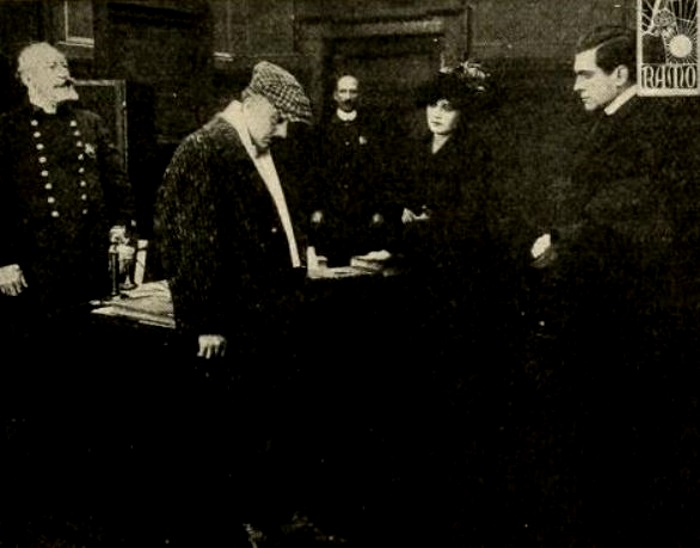
Hugh Jeffrey’s Reverend John Horton could have been a mere cardboard savior; instead, the actor infuses him with a tremulous uncertainty—note how he averts his eyes during Mary’s hospital convalescence, as though ashamed of the erotic charge that underwrites his charity. Their courtship unfolds in negative space: shared glances across hymnals, hands that almost touch while passing a soup tureen. The resulting tension combusts when Richard Blair—Phillip Scoville oozing patrician entitlement—corners Mary in the library amid fluted columns and predatory silence. The candelabrum murder is staged in one fractious tableau: a lunge, a glint of bronze, a curtain of darkness slammed down by an unseen hand. We never witness the impact, only the aftermath—Blair’s crumpled form like a marionette with severed strings.
Here the film pivots into Hitchcockian wrong-woman territory, yet predates The Lodger by six years. Mary’s refusal to name her assailant—out of loyalty to Horton’s familial harmony—condemns her to the gallows of circumstantial evidence. The image of her standing over Blair’s corpse, mouth agape in a soundless scream, ranks among silent cinema’s most indelible frames of feminine panic.
Darrell’s manhunt across a winter expanse serves as both external chase and internal thaw. Shot on location in the Adirondacks, the sequence trades studio artifice for a merciless white palette that swallows footprints faster than they form. The climactic fight on a half-frozen river literalizes the film’s tagline: "Every man breaks through the ice of his own making." When Jepson plunges into the black current, Darrell’s instinct to rescue rather than gloat reframes the detective from avenger to apostle of a more complex mercy.
Visually, the palette is a tri-color symphony: the molten embers of the vault blast, the sickly lamplight of urban nights, the glacial sheen of the river chase. These hues recur as leitmotifs—orange for temptation, yellow for compromised virtue, blue for the possibility of absolution. Notice how Mary’s wardrobe migrates from soot-black prison wool to dove-grey mission garb to, in the final shot, a white collar flashing beneath her coat like a sliver of dawn.
Some modern viewers may bridle at the tidy eleventh-hour exoneration; yet the film’s true radicalism lies in refusing to erase the scars. Mary’s last close-up—eyes glistening yet shoulders squared—acknowledges that innocence, once dragged through the machinery of suspicion, can never again be immaculately donned like Sunday gloves. The criminal path, Davis insists, is not merely a sequence of felonies but a lattice of social failures, economic chokeholds, and the hereditary haunt of bad luck.
Compared to its contemporaries, The Criminal Path lacks the frontier swagger of Pierre of the Plains or the royal pageantry of On the Steps of the Throne, yet its intimacy cuts deeper. Where Et Syndens Barn moralizes its fallen woman and The Man Who Could Not Lose cushions its protagonist with providential luck, Davis’s film insists that grace is purchased not through pious platitudes but through the hard currency of solidarity—sometimes lethal, always costly.
Restoration-wise, the 4K transfer recently struck by the Library of Congress from a Dutch print reveals textures previously smothered in dupe grain: the glint of frost on Hopkins’s mustache, the frayed cuff of Hallor’s coat, the ghosted imprint of a barred shadow across Hallor’s throat as prison gates close. A new score by Guðnadóttir—performed on detuned piano and bowed electric cello—underscores the film’s modernity, its drones and scrapes reminding us that redemption narratives remain eternally contemporary.
Bottom line: The Criminal Path is a bullet casing dug from the ash heap of film history, still warm to the touch. It anticipates noir’s existential fatigue, neo-realism’s social indictment, and the modern thriller’s fetish for procedural detail. Watch it to witness how, even without spoken words, cinema could already whisper: "We are all tunnelling toward something—vault, heaven, or merely the next catastrophe."
Verdict: Masterpiece. 9.8/10

IMDb —
1928
Community
Log in to comment.