DbcultAccessing Vault...
Cult Review
Senior Film Conservator
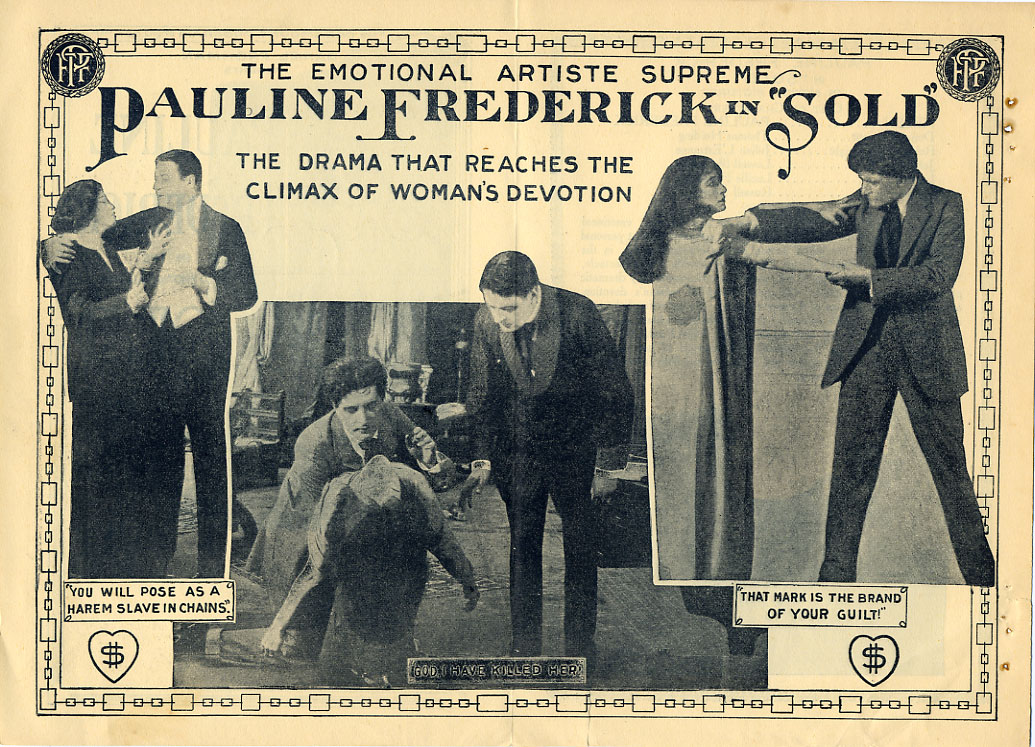
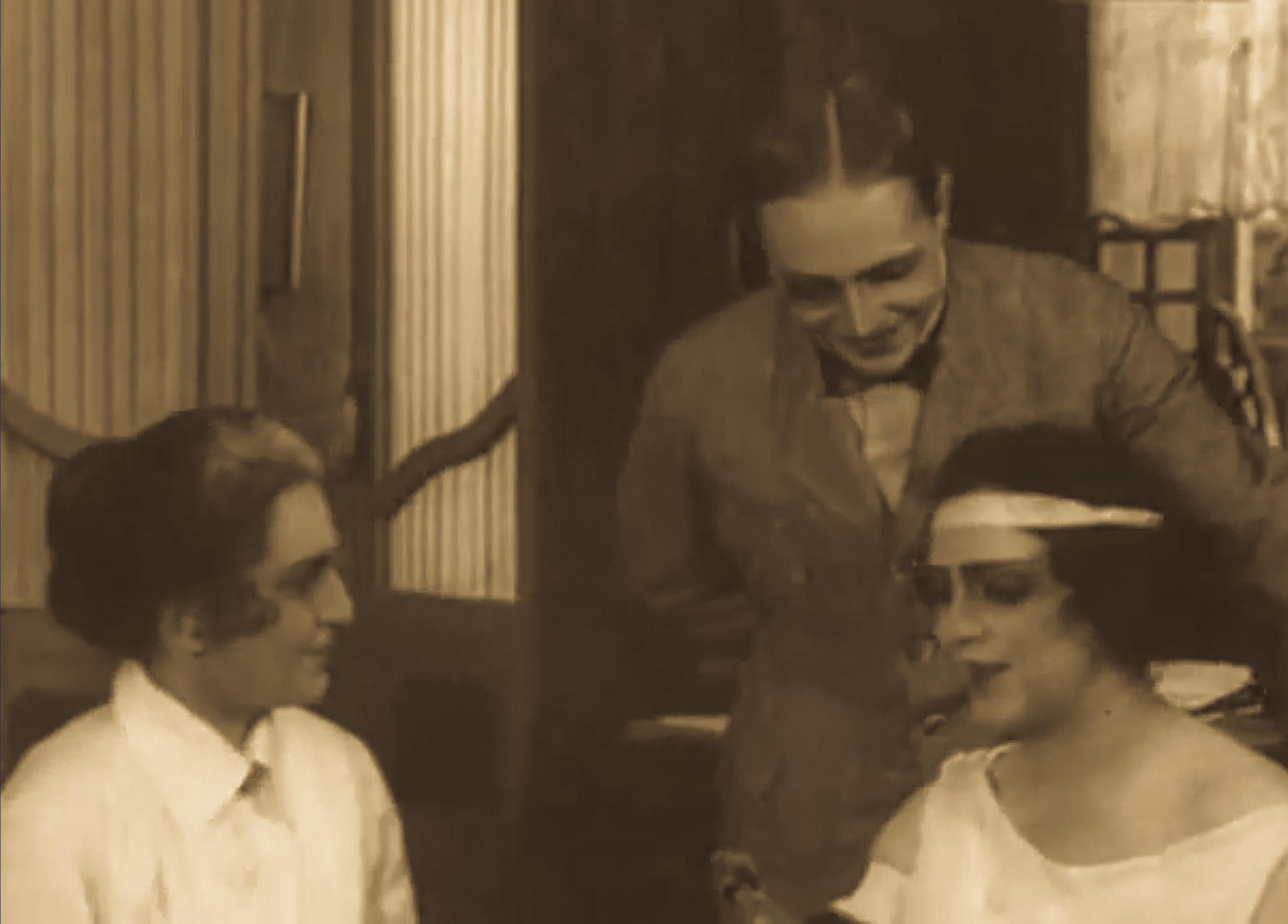
The 1915 cinematic landscape was a crucible of burgeoning narrative sophistication, a period where the primitive allure of the moving image began to coalesce into a profound language of human psychology. At the center of this metamorphosis stands Sold, a film that transcends the typical melodrama of its era to interrogate the very nature of artistic commodification and the gendered expectations of sacrifice. Written by George Erastov and featuring the luminous Pauline Frederick, the film operates as a searing critique of a society that values the 'connections' of the elite over the raw, unadulterated talent of the marginalized. It is a story not merely of a woman caught between two men, but of an aesthetic soul caught between the demands of the stomach and the aspirations of the spirit.
The opening movements of Sold establish a stark socio-economic contrast that feels uncomfortably relevant even a century later. We are introduced to two painters who represent the two poles of the creative existence. One is a man of immense financial means, whose success is less a product of his brushwork and more a result of his navigation through the corridors of power. The other, played with a haunting vulnerability, is an artist of genuine genius who lacks the 'funds with which to make the connections'—a phrase that serves as a stinging indictment of the meritocratic myth. This dynamic is mirrored in other works of the period, such as The Soul of Broadway, which similarly explores the corrupting influence of the metropolitan social ladder.
When the woman they both love chooses the 'poor artist,' the film shifts from a social study into a domestic tragedy. This choice is presented as an act of radical romanticism, yet the screenplay does not shy away from the visceral consequences of her decision. The 'long period of stress and financial difficulties' is not glossed over with cinematic sentimentality; instead, it is depicted as a slow erosion of the couple's vitality. Unlike the more lighthearted explorations of class found in A Gentleman of Leisure, Sold maintains a somber, almost claustrophobic atmosphere that underscores the desperation of the protagonists.
Pauline Frederick delivers a performance that anchors the film’s emotional gravity. Her character is not a passive object of desire but the narrative’s moral engine. When the rich artist visits their home and sees the nude portrait her husband painted of her, the film enters a complex discourse on the male gaze and the ownership of the female image. The rich artist’s request for her to model for his own work, 'The Harem Market,' is laden with symbolic weight. The title of his painting within the film suggests a commodification of the female form that mirrors the wife’s own predicament: she is forced to 'sell' her image to save the man who immortalized it.
The tension here is palpable. Frederick conveys a sense of internal devastation masked by a resolve that is nothing short of heroic. This role calls to mind her work in The Unwelcome Mrs. Hatch, where she similarly navigated the treacherous waters of social disgrace for the sake of familial love. In Sold, her decision to visit the rich artist and accept his offer is portrayed not as an act of infidelity, but as a supreme gesture of marital devotion. The film subtly critiques the husband’s artistic ego; while he thrives on his wife’s support, his pride becomes the very thing that prevents him from seeing the truth of her sacrifice.
The inclusion of the 'Harem Market' painting as a plot device is a stroke of brilliance by writer George Erastov. It serves as a meta-commentary on the film industry itself in 1915—a burgeoning market where beauty was traded for the entertainment of the masses. The rich artist represents the industry’s commercial side, hungry for authenticity but only able to acquire it through the power of the purse. This stands in contrast to the husband’s work, which is born of genuine intimacy. The conflict that arises when the husband discovers her involvement is a classic trope of the era, yet it is handled with a psychological depth that predates the more formulaic approach of later silent films like Double Trouble.
The husband’s denunciation of his 'false wife' is a moment of profound irony. He, the artist who values truth in his work, is blinded by the surface-level reality of his wife’s presence in another man’s studio. He fails to see the 'masterpiece' of her character—the self-abnegation required to endure the rich artist’s scrutiny for the sake of her husband’s career. This thematic exploration of misplaced faith and eventual redemption is a hallmark of the era’s best dramas, often seen in the works of D.W. Griffith or in the atmospheric tension of Trilby.
Visually, Sold utilizes the limited technology of 1915 to create a sense of mounting dread and eventual catharsis. The use of chiaroscuro in the studio scenes highlights the moral ambiguity of the rich artist’s proposal, while the domestic scenes are often bathed in a softer, more naturalistic light that emphasizes the couple’s initial purity. The film’s pacing is deliberate, allowing the 'long period of stress' to weigh on the audience just as it weighs on the characters. This isn’t the fast-paced spectacle of The Indian Wars or the chaotic energy of Tillie's Punctured Romance; rather, it is a contemplative piece that demands emotional investment.
As the husband’s faith is 'tenderly unfolded' and restored, the film achieves a resolution that feels earned rather than forced. The 'dawn of a new life' mentioned in the plot summary is not merely a financial recovery, but a spiritual one. The husband must learn to value his wife not just as a model or a companion, but as a co-creator of their shared existence. In this sense, Sold is a precursor to modern feminist critiques of the 'muse' archetype, suggesting that the woman behind the artist is often the greater architect of his success.
When placed alongside other 1915 releases like The Avalanche or the more adventurous Colorado, Sold distinguishes itself through its focus on the interiority of its characters. It lacks the grandiose scale of Don Quixote or the exoticism of Gems of Foscarina, yet it possesses a narrative density that makes it feel more modern. The film’s exploration of poverty and hope resonates with the themes of The Dawn of a Tomorrow, but with a more cynical edge regarding the price of success.
The cast, including Russell Bassett and Thomas Holding, provides a solid framework for Frederick to shine. While some of the supporting performances lean into the theatricality of the time, Frederick’s restraint is notable. She understands that in the silent medium, the flicker of an eyelid or the slight slump of a shoulder can communicate more than a thousand title cards. This subtlety is what elevates Sold from a mere photoplay into a work of enduring art.
In the grand tapestry of early cinema, Sold is a thread that deserves to be re-examined. It is a film that understands the high cost of integrity and the devastating power of a misunderstanding. It challenges the viewer to look beyond the surface of 'success' and to recognize the labor—often invisible, often feminized—that sustains it. Whether compared to the whimsical The Circus Man or the redemption arc of The Actress' Redemption, Sold remains a testament to the power of silent drama to evoke complex moral questions. It is a haunting, beautiful, and ultimately hopeful film that captures the struggle of the artist in a world that knows the price of everything but the value of nothing.
Ultimately, the legacy of Sold lies in its refusal to offer easy answers. It acknowledges that while the dawn of a new life may brighten before the couple, the shadows of their struggle will always remain a part of their canvas. It is a masterpiece of the human condition, rendered in the flickering light of 1915, and it remains a vital piece of cinematic history for anyone interested in the evolution of the narrative form. If you seek a film that combines social commentary with deep emotional resonance, Sold is an essential viewing experience.
IMDb 5.2
1927
Community
Log in to comment.