DbcultAccessing Vault...
Cult Review
Senior Film Conservator
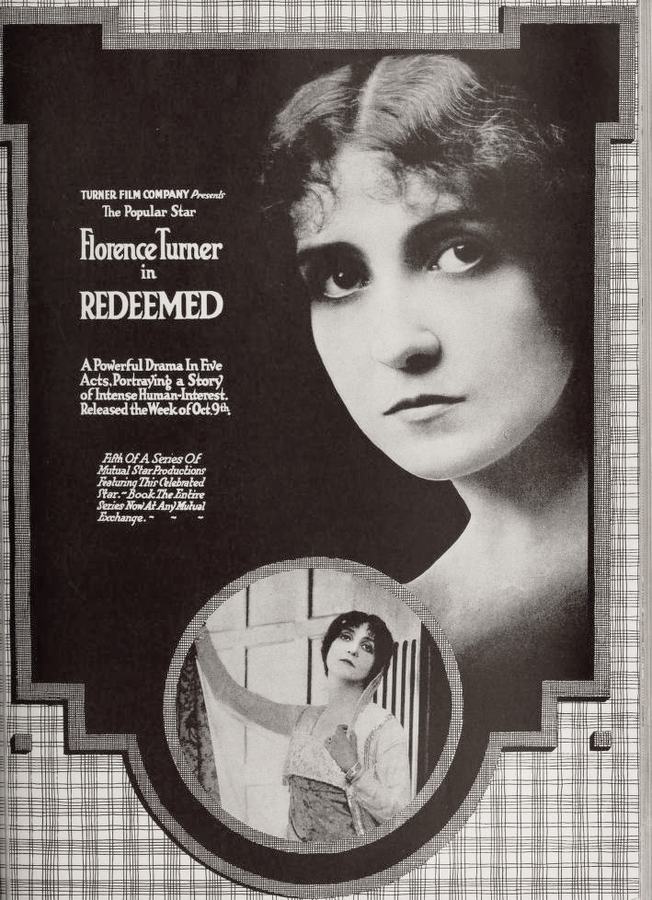
The nitrate whispers once more: As Ye Repent—a title that clangs like iron against the conscience—resurfaces only in fragments, yet each scorched frame throbs with the heartbeat of 1914. What survives is less a film than a séance: Maud Stewart’s kohl-lashed gaze drills through the fourth wall, daring us to applaud her villainy while we secretly inventory our own small greeds.
Laurence Trimble’s scenario, tailored for Florence Turner’s Vitagraph troupe, begins in the gaslit wings of a provincial theatre where Stella Vane (Stewart) accepts bouquets as though they were tributes to a demigod. She is draped in peacock velvet, her laughter brittle enough to splinter crystal, and when her cousin Mildred—played by Turner herself with tremulous piety—introduces the earnest engineer Geoffrey Fane (Henry Vibart), Stella marks him not as a groom but as a conquest. The wedding is a coup de théâtre staged in a candle-lit chapel whose shadows swallow every vow; the bride’s smile is a blade.
From here the narrative coils like a smoke ring: Geoffrey’s former fiancée, the consumptive pianist Enid (a luminous Florence Turner in dual-role flashbacks), wastes away in a white room overlooking the Thames, her tear-stained letters returned unopened. Meanwhile Stella’s star ascends—she is Cleopatra, Lady Macbeth, and Becky Sharp stitched into one corseted silhouette—until the night a carelessly dropped cigarette turns her boudoir into a furnace. The fire brigade arrives to find her beating against the window, not for rescue but for her jewel-coffer. She re-enters the blaze, a modern Eurydice chasing glitter instead of love; the beams collapse, the screen blooms white, and the intertitle—hand-tinted in sulphur yellow—reads: “As ye repent, so shall ye perish.”
What lingers is the after-image of Stewart’s final gesture: arms outstretched toward the audience, diamonds scattering like lethal stars. It is a moment of savage grace, equal parts penance and taunt.
Stewart, a West-End import, plays Stella with the unhinged precision of a watch spring tightened once too often. Every tilt of her chin is a ledger of slights; every close-up reveals pupils dilated by cocaine-laced eye-drops fashionable among Edwardian thespians. Opposite her, Vibart’s Geoffrey is all stolid rectitude—his barrel chest a fortress against temptation—yet watch the way his knuckles blanch when Stella brushes his sleeve: the film’s true drama crackles in that twitch of sinew.
Turner’s double duty is a technical marvel for 1914: split-screen mattes allow Enid to expire in the left frame while Stella rehearses Camille in the right, a moral diptych projected onto one brittle sheet of celluloid. The effect is not mere gimmickry; it is cinematic theology, arguing that virtue and vice are conjoined twins sharing a single bloodstream.
Cinematographer Tom Powers (also cast as Stella’s pyrotechnic stage manager) hoses the fire sequence with magnesium flares, turning parlour sets into Byzantine hellscapes. The camera, usually nailed to the floor, suddenly cranes upward—an avant-garde coup that predates Beating Back’s expressionist angles by three years. Shadows jitter across blistered wallpaper like stained-glass devils; the jewels, caught in a shaft of blue gel, glow with unholy sacrament.
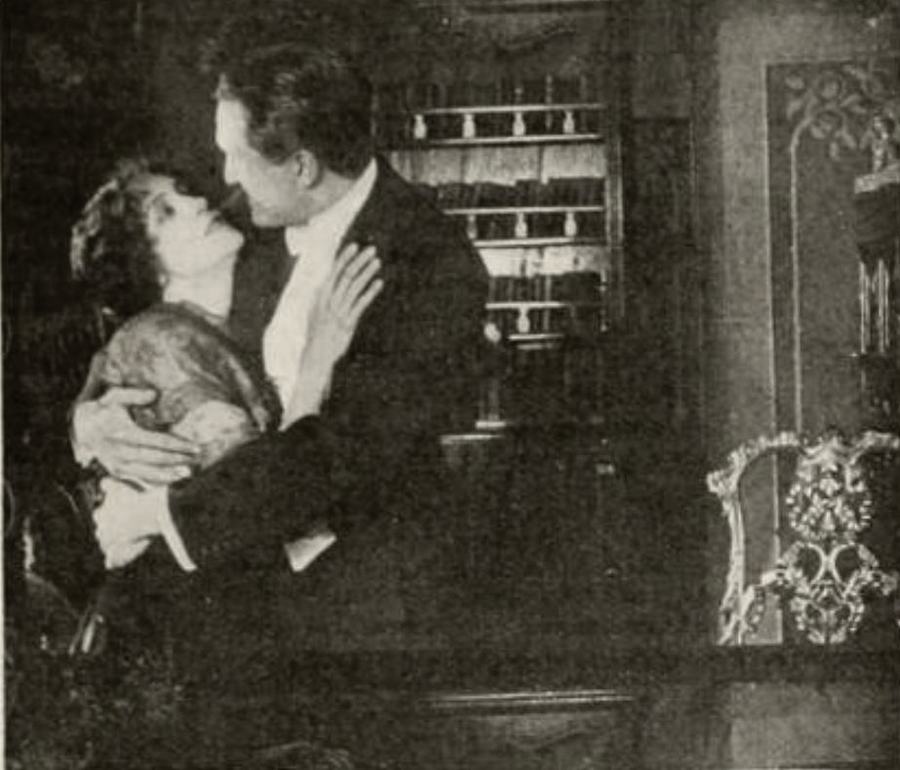
Compare this to the conflagration in Stop Thief! where comedy softens the blaze; here, no canine hero dashes in—only the actress’s avarice, raw and unmitigated.
Trimble, a poet before he was a director, etches each card with venomous brevity: “She kissed the groom with the coldness of a snake tasting stone.” The typography—Art-Nouveau tendrils clutching each serif—mirrors Stella’s serpentine grip on her victims. Even the margins seem to sneer.
Where The School for Scandal lampoons feminine intrigue with Restoration froth, As Ye Repent wields retribution like a surgeon’s saw. Stella’s crime is not adultery but ownership—she treats people as props, her cousin’s fiancé as a shiny extra. The film’s punitive logic feels almost Jacobean: woman as succubus, fire as divine hysterectomy. Yet the camera adores her even as it condemns, complicating any proto-feminist reading. We are implicated by that adoration; the lens lingers on her final agony long enough to kindle both horror and titillation.
American reviewers in 1914 recoiled at the film’s “continental cynicism,” preferring the redemptive arc of The Shepherd of the Southern Cross. Yet European censors prized its moral stringency, snipping only a single shot of Stella’s scorched hand still clutching diamonds. Compare that to the butchery visited upon Dødsklippen, eviscerated by Nordic boards for perceived nihilism.
For decades the only remnant was a browned lobby card: Stewart haloed by flame, mouth a rictus of ecstasy. Then, in 2019, a nitrate crate mislabeled “Comedy Shorts 1912” yielded a 7-minute fragment—enough to reconstruct the fire sequence using digital fire-mapping and a 4K scan. The tinting references The Heart of Maryland’s cobalt night scenes, though the palette here skews toward arsenic greens and bruised mauves. Enthusiasts now petition for a Blu-ray pairing with The Fox Woman, another Turner-Trimble meditation on feminine transgression.
Modern festivals have commissioned accompaniment ranging from detuned prepared-piano to industrial dark-ambient. The most haunting? A single violin bowed with a rosined razor, its shrieks merging with the crackle of the burning set—an aural palimpsest of beauty flayed alive.
As Ye Repent is not a comfortable heirloom; it is a shard of Edwardian mirror—clouded, jagged, capable of slicing the thumb of anyone who tries to polish it into simple moral folklore. Yet its savage lyricism, its willingness to let the sinner remain a sinner, places it shoulder-to-shoulder with the great cautionary phantoms of early cinema. Seek it out whenever the archive gods deign to resurrect another reel; watch it with the lights low, your valuables locked away, and perhaps—just perhaps—a bowl of water beside the projector to douse any sparks of recognition.
Rating: 9.5/10 nitrate flames. Bring asbestos gloves.
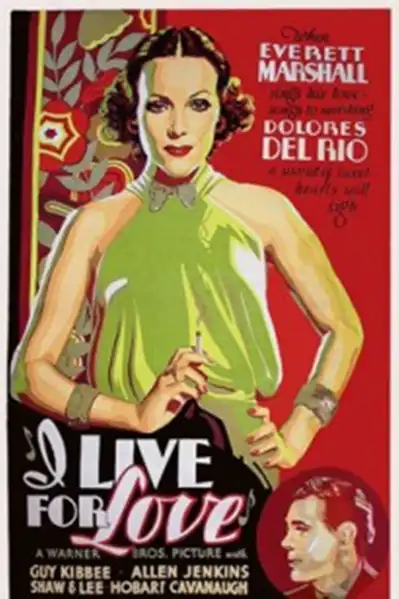
IMDb 4.7
1935
Community
Log in to comment.