DbcultAccessing Vault...
Cult Review
Senior Film Conservator
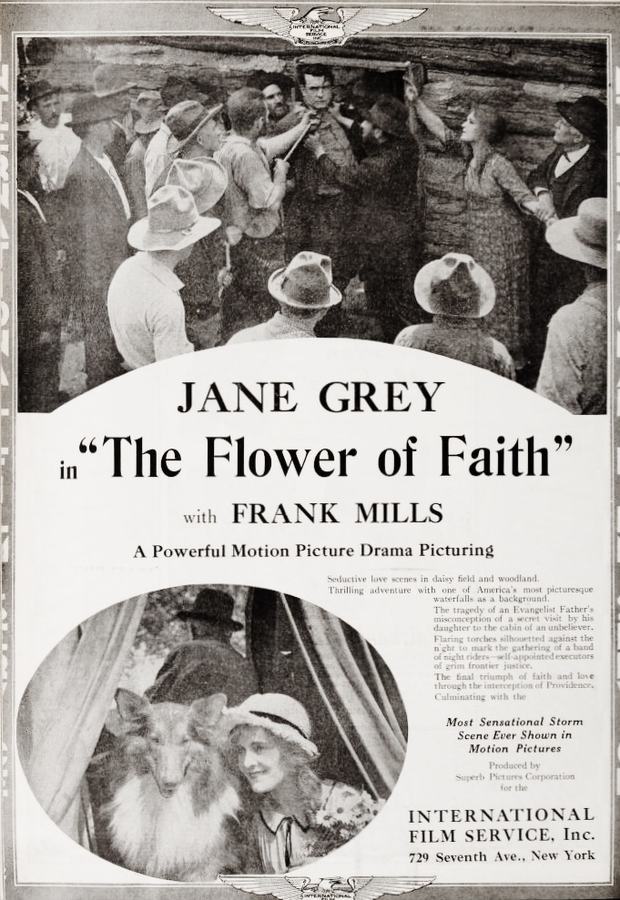
There's something inherently captivating about early cinema's audacious embrace of grand narratives and unvarnished emotion. Long before the advent of sophisticated CGI or the nuanced psychological dramas we've come to expect, filmmakers wielded melodrama like a finely honed instrument, crafting tales designed to stir the soul and challenge the spirit. 'The Flower of Faith' stands as a potent testament to this era, a film that, despite its vintage, manages to weave a tapestry of moral quandaries, human fallibility, and the redemptive power of belief, all culminating in a climax that can only be described as divinely orchestrated. It’s a compelling journey that reminds us of the raw, visceral power of storytelling, even when presented through a lens of yesteryear.
The narrative unfurls in a community seemingly defined by its fervent Christian devotion, a setting that immediately establishes a fertile ground for both profound faith and dangerous hypocrisy. Into this crucible steps Ephram Judson, portrayed with a compelling gravitas by Albert Tavernier, an itinerant evangelist whose mission is to shepherd souls towards salvation. He's not alone; his diligent daughter Ruth, brought to life with an understated strength by Jane Grey, and his impressionable 17-year-old son Tom, played by William Reynolds, are his constant companions. Their arrival precipitates a series of revival meetings, galvanizing the devout and, perhaps, stirring latent anxieties within the community's more skeptical corners. This initial setup is a classic trope, seen in many films of the era, where the arrival of outsiders acts as a catalyst for internal conflict, echoing the thematic tensions found in works like The Voice of Love.
However, the film's true dramatic core emerges from the shadows of this outwardly pious community. On its fringes resides Hugh Lee, an outcast whose very existence is a stark counterpoint to the prevailing religious fervor. His backstory is steeped in tragedy: the horrific death of his sister, burned alive on her wedding day, a trauma so profound it irrevocably severed his ties with God and society. Percy Helton imbues Lee with a haunting blend of resentment and profound sorrow, making his isolation palpable. It's a masterful portrayal of a man consumed by grief and disillusionment, a stark contrast to the zealous belief surrounding him. This character, a victim of circumstance and a symbol of profound doubt, is crucial to the film's exploration of faith's boundaries.
The narrative's emotional fulcrum pivots on the accidental meeting between Hugh Lee and Ruth Judson. For Lee, Ruth represents a beacon of warmth and compassion in a world he has long perceived as cold and uncaring. Her gentle demeanor, her unwavering kindness, begins to chip away at his hardened skepticism, offering him, for the first time since his sister's death, a glimpse of brightness. Ruth, embodying the very essence of Christian charity, encourages him to attend a Sunday service. This scene is pivotal; it promises a potential bridge between the sacred and the secular, between faith and despair. Jane Grey’s portrayal of Ruth is particularly effective here, conveying both innocence and a quiet strength that draws Lee in.
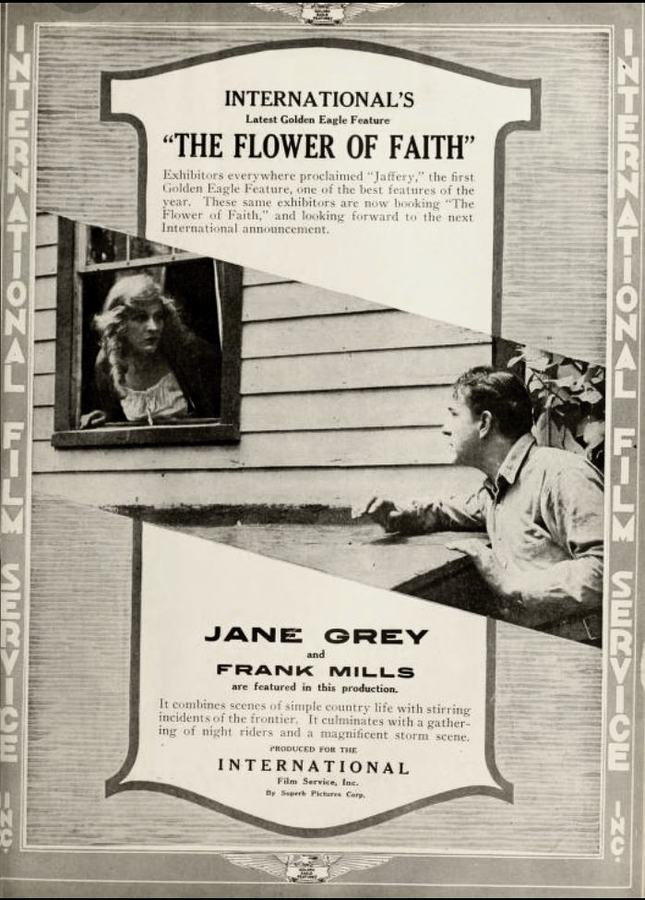
But this fragile hope is brutally shattered. During the service, the oppressive atmosphere of piety, perhaps coupled with the sermon's intensity, triggers a horrifying flashback for Lee. The vivid image of his sister's agonizing death consumes him, breaking his composure. He erupts into a violent denunciation of religion itself, a raw, unfiltered outpouring of his long-suppressed pain and anger. This moment, expertly staged to maximize shock, is a masterful stroke of melodrama, transforming a moment of potential conversion into one of explosive blasphemy. The congregation's reaction is immediate and visceral: shock quickly curdles into righteous indignation, and they pursue Lee into the woods, a frenzied mob baying for retribution. This swift descent into mob rule, fueled by religious fervor and a perceived affront, draws parallels to the societal pressures and judgments explored in films like Samhällets dom, highlighting humanity's darker impulses when confronted with perceived heresy.
While the mob hunts Lee, another tragedy of human weakness unfolds. The day's substantial collection, a symbol of the community's collective faith, is entrusted to young Tom Judson. William Reynolds portrays Tom's youthful naivety and susceptibility with convincing earnestness. He falls prey to the wiles of the village sport, Frank Mills in a suitably slippery performance, who inveigles him into a game of cards. In a moment of catastrophic misjudgment, Tom stakes the church funds and, inevitably, loses. The gambler, with a cynical pragmatism, uses the money to pay off a bill with the village grocer, played by Mary Smith. Tom, witnessing this transaction and seeing the grocer hide the money, is overcome by desperation. In a desperate attempt to rectify his colossal error, he steals the money back, only to be pursued and slightly wounded by the vigilant grocer. This sequence, a thrilling chase in its own right, showcases the film's ability to interweave personal moral failings with broader community drama.
Wounded and terrified, Tom seeks refuge in the only place he can imagine: the cabin of the very outcast, Hugh Lee, he and his family had encountered. Believing himself to be dying, Tom's plea for his sister Ruth is heart-wrenching. Lee, despite his own precarious situation and the lingering bitterness, displays an unexpected act of compassion, fetching Ruth in the dead of night to attend to her brother. This moment is crucial; it establishes Lee not as a villain, but as a man capable of profound empathy, even for those who represent the world that has scorned him. Ruth’s arrival at the cabin, in her nightclothes, sets the stage for a misunderstanding that will have grave consequences, yet her immediate instinct is to protect. This selfless act of shielding her guilty brother and Lee from the encroaching mob is a powerful testament to her character, echoing the themes of loyalty and self-sacrifice seen in films like Barbara Frietchie, where personal courage defies societal pressure.
The grocer, having aroused the entire community, including Ephram Judson, sets off a relentless hunt for the thief. The trail inevitably leads to Lee's secluded cabin, which is then violently attacked. The scene of the mob's descent is chaotic and terrifying, a vivid portrayal of collective hysteria. Finding Ruth in the cabin, in her night clothes, ignites a new, more dangerous spark of fury. The implication, for the mob, is scandalous, further cementing their conviction of Lee's depravity and now, Ruth's supposed complicity. Yet, Ruth, with unwavering resolve, continues to shield both her brother and Lee, refusing to divulge the truth, even as Lee desperately pleads with her to save her honor and hand Tom over to the law. Her declaration, "God will save them all," is a moment of profound faith and defiance, a desperate prayer hurled into the face of imminent doom.
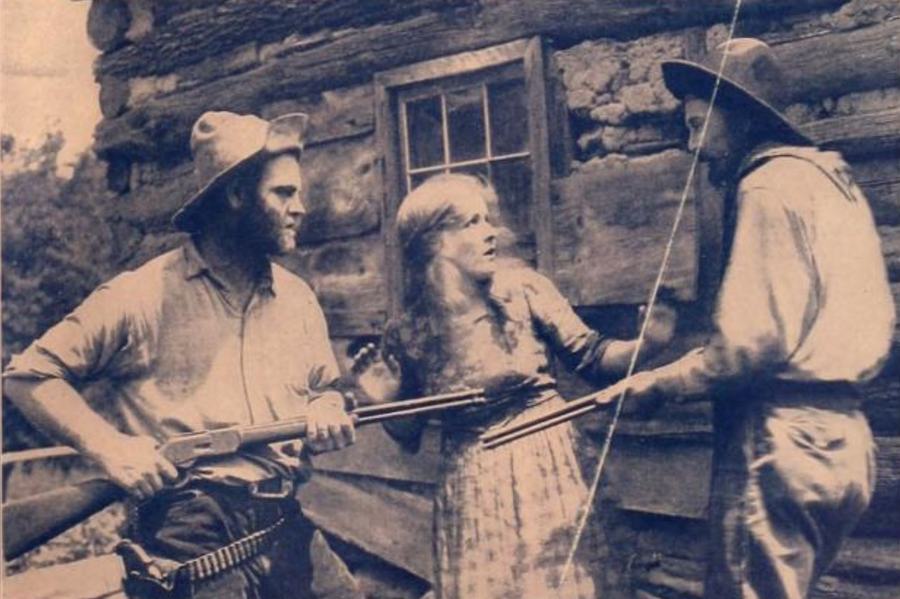
The fury of the mob, now inflamed by perceived moral transgression, breaks loose. Lee is dragged from his burning cabin, a noose ominously placed about his neck. The scene is charged with a palpable sense of injustice and impending doom. As a ferocious storm rages, mirroring the tempest in human hearts, the mob, illuminating their path with fire-brands, marches Lee to the very scene of the revivals. The leader of the mob, Percy Helton delivering a chilling turn as the zealous instigator, throws the end of the noose over a tree limb, and with a crack of the whip, sends Lee's horse forward. It is at this precise, breathtaking moment that the film delivers its most audacious narrative twist: a terrific bolt of lightning strikes the limb, severing it from the tree and throwing Lee to the ground, miraculously unharmed. Simultaneously, the same bolt strikes the mob leader, killing him instantly. This literal act of divine intervention is a bold, almost audacious, narrative choice, but one that perfectly aligns with the melodramatic conventions of the era, where cosmic justice often descends to right human wrongs. It’s a moment of breathtaking spectacle, a testament to the power of the cinematic medium even in its nascent stages.
From the inferno of the burning cabin, a guilt-ridden Tom emerges. He has followed the mob, and arrives on the scene just as the hand of God intervenes, saving an innocent man and striking down the unjust. This powerful visual, combined with the sheer terror and relief of the moment, acts as a cathartic turning point for Tom. He confesses his guilt, publicly clearing Lee and, crucially, his sister's honor. This confession, emerging from the crucible of divine judgment, transforms the frenzied, vengeful mob into a rejoiceful gathering. The shift is instantaneous and profound, a testament to the film's belief in the power of truth and spiritual awakening. This dramatic shift of the crowd, from bloodthirsty to repentant, is a recurring theme in early melodramas, often used to underscore a moral message, much like the moral awakening in In the Hour of Temptation.
The picture closes with a deeply satisfying resolution. Hugh Lee, once the bitter unbeliever, now acknowledges the undeniable power of faith that has saved him. In a tender embrace, he clasps Ruth in his arms, a symbol of newfound connection and shared belief. The film, in its final frames, delivers a powerful message of redemption, not just for Tom, but for Lee, whose skepticism is ultimately overcome by a profound, undeniable experience of the divine. It's a conclusion that resonates with the core tenets of classic melodrama: the triumph of good over evil, the vindication of the innocent, and the ultimate, transformative power of faith.
'The Flower of Faith', penned by the Dazey brothers, Frank Mitchell Dazey and Charles T. Dazey, is more than just a relic of early cinema; it's a vibrant, if at times overtly theatrical, exploration of timeless themes. The performances, particularly by Jane Grey as the steadfast Ruth and Percy Helton as the tormented Lee, anchor the film's emotional weight, making their struggles and ultimate triumphs feel genuinely earned. Albert Tavernier as the evangelist and William Reynolds as the errant son also deliver compelling turns, each contributing to the rich tapestry of characters.
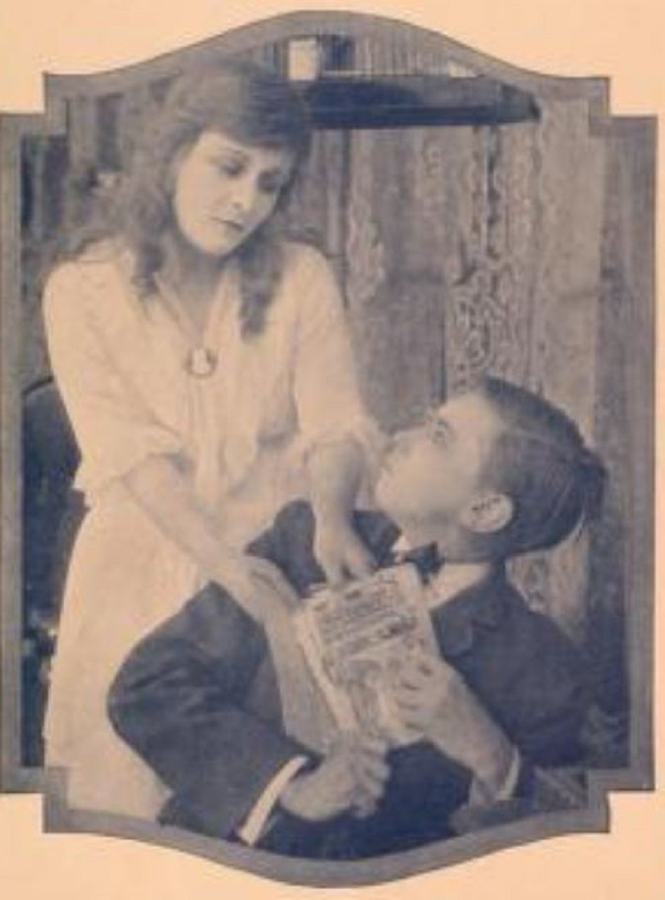
While the film's reliance on divine intervention for its climax might strike modern viewers as a narrative deus ex machina, it was a perfectly acceptable and often anticipated device in early melodramas, serving to reinforce moral lessons and provide a definitive resolution. It speaks to a particular cultural understanding of justice and cosmic order. This film, in its bold storytelling and unashamed emotionality, holds up a mirror to the anxieties and aspirations of its time, showcasing a society grappling with questions of faith, doubt, and community responsibility. The dramatic structure, building from personal tragedy to mob hysteria to miraculous intervention, keeps the audience thoroughly engaged, a testament to the Dazeys' understanding of compelling narrative flow.
In a cinematic landscape often dominated by gritty realism, revisiting 'The Flower of Faith' is a refreshing reminder of the genre's capacity for grand pronouncements and unambiguous moral clarity. It’s a film that doesn't shy away from depicting humanity at its worst – the mob mentality, the reckless folly of youth – but ultimately champions its capacity for redemption and the enduring power of belief, even in the face of overwhelming adversity. Its dramatic arc, from skepticism to unwavering faith, from injustice to divine justice, is a powerful and resonant one. It leaves an indelible impression, a testament to the enduring power of a well-told story, blooming brightly even from the annals of cinematic history.
The film's exploration of public perception versus private truth, and the ease with which a community can turn into a vengeful mob, remains chillingly relevant. It’s a theme that transcends time, finding echoes in various forms of social commentary throughout cinematic history. Moreover, the portrayal of Ruth’s unwavering loyalty, even when her own reputation is on the line, is a powerful statement on the strength of character and the limits of self-sacrifice. Her faith isn't just a passive belief; it's an active, protective force that ultimately guides the narrative towards its miraculous conclusion. This kind of steadfast heroism, often found in films like The College Orphan, where characters face intense social scrutiny, highlights the moral fortitude celebrated in these early narratives.
Ultimately, 'The Flower of Faith' is a compelling cinematic experience that, despite its age, offers a rich tapestry of human emotion, moral struggle, and spiritual awakening. Its bold narrative choices, strong characterizations, and dramatic climax ensure its place as a significant work within the melodrama genre. It encourages us to look beyond the surface of its early cinematic techniques and appreciate the profound questions it poses about faith, justice, and the transformative power of a single moment. It's a film that, much like a resilient bloom, continues to offer beauty and insight to those willing to seek it out.
IMDb 5.3
1934
Community
Log in to comment.