DbcultAccessing Vault...
Cult Review
Senior Film Conservator
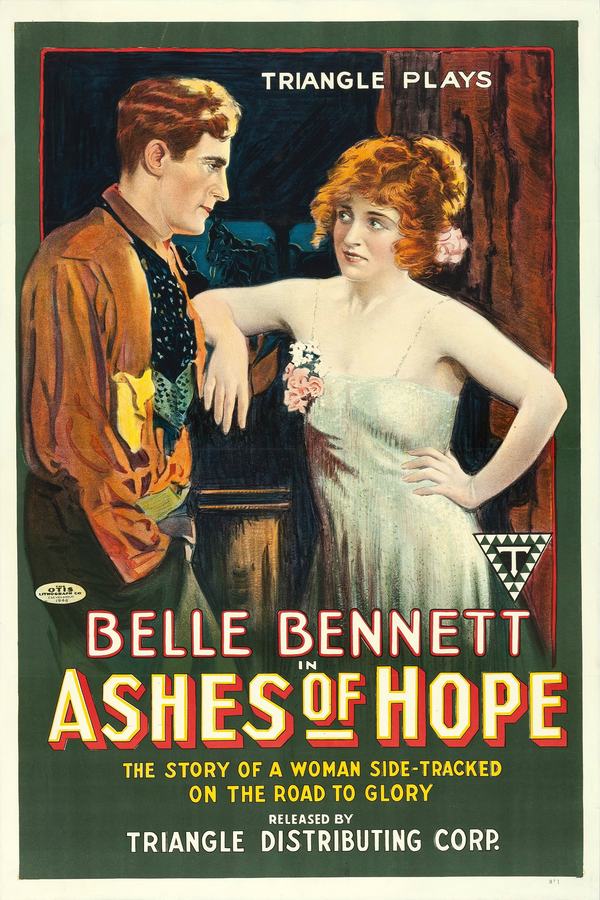
The flickering, sepia-toned canvas of Ashes of Hope (1917) unfurls a narrative tapestry woven with threads of stoic virtue, perilous romance, and profound sacrifice, all set against the unforgiving backdrop of the American frontier. Directed by Thomas H. Ince, a titan of early cinema renowned for his innovative production methods and keen understanding of the Western genre, this silent masterpiece transcends mere melodrama, delving into the intricate moral calculus of its characters with a surprising depth that belies its era. It's a film that demands a discerning eye, one willing to look beyond the conventions of its time to appreciate the raw emotional power and sophisticated storytelling at its core.
At its heart lies Jim Gordon, portrayed with a compelling, understated intensity by Jack Livingston. Gordon arrives in Paluski, a mining settlement teeming with the rough-and-tumble ethos of the Wild West, a place where temptations are as plentiful as gold dust. Yet, Gordon is an anomaly, an island of unwavering rectitude in a sea of hedonism. He neither partakes in the ubiquitous drinking nor succumbs to the allure of the gambling tables, and the advances of the dance hall girls, the very embodiment of Paluski's vivacious, albeit morally ambiguous, spirit, fall flat. This staunch refusal to conform immediately establishes him as a figure of intrigue, a man carrying a past, perhaps, or adhering to a personal code that sets him dramatically apart. His very presence challenges the established order, a quiet rebellion against the prevailing norms of masculine bravado and indulgence. This immediate characterization, achieved through subtle gestures and powerful on-screen presence, is a testament to Livingston's skill and Ince's direction.
Into this stark contrast steps Gonda, the undisputed queen of the dance hall, embodied with magnetic charisma by Josie Sedgwick. Gonda is not merely a decorative figure; she is a woman of agency, albeit one operating within the restrictive confines of her environment. Her beauty and vivacity are her currency, her charm a shield. She is, however, deeply entangled in the possessive, almost obsessive, affections of "Ace High" Lawton, the settlement's gambling proprietor, a man utterly consumed by his unrequited love for her. Percy Challenger, as Lawton, delivers a performance that oscillates between smitten devotion and simmering resentment, a complex portrayal that elevates him beyond a mere villain. It is Lawton, in a desperate attempt to assert his dominance and perhaps to break Gordon's enigmatic resolve, who proposes a wager: Gonda's challenge to seduce the unyielding stranger. This initial setup immediately injects a palpable tension, transforming a simple encounter into a battle of wills and desires, where the stakes are far higher than mere pride.
The narrative truly ignites when Gordon, in an unexpected display of gallantry, intervenes to protect Gonda from the violent advances of a drunken miner. This act of chivalry, a stark contrast to his earlier aloofness, reveals a deeper, protective instinct within him. Yet, when Gonda, perhaps as part of her wager or genuinely attempting to bridge the chasm between them, tries to induce him to drink, Gordon's response is swift and uncompromising. He knocks the glass from her hand, a gesture that, while seemingly minor, precipitates a brutal barroom brawl. This sequence is a masterclass in silent film action, relying on dynamic staging and the visceral performances of the actors to convey the chaos and raw energy. Gordon emerges victorious, but not unscathed, his injuries becoming the unexpected catalyst for a profound shift in their relationship.
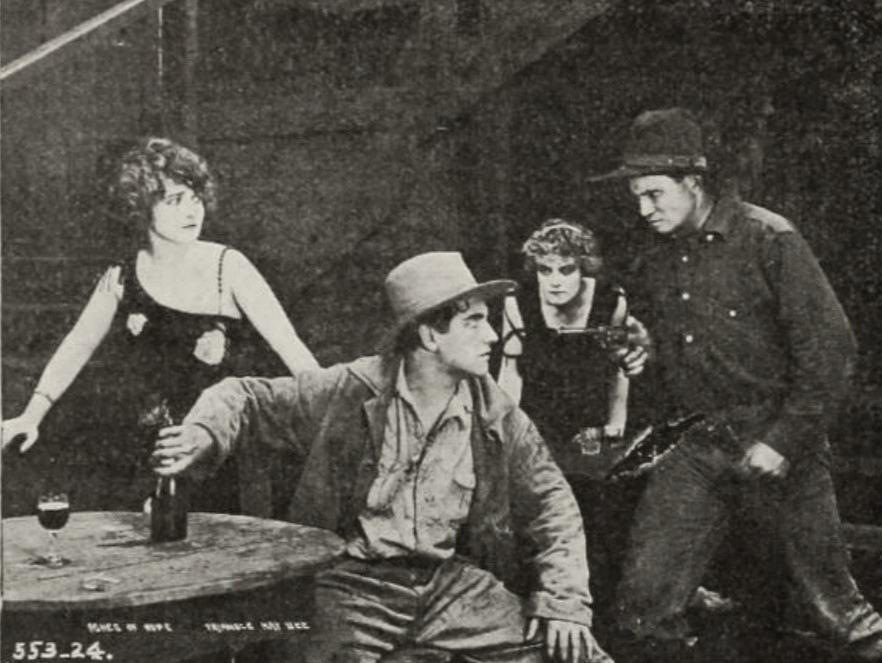
During his convalescence, Gonda, in an act of genuine care that transcends the cynical parameters of the wager, nurses him back to health. It is in these quiet, intimate moments, stripped of the performative masks they wear in public, that a true connection blossoms. The initial game of seduction gives way to authentic affection, culminating in plans for marriage. This romantic development, though seemingly conventional, is imbued with a sense of earned intimacy, a testament to the actors' ability to convey evolving emotions without dialogue. However, a peculiar detail emerges: Gordon discourages Gonda from becoming pregnant, a subtle but significant foreshadowing that hints at unresolved complexities in his past. This particular narrative beat, rather than a simple romantic trope, adds a layer of psychological depth, suggesting a man grappling with burdens and responsibilities that extend beyond his immediate present.
The fragile idyll is shattered by the arrival of a letter from the East, a tangible tether to a life Gordon had seemingly left behind. The contents are devastatingly bittersweet: a knitted baby shoe, a poignant symbol of impending fatherhood, and the news of his exoneration from a murder charge. This revelation reframes Gordon's entire character, explaining his stoicism, his avoidance of entanglement, and his reluctance for Gonda to become pregnant. He wasn't merely a man of principle; he was a man living under the shadow of a grave accusation, a man who had perhaps believed his future was irrevocably tainted. The sudden lifting of this burden, coupled with the news of his impending child, compels him to abandon his newfound love and return to his original life. He leaves Gonda a sum of gold, a gesture intended as both provision and a final, painful farewell, unaware of the tragic misinterpretation that will follow.
This plot twist, a classic device in silent cinema, effectively ratchets up the emotional stakes. It draws parallels to films like The Seed of the Fathers, where past transgressions and societal judgment loom large over characters striving for a new beginning, or even Shame, in its exploration of how a reputation, once sullied, can haunt a man's future. The dramatic irony here is potent: Gordon's act of responsibility is perceived as an act of betrayal. Lawton, consumed by his unrequited love for Gonda and misinterpreting Gordon's departure as a callous abandonment, exacts a brutal revenge, throwing Gordon from a cliff. This act of violence, fueled by passion and misunderstanding, propels the narrative into a darker, more desperate phase. Jack Richardson, in a supporting but crucial role, likely contributed to the film's gritty realism as a miner or townsfolk, further grounding the story in its harsh setting.
Miraculously, Gordon survives the fall, only to be stripped of his remaining possessions by an opportunistic Indian trapper. Destitute, desperate, and with the weight of his past and the promise of his future pressing down on him, he attempts a desperate act: to rob Lawton's gambling hall. This is a profound moment of character transformation; the stoic, principled man is pushed to the brink, forced to compromise his own moral code in a desperate bid for survival and return to his family. The failed robbery leads to his capture and the grim prospect of lynching, a harsh, summary justice often depicted in Westerns of the era, reminiscent of the perilous situations faced by protagonists in films like A Romance of the Redwoods, where lawlessness often dictates fate.
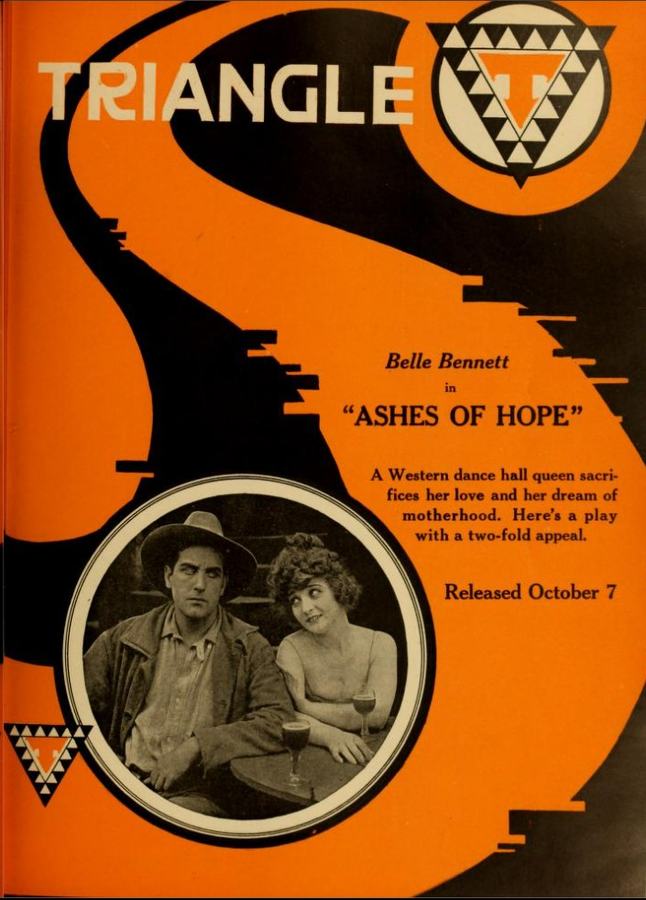
It is Gonda, however, who becomes the unexpected architect of his salvation. In a twist of fate that underscores the film's thematic exploration of love and sacrifice, she discovers the letter—the tangible proof of Gordon's innocence and his true, noble intentions. This discovery transforms her perspective, shifting her from heartbroken victim to a woman of immense strength and selfless resolve. For the sake of Gordon's unborn son, a child she will never know, Gonda orchestrates his escape. Her decision is a poignant act of self-abnegation, a profound testament to a love that transcends personal happiness. She agrees to marry Lawton, trading her own future for Gordon's freedom, a sacrifice that echoes the tragic romanticism found in films like Sangue blu or Panna Meri, where love often demands the ultimate price. Lawton, blinded by his desperate desire for Gonda and perhaps swayed by her apparent acquiescence, then misleads the party trailing Gordon, inadvertently becoming an accomplice in the very escape he initially sought to prevent. Belle Bennett, though likely in a smaller role, would have contributed to the ensemble's portrayal of the town's inhabitants, adding to the film's rich texture.
Thomas H. Ince's directorial hand is evident throughout Ashes of Hope. Known for his "factory system" of filmmaking, Ince nonetheless championed strong narratives and character-driven plots. His films often explored the complexities of human nature within the dramatic framework of the Western, a genre he helped define. Here, he masterfully balances action sequences with moments of quiet emotional intensity, allowing the performances of his cast to carry the narrative weight. The visual storytelling, a hallmark of the silent era, would have relied heavily on expressive body language, facial micro-expressions, and carefully constructed intertitles to convey dialogue and internal monologues. The stark landscapes of the American West, often a character in themselves in Ince's films, would have underscored the isolation and harsh realities faced by the characters.
The film's exploration of moral ambiguity is particularly striking for its time. Gordon is not a flawless hero; he is a man burdened by a past, capable of both noble acts and desperate measures. Gonda is not a passive damsel; she is a woman who navigates a dangerous world with resilience, ultimately making a choice of profound ethical weight. Lawton, while antagonist, is driven by a tragic, misguided love rather than pure malice, making him a more complex figure than a cardboard cutout villain. This nuanced characterization, a testament to Ince's writing team and his overall vision, elevates Ashes of Hope beyond a simple good-versus-evil narrative. It aligns with the emerging sophistication of early cinematic storytelling, where psychological realism began to infiltrate even genre pictures.
In conclusion, Ashes of Hope stands as a powerful example of early American cinema's capacity for intricate emotional storytelling. It weaves a compelling tale of a man's quest for redemption, a woman's unwavering love, and the profound sacrifices made in the crucible of a rugged frontier. The film's title itself is evocative, suggesting that even from the remnants of despair, a new future can emerge, often at a steep personal cost. The performances, particularly by Josie Sedgwick and Jack Livingston, would have resonated deeply with audiences, conveying the raw, unvarnished emotions central to the plot. The film's enduring themes of justice, forgiveness, and the selfless nature of true love ensure its continued relevance, offering a window into the narrative sophistication of the silent era. It reminds us that even without spoken dialogue, the human heart's most complex yearnings and most profound acts of courage can be powerfully articulated on screen, leaving an indelible mark on the cinematic landscape. The choices made by its characters, particularly Gonda's final, heart-wrenching decision, speak to a universal truth about the nature of love and the lengths to which individuals will go for the well-being of others, especially for the innocence of a child yet to be born. It is a poignant reflection on the sacrifices that forge the path to a brighter tomorrow, even when those sacrifices leave personal happiness in their wake. The film’s silent storytelling, far from limiting its impact, amplifies the universality of its message, allowing the audience to project their own understanding onto the raw, expressive performances. It’s a narrative that, even a century later, still holds a mirror to the enduring complexities of human nature and the powerful currents of fate and free will that shape our destinies, truly earning its place among the distinguished works of its period, such as The Lily of Poverty Flat for its nuanced portrayal of frontier life or War and the Woman for its exploration of female agency under duress.
IMDb —
1927
Community
Log in to comment.