DbcultAccessing Vault...
6.4/10
Senior Film Conservator
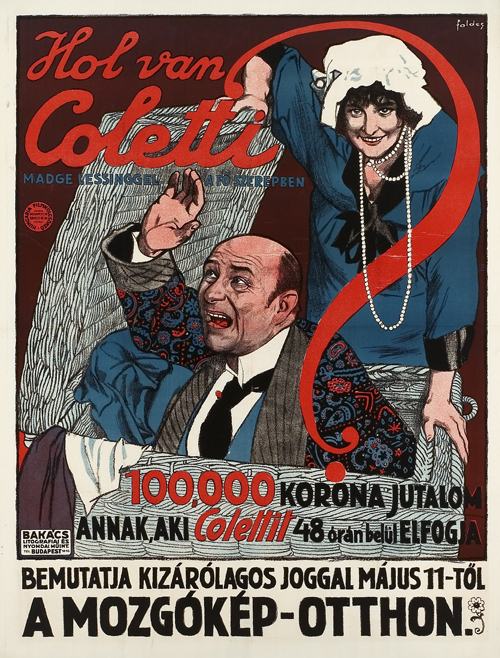
A definitive 6.4/10 rating for a film that redefined the boundaries of cult cinema. Where Is Coletti? remains a cornerstone of transgressive art.
The first thing that strikes you about Where Is Coletti? is the sheer velocity of its confidence. 1913 was still teaching itself how to point a camera without flinching, yet here is a German one-reel firecracker that races through disguises, Zeppelin stunts, café choreography and meta-commentary on newspaper culture without ever gasping for air. Franz von Schoenthan’s screenplay treats Berlin like a tiramisu—layer upon layer of social strata ready to collapse into one sugary, caffeinated mess the instant a $25,000 reward is waved overhead.
Hans Junkermann’s Coletti arrives on-screen already half-mythic: the kind of detective who wears reputation instead of a badge. When the Continental Daily Mail lampoons his failure to collar a bank robber who lingered in the city for two smug days, Coletti does not bristle; he folds the insult into an even larger legend. His open-letter wager—print my face, plaster my name, and still you will not net me—is less hubris than performance art, a dare hurled at a metropolis that thinks modernity has made every citizen a bloodhound.
Once the typographers set the last line of movable type, Berlin sheds its skin. Shop-girls pin newspapers to hatpins; factory boys whistle the detective’s portrait onto brick walls; a butcher slaps Coletti’s likeness beside his sausage links, as if fame itself were a condiment. The city becomes a living Where’s Waldo in sepia, and the camera—still tethered to static wide shots—somehow vibrates with anticipation. Watching the crowds pour across Potsdamer Platz, you sense that cinema has discovered the pleasures of mass movement; the frame swells like a lungs filling with chase.
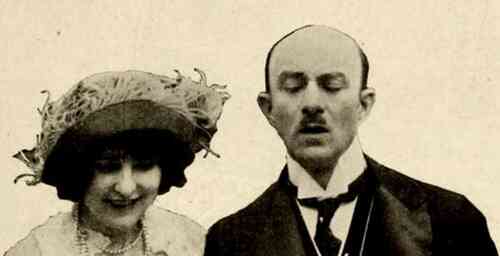
Enter Anton the barber, played by Heinrich Peer with the spring-heeled grace of a music-hall star. Anton’s genius lies not in looking like Coletti, but in behaving like everyone’s idea of Coletti: the swaggering sleuth who could leap from moving bus to dirigible without rumpling his cuffs. His mirror routine—snip, lather, tilt the bowler to a rakish angle—carries the comic DNA that will later flower in Tati’s Mr. Hulot. When he boards the Zeppelin, the film pirouettes into outright surrealism: a floating salon of plumed hats and champagne buckets, suspended above a city that has literally tilted its neck skyward to squint.
The gag peaks when the actual Coletti, disguised as a soot-smeared sweeper, serves Anton a foaming beer. The moment is edited with Eisensteinian punch: close-up on froth, iris-in on the recognition flicker, cut to the stout matron who clamps Anton’s collar like a bear-trap. The Zeppelin’s descent becomes a triumphal parade for the wrong hero; Berlin, fickle lover, cheers itself hoarse for a haircut wearing a false moustache.
And yet the film refuses to mock the crowd for long. In its brisk 45 minutes it understands that the true subject is not mistaken identity but metropolitan amnesia—how quickly we outsource memory to headlines, how readily we become the hunt. When the police dog arrives, nose to cobblestone, the chase shrinks from civic carnival to intimate suspense. Lolette’s dance—Madge Lessing’s limbs flickering like a zoetrope—buys Coletti the last grains of sand in the hourglass. The final shrug of the detective—five minutes too late—lands less as victory than as gentle shrug at human limitation.
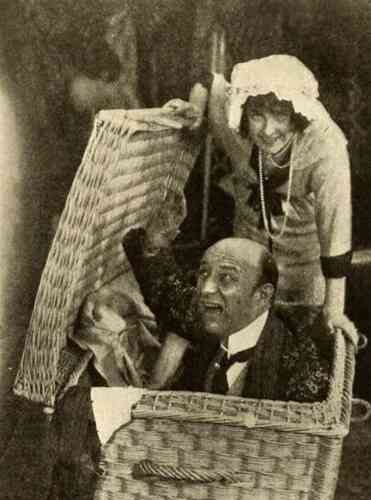
Technically the print survives in 35mm at Bundesarchiv, speckled with nitrate freckles that flicker like fireflies. The tinting is heroic: amber for daytime bustle, cyan for Zeppelin sky, rose for the café where romance and peril share a marble table. The intertitles, set in Fraktur, read like telegrams from a prankish god. There is no credited score; I recommend pairing it with a modern kleztech trio—clarinet, accordion, muted trumpet—to echo Berlin’s mongrel soundtrack of 1913.
Comparisons? Think of What Happened to Mary if its serial cliffhangers were compressed into a single espresso shot, or of The Flying Circus minus the circus tents but keeping the daredevil DNA. The DNA, in fact, is chase itself: a city sprinting after its own reflection.
Some historians slot Where Is Coletti? as mere Jagdfilm—a hunting romp. That undersells its modern pulse. The picture grasps surveillance culture before Orwellian dread, anticipates reality-TV self-branding, and even winks at algorithmic profiling: feed the masses a face, watch them sort the world. Yet it never curdles into cynicism; the tone stays buoyant, a champagne cork fired over no-man’s-land.
What lingers longest is the Zeppelin sequence—an image of German confidence before history rewrote the sky. Watching the dirigible drift unscathed, you feel the vertigo of hindsight: in thirteen months the same contours will darken with shrapnel. The film, blissfully oblivious, treats the airship like a child’s balloon. Perhaps that is why silent comedy feels, paradoxically, more honest than tragedy: it preserves the moment before we knew better.
Should you seek it out? Absolutely—if you can coax an archivist, if you can bribe a cinematheque. Bring friends, bring children, bring anyone who assumes old means slow. The room will whoosh with communal gasps when Anton leaps from the bus, with laughter when the matron totes her trophy to the newsroom. And when Coletti raises that final, gentle hand, you will feel the timeline fold: 1913 Berlin winking at 21st-century TikTok flash-mobs, both cities drunk on the same illusion—that if we just stare hard enough, we can pin the human soul to a wanted poster and call the chase complete.
IMDb 6.7
1932
Community
Log in to comment.