DbcultAccessing Vault...
Cult Review
Senior Film Conservator
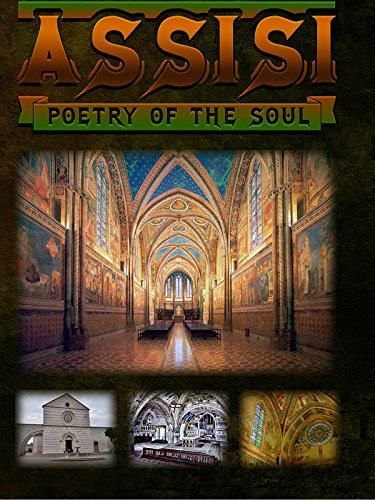
There are films that narrate, and then there are films that exhale. Assisi, Italy belongs to the latter species: a 1911 one-reeler whose running time feels suspended somewhere between liturgy and lullaby. Conceived at the crossroads of travelogue and ecclesiastical pageant, it dispenses with plot the way a monk dispenses with chatter—by simply stepping aside and letting presence speak.
Forget three-act scaffolding; the film is architectural rather than anecdotal. A phantom cinematographer—identity lost to the folds of time—mounts what must have been a hand-cranked Debrie or Pathe on the back of a mule cart and begins a slow, tidal pan across the valley. The result is a living cartolina: olive terraces ripple like green lava; cypress needles quiver, each frame tattooed with the grain of 35 mm nitrate. Because the camera never seeks a face, the town itself becomes protagonist—an organism of travertine and faith breathing under the Italian sun.
We approach the Porta San Francesco head-on, the lens tilting slightly upward so that the arch’s lunette swallows half the sky. Centuries drop away; medieval footfalls seem to echo just outside the gate’s earshot. The shot lasts maybe twelve seconds, yet the gradation of greys—calcium-rich stone caught between glare and shade—creates a bas-relief effect that no CGI could counterfeit. Watch how the shadows pool like spilt wine inside the arch’s recesses: this is chiaroscuro before noir ever coined the term.
Cut—without dissolve—to the façade of San Rufino. Rose-window tracery spider-webs across the frame, its concentric circles echoing the camera’s iris. A stray tourist couple slips into view, their parasol a ghostly comma punctuating the shot. They aren’t staged; they’re geological accidents, human lichen clinging to sacred stone. The camera lingers, retreats, ascends staircases as if on invisible roller-skates, then plunges us into the cloister of Santa Chiara. Here the tempo slackens: columns file past like choristers, their capitals flickering between black and ivory, a semaphore of faith and mortality.
Suddenly we are underground. The screen dims; grains of silver swell like bacteria under a microscope. A grated window the width of a fist admits a shaft of light that spears the gloom. This is the prison where—legend insists—Saint Francis’ father once chained his rebellious son. No dramatization follows, yet the very austerity of the shot—its refusal to embellish—renders it more harrowing than any reenactment. The camera holds until the light-shaft trembles, as though the past itself were shivering.
We crest the hill; the Rocca Maggiore looms, crenellations gnawing the sky. The camera’s elevation affords a diorama: valleys quilted into olive, vineyard, and tobacco; the Tiber a mercury thread in the far distance. A match-cut thrusts us inside the ramparts where battlements zigzag like broken vertebrae. Scene after scene, the film eschews cartographic omniscience in favor of tactile intimacy: a pigeon startled into flight, a banner snapping like a Morse signal. You half expect Guelphs and Ghibellines to storm the parapets.
Context matters. 1911 is the year royal processions and biblical pageants flooded nickelodeons. Audiences nursed a hunger for the far-away, the holy, the safely exotic. Yet Assisi, Italy diverges from its contemporaries—say, Glacier National Park with its vertiginous panoramas—by substituting adrenaline for contemplatio. Where the latter woos with grandeur, Assisi courts with stillness, achieving a proto-Ozu serenity decades before the Japanese master froze tatami time.
Restorationists at Bologna’s Cineteca report that the surviving print—stored for decades inside a trunk of nitrate newsreels—retains its original density range. Blacks sink to obsidian without clogging; highlights bloom like albino poppies. When projected at the correct 18 fps, motion judders just enough to make stone appear porous, as though Assisi’s very masonry were inhaling. Some scholars detect phantom carriage-shake, evidence of the cameraman bracing the tripod against a mule’s flank while ascending switchbacks. Such imperfections transmute into poetry: the tremor becomes a heartbeat.
Viewed today, the film invites a double silence: the archival hush of a world long gone, and the modern mute button pressed in deference. Some programmers accompany it with Saint Francis’ Laudes Creaturarum or a spare string quartet. Both choices feel gaudy. The images demand nothing more than the thrum of projector sprockets—an acoustic ghost that whispers: you are mortal, stone is not.
Where With Our King and Queen Through India choreographs pomp, Assisi cultivates privacy. Where Dante’s Inferno stages brimstone spectacle, this film locates hell in a windowless cell. Even 1812, with its patriotic explosions, cannot rival the subterranean chill invoked by a single iron ring bolted into tuff.
Shot during the Italo-Turkish War’s buildup, the film flirts with propaganda yet evades jingoism. There are no flags, no military parades—only the mute testimony of ramparts that once hosted Guelph crossbows and Papal banners. In eschewing human actors, it sidesteps the colonial gaze that mars many Images de Chine of the period. The viewer becomes a pilgrim rather than conqueror, invited to look without possessing.
Rossellini screened a 16 mm duplicate while prepping Francesco, giullare di Dio (1950), claiming the prison shot alone taught him how emptiness could preach louder than dialogue. More recently, the film’s DNA resurfaces in the fixed-frame long takes of Sacro GRA and the contemplative urbanism of Le quattro volte. Even video-artists such as Bill Viola cite its radical refusal of the human close-up as precursor to their own explorations of durational spirituality.
A 2022 4 K scan by L’Immagine Ritrovata reveals micro-fractures in the stone akin to lunar regolith. Pixel-peepers will delight at airborne dust motes—each speck a micro-meteor of historical time—caught in the act of drifting across the lens. Yet the upgrade never betrays the emulsion’s soul. Grain nestles discreetly beside pixel, a matrimony of analog and digital that feels almost Franciscan in its humility.
Masterpiece is a word lobbed too often, yet what else to call a film that turns stone into speech, absence into narrative? Assisi, Italy is not a relic but a reservoir: dip into it and you emerge drenched in the marrow of time. Seek it out in archive festivals, on DCP, on whichever platform dares to host silence. Let its shadows pool behind your eyes; let its ramparts guard your memory. For eleven wordless minutes, the screen becomes a portal, the auditorium a nave, and you—yes, you—its fleeting, fortunate congregant.
Rating: 5/5 – A celluloid psalm carved in light.

IMDb 5.9
1924
Community
Log in to comment.