DbcultAccessing Vault...
Cult Review
Senior Film Conservator
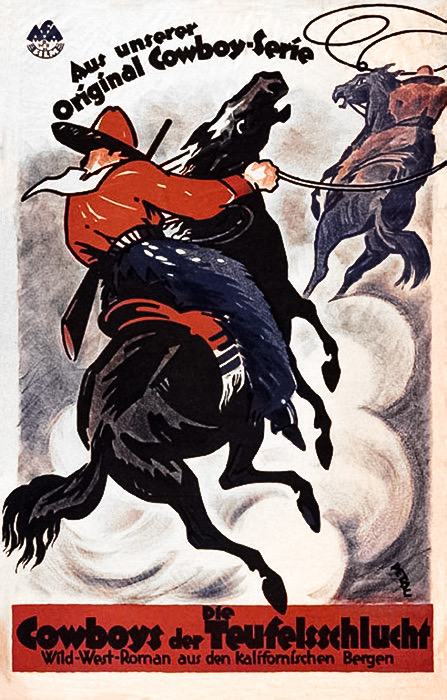
In the annals of early cinema, few narratives capture the raw, untamed spirit of human desire and its potential for corruption quite like Daniel F. Whitcomb's 'At Devil's Gorge.' This silent era gem, though often overshadowed by its more grandiose contemporaries, stands as a potent testament to the enduring power of elemental storytelling. It plunges us headfirst into a world where the glint of gold is rivaled only by the spark of forbidden love, and where the bonds of partnership prove as fragile as the dust-laden plains. Filmed against a backdrop that hints at the rugged beauty and unforgiving nature of the frontier, this picture isn't just a tale of prospectors; it’s a profound exploration of the human heart’s darkest corners, laid bare without the need for a single spoken word.
The premise of 'At Devil's Gorge' is deceptively simple, yet it unravels with the inevitability of a Greek tragedy. We are introduced to two prospectors, partners in a gold claim, whose shared toil and dreams of fortune have seemingly forged an unbreakable bond. Yet, beneath this veneer of camaraderie simmers a volatile undercurrent: both men are hopelessly enamored with the same woman. This classic love triangle, a narrative device as old as storytelling itself, takes on a particularly brutal edge in the isolated, high-stakes environment of the gold rush. The woman, a beacon of light in their otherwise arduous existence, becomes not just an object of affection, but a symbolic prize, representing a life beyond the dirt and struggle. The tension, palpable even in the silent frames, is meticulously built, allowing the audience to feel the unspoken rivalries simmering between the erstwhile friends.
The fateful turning point arrives with a desperate proposition: a game of cards. This isn't merely a casual wager; it's a desperate gamble for everything that matters – the gold claim, the future it promises, and the woman who embodies their hopes for companionship and solace. The stakes could not be higher, and the silence of the scene only amplifies the profound weight of this decision. The shuffling of cards, the intense gazes, the unspoken prayers – all contribute to a moment of excruciating suspense. When one partner loses, the audience anticipates a grudging acceptance, perhaps a somber departure. Instead, we witness a chilling display of moral bankruptcy. The loser, unable to countenance defeat, refuses to honor the terms, electing instead to unilaterally change the rules of engagement. This act of brazen defiance and betrayal transforms a game of chance into a desperate struggle for survival, shifting the narrative from a romantic rivalry to a stark exploration of human depravity. It's a stark reminder that some men, when pushed to the precipice of loss, will abandon all semblance of honor.
The effectiveness of 'At Devil's Gorge' hinges significantly on its cast, who, without the benefit of dialogue, must convey a vast spectrum of emotion through gesture, facial expression, and body language. Edmund Cobb, a prolific actor of the era, brings a rugged intensity to his role. His portrayal likely oscillates between the earnestness of a man in love and the simmering frustration of a partner betrayed. Cobb’s physicality, his nuanced expressions, would have been crucial in communicating the depth of his character’s emotional journey, from hopeful prospector to wronged lover. His ability to project inner turmoil without uttering a word is a testament to the craft required in silent film acting. Similarly, Wilbur McGaugh and William White, portraying the other prospector (or perhaps different aspects of the same conflicted character, depending on interpretation of the brief plot synopsis), would have had the formidable task of embodying the descent into desperation and treachery. Whether one plays the initial betrayer and the other a later antagonist, or they represent different stages of the same man's moral decay, their performances are central to the film's dramatic thrust. The shift from a seemingly honorable agreement to outright deceit demands a powerful, non-verbal articulation of inner conflict and external aggression.
Helene Rosson, as the object of both men’s affections, carries the immense responsibility of being the emotional anchor and the catalyst for the entire conflict. In silent cinema, the female lead often embodied purity, vulnerability, or a fierce independence, and Rosson’s portrayal would have had to navigate these archetypes with grace and conviction. Her reactions, her expressions of fear, affection, or despair, would have dictated the audience's understanding of the stakes involved. Without dialogue, the subtle tilt of her head, the widening of her eyes, or the clasp of her hands would convey volumes, drawing the viewer into her plight and making her more than just a prize to be won. Her performance is essential in grounding the high-flung melodrama in genuine human emotion, preventing the narrative from becoming a mere spectacle of male rivalry. The interplay between these actors, their silent glances and dramatic confrontations, forms the very backbone of the film's emotional landscape.
The genius of 'At Devil's Gorge' also lies in the masterful economy of Daniel F. Whitcomb's screenplay. Writing for the silent screen required a unique skill set: the ability to distill complex motivations and plot points into visually digestible sequences, often relying on intertitles for exposition and dialogue. Whitcomb’s narrative structure is a testament to this art form, meticulously building tension from the initial partnership, through the introduction of the romantic rival, to the climatic card game and its devastating aftermath. The decision to have the loser renege on the agreement is a stroke of narrative brilliance, instantly elevating the conflict from a simple competition to a profound moral crisis. It's a choice that speaks volumes about human nature under duress, and it provides a dramatic pivot that ensures the audience remains utterly gripped.
Whitcomb's script, though succinct by modern standards, manages to imbue its characters with clear, if archetypal, motivations. The desperation for wealth, the yearning for love, and the ultimate slide into treachery are all rendered with stark clarity. The pacing, crucial in silent films to maintain audience engagement, would have been carefully orchestrated, alternating between moments of quiet suspense and explosive action. This narrative precision is what allows 'At Devil's Gorge' to transcend its era and remain a compelling piece of cinema. It understands that true drama often arises not from elaborate dialogue, but from the raw, unvarnished collision of human desires and moral failings. The very setting, 'Devil's Gorge,' hints at the treacherous nature of the human soul and the perilous landscape of their moral choices, a subtle but effective piece of symbolic foreshadowing embedded within the title itself.
Beyond the performances and the script, 'At Devil's Gorge' likely employed the visual language typical of its time to convey emotion and advance the plot. Cinematography, even in its nascent stages, would have played a vital role in establishing mood – perhaps wide shots emphasizing the isolation of the frontier, or close-ups highlighting the anguish on an actor's face. The direction, though uncredited in the brief synopsis, would have guided these visual choices, ensuring that every frame contributed to the unfolding drama. The desolate landscape itself acts as a character, mirroring the barrenness that descends upon the prospectors' friendship and the moral wilderness they navigate.
Thematically, the film explores universal concepts that resonate far beyond the specific setting of the gold rush. It delves into the corrupting influence of greed, not just for gold, but for possession in all its forms, including the desire to possess another person. The betrayal at the card table is a potent symbol of how easily principles can be cast aside when faced with personal loss. This theme of moral compromise and the destructive nature of unchecked desire finds echoes in later, more complex psychological dramas. It speaks to the fragility of human loyalty when confronted with the powerful forces of love and avarice. The film poses a timeless question: what price are we willing to pay for what we desire, and at what point does ambition curdle into dishonor?
While 'At Devil's Gorge' may not boast the grand scale of some epic silent films, its focused narrative on human conflict positions it within a rich tradition of storytelling. The raw, visceral struggle over a woman and a fortune can be seen as a precursor to countless Westerns and melodramas that followed. The intense emotional stakes, driven by love and betrayal, recall the powerful human drama found in films like Op hoop van zegen, where the harsh realities of life and the depths of human emotion are explored with unblinking candor. The moral quandary of a man who cannot accept defeat, who attempts to manipulate the rules of fate, also resonates with the ethical dilemmas presented in works such as The Lion and the Mouse, albeit in a different social context. Both films touch upon the intricate dance between justice and self-interest, and the consequences when one triumphs over the other.
The simplicity and directness of 'At Devil's Gorge' are its strengths, allowing its universal themes to shine through without the need for intricate subplots or sprawling casts. It is a story stripped down to its essential components: man versus man, driven by elemental desires. This contrasts sharply with films like The City of Illusion, which might delve into more complex societal critiques or intricate urban narratives. Instead, 'At Devil's Gorge' grounds itself in the timeless, almost archetypal struggle of individuals in a desolate landscape. Even in a film like The Love Auction, where human desires are commodified, there's a different kind of moral transaction at play; 'At Devil's Gorge' feels more primal, more about what men will take rather than what they will bid for. Its narrative efficiency, common in early cinema, is a lesson in how to convey profound drama with minimal fuss, relying heavily on the audience's ability to read emotion and intent from visual cues alone. The film serves as a vital historical document, showcasing the storytelling prowess of the silent era and its capacity to deliver compelling, emotionally charged narratives that continue to resonate with modern viewers.
'At Devil's Gorge' may be a product of its time, a silent film from an era long past, but its core narrative remains startlingly relevant. It’s a stark reminder that the battle between honor and avarice, between love and possession, is an eternal human struggle, one that transcends the specifics of a gold claim or a frontier setting. The film’s power lies in its ability to strip away the complexities of modern life and expose the raw nerves of human desire, betrayal, and consequence. It invites us to reflect on the choices we make when faced with overwhelming temptation and the devastating ripple effects of broken trust. For those keen to explore the foundations of cinematic storytelling and the enduring appeal of profound human drama, 'At Devil's Gorge' offers a compelling and ultimately sobering experience, a silent scream of passion and perfidy echoing from the distant past.
IMDb —
1918
Community
Log in to comment.