DbcultAccessing Vault...
Cult Review
Senior Film Conservator
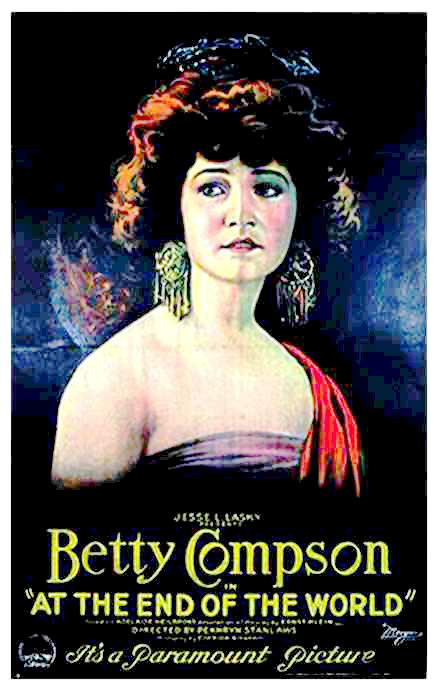
Set in the humid, neon-drenched alleyways of Shanghai, At the End of the World emerges as a chiaroscuro masterpiece that refracts the moral ambiguities of the interwar period through the prism of a woman’s calculated survival. Betty Compson’s Cherry O’Day is not merely a heroine but a sociological experiment—a creature of her environment, molded by her father’s nihilistic aphorisms into a sexual tactician who weaponizes her beauty against the patriarchal structures that seek to confine her.
The film’s opening acts establish a rhythm of sexual politics as clinical as a dissection. Terence O’Day’s (Joseph Kilgour) Paper Lantern Café becomes a microcosm of capitalist decadence, where Cherry’s suitors—from the laboring MacGregor (Mitchell Lewis) to the bourgeois Blaine (Milton Sills)—are reduced to pawns in a game of emotional chess. When her father’s death accelerates her marriage to Blaine, the transactional nature of their union is underscored by the cinematographer’s tight close-ups, which magnify the tension in Compson’s eyes as she navigates the shift from sexual autonomy to financial pragmatism.
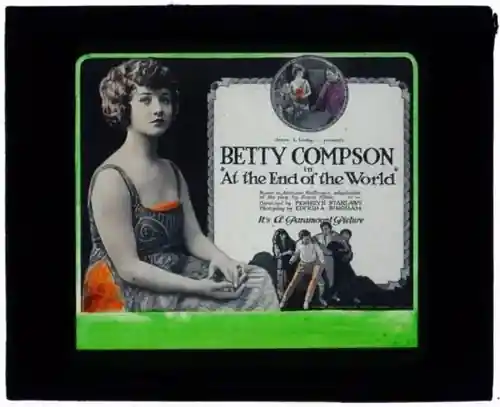
Gordon Deane’s (Casson Ferguson) arrival as the least interested suitor initially appears to be a narrative detour, but his decision to retreat to a lighthouse becomes the film’s most potent metaphor. The lighthouse, with its vertical architecture and precarious isolation, serves as both sanctuary and purgatory. Its spiral staircases and narrow windows create a visual motif of entrapment, while the encroaching sea symbolizes the inevitability of emotional submersion. The casting of Deane as a novelist—an artist removed from material concerns—highlights the film’s critique of artistic detachment in a world governed by transactional relationships.
Allen’s (Spottiswoode Aitken) criminal subplot, involving stolen bonds, introduces a thread of economic anxiety that permeates the narrative. His subsequent presence in the lighthouse—where he and MacGregor’s rivalry culminates in a fatal fall—becomes a microcosm of the film’s broader themes. The directors, drawing from the scripts of Edfrid A. Bingham and Ernst Klein, employ the lighthouse’s precariousness to amplify the stakes of male rivalry, a dynamic that mirrors the more refined but equally lethal power plays in films like Love and the Woman.
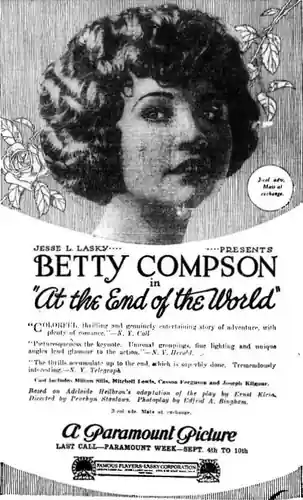
Betty Compson’s portrayal of Cherry is a masterstroke of physical and psychological nuance. Her gestures are deliberate, from the languid lighting of a cigarette to the sharp tilt of her head when assessing a suitor’s worth. In the lighthouse scenes, Compson’s use of silence becomes its own language—a stare toward the horizon speaks volumes about her conflicted yearning for both escape and connection. This echoes the restrained performances in And the Law Says, though Cherry’s agency places her in a more ambiguous moral space.
The film’s visual grammar is defined by its interplay of natural elements. The Shanghai setting is rendered in a haze of golden light filtered through window screens, creating a sense of perpetual twilight. When the narrative shifts to the island, the palette darkens, with stormy skies and the lighthouse’s artificial beacon creating a stark contrast. The vertical composition of the lighthouse—its ascent and descent—mirrors Cherry’s arc from social climber to tragic figure, a motif that resonates with the stairwell symbolism in The Wheel of the Law.

Water emerges as both a setting and a thematic force. The lighthouse’s proximity to the sea, the drowned sailor MacGregor, and the final plunge of Allen and MacGregor all serve to blur the line between life and death, stability and chaos. This aquatic symbolism is reminiscent of the drowning sequences in Nurse Cavell, though here it is employed more metaphorically to underscore existential futility.
At its core, At the End of the World interrogates the intersection of gender and capitalism in early 20th-century society. Cherry’s manipulation of suitors is framed as both a survival strategy and a moral compromise, a duality that reflects the film’s era-specific anxieties about female autonomy. The presence of a wealthy husband (Blaine) juxtaposed with the working-class MacGregor highlights class tensions, a theme explored with similar nuance in God’s Country and the Law. Yet where that film focuses on systemic injustice, this one zooms in on intimate betrayals.
The film’s tragic resolution—where Cherry finds happiness with Deane after her two suitors’ deaths—invites scrutiny of the narrative’s moral calculus. Is Deane’s acceptance a form of redemption, or merely another transaction in a cycle of violence? This ambiguity, paired with the film’s stark visual poetry, ensures that At the End of the World lingers not as a straightforward melodrama but as a meditation on the futility of human connection in a world governed by power and desire.
Though overshadowed by contemporaneous silent classics, At the End of the World demonstrates technical sophistication in its use of deep focus during lighthouse scenes and its innovative editing of dialogue-free sequences. The score, though modest, employs motifs that echo the waves against the lighthouse, enhancing the film’s maritime unease. For modern viewers, the film serves as a time capsule of 1920s Shanghai’s cosmopolitanism, its blend of Chinese and Western settings offering a rare visual document of the era’s cultural hybridity.
In conclusion, At the End of the World endures as a quietly revolutionary work. Its exploration of emotional triangulation, class conflict, and gendered power dynamics remains startlingly relevant. For cinephiles seeking a lost gem of early cinematic expressionism, this film offers a rewarding journey through its storm-wracked lighthouse and the fractured hearts it illuminates.

IMDb —
1920
Community
Log in to comment.