DbcultAccessing Vault...
5.5/10
Senior Film Conservator

A definitive 5.5/10 rating for a film that redefined the boundaries of cult cinema. A Ship Comes In remains a cornerstone of transgressive art.
If you are looking for a dusty relic of early 20th-century patriotism, A Ship Comes In will surprise you. It is worth watching today not just for its historical value, but for the raw, physical performance of Rudolph Schildkraut. This is a film for viewers who appreciate silent-era expressionism and stories that tackle the immigrant experience without the usual rose-colored glasses. While the second half leans into a somewhat melodramatic thriller plot, the first hour is one of the most grounded depictions of the 'huddled masses' ever put to celluloid. Those who find silent films too slow or theatrical might struggle with the earnestness, but the visual storytelling here is remarkably sophisticated.
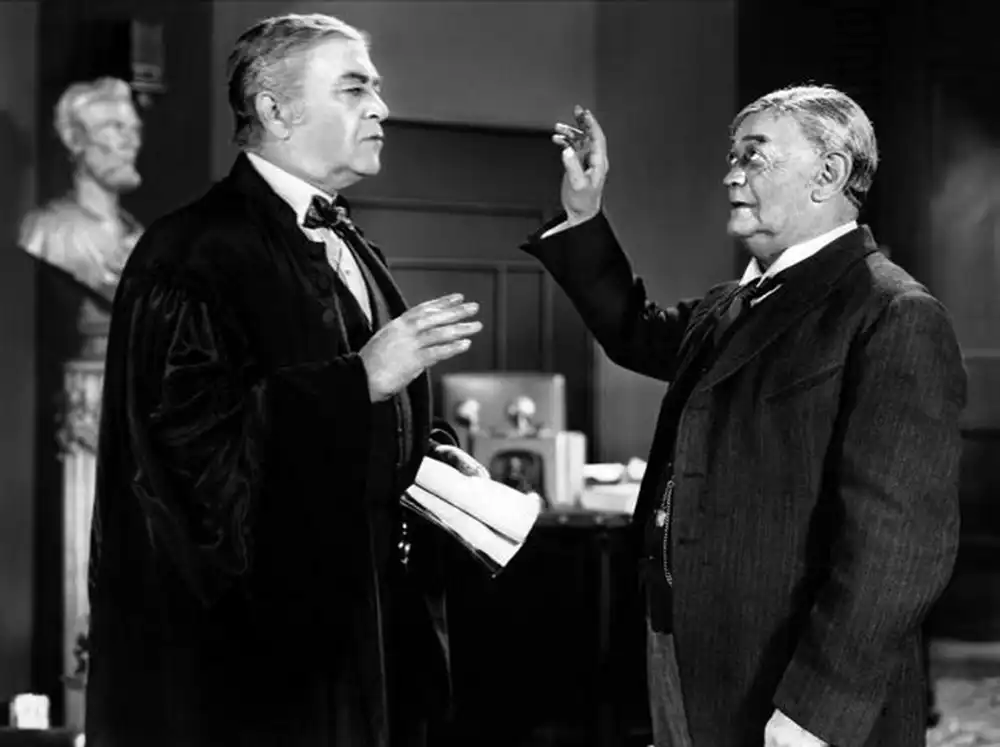
The film lives and dies on the face of Rudolph Schildkraut as Peter Pleznik. Unlike many silent actors who relied on grand, sweeping gestures, Schildkraut plays Peter with a heavy, internal dignity. You see it in the way he handles his naturalization papers—not as props, but as holy relics. There is a specific scene where he stands before a judge, and the camera stays tight on his weathered features. You can see the exhaustion of a lifetime of labor competing with the terror of being rejected. It’s a masterclass in subtlety that makes many contemporary performances look loud by comparison.

Louise Dresser, playing Mama Pleznik, provides the emotional anchor. While Peter is obsessed with the abstract idea of 'America,' Mama is the one dealing with the reality of the tenement kitchen and the safety of the children. Her performance was nominated for an Academy Award at the very first ceremony, and it’s easy to see why. She doesn't play a caricature; she plays a woman who is constantly scanning the room for threats, even when things are going well. The chemistry between the two feels like a marriage that has survived decades of hardship before the first frame even starts.
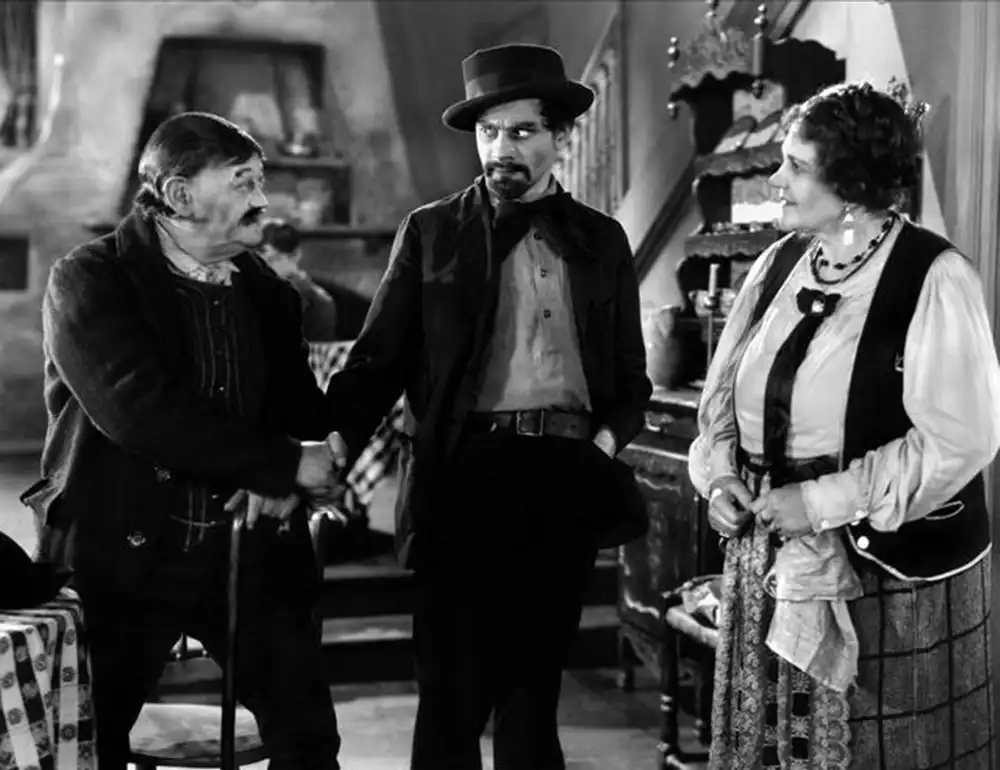
Director William K. Howard avoids the flat, stagey look common in lesser films of the era. The arrival at Ellis Island is shot with a sense of overwhelming scale. You feel the claustrophobia of the processing lines and the coldness of the institutional architecture. There is a specific visual choice where the shadows of the bars in the federal building fall across Peter’s face long before he is ever accused of a crime—a bit of heavy-handed foreshadowing, perhaps, but it works to establish a sense of impending doom.
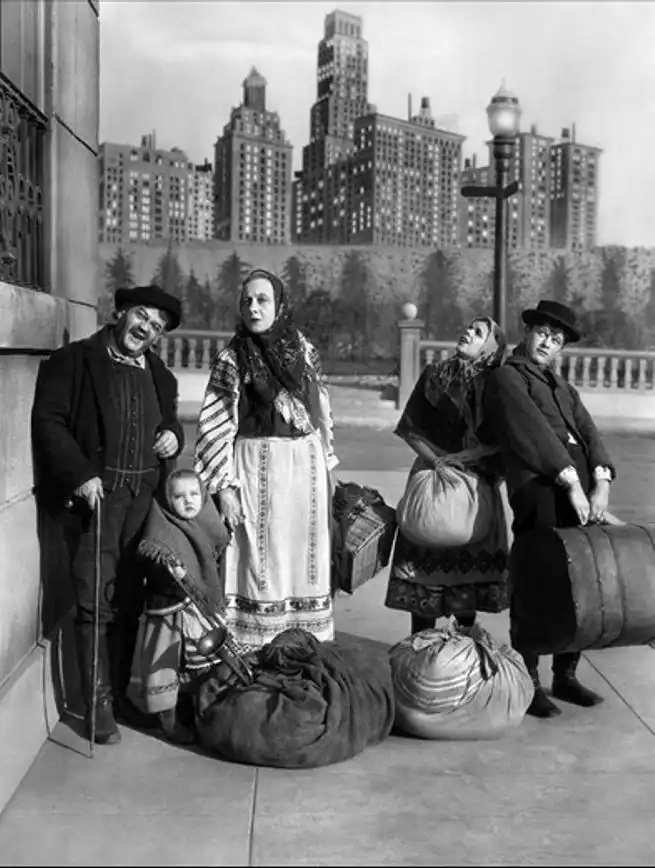
The lighting in the Pleznik apartment is notably dim. It doesn't look like a movie set; it looks like a place where electricity is a luxury. You notice small details, like the way the family huddles around a single table, or the specific texture of the heavy wool coats they wear even indoors. This realism elevates the film above the standard 'melting pot' propaganda seen in other titles like The Bronze Bell. It feels lived-in and sweaty.

The film is essentially two movies stitched together. The first half is a poetic, almost documentary-style look at assimilation. The second half is a high-stakes political thriller involving an anarchist plot and a bomb hidden in a jury room. This shift is jarring. One moment we are watching Peter practice his English, and the next we are thrust into a world of shadowy conspirators and ticking clocks.
The pacing drags slightly during the courtroom sequences. The title cards become more frequent and the legal jargon slows the momentum that the earlier, more visual scenes built up. However, the tension remains high because Howard has made us care so deeply for Peter. When the bomb goes off—a sequence handled with surprisingly violent practical effects for 1928—the impact is genuinely shocking. It isn't just a plot point; it’s the literal destruction of the family’s peace. The way the youngest child is caught in the crossfire is a brutal touch that reminds you this film isn't pulling its punches.
The film’s greatest strength is its empathy. It doesn't treat the Plezniks as symbols; it treats them as people with specific fears and limited options. The sequence where Peter is finally sworn in as a citizen is genuinely moving because we’ve seen the physical toll it took to get there. It’s a far cry from the more theatrical melodrama found in Sapho or the lighter social commentary of Peacock Alley.
The weakness lies in the villains. The 'anarchists' are largely faceless boogeymen, a reflection of the Red Scare anxieties of the late 1920s. They lack the interiority given to the Pleznik family, serving only as a mechanism to put Peter in jeopardy. Additionally, some of the supporting characters, particularly the older children, feel a bit thin. They are there to react to the tragedy rather than drive the story themselves.
A Ship Comes In remains a powerful experience because it captures the vulnerability of the immigrant. It understands that for people like Peter, the law isn't just a set of rules; it’s a life-or-death gamble. While the ending leans toward a tidy resolution that feels a bit forced compared to the grit of the opening, the journey is worth it. It’s a film that demands you look at the human cost of the flags and the anthems. If you can handle the silence, the rewards are immense.

IMDb 6.4
1935
Community
Log in to comment.