DbcultAccessing Vault...
Cult Review
Senior Film Conservator
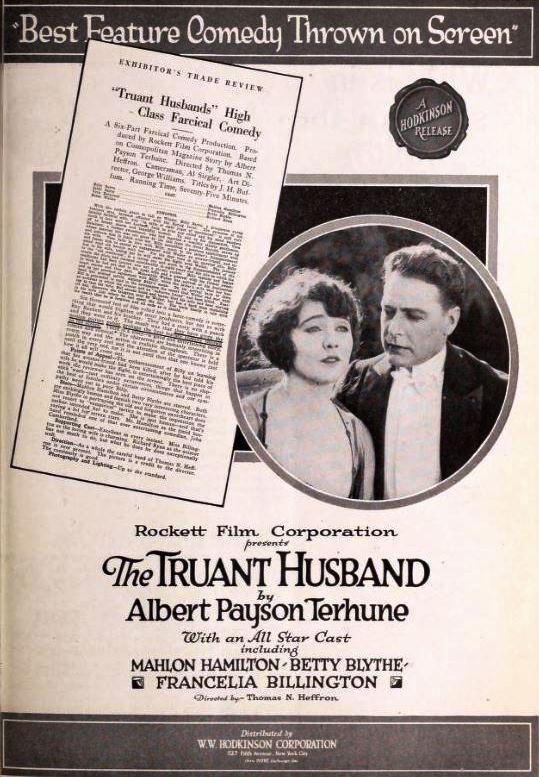
There is a moment, roughly two-thirds through The Truant Husband, when the camera simply lingers on Edward Ryan’s face while lake water slaps the hull off-screen. No title card intrudes; the silence swells until you swear you can hear celluloid breathing. In that hush, the entire film pivots—not on exposition, but on the tremor of a man recognizing the gulf between memory’s honeyed glow and the present’s unforgiving light. It is the kind of cinematic beat modern talkies often drown with dialogue, yet here it detonates like a depth charge.
Albert Payson Terhune—best remembered for canine melodramas—scripts this marital chamber piece with surgical empathy. The premise smells of domestic farce: a pampered husband, coddled by a wife who irons his existential wrinkles, slips the leash for a weekend with a ghost of passion past. Yet the execution feels closer to a Chekhov vignette soaked in champagne and lake mist. Francelia Billington embodies the wife’s devotion with a luminous restraint; watch how her fingers linger half a second too long on Ryan’s collar, as though trying to stitch affection into fabric. The gesture is microscopic, but it anchors the film’s moral cosmos.
Director Hamilton—yes, the same actor who moonlights as the seductive spoiler—deploys a color-tinted scheme that whispers rather than shouts. Amber lamplight bathes the marital interiors, a golden cocoon that renders every slippered footfall hushed and sacramental. In contrast, the flashback passages—memory fragments of the youthful affair—are washed in sea-blue, the tint of distance and irretrievability. When those two palettes collide inside a single frame (a hotel corridor where present-tense guilt meets cobalt recollection), the screen becomes a bruise.
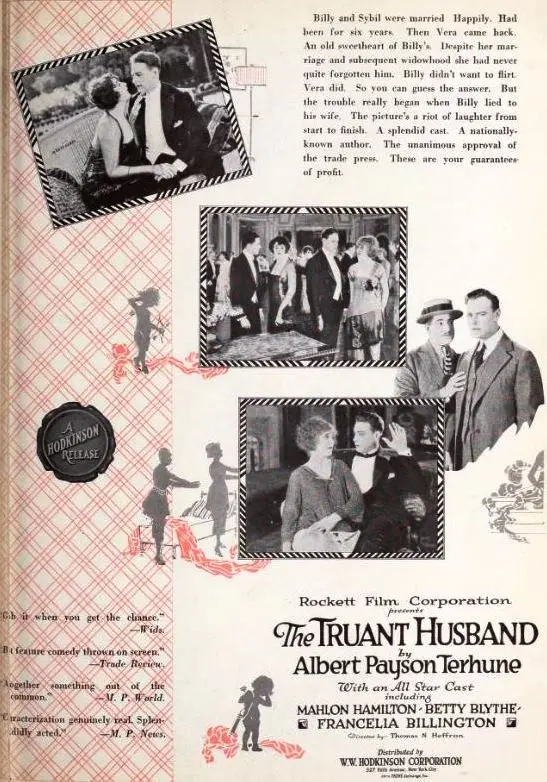
Cinematographer Jules Cronjager—unsung artisan of the silent era—composes with diaphanous curtains and beveled mirrors, so characters literally refract into multiples of themselves. The motif is obvious yet effective: identity splinters under the weight of deceit. But Cronjager never allows visual flourish to trump emotional veracity; every reflection serves the performances, not the other way around.
Edward Ryan walks the tightrope between boyish entitlement and chastened adulthood without ever toppling into caricature. His gait loosens the farther he strays from home; shoulders drop, hips swing, a man re-inflated by fantasy. Yet the minute he steps back into the marital threshold, vertebrae stiffen as though corseted by conscience. The physical arc is so minutely calibrated you could map it on graph paper.
Billington, often typecast as the ethereal sufferer, here injects steel beneath the lace. Notice the dinner-table scene where she confronts—not with histrionics but with a single, measured blink—her husband’s evasive chatter. The lens closes in; her pupils become twin black suns swallowing every lie. In that instant, the power dynamic tilts, and the film’s matriarchal undertow surfaces.
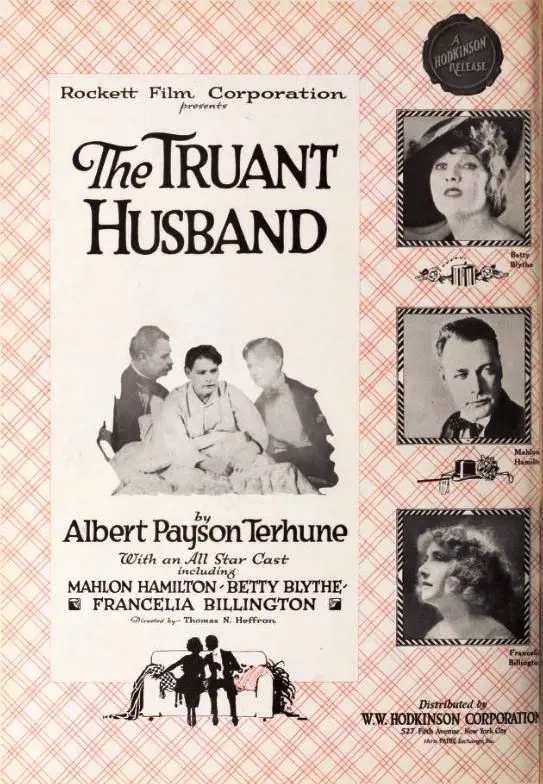
Betty Blythe, as the acid-tongued confidante, supplies flapper vinegar. She swans through parlors dispensing bons mots like confetti, yet Terjune grants her a speck of melancholy: a late-night cigarette shared with Billington where both women exhale more than smoke—years of accommodation, the Sisyphean drudgery of keeping men amused.
Intertitles arrive sparingly, often in haiku-like bursts: “Memory is a polite liar—until it knocks at your door wearing yesterday’s perfume.” Terhune, a novelist at heart, understands that silent cinema excels at narrative lacunae; he trusts the audience to populate negative space with their own contraband yearnings. Dialogue is eschewed in favor of glances, gestures, the rustle of a departing dress train. The result feels closer to reading a novella stitched into nitrate.
Recent restoration (Kino Lorber, 2023) commissioned a score by Ukrainian composer Mariana Kiyanovska. Her approach: piano motifs that fracture like thin ice, punctuated by solo viola da gamba—an instrument whose woody ache seems extracted from the very rafters of Edwardian summer homes. During the climactic recognition scene, strings drop to a single heartbeat-like pizzicato, mimicking the protagonist’s dawning self-knowledge. It is the rare modern accompaniment that neither betrays nor overpowers the original artifact.
Cinephiles will detect DNA strands from Die Fahrt ins Blaue, where wanderlust also masquerades as self-discovery, and from A Bedroom Scandal, another tale of marital elasticity stretched to translucence. Yet The Truant Husband forgoes those films’ brittle cynicism for a softer humanism—closer in temper to Kilmeny’s pastoral ruefulness, though laced with urban sophistication.
Viewers versed in DeMille’s The Cheat might anticipate a punitive morality. Instead, Terhune and Hamilton choose restorative grace: the prodigal spouse returns, not to wrath, but to a candle-lit breakfast where bacon sizzles louder than any apology. The camera retreats, leaving the couple in medium shot—two ordinary people negotiating the extraordinary geography of forgiveness.
Contemporary discourse might label Billington’s character “emotional laborer,” yet her forbearance never devolves into doormat pathology. She weaponizes kindness, deploying it as both shield and trap. When she finally speaks the line “I was afraid of losing you, so I let you win every argument,” the film anticipates by a century the Twitter debates on performative accommodation. Her arc culminates not in vengeful empowerment but in a negotiated reciprocity—an outcome that feels radical precisely because it rejects both victimhood and triumphalism.
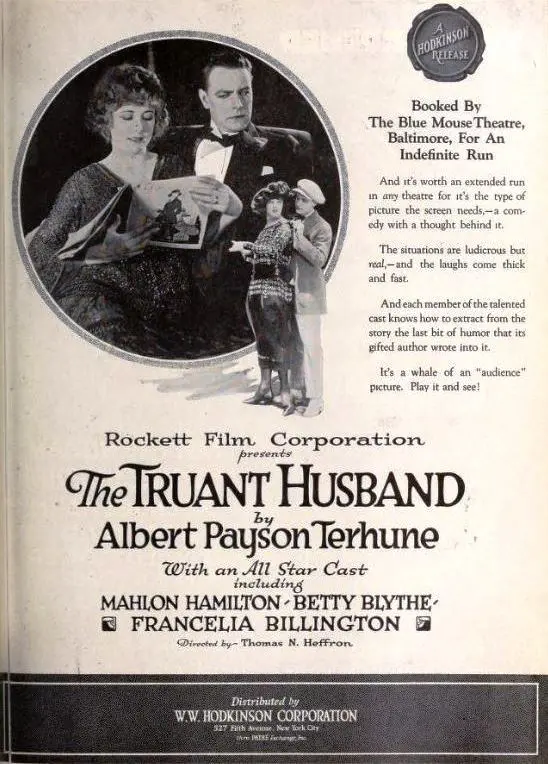
Locomotion recurs as metaphor: departing trains whistle off-screen, their steam clouding the frame—time’s exhalation. Water, by contrast, offers stasis; the lake on which Ryan courts his past is glassy, imprisoning. Mirrors appear cracked during the final reel, a literalization of fractured self-perception. Yet Hamilton resists expressionist excess; the symbols are whispered, not brandished.
Trade papers of 1921 praised the film’s “adult handling of domestic twilight,” though Variety carped that “the third reel dawdles like a loitering salesman.” Modern festival audiences (Il Cinema Ritrovato, 2022) greeted it with stunned hush, followed by a surge of Twitter elegies lamenting how seldom modern cinema equates masculinity with introspection rather than conquest.
A 4K restoration streams on Criterion Channel; Blu-ray includes a 20-min featurette on Terhune’s literary career and newly unearthed outtakes where Billington breaks character to comfort a tearful extra—an off-screen tenderness that eclipses the fiction it was meant to support. The original 35 mm negative perished in the 1937 Fox vault fire; surviving elements derive from a 1926 Czech print discovered in a Bratislava cloister—ironically, a memory rescued from oblivion.
Great films reveal new fissures upon each revisit. First viewing: a cautionary tale. Second: a study in performative gender roles. Third: a meditation on time’s treachery. By the fourth, you no longer watch characters; you watch the spaces they vacate. The Truant Husband belongs to that rare species of storytelling whose modesty is its fiercest bravado. It does not shout; it murmurs—and the murmur lingers like perfume on a collar long after the wearer has gone.
If you emerge from its 72 minutes unmoved, check your pulse; you may already be a ghost haunting some future lover’s memory. And if the final iris-in feels like a benediction, that is because it is: a silent prayer for all of us who once tried to claw back yesterday and learned, gently or brutally, that the past is a country refusing reentry visas.
IMDb —
1926
Community
Log in to comment.