DbcultAccessing Vault...
Cult Review
Senior Film Conservator
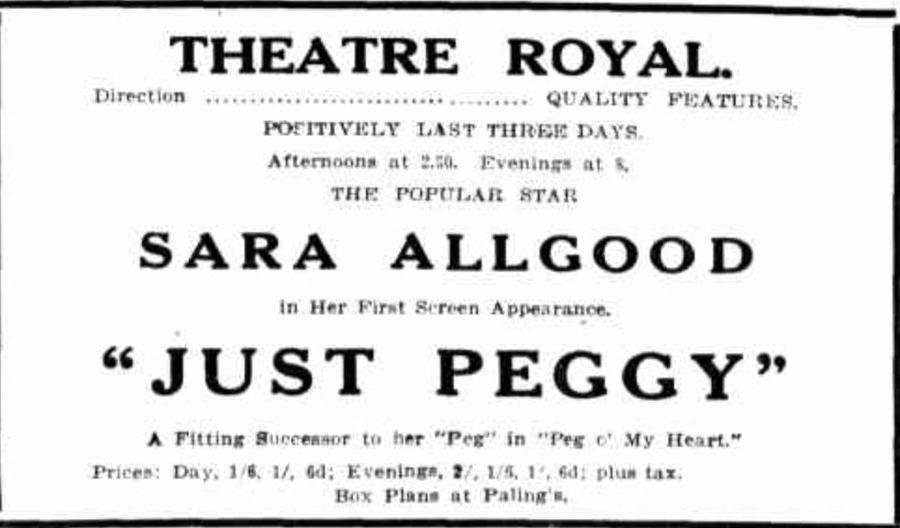
In the annals of early 20th-century cinema, certain narratives emerge not merely as stories but as profound explorations of the human condition, rendered with a sincerity that transcends their silent medium. J.A. Lipman's 'Just Peggy' is unequivocally one such cinematic artifact, a poignant melodrama that, despite its age, still possesses the remarkable ability to stir the soul. It's a film that asks us to contemplate the profound connections forged by fate, the redemptive power of art, and the enduring resilience of the human spirit. The premise itself is a potent cocktail of classic melodramatic tropes: a child, abandoned to the cruel whims of destiny, grows into an accomplished artist whose very talent becomes the catalyst for an improbable familial reunion. Yet, within this familiar framework, 'Just Peggy' finds a unique voice, largely through its masterful execution and the compelling performances that bring its characters to life.
The film commences with an image of heart-wrenching vulnerability: an infant, left to the mercies of a cold, indifferent world, her only inheritance a violin. This instrument, far more than a mere prop, quickly assumes a symbolic weight, becoming both a surrogate parent and a prophetic emblem of her future. This stark beginning immediately establishes the film's emotional register, inviting the audience to invest deeply in Peggy's journey. As the narrative progresses, we witness her transformation from a forsaken child into a prodigious musician, her innate talent nurtured by circumstance and, perhaps, by the very loneliness that marked her early years. The violin, initially a mute companion, becomes her voice, her solace, and ultimately, her destiny. Tralie Nicholson, in the titular role of Peggy, delivers a performance that is both delicate and powerful, a testament to the emotional depth that could be conveyed without a single spoken word in the silent era. Her expressions, her posture, the very way she holds the violin, all contribute to a portrayal that is utterly convincing and deeply moving.
What truly elevates 'Just Peggy' beyond a simple tale of triumph over adversity is its intricate exploration of familial separation and eventual reunion. The revelation that Peggy's parents are a hunchbacked conductor and a singer who once suffered from blindness adds layers of tragic irony and poetic justice to the narrative. Her father, portrayed with a compelling blend of artistic genius and profound personal sorrow by T. Moran, embodies the archetype of the tormented artist, his physical deformity a mirror to the emotional scars of his past. Aileen Campbell, as Peggy's mother, brings a luminous grace to the role of the singer, her past blindness adding a poignant dimension to her character's journey toward clarity and recognition. The film masterfully uses these character details to enhance the emotional stakes, making the eventual reunion not just a happy ending, but a profound act of healing and completion. The unfolding of this intricate plot, penned by J.A. Lipman, showcases a remarkable understanding of dramatic pacing and character development, building towards a climax that feels both inevitable and deeply satisfying.
The aesthetic of 'Just Peggy' is a quintessential example of early silent film artistry, relying heavily on visual cues, exaggerated expressions, and symbolic imagery to convey its intricate emotional landscape. The cinematography, while perhaps rudimentary by today's standards, is effective in capturing the grandeur of musical performances and the intimate struggles of its characters. The use of close-ups, particularly on Peggy's hands as they glide across the violin strings or on the faces of her parents as they experience moments of realization, serves to draw the audience into their inner worlds. The film's ability to communicate complex emotions without dialogue is a testament to the power of visual storytelling, a craft that was honed to perfection during this era. This reliance on visual cues is a hallmark of the period, allowing for a universal appeal that transcended language barriers, much like the timeless narratives found in films such as Chûshingura, which, despite its vastly different cultural context, similarly uses visual grandeur to convey profound emotional and moral dilemmas.
Beyond the central triumvirate, the supporting cast of 'Just Peggy' contributes significantly to the film's rich texture. Sara Allgood, a veteran of the stage and screen, brings a gravitas to her role, her presence lending an authentic weight to the proceedings. Mona Scully, Vincent White, Roma Highes, Harry Thomas, T.M. Lloyd, Nellie Phillips, Monica Dick, Percy Walshe, Marjorie Henry, Rigby C. Tearle, Lily Rochefort, Gerald Henson, and Fred Ward each carve out distinct, memorable characters, even in their brief appearances. Their collective efforts ensure that the world Peggy inhabits feels fully realized, populated by individuals whose lives intersect with hers in meaningful ways. The nuanced performances, often relying on subtle gestures and expressions, underscore the collaborative spirit inherent in silent film production. This ensemble work, reminiscent of the communal storytelling found in tales like Moora Neya, or The Message of the Spear, where individual contributions weave into a larger, more impactful narrative, is crucial to the film's success.
At its core, 'Just Peggy' is a profound meditation on identity and belonging. Peggy's journey is not merely about finding her parents but about understanding who she is in the context of her unique gifts and her fractured past. The violin, initially a symbol of her abandonment, transforms into an instrument of self-discovery and connection. It is through her music that she not only expresses her deepest emotions but also communicates across the chasm of estrangement to her parents. This theme resonates with other films of the era that explored the transformative power of unique talents or circumstances to forge identity, such as The Gift Girl, where a character's inherent value transcends societal perceptions, or even the comedic genius of Chaplin in The Essanay-Chaplin Revue of 1916, where performance becomes a defining aspect of self. Peggy's artistic triumphs are inextricably linked to her personal quest, creating a narrative that is both externally dramatic and internally rich.
It's crucial to view 'Just Peggy' through the lens of its historical context. The film embraces the melodramatic conventions prevalent in early cinema, utilizing heightened emotions, dramatic coincidences, and clear moral distinctions to engage its audience. While contemporary viewers might find some elements overtly sentimental, this was precisely the language through which audiences of the time connected with stories. The film's embrace of these conventions is not a weakness but a reflection of its era, much like the intense emotional narratives found in Transgression or Hearts in Exile. J.A. Lipman's writing, while adhering to these tropes, manages to imbue the narrative with a genuine emotional core, preventing it from devolving into mere caricature. The suffering of the characters feels real, and their eventual joy is hard-earned, making the journey compelling despite its predictable beats.
'Just Peggy' stands as a testament to the enduring power of silent cinema, a medium often underestimated in its capacity for profound storytelling. It reminds us that narrative depth and emotional impact do not require spoken dialogue, but rather a keen understanding of visual language, character development, and universal human themes. The film's portrayal of a child's journey from abandonment to artistic triumph and familial reconciliation resonates with timeless appeal, speaking to our innate desire for connection and healing. The specific details—a hunchbacked father, a blind mother—add a layer of poetic challenge, making the eventual triumph all the more glorious. This narrative sophistication, even in a silent film, positions 'Just Peggy' alongside other significant works of the period that sought to explore complex social and emotional landscapes, perhaps even touching upon the societal reflections found in films such as Reputation or Rosie O'Grady, which similarly navigated the intricacies of individual lives against broader societal backdrops.
Ultimately, 'Just Peggy' is a celebration of music's transcendent power. It is the violin, and Peggy's mastery of it, that acts as the primary force driving the plot, bridging divides, and ultimately bringing light to darkness. The film posits music as a universal language, capable of communicating what words cannot, of reaching into the deepest recesses of the heart and stirring recognition and love. This profound message, delivered through a compelling narrative and memorable performances, ensures that 'Just Peggy' remains a significant, if perhaps lesser-known, gem of the silent era. It's a film that leaves an indelible impression, a resonant echo of a bygone cinematic age that still speaks volumes today about the unbreakable bonds of family and the extraordinary capacity of art to heal and unite. Its legacy is not just in its plot, but in its artistic sincerity and its unwavering belief in the power of human connection, a sentiment that aligns with the hopeful messages sometimes found in films like A Prince in a Pawnshop, where circumstances are overcome through unexpected turns of fate and the resilience of spirit. Even in its quietest moments, 'Just Peggy' sings a powerful song of hope and reconciliation, proving that some melodies, once heard, are never truly forgotten.
IMDb 5.7
1932
Community
Log in to comment.