DbcultAccessing Vault...
6.9/10
Senior Film Conservator
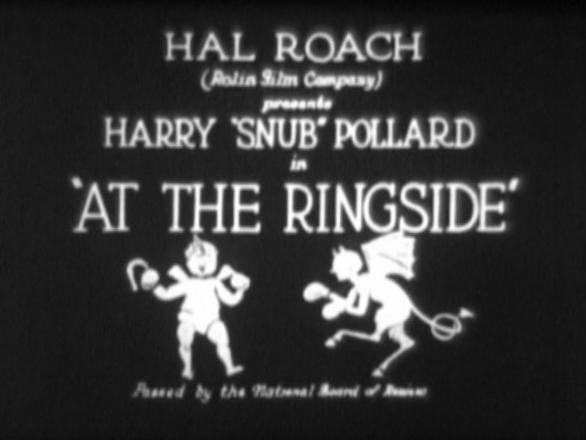
A definitive 6.9/10 rating for a film that redefined the boundaries of cult cinema. At the Ringside remains a cornerstone of transgressive art.
At the Ringside
is a cinematic relic that hums with the anarchic energy of early 20th-century silent comedy, yet it carves out a singular niche in the annals of slapstick with its improbable blend of brawling, buffoonery, and bovine intervention. This 1927 film, directed with a loose, improvisational flair, is less about narrative coherence and more about the joyous collision of physical comedy and absurdist logic. At its core is Snub Pollard, the titular constable whose haplessness is both his liability and his salvation. His journey from inept officer to accidental hero is a masterclass in visual storytelling, relying on exaggerated expressions, kinetic camera work, and a plot that leans into the absurd with unapologetic glee.Snub’s motivation is as noble as it is comically desperate: to rescue his lady friend’s hot dog stand from eviction by winning a paltry $100 prize in a boxing match. The stakes are laughably low, yet the film elevates them through a series of escalating set pieces. Opposing him is a brute of a boxer, played with bovine-like menace by John M. O'Brien, whose reliance on a donkey hidden behind a curtain to defeat opponents is both a literal and metaphorical gag. This device—a mechanical antagonist with a mind of its own—becomes the film’s most enduring image, a symbol of how early cinema weaponized the mundane to create chaos.
What separates At the Ringside from its contemporaries is its refusal to take itself seriously. While films like No Children Wanted leaned into moralizing about social issues, this film embraces pure farce. The turning point comes when Snub’s sweetheart (played by Marie Mosquini) weaponizes pepper in a sandwich, triggering a chain reaction of sneezes from the bully. The sequence is a marvel of timing, as each sneeze becomes a cue for Snub to land a punch, blending slapstick with strategic foresight. The donkey’s final role in the climax—both as a punchline and a punchline’s punchline—elevates the film from mere vaudeville to a meditation on the futility of brute force in the face of cleverness.
Technically, the film is a product of its era, with hand-cranked cameras and exaggerated pantomime, yet its charm lies in its imperfections. The editing is frantic, the sound effects (though silent) are implied with clever visual cues, and the set pieces—particularly the donkey’s first appearance—revel in a childlike sense of wonder. The use of shadows and light in the boxing ring scenes is rudimentary but effective, creating stark contrasts that mirror the clash between Snub’s ingenuity and the bully’s bluntness.
Comparisons to The Wharf Rat are inevitable, given both films’ focus on working-class protagonists. However, At the Ringside diverges by embracing the zany over the gritty. It’s a film where the line between hero and fool is razor-thin, and where the solution to a societal problem (eviction) is resolved with a donkey and a sneeze. This absurdity is its greatest strength, offering a respite from the realism that would dominate later cinema.
The cast, particularly Snub Pollard, embodies the film’s ethos. His physical comedy is a blend of Chaplinesque pathos and Laurel and Hardy-esque mania, creating a character who is both endearing and exasperating. His interactions with the donkey—a silent co-star if ever there was one—are the film’s emotional core, suggesting a mutual respect between man and beast that transcends language. Meanwhile, Marie Mosquini’s role as the clever sidekick is a throwback to the ingénue tropes of the silent era, yet she subverts expectations by being the true mastermind behind the victory.
Thematically, the film is a love letter to improvisation. Snub’s success hinges not on strength or skill but on adaptability—a message that feels oddly prescient in today’s fast-paced world. It’s a film about underdogs, not just in the literal sense of Snub’s underdog status but in the broader cultural context of early cinema itself. These films were underdogs in the race for audiences’ attention, competing with live theater and burgeoning radio, yet they thrived by embracing their own limitations.
Visually, the film’s use of the boxing ring as a stage is noteworthy. The ring becomes a metaphor for life’s absurd struggles, where the rules are malleable and the outcomes are dictated by chance. The donkey’s presence in the ring is both a practical gag and a visual motif for the unpredictability of fate. It’s a device that would feel at home in The Secret of the Submarine, though that film leans into sci-fi while At the Ringside stays grounded in the earthy humor of street-level comedy.
The film’s weakest link is its pacing—certain scenes drag as if the filmmakers were still figuring out how to condense this zany premise into a coherent narrative. Yet, these lulls are forgivable given the film’s overall exuberance. Moments where the donkey’s antics threaten to overshadow the plot are balanced by quieter scenes of Snub’s desperation, creating a rhythm that mirrors the ebb and flow of a real underdog story.
One cannot discuss At the Ringside without acknowledging its place in the broader landscape of early cinema. It sits comfortably alongside A Mala Nova in its use of animal-based humor, though it diverges in tone by embracing a more slapstick approach. The film also shares DNA with Little Eve Edgarton in its focus on working-class heroism, though here the heroism is more slapstick than sentimental.
Ultimately, At the Ringside is a testament to the ingenuity of silent film. It reminds us that before dialogue became the primary storytelling tool, filmmakers relied on faces, bodies, and objects to communicate. The donkey, in this sense, is more than a joke—it’s a character in its own right, a symbol of the creative possibilities of cinema. For modern audiences, the film is a reminder that humor can be both simple and profound, a lesson that He Couldn’t Fool His Wife might echo but never replicate.
In conclusion, At the Ringside is a film that wears its silliness on its sleeve and dares you not to smile. It’s a time capsule of a genre at its peak, where the line between nonsense and narrative blurred to create something uniquely memorable. For those who think silent films are relics of a bygone era, this one is a corrective—a vibrant, bouncy, and unexpectedly moving piece of cinematic history.
IMDb 7.2
1932
Community
Log in to comment.