DbcultAccessing Vault...
Cult Review
Senior Film Conservator
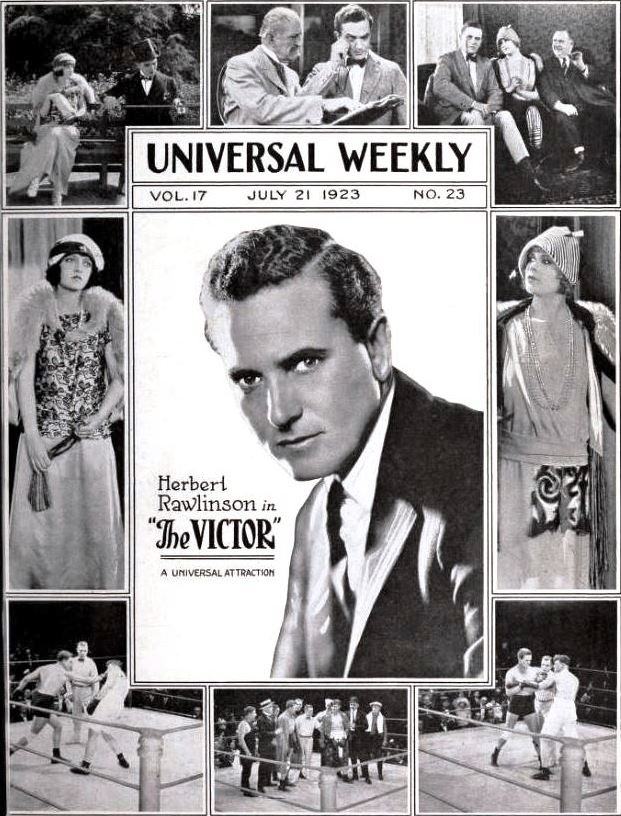
The opening frames of *The Victor* establish a stark dichotomy: the mist‑cloaked estates of the English countryside juxtaposed with the neon‑lit bustle of 1920s New York. Director Gerald Beaumont, collaborating with screenwriter Richard Schayer, crafts a visual metaphor for Sir Edward Pembroke’s inner dissonance. The aristocrat’s polished veneer, rendered in soft focus, quickly gives way to the harsh, grainy realism of a downtown eatery, where the clatter of dishes becomes a percussive score to his descent.
Otis Harlan, embodying Pembroke with a blend of aristocratic poise and bewildered earnestness, delivers a performance that oscillates between restrained dignity and frantic desperation. His measured diction, tinged with a faint American twang acquired through the script’s clever dialogue, underscores the character’s cultural dislocation. In contrast, Frank Currier’s portrayal of the opportunistic promoter, Silas McCoy, exudes a sleazy charisma that feels eerily contemporary, reminding viewers of modern talent scouts who prey on vulnerability.
The film’s comedic beats hinge on Pembroke’s inability to navigate the service industry. A scene where he mistakenly serves a soup to a patron’s lap—only to watch it cascade like an abstract painting—exemplifies Beaumont’s knack for physical comedy that never feels slapstick for its own sake. The humor is undercut by a lingering melancholy; each laugh is a reminder of a man forced to abandon his birthright.
Eddie Gribbon, as the irascible prizefighter Jack “The Hammer” Malone, provides a foil to Pembroke’s refined awkwardness. Their confrontation in the dimly lit backroom of the restaurant is choreographed with a kinetic energy that anticipates later noir brawls. The sudden, thunderous punch that sends Malone sprawling is captured in a slow‑motion close‑up, the camera lingering on the ripple of his flesh—a visual echo of the aristocrat’s own internal rupture.
Once signed to McCoy’s promotion, Pembroke’s training montage is a masterclass in visual storytelling. The sequence, set against the backdrop of a gritty gym bathed in the sea‑blue hue #0E7490, intercuts the clang of iron with the aristocrat’s disciplined breathing. The cinematographer employs chiaroscuro lighting to highlight the tension between Pembroke’s refined posture and the raw, bruised muscles he cultivates.
Herbert Rawlinson, cast as Pembroke’s trainer, brings a stoic gravitas that mirrors the film’s thematic core: the forging of identity through trial. His terse admonitions—"Discipline is the language of the ring"—are delivered in a clipped, almost poetic cadence, reinforcing the narrative’s preoccupation with language as power.
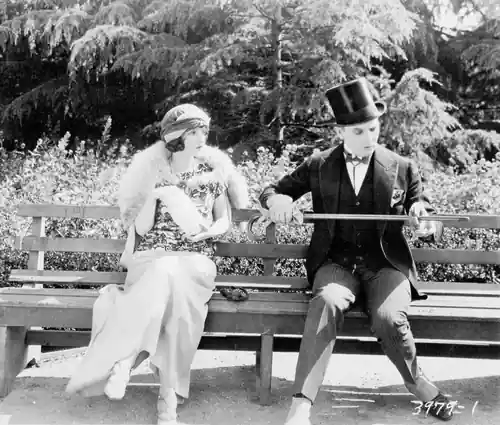
At its heart, *The Victor* interrogates the paradox of agency within the constraints of class. Pembroke’s initial decision to marry for financial salvation reflects a patriarchal duty, yet his subsequent refusal to consummate the arrangement signals a rebellion against prescribed roles. The boxing ring becomes a crucible where the aristocratic veneer is stripped away, revealing a man who defines himself through exertion rather than inheritance.
The film’s subtext aligns with contemporary discourses on social mobility, echoing the narrative arcs of *The Marriage Speculation* (see comparison) and the class‑crossing romance of *Little Women*. However, unlike the romantic optimism of those works, *The Victor* adopts a more ambiguous stance: victory in the ring does not guarantee societal acceptance, but it does afford personal redemption.
Dorothy Manners, portraying Margaret Whitfield, offers a nuanced performance that avoids the damsel‑in‑distress trope. Her eyes convey a mixture of expectation and curiosity, and her occasional moments of quiet defiance—such as when she refuses to pressure Pembroke into marriage—suggest an undercurrent of feminist agency that predates the era’s mainstream narratives.
Esther Ralston’s cameo as a rival boxer’s sister adds a layer of inter‑gender tension, her dialogue laced with sardonic wit that punctuates the male‑dominated world of the ring. The interplay between Ralston and Rawlinson’s trainer hints at a subtle commentary on mentorship and gender dynamics.
Beaumont’s visual palette is deliberately restrained, employing a muted grayscale that accentuates the occasional bursts of color—most notably the dark orange of the promotional posters (#C2410C) and the vivid yellow of the boxing gloves (#EAB308). These splashes of hue serve as narrative signposts, drawing attention to moments of transformation.
The use of sea‑blue lighting in the gym sequences creates an ethereal ambience, evoking both the coldness of the ocean and the depth of the protagonist’s introspection. This chromatic choice aligns with the film’s broader motif of water as a symbol of rebirth, a motif also explored in *The Tides of Fate* (see comparison).
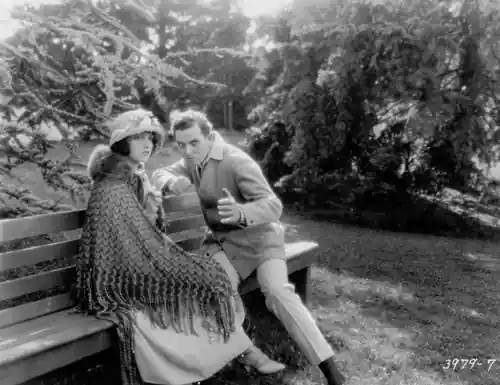
The screenplay’s three‑act structure adheres to classic Hollywood conventions while injecting a rhythm that feels almost musical. The first act establishes the aristocratic dilemma; the second act delves into the chaotic world of service and the inciting fight; the third act culminates in the climactic bout, where Pembroke’s victory is less about the trophy and more about self‑actualization.
Beaumont’s pacing is deliberate; he lingers on moments of silence—Pembroke’s solitary walks through the rain‑slicked streets of Manhattan—allowing the audience to inhabit the character’s alienation. This restraint contrasts sharply with the kinetic editing of the fight scenes, where rapid cuts mirror the adrenaline surge.
When juxtaposed with *The Rough Lover* (see comparison), *The Victor* distinguishes itself through its focus on class inversion rather than romantic pursuit. While *The Rough Lover* leans heavily on melodrama, *The Victor* employs a more grounded, almost documentary‑like approach to its boxing sequences, lending authenticity to Pembroke’s evolution.
The film also shares thematic DNA with *The Answer*, particularly in its exploration of personal agency amidst societal pressure. However, *The Victor* diverges by embedding its philosophical queries within the visceral spectacle of sport, thereby broadening its appeal beyond the introspective drama audience.
Though a silent film, *The Victor* relies on an expressive musical score that oscillates between somber strings during Pembroke’s moments of doubt and brassy, syncopated rhythms during the boxing bouts. The orchestration, reminiscent of contemporary jazz motifs, underscores the film’s transatlantic tension, marrying Old‑World elegance with New‑World vigor.
Upon its release, *The Victor* resonated with audiences grappling with post‑World War I economic uncertainty. The narrative of a fallen aristocrat reinventing himself through sheer will appealed to a public eager for stories of resilience. Over the decades, the film has been cited in scholarly works examining the evolution of class narratives in early American cinema.
Modern cinephiles often reference *The Victor* when discussing the lineage of sports dramas, noting its influence on later classics such as *Rocky* and *Raging Bull*. Its blend of social critique and kinetic action set a template for subsequent filmmakers seeking to intertwine personal redemption with athletic spectacle.
*The Victor* endures as a compelling artifact of an era where cinema was still discovering its narrative boundaries. Its meticulous craftsmanship, from Harlan’s layered performance to Beaumont’s chromatic symbolism, invites repeated viewings. The film’s exploration of identity, duty, and the transformative power of physical struggle remains as relevant today as it was a century ago.
IMDb 5.8
1932
Community
Log in to comment.