DbcultAccessing Vault...
Cult Review
Senior Film Conservator
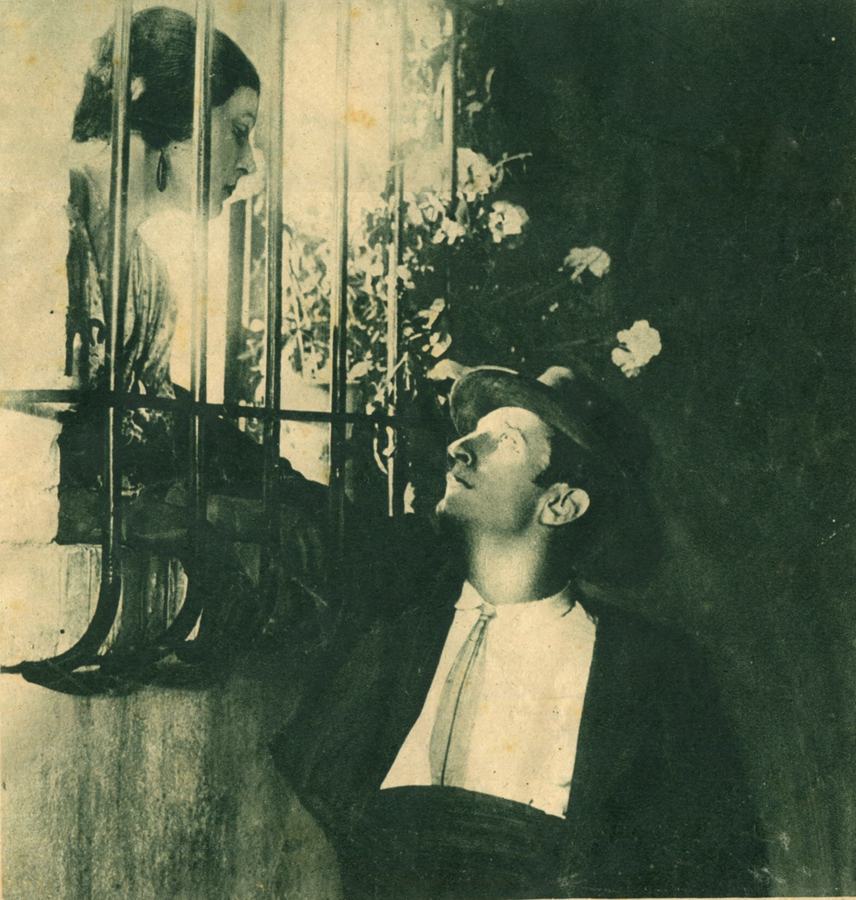
Cinema, in its most primordial form, has often functioned as a vessel for the exploration of territoriality and the elemental forces that govern human survival. In Aux jardins de Murcie, the lens captures more than just a pastoral romance; it documents a socio-economic friction point where the scarcity of water mirrors the parched emotional landscapes of its protagonists. This film, a striking adaptation of the play by Josep Feliú i Codina, bypasses the typical sentimentalism of early 20th-century melodrama to present a gritty, yet luminously photographed, study of sacrifice and redemption. The rivalry between the upper and lower villages isn't merely a backdrop; it is a living, breathing entity that dictates the rhythm of the narrative, much like the aqueous themes explored in Ewiger Strom, where the flow of the river serves as both a life-giver and a divider.
The visual grammar of the film is steeped in a chiaroscuro that emphasizes the harsh Spanish sun and the deep shadows of the orchard. Directorially, the film manages to imbue the landscape with a sense of impending doom. Every drop of water is a drop of blood, a concept that resonates through the ages of agrarian storytelling. Unlike the more urban-centric dramas found in The Seven Sisters, which deals with domestic interiority, Aux jardins de Murcie forces its characters into the open, where the environment itself acts as a relentless judge. The cinematography captures the textures of the soil and the lushness of the hidden gardens with a tactile quality that suggests a precursor to the neo-realist movements that would follow decades later.
The narrative pivot—Maria del Carmen’s decision to nurse Xavier—elevates the film from a simple revenge plot to a complex ethical discourse. She becomes a negotiator between two warring factions of the earth. In this regard, the film shares a certain thematic kinship with The Selfish Woman, though Maria is the antithesis of selfishness; she is a martyr of circumstance. Her presence in the household of the rich Domingo is not one of social climbing, but of profound diplomatic sacrifice. The tension within these walls is palpable, as the audience watches her navigate the growing, unrequited passion of a man whose very existence is a threat to her happiness.
Pierre Blanchar delivers a performance of haunting vulnerability. As Xavier, he avoids the pitfalls of the typical villainous 'rich son' archetype. Instead, he portrays a man grappling with a burgeoning love that he realizes is built on a foundation of coercion. When the revelation of his terminal illness surfaces, the film shifts gears into a transcendental space. It ceases to be about who 'wins' Maria and starts to be about the legacy of a dying man's soul. This transition is handled with a delicacy that is often missing from contemporary cinema, which tends to favor explosive conflict over quiet introspection. The internal struggle of Xavier is as vast and unforgiving as the deserts seen in Desert Gold, yet it is contained within the fragile frame of a man whose time is slipping away.
The supporting cast, including the formidable Pâquerette and the nuanced Max Maxudian, provide a sturdy framework for this emotional upheaval. The interactions between Domingo and his son are particularly poignant, highlighting a paternal desperation that seeks to buy a future for a man who has none. This dynamic adds a layer of class critique; even the wealthiest man in the village cannot negotiate with the grim reaper, nor can his riches truly purchase the genuine affection of a woman whose heart remains in the exiled Pancho’s possession.
One cannot discuss Aux jardins de Murcie without addressing the central motif: the irrigation canals. These veins of the earth are the lifeblood of the community, but they also serve as the boundaries of hatred. The film uses the sound and sight of flowing water to punctuate moments of high drama. This is not the whimsical use of liquid found in Love and Doughnuts; here, water is a grave matter of life and death. The rivalry is atavistic, rooted in generations of survivalist instinct that makes the eventual reconciliation all the more powerful.
The reappearance of Pancho acts as the final catalyst. His return is not marked by the expected bloodshed but by a eavesdropped truth that changes the trajectory of three lives. The moment Xavier hears of his own impending death is a masterclass in silent-era pathos (even if we are viewing this through the lens of early sound-era sensibilities). The decision to facilitate Maria's escape with Pancho is a subversion of the 'hero wins the girl' trope. Here, the 'antagonist' becomes the hero by surrendering his claim, proving that the highest form of love is the one that sets the beloved free. It’s a narrative sophistication that rivals the moral complexities found in The Writing on the Wall.
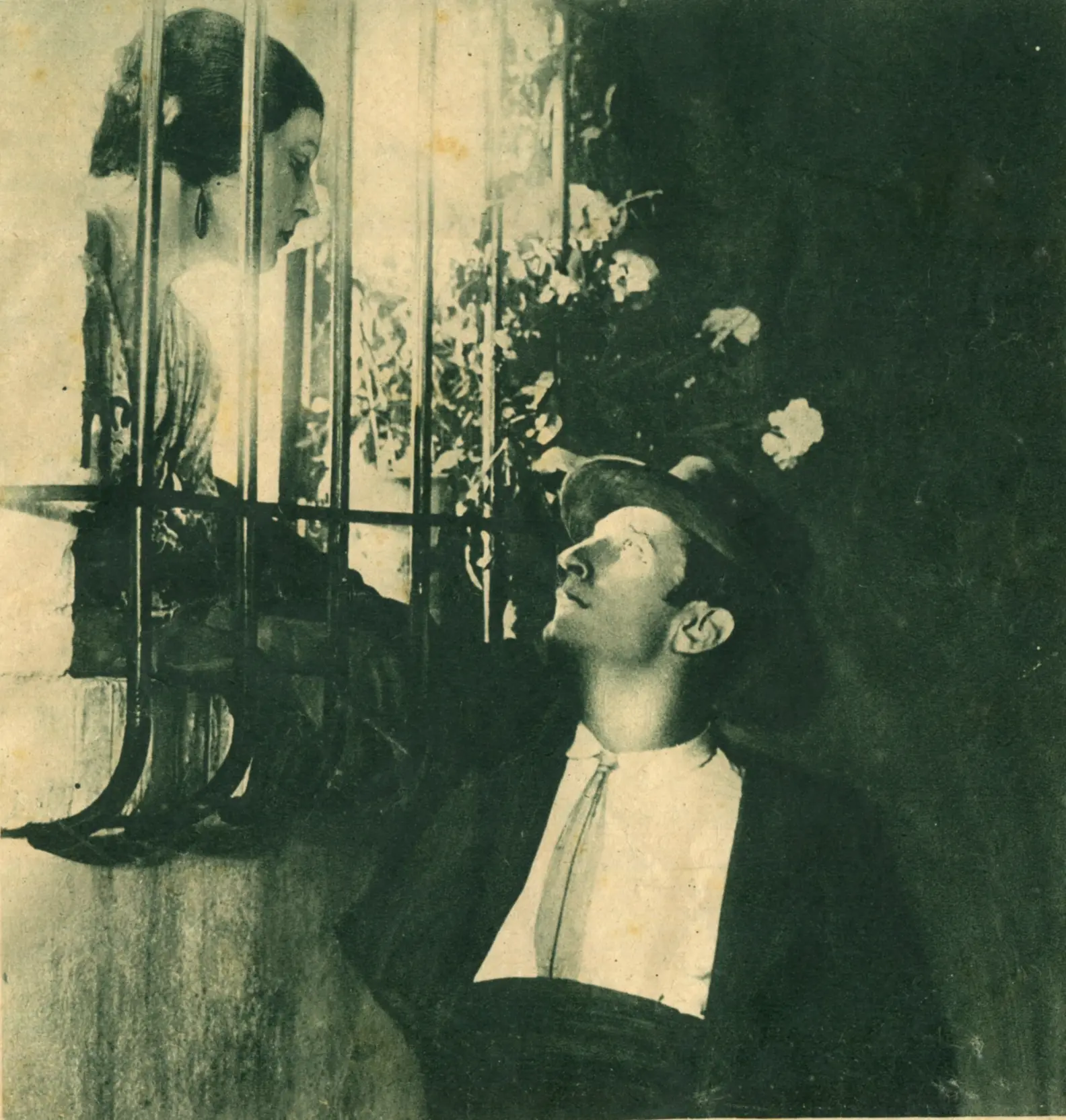
The production of this film represents a fascinating intersection of French directorial technique and Spanish cultural grit. The influence of French lyrical realism is evident in the way the camera lingers on the natural world—the rustle of leaves, the shimmer of the heat over the fields. It possesses a dignity that reminds one of Heroic France, yet it remains firmly rooted in the specific, localized traditions of Murcia. It is a film that demands to be seen not as a dusty relic, but as a vibrant, breathing piece of art that understands the fundamental human condition.
Comparing it to the simplistic morality of The Four Musicians of Bremen would be an injustice; Aux jardins de Murcie is far more interested in the gray areas of morality. No character is entirely blameless, and no character is beyond the reach of grace. Even the rich Domingo, whose actions are initially seen as oppressive, is motivated by a tragic love for his dying son. This layering of motivations ensures that the film remains relevant to modern audiences who crave psychological depth over binary conflict.
The pacing of the film is deliberate, allowing the tension to simmer like the midday sun. It doesn't rush toward its climax but allows the weight of the characters' decisions to settle on the viewer. The use of space is also noteworthy; the contrast between the claustrophobic interiors of the wealthy estate and the vast, open fields where Pancho hides creates a visual metaphor for the characters' varying degrees of freedom. While some films of the era, like The Great London Mystery, relied on pulp thrills and rapid-fire plotting, Aux jardins de Murcie finds its power in the slow burn of emotional realization.
Furthermore, the film's exploration of gender roles is surprisingly nuanced. Maria del Carmen is not merely a prize to be won; she is the most active agent in the story. Her initial sacrifice is a calculated move to save her fiancé, and her eventual happiness is only made possible by her ability to endure the psychological toll of her situation. She possesses a resilience that is rarely found in the 'damsel in distress' archetypes of the 1920s and 30s. Her strength is quiet, rooted in the same soil that she and her people have tilled for centuries.
In the final analysis, Aux jardins de Murcie stands as a monumental achievement in early European cinema. It bridges the gap between the theatrical traditions of the 19th century and the burgeoning visual language of the 20th. It is a film about the ending of things—the end of a life, the end of a feud, and the end of an era of isolation for its characters. The final scenes, where the two men find a common ground in the face of the eternal, are among the most moving in the history of the genre. It lacks the whimsical nature of Her Lucky Day, opting instead for a profound, bittersweet resonance that lingers long after the credits roll.
For those who appreciate cinema that explores the intersection of environment and emotion, this film is essential viewing. It is a reminder that even in the most arid landscapes, the human heart can find a way to bloom, provided it is watered by the virtues of sacrifice and forgiveness. It is a cinematic garden that remains lush and relevant, even nearly a century after its initial planting. It avoids the simplistic adventure of Allan Quatermain or the slapstick of A Desert Hero, choosing instead to plow a deeper, more difficult furrow into the human experience. This is a work of art that demands contemplation, a rare jewel of the Mediterranean spirit captured on celluloid.
Critic's Rating: 9.2/10
A triumph of rural storytelling, blending socio-economic critique with a devastatingly beautiful romantic tragedy. Pierre Blanchar is unforgettable.
IMDb —
1925
Community
Log in to comment.