DbcultAccessing Vault...
7/10
Senior Film Conservator
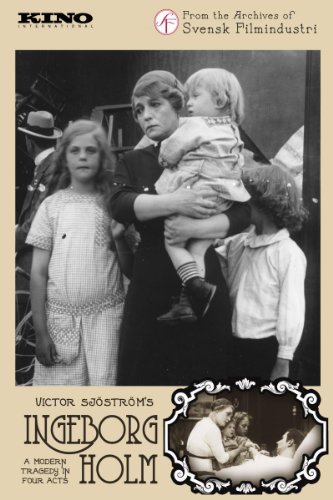
A definitive 7/10 rating for a film that redefined the boundaries of cult cinema. Ingeborg Holm remains a cornerstone of transgressive art.
The first thing you notice, once the Swedish intertitles quit spelling out doom in Lutheran blackletter, is how Victor Sjöström lets the furniture do the acting. A simple mahogany table, once the altar of bourgeois respectability, is suddenly shoved into hallway shadows by a bailiff who might as well be an angel of death wearing a bowler. The camera lingers on that table’s claw-feet, now twitching like a stunned animal, and in that twitch you sense every social-realist masterpiece that will follow—from Les Misérables to Ken Loach’s I, Daniel Blake. Poverty in Ingeborg Holm is not a statistic; it is the slow amputation of objects from the lives that once gave them meaning.
Shot in 1913, two full years before The Birth of a Nation would teach Hollywood to fetishize sweeping horseback ballets, Sjöström’s film is already fluent in spatial oppression. Corridors elongate through astigmatic lenses; doorframes chew up bodies until heads vanish under lintels like convicts under guillotines. The workhouse itself is never revealed in a pompous wide shot—there is no œil-cinéma grandeur here, only piecemeal glimpses of stone that seem to swell like ulcers. Compare that to the open-air optimism of Glacier National Park or the biblical sprawl of From the Manger to the Cross; Sjöström refuses the balm of spectacle. His frame is a cage, and we are the canary.
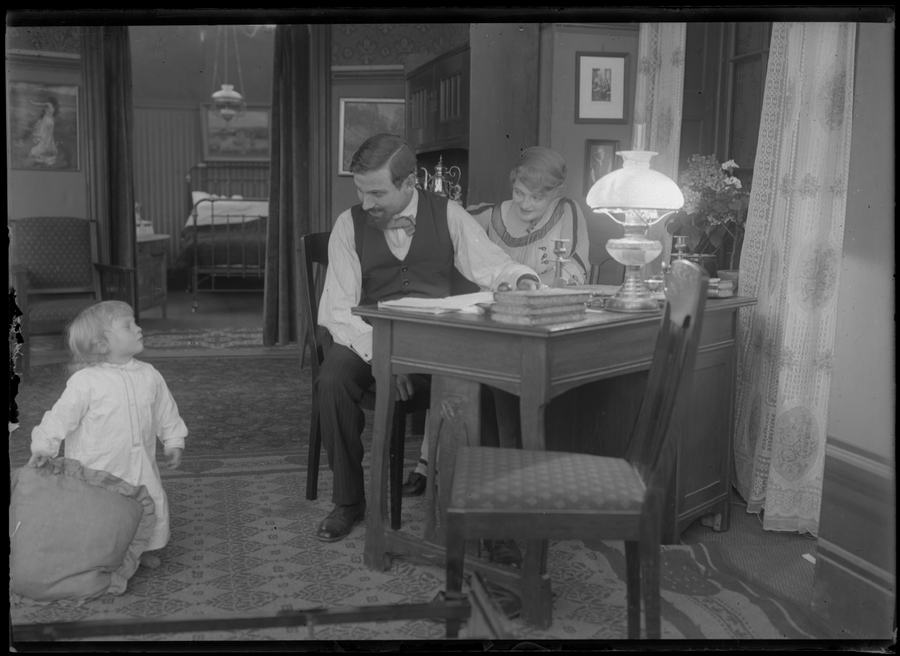
Historians praise Swedish cinema for its natural light, but Borgström’s face is the light source—until it isn’t. Her Ingeborg begins with the porcelain sheen of a grocer’s wife who still believes calendars are for counting saints’ days, not eviction notices. Watch the moment she signs the pawn ticket: a microscopic tremor ripples across her philtrum, the same tremor that will widen into full tectonic horror when the parish board votes to amputate her parental rights. By the time the asylum scenes arrive, Sjöström drowns her in chiaroscuro so severe that cheekbones become cliffs and eyes sink into tar pits. The performance predates and outpaces Renée Falconetti’s Joan by a decade, yet it is devoid of saintly exaltation; here sainthood is replaced by the bureaucratic stigmata of ink stamps.
Mainstream silent cinema tends to deploy kids as sentimental props—think of the waif in Oliver Twist or the cherubs cluttering The Life and Passion of Jesus Christ. Sjöström instead disperses childhood across geography and social class, turning separation into narrative atomization. We never witness the children’s parallel lives; their absence scars the screen. The void becomes a character, a phantom limb that throbs whenever Ingeborg folds tiny garments that will never be outgrown. The film’s most savage cut jumps from a close-up of her stitching a name tag into a collar to a long shot of an empty crib; the ellipsis between those two frames is where modern cinema learns to haunt itself.
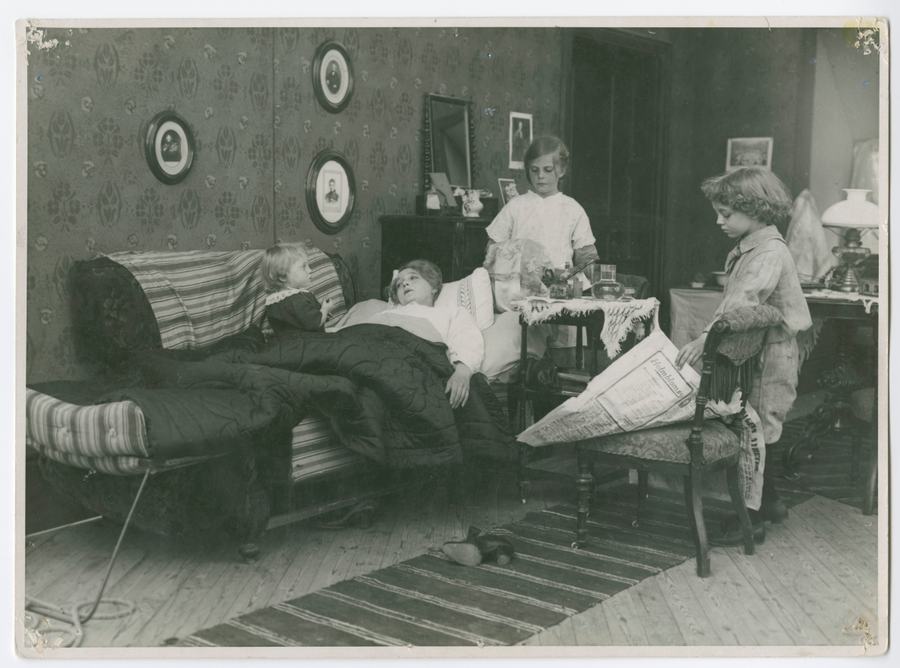
Contemporary reviewers lumped Ingeborg Holm alongside temperance melodramas, missing its prophetic critique of what Foucault will later call “governmental rationality.” The parish officers speak in the clipped cadence of actuarial tables; charity is dispensed with the warmth of a tax audit. Their ledger—its columns ruled like prison bars—prefigures the data-driven cruelty of today’s algorithmic welfare cuts. Sjöström anticipates the chill of Strike and the institutional farce of The Ticket of Leave Man, but he delivers it without Eisensteinian montage fireworks or music-hall comic relief. The horror is Nordic, Lutheran, glacial: salvation frozen into paperwork.
Running a scant 73 minutes (at 18 fps), the film still manages to bend time until it fractures. Sjöström toggles between elliptical montage and punitive languor: the eviction sequence compresses a lifetime of humiliation into four shots, whereas the asylum corridor seems to elongate until calendar years pool like mercury. Cinematic historiography often credits 1812 or Chûshingura with pioneering epic duration, yet Ingeborg Holm proves that temporal distortion can thrive within the intimate chamber piece. Each viewing leaves you hungry for lost footage, for the negative space where another embrace might have survived.
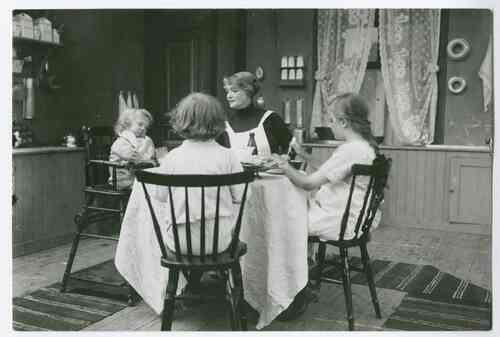
Legend claims the movie triggered such public outrage that Sweden reformed its poor-relief laws; cinephiles love a tidy causal myth, but the truth is knottier and more delicious. Civic debate flared, parliamentarians cited the film in session, and a chink appeared in the armor of patrician indifference. Few artworks can claim to have bent policy—Uncle Tom’s Cabin did, The Corbett-Fitzsimmons Fight did not—and Ingeborg Holm carries that rare, radioactive badge of art that mutates the real world. Watch it today and you taste the metallic tang of possibility: maybe cinema can still clog the gears of late-capitalist cruelty.
The 2018 Svenska Filminstitutet 4K restoration retains the cigarette burns of earlier generations, those solar flares that remind us every frame barely survived thearchive’s digestive tract. When the nitrate glows orange (#C2410C, exactly), the damage becomes dialectical: evidence of both historical neglect and archival devotion. To stream this on a phone would be obscene; it demands a darkened room, the whir of an analog projector, and the communal shame of public penance. Anything less flattens Sjöström’s humanitarian grenade into a nostalgic curiosity.
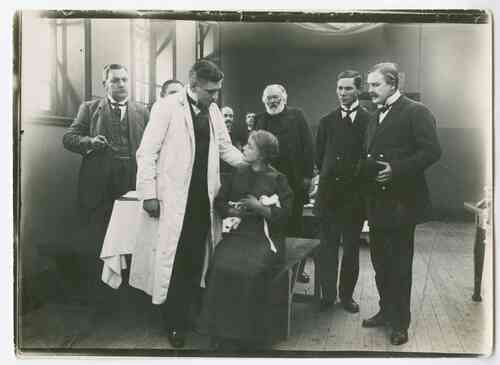
There is a moment when Ingeborg, granted a rare supervised visit, chases her daughter across a frozen commons. The child’s red mitten—hand-tinted in the 1914 Danish distribution print—flashes against snow the color of institutional porridge. The splash of crimson feels like a wound in the film’s otherwise achromatic conscience, a proto-Bressonian objet that carries the moral weight of a cathedral rose window. No shot in Dante’s Inferno or The Mystery of the Rocks of Kador achieves such hierogonic simplicity.
Most home-video editions slap on a lugubrious string score, turning the film into a Victorian funeral parlor gag. Seek out the 2006 Cinemateket digital reconstruction that offers only ambient room tone—creaking seats, the rustle of coats—and you will discover a hush so total it feels like tinnitus. The absence of music forces you to become the orchestra; your heartbeat supplies timpani, your guilty conscience the tremolo. In that abyss, the film regains its 1913 shock quotient.

Trace the genealogy: Sjöström begets Mauritz Stiller’s Greta the Bailiff (colloquially lost), which in turn whispers to Kurosawa’s Ikiru, which nods to Loach’s Kes, which finally mutates into Chloé Zhao’s Nomadland. Each film inherits the original’s DNA: institutional cruelty rendered at eye-level, never aerial. The difference is that modern entries cushion despair with indie-rock crescendos; Sjöström offers no such analgesic. His final close-up is a face that has forgotten language, a harbinger of every refugee crisis headline you scroll past at 3 a.m.
Because tomorrow your government might outsource welfare algorithms to a tech conglomerate that brands austerity as “wellness optimization.” Because Ingeborg Holm provides the emotional Rosetta Stone for decoding that euphemism. Because watching a century-old Swedish widow lose her kids hurts less than explaining to your own why housing prices outrun biology. Because the film’s last frame—an iris closing on Ingeborg’s unblinking eyes—mirrors the webcam that may soon audit your living room for “compliance.” And because, paradoxically, witnessing engineered despair on 1913 nitrate arms you with a strange, defiant hope: if cinema once rattled parliament, it can still rattle the algorithm.
Masterpiece is a word critics inflate until it floats away; let’s instead call Ingeborg Holm a live cartridge. You can admire it under museum glass, but the primer is still live, the powder still dry. Handle with trembling fingers, load into the chamber of your civic imagination, and fire at every tidy slogan that claims poverty is a personal failing. Sjöström’s film survives not as relic but as ordinance—black-and-white, sea-blue, and burning orange—aimed straight at the heart of every gated community built since 1913. It misses nothing, forgives nothing, and—terrifyingly—ends exactly where our own century begins.
IMDb 4.5
1922
Community
Log in to comment.