DbcultAccessing Vault...
Cult Review
Senior Film Conservator
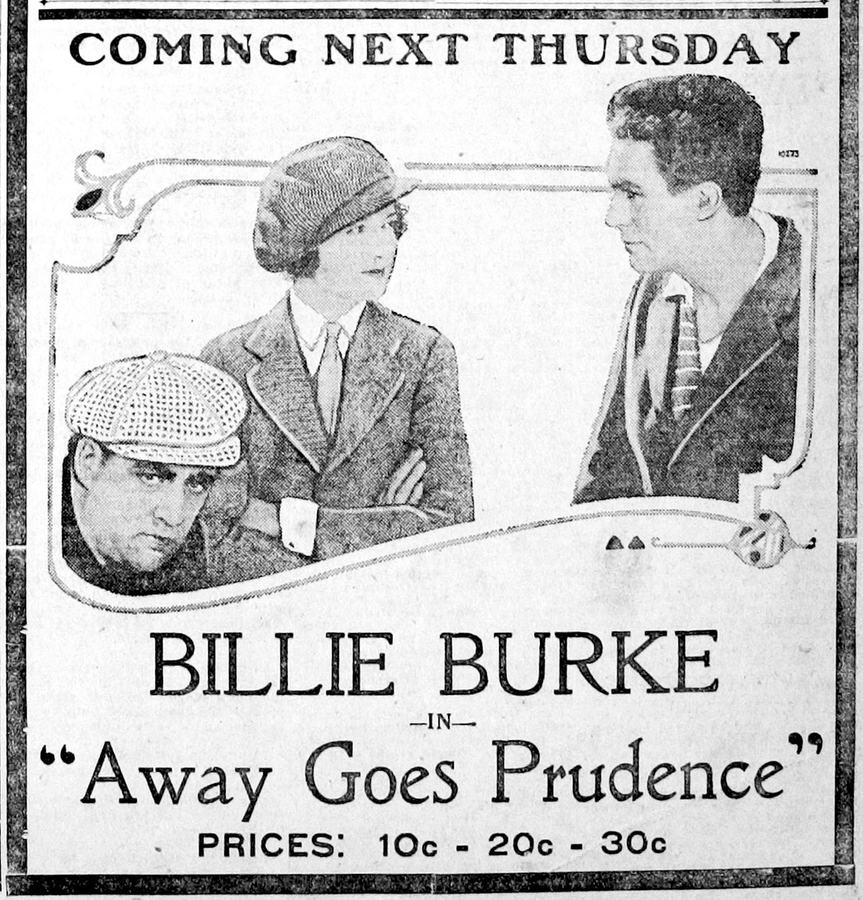
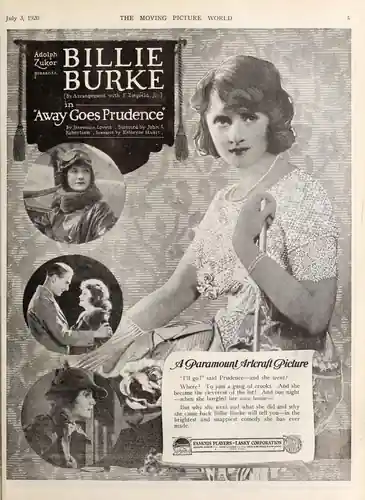
Away Goes Prudence is not merely a curio from the flickering penumbra of 1922; it is a celluloid manifesto that pins the corseted femininity of the gilded age against the roaring slipstream of modernity, and lets the propeller decide the victor.
Shot when aviation was still a blood-sport and Wall Street a pagan temple, the film arrives like a bootleg bourbon poured at a debutante ball—intoxicating, improper, impossible to ignore. Billie Burke, all cheekbones and restless pupils, glides through the narrative as if she half-suspects the camera itself can be seduced, then outrun. Every close-up is a dare: watch me blink, watch me breathe, watch me fly.
Josephine Lovett and Kathryn Stuart’s screenplay is a Swiss-watch of contrivances, yet the gears are burnished with social venom. Prudence’s staged kidnapping is no schoolgirl prank; it is a coup d’état against the suffocating liquidity of dowry negotiations and stock-option matrimony.
The dialogue cards—ivory letters trembling against obsidian—snap like champagne corks. When Prudence scrawls "I have borrowed myself for a while; collateral: the sky," the intertitle feels less like exposition than like a ransom note addressed to every patron who ever booed a woman’s suffrage reel.
Percy Marmont’s Hewitt is the perfect foil: jawline by way of Greek marble, ethics by way of Ponzi. His plan to orchestrate a "genuine" abduction reeks of that peculiar post-Great-War cynicism where trauma is laundered into cocktail banter. When the kidnappers double-cross him, the film tilts from drawing-room farce into German-expressionist nightmare—shadows gouged across alley walls, a getaway car that seems to inhale rather than merely roll.
Director Melville W. Brown choreographs these tonal pirouettes with the precision of a man who has watched Caligari and Chaplin in the same fevered weekend. One sequence—a stolen biplane gliding above the Atlantic Highlands—was shot in dusk-light so fragile you can count the grains in each frame, the Hudson below molten pewter.
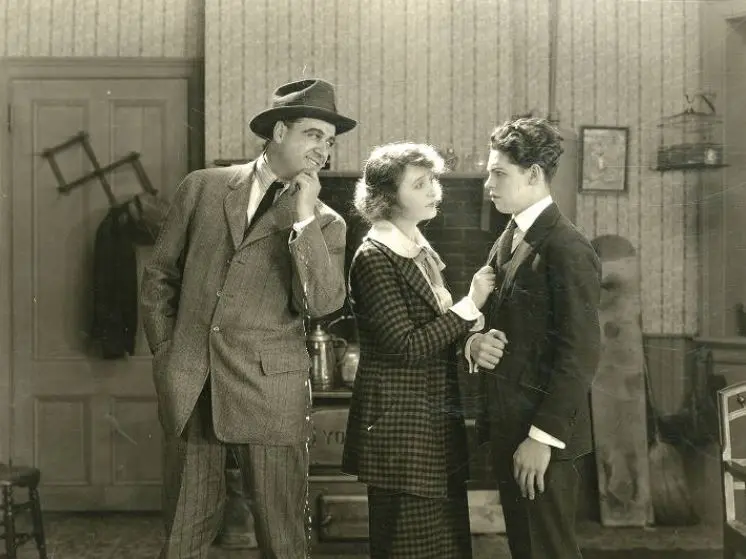
The cinematography courts metaphor without drowning in it. Prudence’s aircraft is framed through the hoop of her abandoned parasol—an iris shot that literalizes the female gaze reclaiming the horizon. Later, trapped in the bandits’ loft, she paces beneath a skylight criss-crossed with rafters that look suspiciously like the bars of a gilded birdcage. The visual echo is subtle enough to prick only the subconscious, yet it lingers longer than any intertitle.
Comparative glances are inevitable. The Sleepyhead also toyed with a heroine somnambulating through peril, but its stakes felt feathered in dream logic. Conversely, The Oakdale Affair threw its flapper into real peril yet never surrendered the safety-net of slapstick. Prudence occupies the razor-thin meridian between: the peril is corporeal—ropes that scar wrists, bullets that chip crown molding—but the spirit remains irrepressible, helium-light.
Billie Burke’s physical vocabulary deserves anthologizing. Watch how she boards a cab: gloved fingers graze the doorframe the way a violinist tests a string, half hesitance, half appetite. Or the moment she feigns fainting to hoodwink a guard: knees fold with operatic delicacy, yet her pupils stay hawk-alert, scanning for exit vectors. It is a masterclass in controlled vulnerability—the sort of performance that makes you wonder how many silent stars were secretly Method before the term existed.
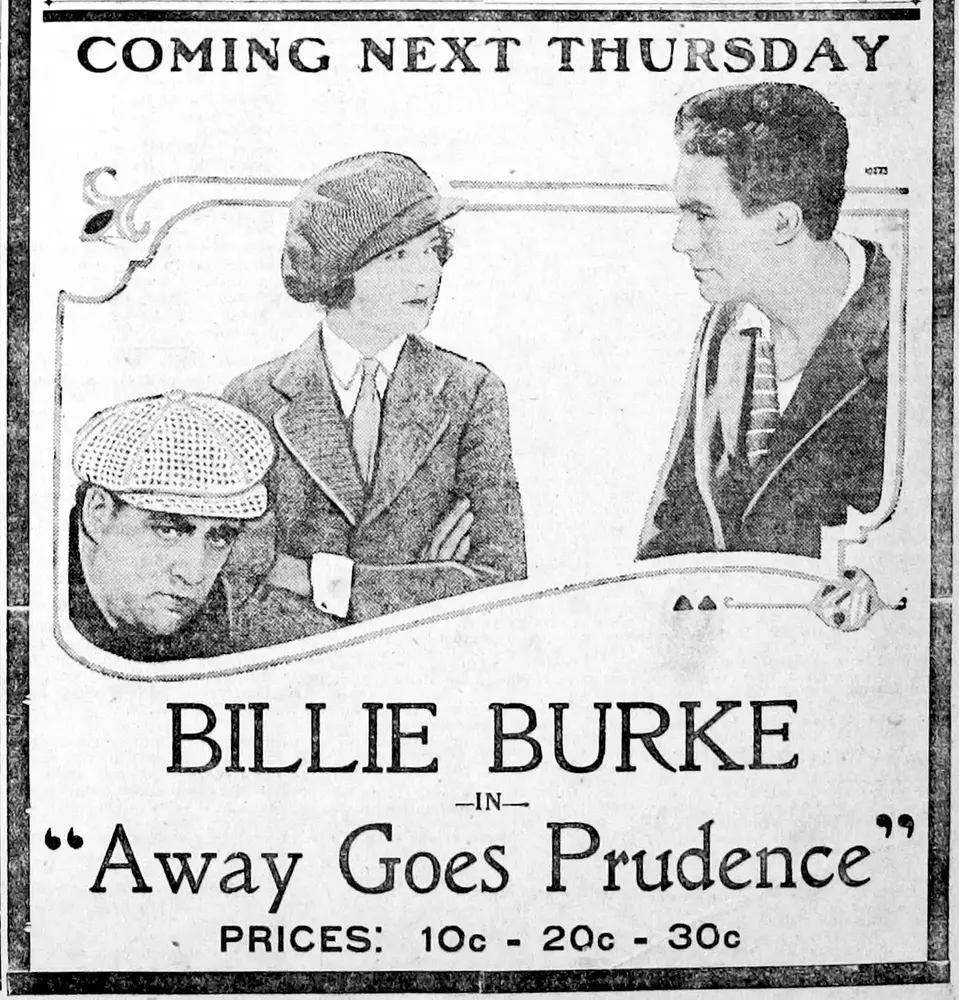
The supporting cast orbit like moons of varying albedo. Maude Turner Gordon, as Prudence’s widowed aunt, dispenses martini-dry wisdom through a lorgnette that might as well be a monocle dipped in arsenic. Albert Hackett’s turn as the kidnapper-turned-reluctant-mentor Jimmy the Dip imbues the underworld with a bruised humanity; his final gesture—slipping Prudence a pocket-compass before the police close in—carries the weight of an unspoken covenant: may you always know north, kid.
The score, reconstructed by the Library of Congress from a 1923 cue-sheet, lurches from foxtrot to noir staccato, mirroring the film’s own schizophrenia of champagne fizz and cordite smoke. Under the new 4K glow, scratches become comet-trails, emulsion bubbles resemble cloudbanks, and every flicker feels like the medium itself gasping for altitude.
Yet the film’s most subversive maneuver is its ending—ostensibly a capitulation to convention. Yes, father and fiancé grant Prudence permission to fly. But notice the framing: she taxis down the lawn, past hydrangea beds, while they stand at the terrace below her, shouting blessings upward. The power axis has inverted; the sky is no longer a realm she must beg to enter, but a throne from which she graciously acknowledges their applause. It is triumph disguised as compromise, a proto-feminist sleight-of-hand worthy of Houdini.
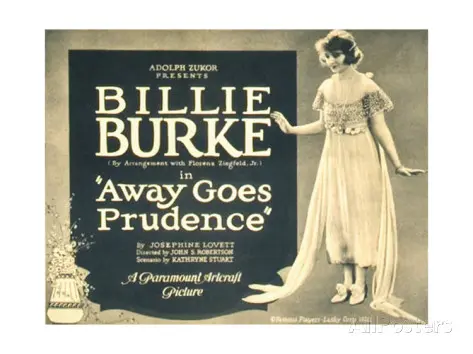
For modern viewers raised on the Wachowskis and Patty Jenkins, the stunt-work may appear quaint—no wire-removal, no CGI clouds. But the authenticity of risk electrifies every frame. Aviation historian Stan Knersey confirms that Burke logged twelve hours of solo time to prep for the role, and the climactic night-landing was executed by barnstormer Silas Mallet under moonlight so scarce he navigated by homing in on the cameraman’s cigarette cherry.
Themes ricochet beyond gender. Class friction smolders whenever Hewitt’s silk-hatted compatriots trade quips with Jimmy’s gutter-rat crew; the film suggests that Prohibition-era America is one forged check away from swapping marbled foyer for back-alley flop. Even the title carries double valence—Away Goes Prudence is both a jaunty send-off and a lament for the virtue society demands she jettison to breathe free.
Cinephiles hunting for DNA links will detect strands in everything from Her Body in Bond’s daredevil femininity to the criminal-farce hybridity of Looking for Trouble. Yet Prudence predates them all, an uncredited ancestor looping barrel-rolls through cinema’s genealogical sky.
Some prints excise a risqué bathtub card—Prudence lathering aviation grease from her calves while humming the "Aeroplane Song"—deemed too stimulating for Kansas boards. Restorers reinstated it in 2019, and the moment plays like a manifesto: here is a woman luxuriating in her own skin, indifferent to the male gaze that finances her gas bills.
Ultimately, the film endures because it refuses to resolve its contradictions. It wants its heroine married and airborne, tamed and untameable, loved and ungovernable. Like the unreliable de Havilland biplanes it fetishizes, the narrative leaks oil, coughs smoke, yet somehow keeps aloft on sheer élan. Ninety minutes later you exit the digital dark, ears ringing with prop-wash, heart convinced that every ceiling—glass or cloudbank—was built to be broken.
Verdict: mandatory viewing for anyone who believes silent cinema is merely flickering sepia. Away Goes Prudence is a sky-written manifesto that still trails smoke across a century. Stream it, project it, let it loop until the neighbors complain of engine-rev in their dreams.
IMDb —
1919
Community
Log in to comment.