DbcultAccessing Vault...
6.3/10
Senior Film Conservator
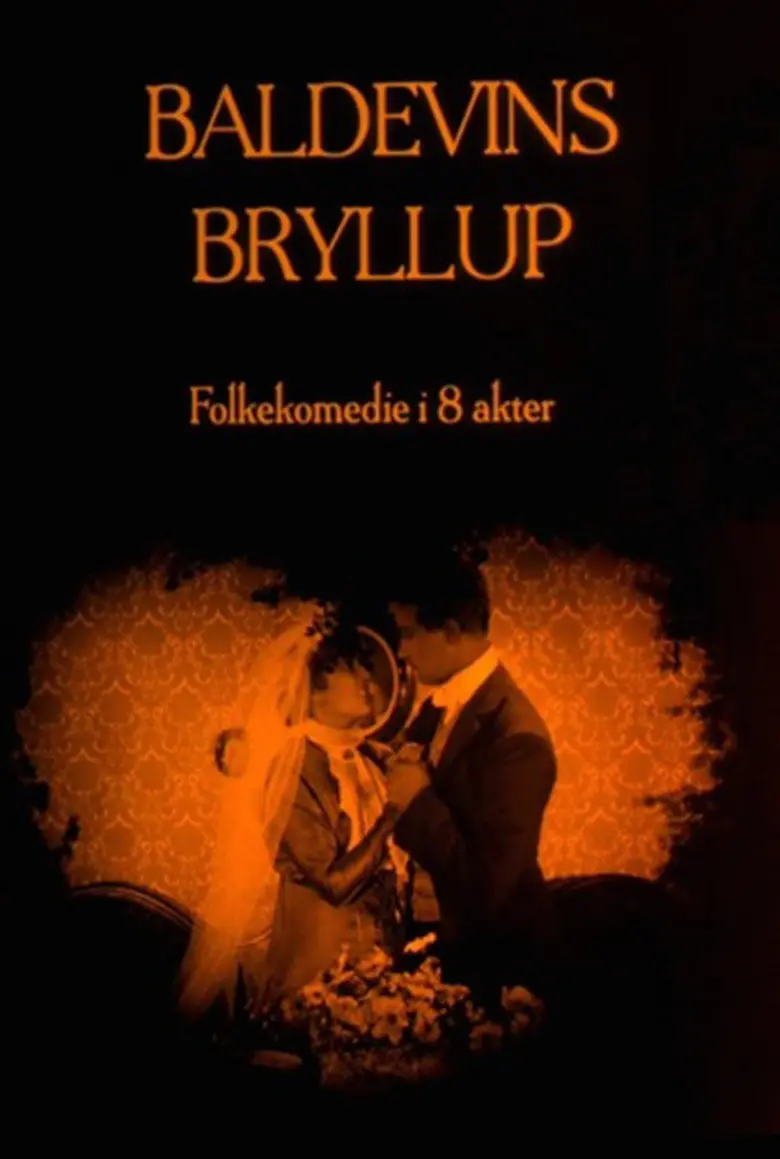
A definitive 6.3/10 rating for a film that redefined the boundaries of cult cinema. Baldevins bryllup remains a cornerstone of transgressive art.
Is 'Baldevins bryllup' worth watching today? Short answer: yes, but with significant caveats. This film is a fascinating, if sometimes frustrating, watch for cinephiles interested in early Nordic cinema, silent film enthusiasts, and those curious about the comedic sensibilities of the 1920s. It is decidedly not for viewers seeking modern pacing, sophisticated humor, or a polished narrative experience.
For those with an appreciation for film history and an open mind, it offers a unique window into a burgeoning national cinema. However, its broad humor and deliberate rhythm will test the patience of many contemporary audiences.
George Schnéevoigt's 'Baldevins bryllup' (Baldewin's Wedding) emerges from the nascent years of Norwegian filmmaking, a period often overshadowed by its more prolific Scandinavian neighbors. Released in 1926, it carries the distinct hallmarks of its era: exaggerated performances, a reliance on intertitles, and a narrative simplicity that belies its occasional cultural depth. The film's premise — a well-meaning sailor attempting to find a wife for his drunken friend — is ripe for farce, and indeed, much of the film leans heavily into physical comedy and situational absurdity.
However, to approach 'Baldevins bryllup' solely as a laugh riot would be to miss its subtle, often accidental, anthropological value. It’s more than just a series of gags; it’s a time capsule. We see glimpses of early 20th-century Norwegian domestic life, social expectations, and the perhaps uncomfortable realities of marriage as a practical arrangement rather than a romantic ideal.
This film works because it provides an invaluable historical document of early Norwegian cinema and offers a unique, if sometimes jarring, look at period social dynamics. It fails because its comedic timing and narrative structure often feel ponderous by modern standards, and some of its humor has not aged gracefully. You should watch it if you are a film historian, a silent film aficionado, or someone genuinely curious about the cultural artifacts of a bygone era.
The core narrative revolves around Simen, played with earnest, if sometimes over-the-top, sincerity by Nicolai Johannsen. Having traded the high seas for domesticity with his wife Ollevine (Johanne Voss), Simen finds his quiet life disrupted by the arrival of Baldewin (Sverre Arnesen), a friend whose fondness for the bottle is matched only by his lack of marital prospects. Simen’s decision to play Cupid for his boisterous pal forms the backbone of the plot, leading to a series of encounters with various potential brides, each more ill-suited or comically disastrous than the last.
The screenplay, credited to Alf Rød, Vilhelm Krag, and George Schnéevoigt himself, embraces a episodic structure common in silent comedies. Each attempt to pair Baldewin off is a mini-adventure, characterized by misunderstandings, social faux pas, and the sheer force of Baldewin’s unrefined personality. While this allows for a variety of comedic situations, it also contributes to a certain narrative choppiness, making the film feel less like a cohesive story and more like a collection of vignettes.
One particular sequence involving a rather stern, no-nonsense woman stands out. Baldewin’s attempts at courtship are met with stony silence and thinly veiled disdain, a stark contrast to his own jovial, if drunken, demeanor. It’s a moment that highlights the cultural clash inherent in his quest, and perhaps, the film’s surprising awareness of the transactional nature of marriage in that period. The humor here isn't just in Baldewin's clumsiness, but in the sheer awkwardness of the social ritual itself.
Silent film acting often gets a bad rap for its perceived over-the-top nature, and 'Baldevins bryllup' certainly doesn't shy away from grand gestures. Nicolai Johannsen’s Simen is a whirlwind of earnest intentions and exasperated sighs, his facial expressions and body language doing much of the heavy lifting in conveying his character’s inner turmoil. He’s the anchor, the straight man, whose reactions ground the more outlandish antics of his friend.
Sverre Arnesen, as Baldewin, embodies the archetypal lovable rogue. His portrayal is broad, physical, and often quite funny, particularly in scenes depicting his drunken escapades. There’s a scene where he attempts to gracefully exit a social gathering after one too many drinks, only to practically tumble out the door, which is genuinely amusing even by today's standards. However, the constant state of inebriation can, at times, feel repetitive, bordering on a one-note performance.
Johanne Voss, as Ollevine, Simen’s long-suffering wife, provides a more subdued, yet crucial, performance. Her quiet exasperation and underlying warmth offer a necessary counterpoint to the male characters' antics. Her subtle eye-rolls and patient nods speak volumes, demonstrating that even within the confines of silent film's expressive demands, nuanced acting was possible. It’s a testament to her skill that she manages to convey so much with so little overt action, often becoming the emotional core of the domestic scenes.
George Schnéevoigt, who also co-wrote the script, directs with a straightforward approach characteristic of the era. The cinematography, while not groundbreaking, is competent, capturing the rustic charm of its settings. We see a good mix of interior domestic scenes, often shot with a static camera, and exterior shots that provide a sense of place, whether it’s a bustling street or a quiet countryside path. There’s a noticeable preference for medium shots and full-body compositions, allowing the actors’ physical comedy and expressive gestures to take center stage.
One particular shot that stands out is an outdoor scene where Baldewin, in a moment of drunken bravado, attempts to woo a woman in a public square. The framing captures not only the two characters but also the reactions of passersby, adding a layer of observational humor and realism to the otherwise farcical situation. It's a small detail, but it speaks to Schnéevoigt's understanding of how to use the wider frame to enhance comedic effect.
Compared to more experimental works of the time, such as Abel Gance's Autour de la roue, 'Baldevins bryllup' is visually conservative. Its strength lies not in its innovation, but in its ability to effectively tell its story and convey its humor within the established conventions of silent cinema. The film effectively uses its settings to enhance its narrative, whether it's the cozy claustrophobia of Simen and Ollevine's home or the more open, public spaces where Baldewin's antics unfold.
The pacing of 'Baldevins bryllup' is undeniably deliberate. For modern viewers accustomed to rapid-fire editing and constant narrative propulsion, the film will feel slow. Scenes often linger, allowing the audience to absorb the visual information and the actors' expressions before moving on. This is not a flaw, but rather a characteristic of silent cinema, where the absence of spoken dialogue necessitated a different rhythm of storytelling. Audiences of the 1920s were accustomed to this cadence, allowing them to fully engage with the visual narrative.
The tone is predominantly lighthearted and farcical, though there are moments that hint at deeper, more poignant themes. The humor is broad, relying heavily on physical comedy, exaggerated reactions, and the inherent absurdity of Baldewin's quest. While some of the jokes land well, others feel dated, reflecting a comedic sensibility that has evolved considerably over the last century. A strong, debatable opinion here is that the film’s humor, while broad, reveals more about the cultural anxieties of its time than its creators likely intended, particularly regarding the societal pressure to marry and settle down, even for a character as seemingly unsuitable as Baldewin.
An unconventional observation: the film's true strength isn't its comedy, but its accidental anthropological value. It offers a raw, unfiltered snapshot of early 20th-century Norwegian domestic life and the social pressures surrounding marriage. The casualness with which women are 'sought' and 'evaluated' for Baldewin, while played for laughs, is deeply uncomfortable through a modern lens, highlighting problematic gender dynamics of the era. It works. But it’s flawed.
Yes, but with specific expectations. 'Baldevins bryllup' is a significant piece of Norwegian film history. It provides a unique glimpse into early comedic filmmaking. It showcases the acting styles and narrative techniques of the silent era. It is essential viewing for film scholars and silent film enthusiasts. Casual viewers might find its pacing challenging. Its humor can feel dated. It offers historical and cultural value beyond its entertainment factor.
‘Baldevins bryllup’ is not a forgotten masterpiece, nor is it a film that will resonate universally with today’s audiences. It is, however, a crucial artifact. Its value lies less in its ability to entertain in a conventional sense and more in its capacity to transport us back to a specific moment in cinematic and cultural history. It's a testament to the early efforts of a national cinema, a window into the comedic sensibilities of the 1920s, and an unwitting sociological document. For those willing to adjust their expectations and embrace its deliberate pace and broad humor, there’s a quiet charm to be found. It’s a film that asks for patience, and in return, offers a unique, if imperfect, glimpse into a world long past. It’s worth seeing, but approach it as a historical text, not a blockbuster.

IMDb —
1926
Community
Log in to comment.