DbcultAccessing Vault...
6.9/10
Senior Film Conservator
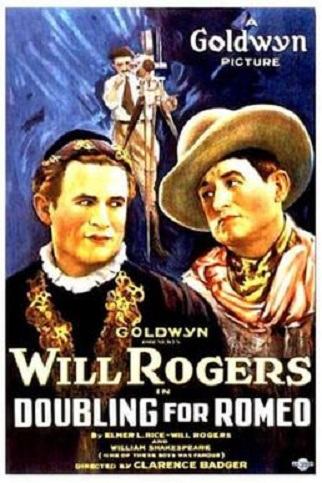
A definitive 6.9/10 rating for a film that redefined the boundaries of cult cinema. Doubling for Romeo remains a cornerstone of transgressive art.
Doubling for Romeo (1920) is a film that lingers like a half-remembered dream, its themes of identity, artifice, and the perils of self-erasure coiled within its narrative like a serpent in a studio lot. Directed by Bernard McConville and Elmer Rice, with a script co-penned by Will Rogers, the film is a silent-era meditation on the paradox of doubling—both the literal act of substituting for another and the metaphysical doubling of self. It is a work that thrums with the anxiety of its time, as Hollywood was still grappling with the transition from theatrical to cinematic storytelling.
At its core, the film is anchored by Sidney Ainsworth’s performance as Slim Cody, a stuntman whose life is a series of substitutions. His dream—a surreal, Shakespearean adaptation of Romeo and Juliet—becomes a mirror for his inner turmoil. The dream’s logic is unmoored from linear time, instead folding reality and fiction into a Möbius strip. Cody’s decision to hire a double for his own fight scenes is not mere cowardice; it is a desperate bid to preserve his autonomy in a world where he is already a shadow of someone else. This decision, however, spirals into tragedy, as the boundaries between his waking life and the dream world dissolve.
The film’s structure is a masterclass in visual storytelling. The studio backlot of Cody’s reality is rendered in stark, almost documentary-like realism, contrasting sharply with the operatic grandeur of the dream sequence. The use of chiaroscuro lighting in the latter—particularly in the duel scenes—echoes the chiaroscuro of Shakespeare’s own drama, where light and darkness are in constant negotiation. The editing is brisk but deliberate, with cross-cuts between Cody’s real-world anxieties and the escalating violence of the imaginary duel, creating a sense of impending doom that is both visceral and cerebral.
The supporting cast, though often relegated to shadowy peripheries, adds layers of texture. Sylvia Breamer’s performance as Cody’s love interest is particularly haunting; her gaze lingers, not with desire, but with a silent, tragic awareness of the inevitability of the dream. William Orlamond’s portrayal of the double is a study in restraint, his silent expressions conveying a world of unspoken conflict. The film’s best moments are those where the actors’ physicality becomes the primary language, their gestures and glances carrying the weight of the narrative.
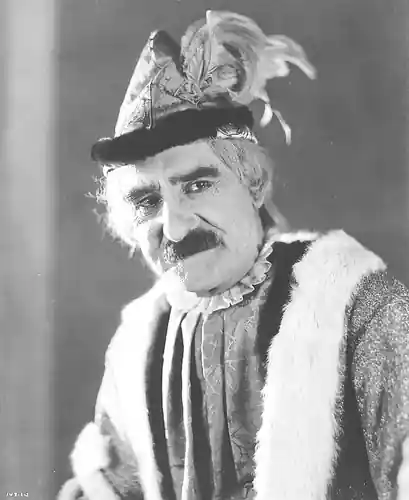
One of the film’s most striking achievements is its treatment of Shakespearean source material. Rather than a direct adaptation, the film reimagines Romeo and Juliet as a psychological landscape. The duel scene, which is the narrative’s fulcrum, is not a reenactment of the Capulet-Montague feud but a metaphor for Cody’s internal struggle. The violence is stylized, almost balletic, yet it carries a raw, almost primal intensity. The director’s decision to juxtapose this with the mundane reality of Cody’s work—a world of wires, harnesses, and safety ropes—highlights the absurdity of Hollywood’s illusion-making.
Thematically, Doubling for Romeo is a film that interrogates the nature of authorship. Cody’s dream is not merely a fantasy but a critique of the cinematic process itself, where the artist is always doubling, always substituting, never fully in control. The film’s conclusion, which sees the dream collapse in a swirl of smoke and blood, is both a release and a condemnation. It is as if the film is saying that to create art is to be consumed by it—a truth as ancient as the tragedies it reinterprets.
In the context of early 20th-century cinema, Doubling for Romeo stands out for its audacity. It is a film that rejects the straightforward narrative conventions of its time in favor of a more abstract, symbolic language. This approach owes debts to the German Expressionists, whose use of exaggerated sets and psychological tension would later influence the likes of The Corbett-Fitzsimmons Fight and The Gingham Girl. Yet, unlike those films, which often prioritize spectacle over introspection, Doubling for Romeo is deeply introspective, using its form to explore the inner life of its protagonist.
The film’s soundlessness—both literal and metaphorical—adds to its haunting quality. In an era when cinema was still finding its voice, the absence of dialogue here is not a limitation but a strength. The silence allows the audience to project their own interpretations onto the film’s ambiguous spaces. The dream sequences, in particular, are a masterclass in non-verbal storytelling, with every shadow and glance contributing to the narrative’s emotional architecture.
Visually, the film is a treat for those who appreciate the tactile nature of early cinema. The use of practical effects—such as the doubling of Cody’s stunt work—is both innovative and charming. The fight scenes, for instance, are a blend of choreography and improvisation, with the actors’ movements suggesting both the rehearsed and the spontaneous. This duality is mirrored in the film’s broader themes, where the boundaries between performance and reality are constantly blurred.
One cannot discuss Doubling for Romeo without acknowledging the influence of Will Rogers, whose co-writing credit adds a layer of cultural specificity. Rogers, known for his wit and folksy charm, brings a grounded sensibility to the script, balancing the film’s more abstract elements with a sense of relatability. This is particularly evident in the scenes involving Cody’s interactions with the studio crew, which are rendered with a dry humor that tempers the film’s darker themes.
The film’s historical context is also worth considering. Released in 1920, it arrives at a moment when cinema was transitioning from a novelty to a serious art form. The themes of identity and self-creation in Doubling for Romeo resonate with the broader cultural shifts of the time, as the post-war world grappled with questions of authenticity and reinvention. The film’s focus on a stuntman—someone who exists in the margins of the film industry—can be read as a commentary on the disposable nature of labor in the creative industries, a theme that would later be explored in films like From Gutter to Footlights.
In terms of legacy, Doubling for Romeo is a film that deserves greater recognition. While it lacks the commercial success of its contemporaries, its artistic ambition and thematic richness make it a landmark in early cinema. The film’s exploration of doubling and identity prefigures the existential concerns of later filmmakers like Ingmar Bergman and Alain Resnais, yet it remains grounded in the specific anxieties of its time.
For modern viewers, the film offers a fascinating glimpse into the mechanics of silent cinema. The absence of dialogue forces the audience to engage more deeply with the visual language, a skill that has become increasingly rare in an age of CGI-heavy blockbusters. Watching Doubling for Romeo is an exercise in patience and attention, a reminder that the best films are those that demand to be seen, not merely consumed.
In conclusion, Doubling for Romeo is a film that rewards repeated viewings. Its layers of meaning—about art, identity, and the perils of doubling—unravel slowly, like the threads of a complex tapestry. It is a work that, despite its age, feels startlingly relevant, a testament to the timelessness of its themes. For anyone interested in the history of cinema or the human condition, this film is an essential watch.
IMDb 5.8
1934
Community
Log in to comment.