DbcultAccessing Vault...
Cult Review
Senior Film Conservator
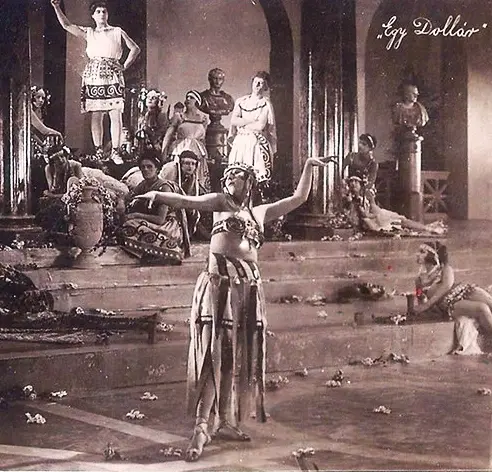
In the grand tapestry of cinematic history, certain threads, though perhaps less frequently illuminated, possess a remarkable luminescence, their patterns intricate and their dyes vibrant. Bobby E. Lüthge's "Az egyhuszasos lány" (The 120-Centimeter Girl), a Hungarian silent film gem from an era brimming with artistic innovation, is precisely such a thread. Far from a mere historical curiosity, this film emerges as a profound meditation on human dignity, societal perception, and the indomitable spirit that defies arbitrary measurements. It’s a journey into a world where external appearances often dictate internal worth, yet where true character ultimately carves its own indelible mark. Watching it today feels less like an archaeological dig and more like encountering a timeless truth, delivered with an elegance and emotional depth that belies its age.
At the heart of this compelling drama is Éva, portrayed with breathtaking nuance by Gida von Lazar. Her character is not defined by her diminutive stature—the eponymous 120 centimeters—but rather by the towering strength of her will and the boundless expanse of her talent. Von Lazar's performance is a masterclass in silent acting, conveying a universe of emotion through subtle gestures, expressive eyes, and a posture that shifts from resigned endurance to defiant pride. Éva is a seamstress of extraordinary skill, her nimble fingers weaving magic into fabric, yet her artistry is consistently overshadowed by a society quick to judge her by her physical uniqueness. She is a woman perpetually underestimated, a quiet observer in a world that often fails to see beyond the superficial. Yet, it is precisely this position that grants her a clarity of vision, an acute understanding of human nature, both its cruelties and its unexpected kindnesses. Her struggle resonates deeply, touching upon universal themes of belonging and the relentless pursuit of self-worth in a world often determined to assign it for us. The film doesn't merely present her struggle; it invites us to inhabit her perspective, to feel the weight of every dismissive glance, every patronizing smile, and every moment of triumphant self-assertion.
The narrative gains considerable traction through its exploration of Éva's entanglement with two pivotal male figures: Baron István Vörös (Zoltán Szerémy) and his cousin, Géza (Paul Lukas). Szerémy imbues István with a romantic idealism, a man capable of seeing past societal veneers to the vibrant spirit within Éva. Their burgeoning romance is depicted with a delicate sensitivity, a testament to the script's (by Bobby E. Lüthge and Mór Jókai) commitment to emotional authenticity. It’s a love story that challenges the rigid class structures and aesthetic prejudices of the era, daring to suggest that true connection transcends superficial categories. In contrast, Paul Lukas's Géza is initially a figure of cynical detachment, a man hardened by the world, whose successful architectural career has perhaps taught him more about structure than soul. Lukas's portrayal is masterful, his initial disdain for Éva gradually giving way to a grudging respect, and then to something far more profound. His transformation is one of the film's most compelling arcs, illustrating how genuine character can pierce through even the most entrenched cynicism. Géza's journey from a detached observer to an unexpected ally mirrors the audience's own potential shift in perspective, forcing us to confront our own preconceived notions about what constitutes value and beauty. One might draw a parallel between Géza's initial skepticism and the societal scorn faced by characters in films like Mr. Opp, where social standing and perceived oddities often dictate acceptance, before a deeper understanding takes root.
Bobby E. Lüthge's direction is nothing short of inspired. In an era where visual storytelling was paramount, Lüthge demonstrates an innate understanding of cinematic language. The film is replete with striking compositions, using deep focus and thoughtful framing to emphasize Éva's place within her environment—sometimes dwarfed by grand architecture, other times commanding the frame with her sheer presence. The use of close-ups on Éva's hands as she works, or on the subtle flicker of emotion across her face, draws the viewer into her inner world, creating an intimacy often lacking in grander productions. The set designs, particularly those depicting the opulent salons of Budapest's elite and the humble confines of Éva's workspace, are meticulously crafted, serving as more than mere backdrops; they are active participants in the narrative, highlighting the stark class disparities and the societal pressures Éva navigates. The costumes, too, are integral, not only showcasing Éva's talent but also reflecting the characters' social standing and psychological states. This meticulous attention to visual detail elevates the film beyond a simple narrative, transforming it into a piece of visual poetry.
While Gida von Lazar anchors the film with her compelling performance, the supporting cast provides a rich tapestry of characters that bring the social fabric of early 20th-century Budapest to life. Irma Lányi's portrayal of Countess Erzsébet is particularly noteworthy. Initially a figure of disdainful aristocracy, her gradual capitulation to Éva's talent and integrity is handled with a believable shift, showcasing the potential for growth even within the most rigid socialites. Emil Fenyvessy, Ödön Bárdi, and Ila Lóth contribute to the vibrant ensemble, each adding layers to the societal backdrop against which Éva's drama unfolds. Helene von Bolvary and Marianne Gyarmathy, likely cast as the jealous rivals or social provocateurs, deliver performances that inject necessary tension and conflict, embodying the superficial judgments and petty cruelties Éva must overcome. The ensemble works in concert, creating a believable world where every glance, every gesture, carries weight and meaning, reinforcing the film's central themes of acceptance and the struggle against prejudice. The nuanced interactions among these characters elevate the film beyond a simple character study, painting a broader picture of a society in flux.
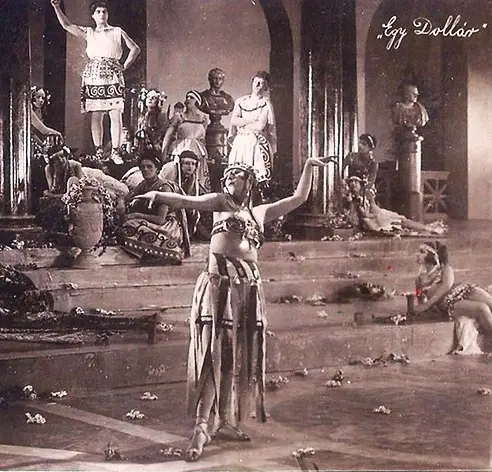
"Az egyhuszasos lány" is more than a period drama; it’s a timeless exploration of identity, resilience, and the arbitrary nature of societal standards. The film masterfully uses Éva’s physical characteristic as a metaphor for any perceived difference that might set an individual apart, be it class, origin, or unconventional talent. It asks profound questions about what truly constitutes worth and beauty, challenging viewers to look beyond the surface. The narrative arc, particularly in its climax where Éva's reputation is threatened by jealous rivals, speaks to the enduring struggle against those who seek to diminish others out of insecurity or malice. This dramatic tension, where the protagonist must fight not just for love but for professional integrity and self-respect, echoes the thematic weight found in narratives of overcoming adversity, much like the resolute spirit seen in The Old Nest, where characters grapple with changing times and personal challenges. The film's resolution, focusing on Éva's dignified independence and recognition of her talent rather than a simplistic fairytale ending, underscores its mature and progressive viewpoint. It champions self-acceptance and the power of one’s craft as ultimate forms of triumph.
As a product of early Hungarian cinema, "Az egyhuszasos lány" offers invaluable insight into the nation's burgeoning film industry and its unique voice. The collaboration between German writer Bobby E. Lüthge and the celebrated Hungarian author Mór Jókai (whose literary legacy undoubtedly influenced the film's narrative richness) speaks to a cross-cultural artistic exchange that enriched European cinema. The film’s ability to weave local socio-cultural nuances with universal human experiences is a testament to the sophistication of its creators. It stands as a significant piece in the puzzle of cinematic history, demonstrating that compelling storytelling and profound character development were not exclusive to the more widely documented film industries of the time. This film, like a carefully preserved artifact, allows us to connect with the artistic sensibilities and societal concerns of a bygone era, proving that great art transcends geographical and temporal boundaries. It holds its own alongside international contemporaries, perhaps not with the epic scale of something like The Queen of Sheba, but with an equally potent emotional resonance and meticulous craftsmanship.
The screenplay, credited to Bobby E. Lüthge and Mór Jókai, is a marvel of concise yet evocative storytelling, a necessity in the silent era. It deftly balances character development with plot progression, ensuring that every narrative beat serves to deepen our understanding of Éva's inner world and her external challenges. The pacing is deliberate, allowing moments of quiet contemplation to breathe alongside dramatic confrontations. The dialogue, conveyed through intertitles, is sharp and purposeful, avoiding verbosity and instead relying on carefully chosen words that advance the plot and reveal character. The writers skillfully build dramatic tension, particularly around the charity ball sequence and the subsequent scandal, creating a sense of genuine peril for Éva. The transformation of Géza, from a cynical observer to a staunch defender, is particularly well-handled, demonstrating a nuanced understanding of human complexity. This narrative precision ensures that the film remains engaging and emotionally resonant, a testament to the enduring power of a well-crafted story, much like the intricate plotting found in detective serials of the time, such as De røvede Kanontegninger, albeit with a focus on psychological rather than purely external suspense.
In a silent film, the burden of conveying emotion and intention falls almost entirely upon the actors' physical presence and facial expressions. The cast of "Az egyhuszasos lány" rises to this challenge with remarkable skill. Gida von Lazar, as Éva, is simply captivating, her every movement imbued with meaning, her eyes speaking volumes. Zoltán Szerémy brings a nuanced warmth to István, making his affection for Éva feel genuine and deeply felt. Paul Lukas, a name that would later achieve international renown, delivers a performance that hints at his future stardom, portraying Géza's internal struggle with compelling authenticity. Even in smaller roles, actors like Ferenc Vendrey, Marianne Gyarmathy, and Tibor Lubinszky contribute to the overall richness of the film, ensuring that the world of "Az egyhuszasos lány" feels fully realized and populated by believable characters. Their collective ability to communicate complex emotions without spoken words is a powerful reminder of the artistry inherent in early cinema, a skill that could captivate audiences just as effectively as the more direct narrative styles seen in action-oriented films like The Sea Wolf, but through an entirely different emotional register.
"Az egyhuszasos lány" stands as a powerful testament to the capacity of cinema to inspire and provoke thought. Its themes of overcoming prejudice, finding one's voice, and the true meaning of acceptance are as relevant today as they were a century ago. It reminds us that beauty comes in myriad forms, and that true strength often resides not in physical stature or social standing, but in the unwavering integrity of the human spirit. For cinephiles and historians alike, rediscovering this film is not just an academic exercise; it's an emotional journey that offers profound insights into human nature and the timeless power of storytelling. It’s a film that lingers long after the final frame, prompting reflection and perhaps, a renewed appreciation for the often-overlooked treasures of cinematic heritage. This compelling drama makes a strong case for the preservation and wider appreciation of silent films, proving that their narratives and artistic merit are far from diminished by the passage of time. Indeed, it's a film that deserves its place in the pantheon of classic cinema, a beacon of hope and resilience that continues to shine brightly.
IMDb —
1925
Community
Log in to comment.