DbcultAccessing Vault...
5.8/10
Senior Film Conservator
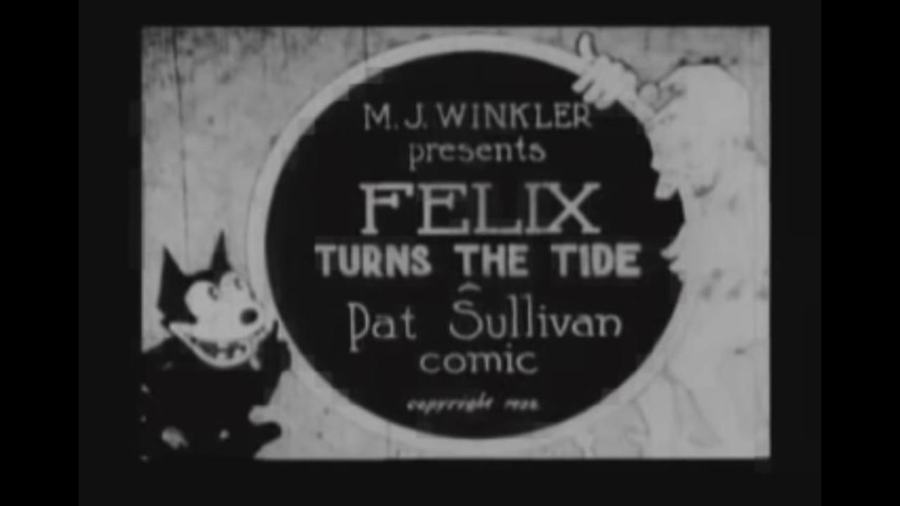
A definitive 5.8/10 rating for a film that redefined the boundaries of cult cinema. Felix Turns the Tide remains a cornerstone of transgressive art.
Otto Messmer’s Felix Turns the Tide arrives like a mislived fever dream committed to celluloid, a 1922 ink-stained bulletin from an era when animation was still learning to breathe. Clocking in at barely eight minutes, the short nevertheless detonates a warehouse of visual ideas that many contemporary features never brush against. From the first frame—where a moonlit streetlamp sputters like a drunken sentinel—the film announces itself as both vaudeville and propaganda burlesque, a wartime parable told through the logic of a jazz solo.
The narrative spark is deceptively simple: rodent nationalism surges, and feline citizens become prey. Yet Messmer’s draftsmanship complicates every ideological edge; rats strut with the swagger of Parisian apaches (see In the Clutches of the Paris Apaches), while cats possess the wistful stoicism of Little Smoky’s orphans (Anne of Little Smoky). The city itself is a palimpsest—tenement windows yawn like old gramophones, chimneys belch Morse code, and every brick appears to sweat gin. It’s a battlefield begging for a hero who refuses orthodox shape.
Enter Felix, that protoexistential trickster whose tail curls into a question mark because the universe itself is the riddle. Messmer doesn’t just animate a cat; he weaponizes negative space. Felix’s ears flatten into semaphore flags, then blossom into umbrellas; his paws invert to become cricket bats when grenades—actually rotten cherries—arc overhead. The metamorphosis feels indebted neither to Disney’s forthcoming squash-and-stretch dogma nor to the European avant-garde alone; rather, it forges a grammar of elastic rebellion, a kinetic middle finger to every trench-coated certainty the Great War left behind.
Conscription scenes unfold like a Mack Sennett two-reeler trapped inside a George Grosz lithograph. Felix lines up alongside tabbies whose skeletons jitter outside their bodies, a literal prefiguration of PTSD rendered five years before Mad Love would probe surgical madness. The drill sergeant—a bulldog whose jowls flap like untuned radio waves—barks orders that materialize as printed words, slapstick subtitles that then club soldiers on the head. Such gags collapse the partition between audience and barracks, implying that anyone watching is already complicit in this carnival of mobilization.
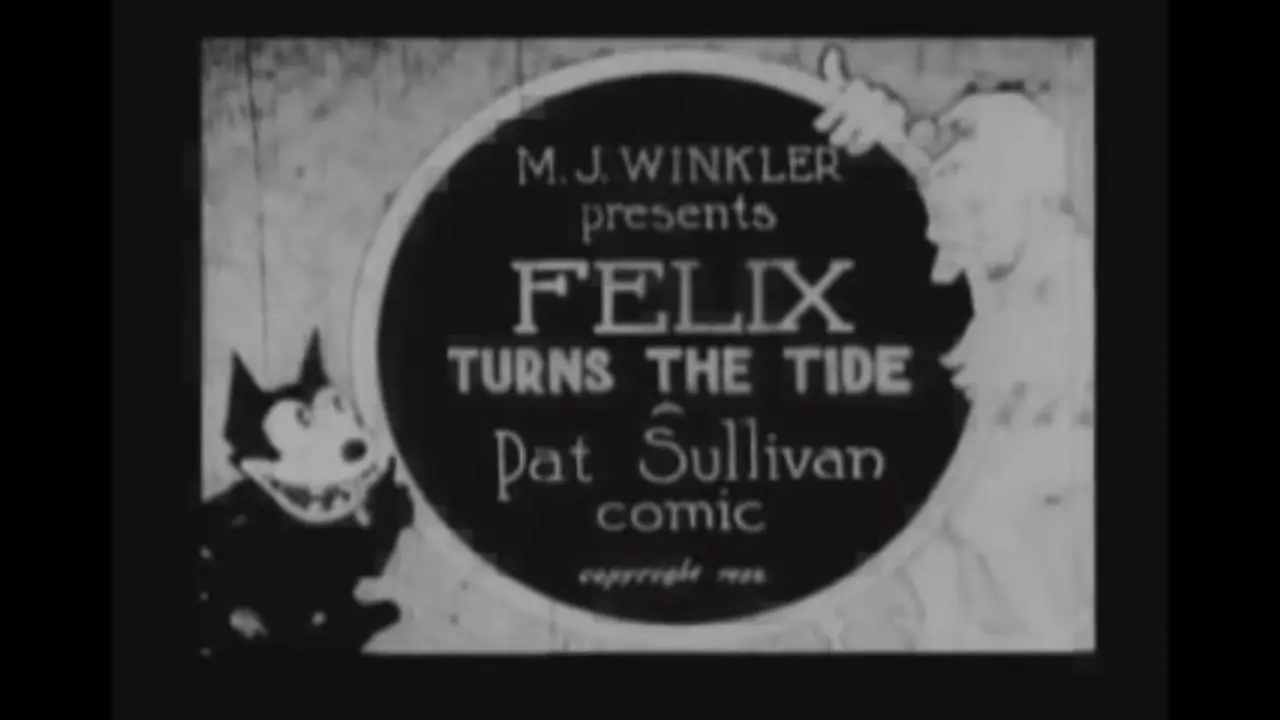
Note the chromatic absence: most prints survive in monochrome, yet Messmer’s shading suggests color by other means. Cross-hatched shadows glow ember-orange when flares hiss, while urban snowflakes carry a faint sea-blue undertone, as though the film stock itself remembers Cezanne. You cannot taste hue, but you can inhale its ghost—a sensual sleight of hand modern 4K restorations rarely replicate.
Once the front line splinters into doodles, Felix Turns the Tide unleashes its most enduring invention: warfare as vaudeville blackout. Rats surf atop bulldog fleas wearing saddles stitched from discarded movie tickets; Felix counterattacks by twisting his tail into a helicopter blade, an image that predates Be a Little Sport’s athletic whimsy by nearly a decade. Messmer’s timing is ruthless—each gag snaps before the viewer can map logic, creating a staccato hypnosis. The result is not merely laughter but cognitive vertigo, a reminder that war’s foremost casualty is rational continuity.
Mid-film, a rat zeppelin—actually a bloated sausage skin—descends to deliver ultimatums. Felix punctures the craft with a quill pen stolen from a recruitment office, and the deflating dirigible squeals like a soprano saxophone, spraying cursive Germanic threats across the sky before dissolving into punctuation marks. One could read this as Messmer’s sly editorial on wartime propaganda: language itself weaponized, then punctured, rendered semantically flatulent.
The climax transpires within a sabotaged clock tower whose gears double as printing presses. Every tick thuds like a typesetter’s mallet, stamping tomorrow’s headlines onto yesterday’s corpses. Felix, now miniature, scrambles across numerals that rearrange into trench maps; hour hands pivot, bayoneting minute hands. The sequence feels less like a chase than a dialectic: time versus timing, history versus historiography. When our feline protagonist rewinds the main spring, the battle rewinds with it—rats march backwards into rat-holes, bombs reassemble into milk bottles, and the war erases itself like an editor regretting a cut.
Yet erasure leaves residue. The final tableau shows Felix lounging atop a war memorial that spontaneously sprouts catnip, while rats and cats share cigarettes carved from soap. The ceasefire is not negotiated but hallucinated, a shared exhaustion so profound it becomes brotherhood. In this, the short anticipates the weary fatalism of Die Dreizehn aus Stahl and the communal delirium of Ministerpresidenten, though distilled through the anarchic spirit of American slapstick.
Because the film predates synchronized dialogue, its soundtrack is whatever phantom score you project. I’ve screened it to hot jazz, to Shostakovich, to sheer room tone; each accompaniment rewrites the emotional libretto. That mutability is Messmer’s masterstroke—he constructs a cartoon so visually rhythmic it sings without audio, a pantomime opera where every punchline lands on a downbeat you invent in your cranial theatre.
Historians routinely cite Felix as precursor to everyone from Mickey to Bugs, yet few acknowledge how his wartime iteration foreshadows the surreal combat of La nave or the gendered subversion of Her Maternal Right. The short’s DNA coils inside later masterpieces: the ink-rebellion of The Awakening of Helena Ritchie, the sibling tensions of A Sister of Six, even the matrimonial absurdities of The Foolish Matrons. Each inheritance is a whisper you must strain to hear—proof that Messmer’s alchemy still percolates through cinema’s groundwater.
Surviving prints often arrive battered, their sprocket scars resembling shrapnel wounds. Yet even in tatters, the film vibrates with uncanny immediacy. When a nitrate fragment wobbles, Felix’s contour seems to shiver with shell shock; when emulsion crackles, the city’s bricks flake like dried blood. Damage becomes documentary, testimony that the cartoon itself served time on some cultural frontline. Archives have lately stitched 4K scans, but I confess to preferring the frayed 16mm—each scratch a footnote, each fade a palimpsest of forgotten laughter.
Viewing it today—amid streaming wars, algorithmic echo chambers, and sabre-rattling headlines—Felix Turns the Tide feels less nostalgia trip than tactical manual. It argues that militarism is a form of animated delusion, a collective hallucination we can ink-wash into absurdity. The rats’ banners read "Totaler Krieg" scrawled in toothpaste; substitute any contemporary slogan and the satire lands intact. Messmer, doodling in the margins of history, suggests that the mightiest weapon is not gunpowder but imagination unshackled from reason.
To write about this eight-minute miracle is to risk gilding chaos with coherence. Better perhaps to emulate Felix himself: leap into the skirmish of interpretation, twist your critical tail into a propeller, and ascend above the artillery of consensus. Whether you land amid the smoky sentiment of Goin’ Thro’ the Rye or the fraternal yearning of Wanted: A Brother, you will carry shrapnel of Messmer’s ink, a souvenir that forever tickles the synapses. And when the next war—cultural, political, or merely cinematic—erupts, you’ll recall that the tide was always ink, always animated, always ready to be redrawn.
IMDb —
1932
Community
Log in to comment.