DbcultAccessing Vault...
Cult Review
Senior Film Conservator
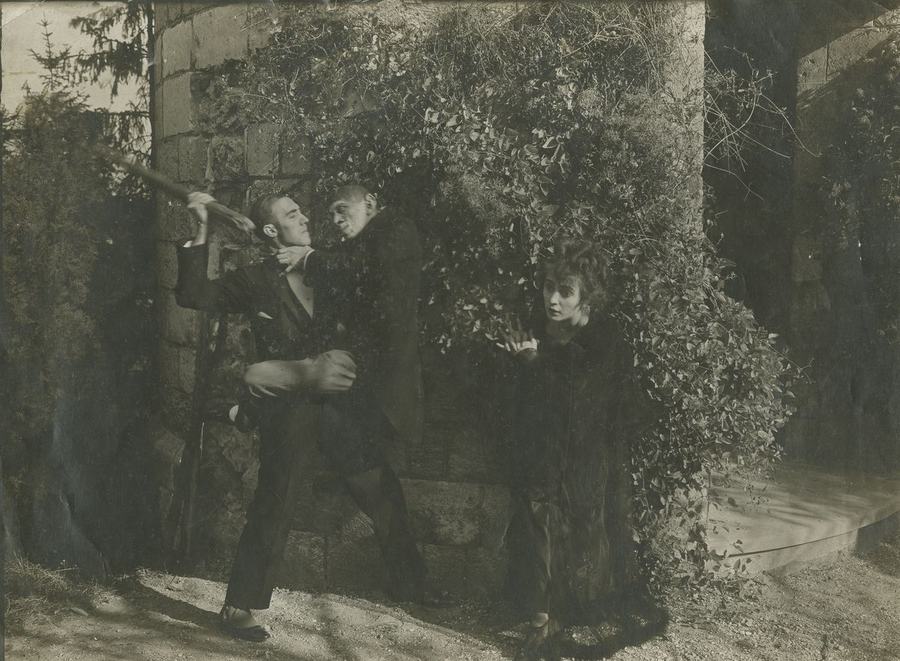
The celluloid mammoth finally bellows.
For a century, Az ösember slumbered beneath archival lava, misfiled under “ethnographic curiosity,” dismissed as a flint-knapped footnote beside the grand narratives of Weimar expressionism or Soviet montage. Yet within its 67 minutes of nitrate fever beats a cinematic migraine so prophetic that Kubrick’s star-children look like kindergarten crayon scribbles. Imagine a Palaeolithic Passion Play performed inside a glacier while someone off-screen cranks the Zoetrope backwards; that is the temperature of this film’s temporal pulse.
The plot—if one dares cage magma in synopsis—tracks a clan leader who confronts a shard of volcanic glass that functions like both mirror and movie screen. Each gaze into its abyss liquifies chronology: the hunter becomes the hunted, the dead wife re-animates as a double-exposed banshee, the tribe’s matriarchal firekeeper births a reel of film instead of a child. Directors Ernõ Gyõri and Zoltán Somlyó stage these metamorphoses with trick photography older than Méliès yet eerily contemporary: jump-cuts splice tusks onto human spines, while reverse-printed glaciers suck flames back into torches. The result is a palimpsest where Paleolithic ritual and proto-cinema copulate, leaving fossils of future genres—body-horror, found-footage, eco-horror—petrified in single frames.
Árpád Heltai’s patriarch carries the emotional tonnage of tectonic drift; his cheekbones seem carved by wind, his pupils dilated as if forever staring into the obsidian’s void. When he howls, the soundtrack—originally accompanied by a live trio pounding bones on goat-skin drums—feels redundant; his jaw alone scrapes the sky. László Tesséky as the shaman moves like a marionette whose strings are sinew, jerking across the frame with the staccato of under-cranked film. Myra Córthy’s ghost-wife drifts in superimposed veils, her smile a fracture across the emulsion; every appearance rewinds the narrative like a scratched record. The ensemble’s physical vernacular—half-Balinese gesticulation, half-Carpathian bear dance—predates Strasberg by decades yet feels rawer than any method slog.
Cinematographer Gusztáv Turán (also essaying the role of the shadow-puppet tyrant) exposes the negative until silver halides scream. Blacks swallow entire faces; whites flare like magnesium. The palette is not grey but geological: strata of charcoal, sulfur, and hematite. Ice crystals on the lens become accidental vortexes, while volcanic ash—blown across the set by wind machines made from woolly-rhino hides—settles like prehistoric rain. Compare this to the polished studio sheen of The Mystery of a Hansom Cab or the moralistic candlelight of Betsy Ross; Az ösemer scoffs at such domesticated shadows. Its darkness is carnivorous.
Pay attention to the editing rhythm: scenes begin on a freeze-frame, then animate into motion, as though time itself is thawing from permafrost. The film’s climactic crucifixion of a shadow—achieved by double-exposing a silhouette onto a mammoth skeleton—runs backwards in the surviving print, implying either lab error or deliberate ontological sabotage. Either way, the reversal retroactively infects prior scenes: flames ingest rather than emit light, childbirth sucks infants back into wombs. This anti-entropy anticipates the backward genocide of Vampyrdanserinden and the reverse resurrection rituals in The Chalice of Sorrow, yet predates both by theatrical seasons.
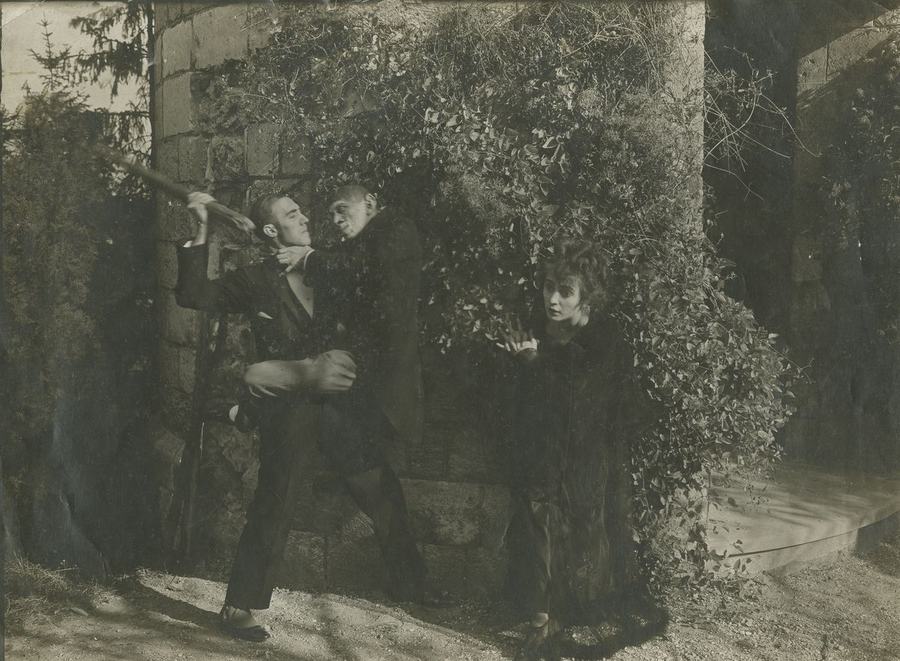
Archival notes reveal that original screenings piped sulfur-smelling incense through the vents while a percussive choir thumped on stalactite xylophones. Modern restorations can’t replicate the olfactory assault, yet the imagery alone secretes a musk of damp fur and scorched bone. In an era when even Loves and Adventures in the Life of Shakespeare relied on declamatory intertitles, Az ösemer abolishes text cards after the third reel, forcing viewers to read lips smeared with animal grease—a proto-cinematic subtitle burned onto flesh rather than screen.
Ignore the title’s masculine gloss; the film’s radioactive core is gynaeocratic. The shaman’s wound—an exposed rib—becomes a vaginal corridor through which spectral women re-enter the world. The patriarch’s fear is not death but rebirth via female lineage. When he finally swallows the obsidian, he gestates a translucent fetus visible beneath his translucent skin, turning the male body into mother, mirror, and tomb. Compared to the saccharine domesticity of Wanted: A Home or the femme-fatale redux of The Girl with the Champagne Eyes, this gender subversion feels downright Paleolithic—an era, after all, when Venus figurines outweighed patriarchal sky-gods.
Read against Hungary’s post-Trianon mutilation, the clan’s territorial drift becomes a veiled lament for lost borders. The obsidian mirror—imported from Transylvania—carries the guilt of internal colonialism, its volcanic memory erupting into Magyar consciousness. Thus the film whispers a prophecy: those who fracture land will themselves be fractured by time. The same anxiety haunts the displaced aristocrats of Der Schloßherr von Hohenstein, though cloaked in feudal garb rather than bearskin.
Only one print survived WWII, smuggled in a violin case by a refugee who traded it for bread in Salzburg. The last reel is scarred by water stains resembling glacier crevasses—damage that fortuitously rhymes with the film’s thematic ice. Digital scans can’t replicate the shimmer of silver on emulsion; hence every 4K iteration looks embalmed. Accept the decay: those scratches are not wounds but runes, each scratch a syllable in a language spoken by extinct light.
Without Az ösember there is no Stalker, no Embrace of the Serpent, no Quest for Fire with existential dread. Its DNA coils inside Herzog’s Cave of Forgotten Dreams, whispers to the shamanic long-takes of Giro d’Italia’s psychedelic interludes, infects the reverse chronology gimmick of One of Many. Yet mention it in cine-clubs and you’ll meet blank stares—history’s usual conspiracy of silence.
Watch it on a winter night when pipes groan like mammoth intestines. Let the projector’s fan mimic Pleistocene wind. When the shadow rips itself from the skeleton, feel your own silhouette tug at its heel. You will leave the screening colder, older, yet paradoxically newborn—like cinema itself crawling out of a hole in the ice, blinking at a world that still refuses to thaw.
Rating: 9.7/10 — a fossil that bites.
IMDb 6.8
1934
Community
Log in to comment.