DbcultAccessing Vault...
Cult Review
Senior Film Conservator
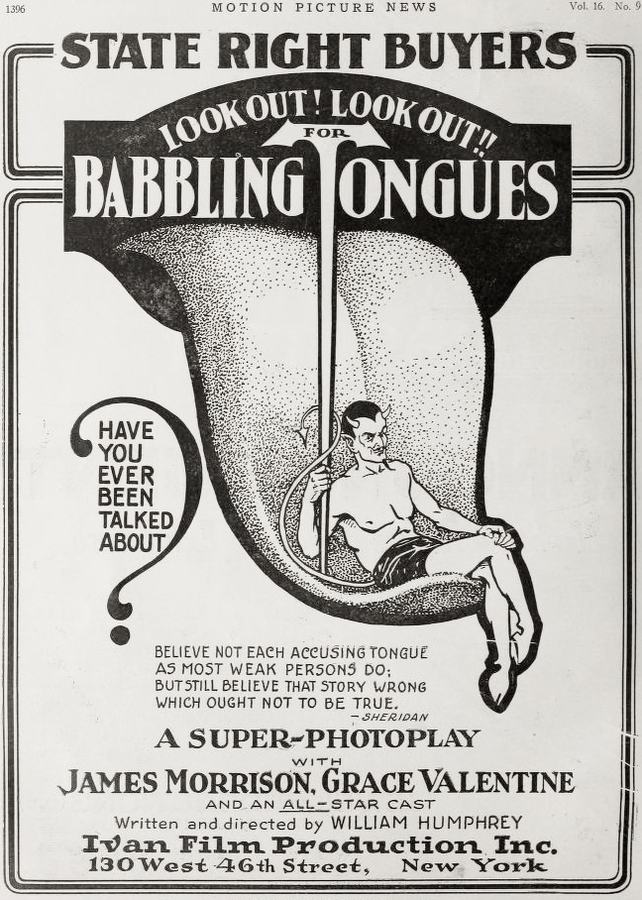
In the grand tapestry of early cinema, where narratives often adhered to straightforward moralizing or exhilarating action, there occasionally emerged a work audacious enough to challenge the very fabric of storytelling itself. Such a film is Babbling Tongues, a cinematic marvel that, even decades later, retains its astonishing capacity to surprise, provoke, and profoundly resonate. It’s not merely a drama; it’s a meta-commentary on perception, the insidious power of societal whispers, and the intricate dance between artistic creation and lived experience. This film doesn't just tell a story; it performs a narrative sleight-of-hand, inviting its audience into a meticulously constructed world only to deftly pull the rug from beneath their feet, leaving them to ponder the elusive nature of truth. It stands as a testament to the ingenuity of its writers, William Humphrey and George Edwardes-Hall, and the visionary performances of its ensemble cast, particularly Gladden James and Carolyn Birch, who navigate its treacherous emotional landscape with remarkable conviction.
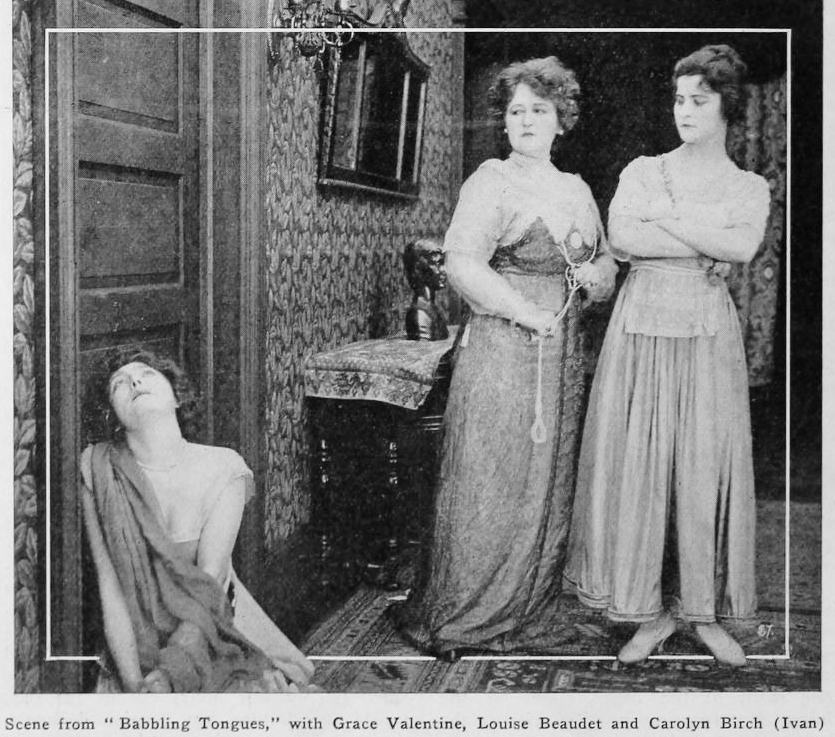
The initial setup of Babbling Tongues seems deceptively simple, almost a conventional domestic drama of its era. We are introduced to Joseph Moreau, an elderly gentleman of apparent means and dignity, and his considerably younger wife, Therese. Their household, a picture of quiet respectability, is disrupted by an act of benevolence: they offer refuge to Paul Savary, a young dramatist struggling against the twin specters of poverty and creative frustration. This seemingly innocuous gesture, however, acts as the catalyst for a societal maelstrom. The close proximity of the youthful Therese and the charismatic Paul, exacerbated by the idle chatter of a provincial society, quickly morphs into a torrent of malicious gossip. Rumors, those intangible yet devastating weapons, begin to insinuate an illicit affair, eroding the foundations of trust and respect that underpin the Moreau household. The film masterfully illustrates how swiftly whispers can calcify into perceived fact, how innocent interactions can be twisted into damning evidence by the collective imagination of a judgmental community. It’s a stark reminder that reputation is often a fragile construct, easily shattered by the merest breath of suspicion.
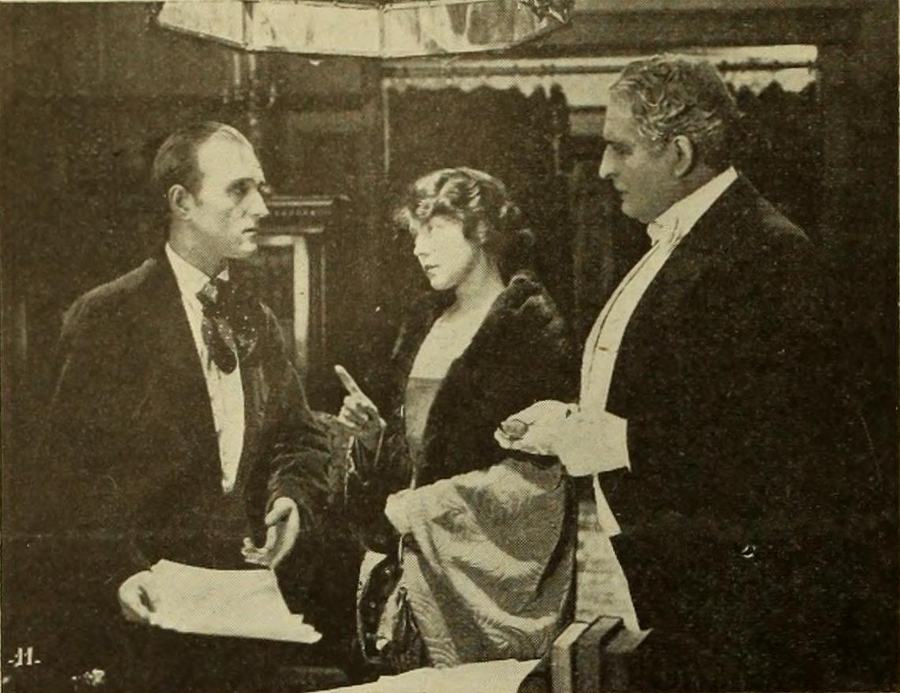
As the insidious tendrils of these rumors tighten their grip, Paul, recognizing the irreparable damage being wrought, makes the honorable decision to remove himself from the Moreau residence. He seeks separate quarters, hoping to quell the burgeoning scandal. Yet, the narrative demonstrates with chilling accuracy that once unleashed, gossip is a force not easily contained. Its momentum is self-sustaining, feeding on conjecture and confirmation bias. Paul, in a moment of unfortunate serendipity, overhears the venomous whispers at a local café. The casual cruelty of the purveyor of these lies, a character expertly crafted to embody societal malice, pushes Paul to a breaking point. Honor, a concept of paramount importance in the societal codes of the time, demands satisfaction. He issues a challenge to a duel, a desperate measure to reclaim his tarnished reputation and protect Therese’s name from further calumny. This escalation transforms the domestic drama into a high-stakes tragedy, where abstract concepts like honor and reputation demand concrete, potentially fatal, consequences.
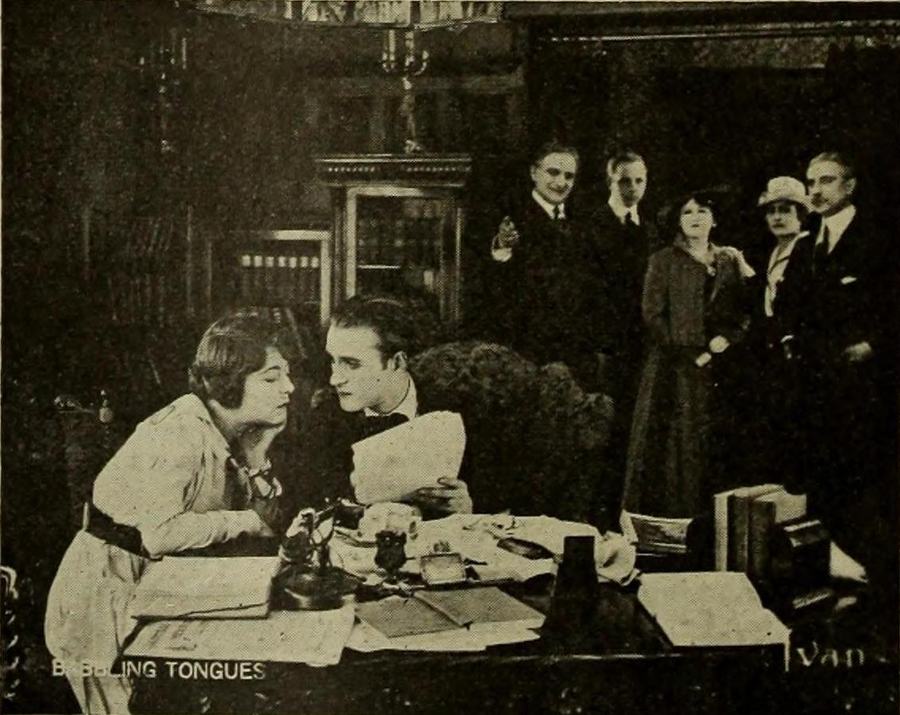
The characters, even within the confines of what appears to be a conventional melodrama, are drawn with considerable psychological depth. Gladden James imbues Joseph Moreau with a palpable sense of weary dignity, a man whose pride and love for his young wife are deeply intertwined. His decision to take Paul's place in the duel is not born purely of selflessness, but a complex brew of patriarchal protectiveness, wounded pride, and a desperate, perhaps misguided, attempt to assert control over a narrative spiraling beyond his grasp. It’s a tragically heroic act, fraught with the irony of a man fighting for an honor already compromised by public opinion. Carolyn Birch, as Therese, portrays a woman caught in an impossible bind—her youth and beauty becoming a liability, her innocence irrelevant in the face of widespread suspicion. Her helplessness in the face of public judgment is agonizingly real, making her a sympathetic figure whose fate seems unjustly intertwined with the whims of others. Paul Savary, portrayed by James Morrison, is initially presented as a victim of circumstance, an artist whose presence inadvertently triggers a social crisis. His artistic ambition, however, will later be revealed as a driving force far more complex than mere survival.
The duel itself is depicted with a raw, understated intensity that is often more powerful than overt dramatics. Joseph, tragically, is mortally wounded. The scene of his agonizing journey back to Paul's apartment is a masterclass in silent film performance, conveying immense suffering and a profound sense of injustice. The film builds to a crescendo of emotional devastation as Joseph stumbles into the apartment, only to find Therese already there. This discovery, in his dying moments, confirms his deepest, most agonizing fears. He dies cursing the pair, believing them to be treacherous lovers, his final breaths poisoned by perceived betrayal. It’s a moment of unparalleled dramatic irony, designed to wring every drop of pathos from the audience. The profound tragedy of a man dying for a lie, believing it to be a truth, is almost unbearable. One might compare the sheer, relentless build-up of personal tragedy and societal pressure to the narrative intensity seen in The Juggernaut, where individual fates are similarly crushed under the weight of external forces. However, Babbling Tongues takes this a step further, into an entirely different realm of narrative complexity.
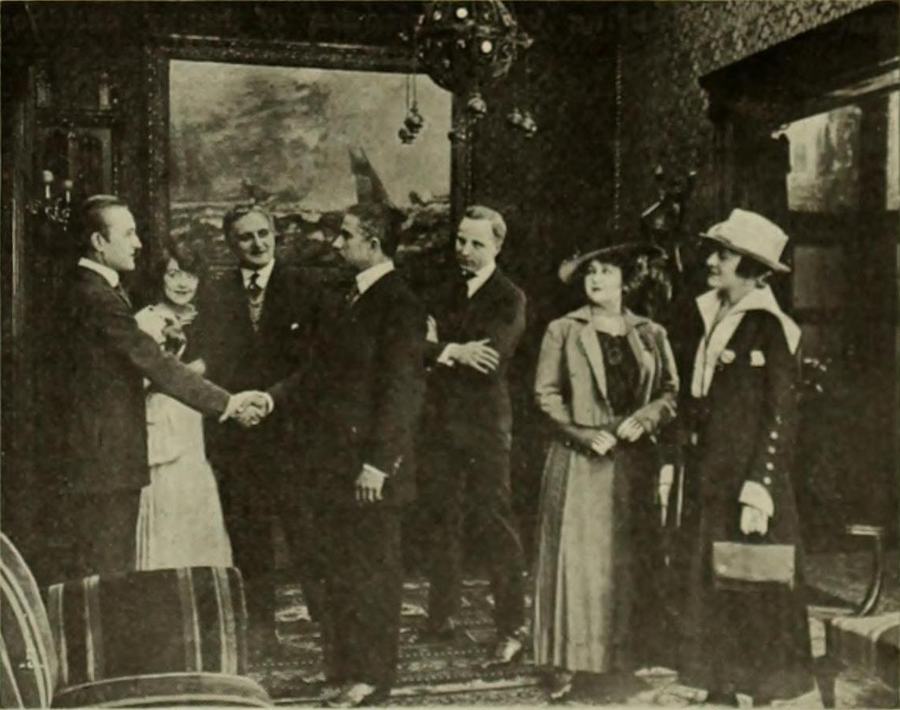
And then, the revelation. The moment that shatters the entire edifice of perceived reality, transforming every preceding scene, every agonizing emotion, into something entirely new. It is revealed that the entire tragic sequence—the rumors, the duel, Joseph’s death, his dying curse—was nothing more than the narrative of Paul Savary’s new play, which he is reciting to a captivated Joseph and Therese. This twist is not merely a plot device; it's a profound philosophical statement. It forces the audience to re-evaluate everything they have witnessed, challenging their preconceived notions about truth, fiction, and the very nature of engagement with art. The initial shock gives way to a breathtaking admiration for the sheer audacity of the screenplay, a meta-narrative stroke of genius that elevates Babbling Tongues far beyond the typical melodramas of its era.
This audacious narrative structure invites a deeper analysis of the film's central themes. The power of gossip, initially presented as a devastating societal force, now takes on an additional layer of meaning. It becomes the very inspiration for Paul's art, demonstrating how real-world anxieties and human frailties can be transmuted into compelling drama. The film cleverly implicates the audience in the very act of believing the gossip, as we, too, were drawn into the manufactured reality of Paul's play. We felt the shock, the sorrow, the indignation, only to have it revealed as a carefully constructed illusion. This challenges the viewer to consider their own susceptibility to narratives, both fictional and real, and the ease with which we accept presented truths. In this way, Babbling Tongues transcends mere entertainment, becoming a sophisticated critique of perception itself. It asks: how much of what we accept as 'true' is merely a well-told story?
The performances, in retrospect, gain an entirely new dimension. Gladden James's portrayal of Joseph Moreau, particularly his dying moments, becomes even more poignant when we realize he is not merely playing a character, but a character *within* a character's creation. The intensity of his despair, his final curse, is a testament to his character's immersion in Paul's narrative. Similarly, Carolyn Birch's Therese, initially a figure of tragic vulnerability, is now revealed to be an active participant in the creation of Paul's art, listening intently to the dramatic unfolding of her fictionalized self. The brilliance of the cast lies in their ability to convey these layers without betraying the twist, offering performances that are both authentically emotional within the 'play' and subtly informed by the 'real' context. The film demands a re-watch, not just for the twist, but to appreciate the intricate nuances in their acting that hint at the meta-narrative without giving it away. It’s a high-wire act of performance, executed flawlessly.
The writers, William Humphrey and George Edwardes-Hall, deserve immense credit for crafting such an intricate and daring screenplay. The pacing of the reveal, the meticulous build-up of tension, and the seamless transition from one perceived reality to another are all hallmarks of exceptional storytelling. They don't just spring a surprise; they orchestrate a profound shift in perspective, forcing the audience to engage intellectually as much as emotionally. This kind of narrative innovation was rare for its time, setting Babbling Tongues apart from many of its contemporaries. While films like David Harum might offer charming character studies and Alma, Where Do You Live? explores societal mores, Babbling Tongues delves into the very mechanics of narrative construction and its psychological impact on the audience. It's a film that anticipates later cinematic experiments with meta-narrative and unreliable narrators, demonstrating a foresight that is truly remarkable.
The direction, while subtle, is crucial to the film's success. The visual language employed throughout the 'play' within the film—the framing, the close-ups on anxious faces, the depiction of the duel—all contribute to the illusion of reality. There are no overt clues, no winks to the camera, that betray the coming twist. This commitment to maintaining the initial dramatic integrity makes the eventual reveal all the more impactful. The director understood that the power of the meta-narrative lay in the audience's complete immersion in the initial false reality. The emotional stakes had to feel genuine for the intellectual punch of the twist to land with maximum force. This careful calibration of dramatic tension and narrative deception is a hallmark of truly skilled filmmaking, elevating the material beyond mere trickery to profound artistic statement.
Babbling Tongues is more than just a clever film; it's a timeless exploration of human nature's darker facets and the transformative power of art. It reminds us that our perception of reality is often shaped by the stories we are told, and that even the most mundane events can be imbued with dramatic significance through the lens of creative interpretation. The film's enduring legacy lies in its ability to spark conversation, to make us question not only the characters' motivations but also our own processes of belief and judgment. It's a film that lingers long after the credits roll, prompting introspection about the stories we consume and the way they shape our understanding of the world. It’s a compelling argument for the unique capacity of cinema to not just reflect life, but to reframe it, to dissect its components, and to present them in a way that challenges our very foundations of knowing. Indeed, few films manage to be so entertaining while simultaneously being so intellectually stimulating, a rare balance that makes Babbling Tongues an indispensable piece of cinematic history. Its innovative spirit and profound thematic depth ensure its place as a groundbreaking work that continues to resonate with audiences seeking more than just superficial storytelling. It’s a masterclass in how to wield narrative as both a mirror and a magnifying glass, revealing the intricate patterns of human deception and the compelling allure of the dramatic arts.

IMDb 6.4
1935
Community
Log in to comment.