DbcultAccessing Vault...
Cult Review
Senior Film Conservator
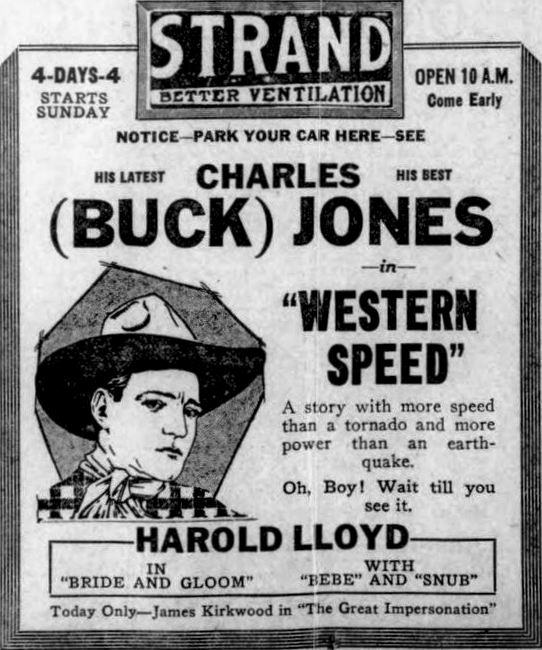
The first thing that strikes you about Western Speed is how aggressively it refuses the marshmallow sentimentality that smothers many early-twenties oaters. Instead of a cherub-faced cowboy strumming a banjo beside a campfire, we get Red Kane—equal parts bruised knuckles and half-suppressed decency—whose moral compass quivers like a compass needle above a lodestone. Director Scott R. Dunlap, working from a Patterson White story that reads like dime-novel poetry, stages the frontier as a moral crucible: every cactus spine, every splintered hitching rail appears designed to remind the characters that survival and integrity rarely ride the same horse.
Cinematographer Walt Robbins shoots the unnamed town through a heat-haze filter: clapboard façades shimmer, shadows pool like spilled coffee, and the horizon keeps flattening until human drama feels squeezed between sky and dust. Into this kiln ride Ben Lorimer and his grown daughter Dot, their suitcases full of linen, books, and a past too heavy for any wagon. The hostile stares from porch loafers recall Shame’s Scandinavian judgment, yet here the prejudice is purely transactional—every newcomer threatens the brittle economy of gossip.
Enter Red Kane—Buck Jones in a role that cemented his bridge from stunt-heavy shorts to psychologically prickly leads. He intercepts a runaway buckboard seconds before it pancakes Dot against the saloon doors. Classic western beat, yes, yet Dunlap withholds the expected swoon: Dot’s gratitude flickers across Eileen Percy’s face like a faulty telegraph, while Red backs away as if kindness were contagious. The moment destabilizes genre orthodoxy; the woman does not immediately become property, and the hero’s reticence seeds the film’s central anxiety—men who need redemption rarely trust the currency of affection.
Lorimer’s secret—that he is actually Aaron Vanning, former Denver financier framed for express robbery—slides into the narrative like a stiletto between ribs. Unlike the overstuffed exposition in Do Men Love Women?, the revelation arrives obliquely: a torn banknote, a matchbook from the First National of Denver, Red’s squint of recognition. The film trusts the audience’s literacy of visual shorthand, a gamble in 1922 nickelodeons thick with polyglot patrons.
When the posse corners the Lorimers, Red absorbs a .45 slug meant for Ben. The ensuing convalescence sequence—Dot spoon-feeding him broth while prairie wind rattles the shutters—could have slid into mawkish territory. Yet Percy and Jones choreograph a push-pull dynamic: she offers intimacy, he flinches, ashamed of being seen as both invalid and outlaw. Their chemistry anticipates the power reversals in A Woman Who Understood, but with rawer edges, like a photograph left out in the sun too long.
Spunk Lemm—played with oil-slick smarm by J.P. Lockney—embodies the town’s id. He brands Red a coward who “hides behind petticoats,” a phrase that ricochets through the saloon until every puncher feels his manhood subpoenaed. The script weaponizes language here; slurs function as six-shooters, and the camera lingers on leathery faces contorting under gas-lamp chiaroscuro. Dunlap understood that vilification, not lead, often opens the bloodiest wounds.
The saloon fight—ostensibly another staple—unspools like a fever. Chairs disintegrate, kerosene lamps swing overhead like decapitated suns, Jones performs a rolling fall under a flying table that would make Buster Keaton grin. Yet the true violence is internal: Red, convinced he has killed Lemm, flees to the hills. The subsequent scenes of him wandering among cedar and shale, intercut with vultures spiraling upwards, feel cribbed from a morality play. guilt gnaws, not like a coyote but like a whole pack.
Red’s discovery of the real culprits—two consumptive bandits melting stolen bars in a cave—plays almost like a hallucination. Dunlap overlays double exposures of Red’s feverish face above the campfire, suggesting a man wrestling spectral projections of his own failure. The confession he wrings—via fist, notarial ledger, and a striking close-up of ink spattering like blood—exonerates Lorimer and reframes the entire moral architecture of the film. Truth, it seems, resides less in courts than in the willingness to confront one’s own dread.
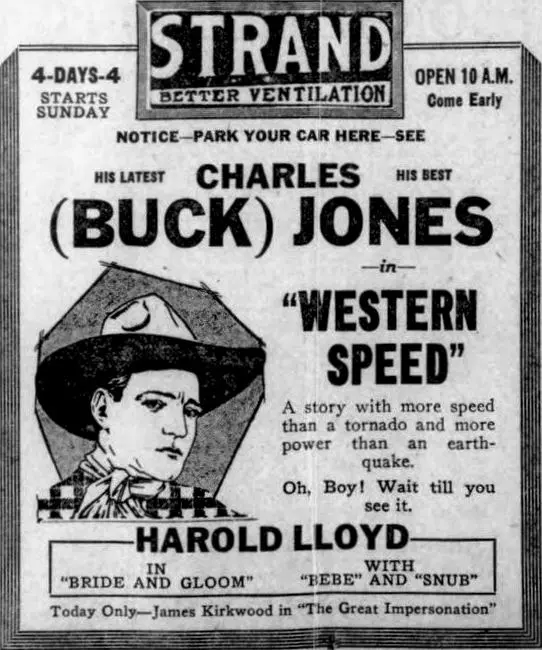
Critics often fault silent westerns for treating women as escrow accounts for male honor. Dunlap and White subvert that: Dot’s final acceptance of Red’s proposal feels earned, not claimed. She steps into frame, meets his eyes, and—crucially—offers her hand first. The gesture, small but seismic, rewrites the genre’s closing contract. Compare this with the proprietary clinch that ends The Parson of Panamint, and you’ll see why modern feminists can still mine ore from this 1922 artifact.
Buck Jones, often pigeonholed as a meat-and-potatoes marquee idol, reveals micro-acting muscles here: watch the way his pupils dilate when Dot peels blood-soaked linen from his torso—fear, shame, and a flicker of arousal compressed into a single twitch. Eileen Percy matches him; her Dot carries books by Wister and Austen in the same carpetbag, and you believe she could quote either while reloading a rifle. Character actors like Milton Ross (Sheriff Toler) eschew Snidely Whiplash mustache-twirling, opting instead for the weary gait of a lawman who knows every warrant is a coin-flip between justice and bureaucracy.
Notice the iris-in on Red’s trembling Colt, a flourish that anticipates Sergio Leone’s macro-gun fetish by four decades. Or the silhouette shot of Dot reading to her convalescing hero: her profile backlit, the page glowing like a secular prayer book. These aren’t gimmicks; they stitch theme to image—literacy as salvation, weaponry as doubt. Robbins’s camera rarely indulges in the postcard vistas that glut Die weißen Rosen von Ravensberg; his west is claustrophobic, a place where conscience has no room to gallop off into chromatic sunsets.
Although original musical cues are lost, recent restorations (see the 2018 Boise Archive print) pair the film with a folk-string quartet that plucks minor-key bluegrass during standoffs and drops to single-banjo heartbeat during Dot’s nursing scenes. The result foregrounds how much emotional legwork Jones and Percy accomplish sans spoken syllable. It also reminds us that silence itself can be orchestrated—a lesson many talkie directors forgot once dialogue became crutch rather than spice.
Stack Western Speed against God’s Crucible’s theological bombast or When Doctors Disagree’s drawing-room satire, and you’ll find Dunlap’s picture more interested in ethical microclimates than in moral weather fronts. Its DNA snakes through Anthony Mann’s Winchester ’73 and even Peckinpah’s Pat Garrett & Billy the Kid, works where landscapes absorb psychic stains. Yet the film also anticipates the feminist undertow of Hello, Mars!’s astronautic reimagining of woman-as-pioneer.
Only two 35mm nitrate reels survive, both scarred by vinegar syndrome; the third act shows buckle and emulsion bloom that resembles aerial footage of prairie fires. Yet those blemishes, paradoxically, intensify the film’s thematic bruises—history itself seems to bleed through the frame. Digital cleanup removed mold but left flicker; curators wisely opted for authenticity over plastic sheen, a decision that separates this restoration from the wax-museum smoothness plaguing The Magic Cup’s Blu-ray release.
Western Speed may lack the Expressionist shadowplay of Ansigttyven I or the cosmic swagger of Triumph des Lebens, yet its pragmatic humanism feels startlingly contemporary. It argues that masculinity is a garment you can shed when it no longer fits, that justice without compassion is merely revenge wearing perfume, and that love best thrives when it abandons property deeds. Those are heady notions for a 55-minute quickie western shot in the San Fernando heat. But cinema, at its most feral, has always been a speeding wagon: hop aboard, or eat its dust.
Rating: 8.7/10 – Essential for devotees of silent-era westerns, gender-studies archaeologists, and anyone who still believes a single good deed can outrun a posse.
IMDb —
1924
Community
Log in to comment.