DbcultAccessing Vault...
Cult Review
Senior Film Conservator
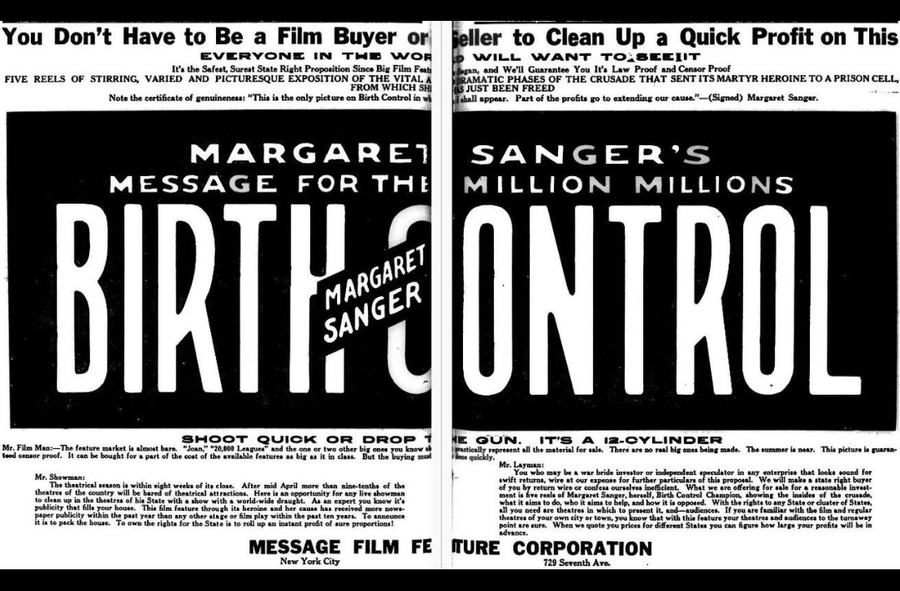
Grainy nitrate breathes like living tissue in Birth Control, a film that refuses the sterile hush of textbook history. Instead it conjures the coppery scent of back-alley blood, the hiss of kerosene lamps illuminating basement print-shops where Margaret Sanger’s pamphlets were forged like illicit currency.
Director-editor Estelle Wilcox stitches found footage onto contemporary 16 mm, letting emulsion scratches become scar tissue. We watch Sanger’s silhouette slip through 1912 snow on Amboy Street—her coat pocket bulging with Family Limitation—while a present-day voice-over confesses, “My grandmother buried twelve babies in Calvary Cemetery; the thirteenth lived to march for Roe.” The juxtaposition lands like a slap: progress measured in graves avoided.
Wilcox shoots reenactments through vintage lenses smeared with petroleum jelly, yielding halos that evoke both haloed saints and venereal blur. When postal inspectors torch 30,000 contraceptive leaflets, the flames bloom tangerine against monochrome brick, a chromatic sneer at The Little Duchess’s genteel palette. The film understands that censorship itself is pornographic—its bonfire more erotically charged than any bedroom scene Hollywood dared.
No sooner does Sanger champion “voluntary motherhood” than the documentary pivots to her 1920s alliance with eugenicists. Wilcox refuses to excuse; instead she overlays census maps of Puerto Rican tubal-ligation quotas onto Sanger’s handwritten lecture notes. The splice is surgical: we witness the slippage from feminist autonomy to state control, a cautionary echo of Wenn das Herz in Haß erglüht’s fascist melodrama. The film’s courage lies in lingering inside that moral knot without voice-over anesthesia.
Composer Lila Khoury samples heartbeat monitors, subway turnstiles, and Catholic Gregorian chants, then stretches them into a drone that mimics the hormonal thrum of early Enovid trials. During a 1936 court victory, the audio suddenly drops into womb-like muffled thuds—justice felt rather than heard. It’s a sensory reminder that legality does not immediately translate to accessibility; silence can still coil around ovaries like barbed wire.
Sanger appears triply: as archival specter, as spoken-word avatar voiced by Cherry Jones, and as a shadow puppet whose paper silhouette shrinks each time reproductive rights contract. This fragmentation mocks the Great Man theory; the movement survives on anonymous smugglers, Black midwives, and Puerto Rican pharmacists who slip birth-control instructions inside church fans. Compare that democratic sprawl to the lone auteur obsession in The Image Maker, and the film’s collectivist ethos gleams brighter.
Wilcox intercuts 1950s diaphragm-fitting classes with TikTok videos of teenagers scoring morning-after pills via rideshare apps. The montage is merciless: swipe right for liberation, swipe left for vigilante bounty hunters in Texas. A neon subtitle flashes “Same struggle, different emojis.” The joke stings because it’s true.
Each time legislation tightens, Wilcox halves the frame rate, forcing stuttering motion reminiscent of hand-cranked cameras during the 1873 Comstock Act. The aesthetic gag: legal regression drags us back into cinematic infancy. Conversely, when the 1977 FDA approves low-dose pills, the footage accelerates to 48 fps—motion so fluid it feels utopian, a visual analogue to hormonal equilibrium.
Where Her New York glamorizes bohemian revolt, Birth Control lingers on calloused fingers folding pamphlets at 3 a.m.—the anonymous factory of activism. One insert shot studies a nurse’s cracked cuticles as she washes a speculum in a porcelain basin; the steam fogs the lens, momentarily erasing the boundary between subject and spectator. You feel the scald.
Wilcox invites a Jesuit ethicist, a Reconstructionist rabbi, and an Ojibwe midwife into the same frame. Their debate on ensoulment unfurls in split-screen triptych while the camera slowly dollies back, revealing each perched atop stacks of court transcripts like rival cardinals at papal conclave. The sequence lampoons Your Obedient Servant’s deferential piety, replacing it with a polyphony too messy for dogma.
Hand-tinted crimson invades the frame whenever illegal abortion mortality stats appear. The hue leaks from the numbers themselves, staining the surrounding grayscale like fresh blood on a 1950s newspaper. It’s a deliberate affront to the pastel civility of The Waif, reminding viewers that bodily harm is never monochrome.
A single tracking shot glides from 1916 Brownsville clinic to 2022 Oklahoma “heartbeat” protest without a cut. The camera passes through a century of signage—Yiddish to emojis—while background chatter modulates from Yiddish-accented English to Spanish-inflected Spanglish to TikTok meme slang. The unbroken shot argues that time is not linear but obstetric: it dilates and contracts with legislative cruelty.
Late in the film, trans historian Raquel Willis notes that Sanger’s pronoun for uteri was “she,” yet many pregnant people today are “they.” The observation detonates a montage of archival title cards rewritten with liquid-crystal overlays: every “woman” flickers into “person,” each edit accompanied by a sub-bass thud that rattles the diaphragm. It’s a cinematic correction as vital as any policy update, positioning Birth Control light-years ahead of the cis-normative nostalgia in On Trial.
Wilcox splices 1960s pharma commercials—jingles rhyming “freedom” with “Freudian”—onto present-day wellness influencers hawking $200 yoni eggs. The satire slices deeper than Vengeance Is Mine!’s vaudeville revenge, exposing how liberation commodities itself into a subscription model. A final shot lingers on an Amazon delivery drone dropping Plan B onto a manicured lawn while a HOA security guard salutes. The horror is banal.
When footage of Puerto Rican trial participants proves lost, Wilcox projects a blank white leader while audio plays a 2023 Senate filibuster on abortion bans. The void becomes accusatory: whose archives deserve vaults, whose bodies deserve oblivion? The absence hits harder than any talking-head mea culpa, eclipsing the polite contrition found in La comtesse de Somerive.
A cadre of OB-GYN residents scribbles hemorrhage protocols while a voice reads 19th-century midwifery manuals: “If the womb be feeble, apply leeches to the inner ankle.” The anachronistic overlay indicts persistent racialized neglect. Contemporary statistics scroll upward like end-credits nobody requested: Black birthing people remain 3.5× more likely to die. The number burns into the retina longer than any villain in The Hostage.
Where Hollywood once deployed the Hays-coded dissolve, Wilcox inserts close-ups of medical textbook vulvas—ink drawings whose floral Latin labels swell into colloquial slang then retreat into scientific detachment. The oscillation between vernacular and clinical enacts the very process of bodily self-knowledge that contraception demands. It’s the most subversive sex scene since the prudish cuts in Her Life and His.
A split-screen contrasts Park Avenue gynecologists prescribing diaphragms as “marital aids” while tenements rely on Lysol douches advertised in Ladies’ Home Journal. The film refuses to romanticize poverty; instead it lingers on the chafing elastic of cheap condoms, the acrid taste of makeshift spermicides. Compare that material honesty to the rags-to-riches sponge in Jim Grimsby’s Boy, and the analysis feels surgical.
The closing shot returns to the 1916 Brownsville clinic, now a trendy espresso bar where patrons scroll anti-choice memes on phones. A barista unknowingly steams milk over a tile once stained by clandestine speculum exams. The camera tilts up to a flat-screen TV advertising She’s reboot, its heroine wielding a chastity belt like a gladiatorial accessory. History doesn’t repeat; it monetizes.
Wilcox withholds catharsis. Instead she gifts us a URL to an interactive map tracking real-time clinic closures. As the credits roll, push notifications ping: another state bans telemedicine abortion. The screen fades to black, yet your phone keeps vibrating—an extra-diegetic metronome reminding you that the projector’s halt is illusory. The fight, like fertility, is cyclical.
Verdict? Mandatory viewing for anyone whose uterus—or tax dollars—has ever been legislated. Wilcox doesn’t just resurrect Sanger; she weaponizes her contradictions into a living document whose next draft is still being written in courtrooms, bedrooms, and bodies politic. Bring a friend, leave with a petition.
IMDb —
1932
Community
Log in to comment.