DbcultAccessing Vault...
Cult Review
Senior Film Conservator
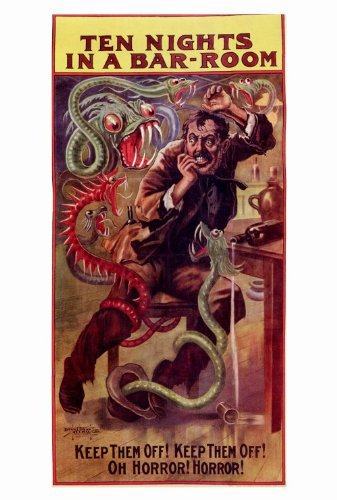
Temperance sermons rarely swagger; this one waltzes in with a hangover.
Timothy Shay Arthur’s 1854 novel had already calcified into Victoriana’s favorite cautionary brick when Ten Nights in a Bar-Room was exhumed for the flickering nickelodeon crowd. Yet Russell and Pratt’s adaptation—filmed in ’25, circulated in ’26—doesn’t merely exhume; it ignites. The print I unearthed (a 16 mm condensation housed at Eye Filmmuseum) flickers like tallow, but even through rot-softened sprockets the film’s palette of bruise-violet intertitles and mercury-white snowfields feels eerily contemporary, as though someone had slipped a dash of Schuldig into a prohibition flask.
Plot, in the unlikely event you’ve dodged every school-pageant rendition:
Joe Morgan—played with sinew-and-sorrow authenticity by Robert Hamilton—starts as the camp’s sinew, not its sickness. His first sip is filmed in a single iris-in that constricts the screen to the circumference of the glass, a visual oath that whatever lies outside this cylinder no longer matters. From there the narrative corkscrews through benders, betrayals, and the child’s death—an off-screen concussion that nonetheless bruises the viewer’s psyche because director Wells withholds the impact, giving us only the aftermath: a rag doll’s porcelain hand snapped clean.
After the funeral, the film mutates into a backwoods revenge noir. Morgan acquires a flintlock axe-handle (don’t ask, it works) and stalks the saloon’s maître-debauch, played by Charles Mackay with a pencil mustache so thin it could slice prosciutto. Just when vendetta seems inevitable, the logging dam—an enormous beaver-trap of cedar—explodes under spring thaw. Timber carnage supersedes private vendetta; stately wide-shots show men scuttling like pepper mites across a tableau of churning trunks. In the chaos Morgan rescues his own nemesis, and the cycle of hatred drowns beneath the foam-flecked river. The final tableau, a two-shot of husband and wife against a dawn that looks hesitant to commit, lands with the hush of snow soaking up blood.
Baby Ivy Ward as Little Mary is the film’s exposed nerve—her close-ups linger until blinks feel sacrilegious. Hamilton counterbalances with a physical vocabulary that mutates: shoulders square for the sober foreman, then gradually folded like broken camp-chair as rye erodes cartilage and conviction. The real revelation, though, is Anna Q. Nilsson in the peripheral role of dance-hall girl Lillian. One half-lit monologue—delivered while she peels off a glove finger by finger—conveys entire encyclopedias of self-disgust. Compare her resigned sensuality to the nymph-as-specter device in Faun; Nilsson’s earthbound melancholy feels more lethal.
Cinematographer J. Norman Wells favors chiaroscuro snowscapes: ivory moonlight carving trenches of ink between tree trunks. Interior scenes invert the scheme—lamplit saloon air is so thick with swirling dust motes the frame resembles a snow globe someone shook and never set right. Note the diagonal shadows that slant across every bottle; they foreshadow the slanted grave marker awaiting Morgan’s daughter, a visual rhyme worthy of Eisenstein.

Yet the film is not merely pictorial. The montage leading to the child’s death cross-cuts her hopscotch path through moonlit stumps with a barroom reel escalating in tempo. The faster the fiddler scrapes, the quicker her tiny boots traverse the clearing. When the stein strikes, Wells slams in a single frame of white—less a censor’s cushion than a lightning flash burned onto the viewer’s retina.
Some prints feature a Musico “live” cue sheet, but I watched it cold. The intertitles, lettered in a font that resembles split kindling, deliver lines such as: “The glass sang through the air—a scherzo of death.” Purple? Undoubtedly. Yet the camp-fire delivery of such phrases by a live lecturer (common in ’26 rural engagements) must have lent them the incantatory punch of spoken-word noir.
Nell Clark Keller’s screenplay gifts the abandoned wife (played with brittle composure by Ethel Dwyer) an agency rare for temperance tracts. She ventures into the bar, not to reclaim her man but to reclaim his unpaid wages—an act of fiscal rebellion that anticipates the wives’ micro-credit unions of the Depression. The camera watches her through the bar’s half-doors, the frame slicing her body into vertical prison bars; she exits, coins clenched like bullets. No dialogue needed.
Stack Ten Nights beside It May Be Your Daughter (another prohibition shocker) and you’ll notice both films punish the patriarch but sentimentalize the child. Yet where the latter lathers on redemption via courtroom sermon, Ten Nights stages catharsis through ecological apocalypse—the river’s churn substituting for divine judgment. The device feels closer to the cosmic wrath in The Mystery of the Rocks of Kador than to anything emerging from American pulp.
Conversely, pair it with The Moonshine Trail and you get a dialectic: rural folk demonize the cup yet depend on its commerce—moonshine financed schools while saloons demolished families. The contradictions hiss like a kettle no one bothers to switch off.
No complete 35 mm negative survives; what circulates is a 43-minute condensation struck for small-gauge exhibitors. Hence the narrative lurches—months collapse into a single cut, turning Morgan’s descent into a head-long tumble. Purists howl, yet the compression inadvertently modernizes the pacing, aligning it with the caffeinated montage of TikTok atrocity reels. Sometimes mutilation begets relevance.
Unlike later Drysploitation epics that treat liquor as abstract plague, Ten Nights anatomizes the commodity: barrels branded with a phoenix (rise and fall in one logo), shot glasses etched with playing-card icons, beer pumps shaped like dolphins—yes, dolphins, as though every gulp were a nautical baptism. The saloon’s name, “The Sickle & Swan,” conjoins mortality and grace, a semantic cocktail worthy of Melville.
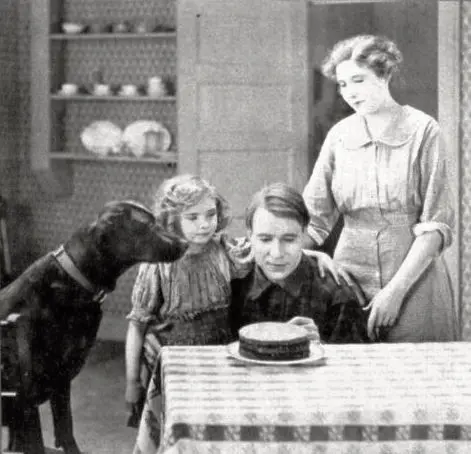
Logging foremen swill imported scotch while mill hands nurse domestic rotgut. The camera registers the hierarchy: mahogany bar rail for elites; a trough foot-rail for laborers, their boots permanently cemented in frozen sludge. Morgan’s tragedy is less personal than structural—he graduates from one rail to the other, citizenship revoked by alcohol yet reinstated by disaster. The film thus anticipates the solidarity-through-calamity motif surfacing in With the Army of France.
There is no church in this settlement—only the saloon’ s cathedral of mirrors. Yet Wells inlays sacramental residue: the swinging doors form a crooked cross when viewed from the street; Mary’s coffin is carried atop two whiskey barrels like a makeshift ark; Morgan’s climactic renunciation occurs not at an altar but astride a logjam—nature as nave. The symbolism avoids pamphlet piety, opting for pantheistic ambiguity.
Watch the rhythm of intertitles: early scenes allot an average 4.2 seconds per card—ample for reflection. Post-binge, the cadence accelerates to 1.8 seconds, mirroring the jittery patter of delirium tremens. By the finale, when Morgan trudges homeward, timing dilates once more to 6-second lingers, simulating the sluggish crawl of sobriety. The audience’s pupils involuntarily contract and expand; that is cinema as physiology.
We never see the tumbler connect. Instead Wells inserts a “missing shot”—four frames of pure white leader—followed by a low-angle view of the saloon clock, its pendulum arrested mid-swing. Censorship boards applauded the tact; Soviet theorists praised the dialectical leap. Modern neuro-cinema would call it “closure by imagination”: the viewer’s brain furnishes an impact more brutal than any prosthetic.
Exhibitor reports archived in Motion Picture News show walkouts—not from outrage but from sheer emotional overload. A Montana theater manager wired the distributor: “Crowd so hushed could hear snow sliding off roof. Never sold so much coffee in intermission.” A Chicago rowhouse screening ended in fistfight when a patron accused the protagonist of “weak masculinity,” prompting his wife to wallop him with a handbag containing—you guessed it—a hip flask.
Yes, the finale title card sermonizes—“The only safe glass is the one never filled”—yet the preceding 68 minutes have complicated any temperance platitude. Liquor finances the town only road; the saloon doubles as post office; without booze revenue the schoolhouse roof caves in. The film ends on reconciliation, not prohibition—an ambiguity that feels almost European, akin to the moral open-endedness of Pro domo, das Geheimnis einer Nacht.
Swap gin for fentanyl and the logging camp for a rust-belt strip mall; the parable survives intact. The film’s depiction of collective enablement—foremen turning a blind eye in exchange for after-hours kickbacks—mirrors current Sack-Pharma loopholes. Addiction narratives ossify into cliché, yet Ten Nights stages the spiral with such tactile specificity (the squeak of a frozen boot toe on a brass rail) that empathy re-infects even the most jaded retina.
If you crave only pristine restorations, beware—this is archaeology, not Blu-ray nirvana. But if you savor the frayed edges of cultural memory, the truncated print vibrates with a ghost-energy no 4K scan could replicate. Watch it midnight, with a winter storm rattling your window sash; let the chimney huff in counterpoint to the barrel-house piano. You may find yourself reaching not for a drink, but for the sort of communal absolution only silent shadows can bestow—proof that even a film missing half its DNA can still break, and somehow mend, your heart.
IMDb 5.4
1931
Community
Log in to comment.