DbcultAccessing Vault...
Cult Review
Senior Film Conservator
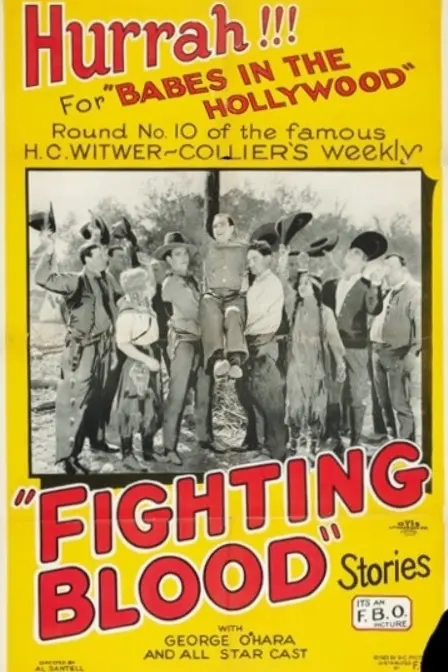
Step right up, film aficionados, and prepare to journey back to the roaring twenties, a time when cinema was still finding its voice, its swagger, and its undeniable magic. We're talking about an era of rapid innovation, where the silver screen was a canvas for grand narratives and burgeoning stars. Today, our spotlight falls upon a delightful, often overlooked artifact from this period: Babes in Hollywood. This isn't just another old film; it's a vibrant snapshot of early filmmaking, a charming confluence of Western grit, romantic rivalry, and genuinely witty comedy, all wrapped up in a package that, even today, sparkles with an infectious zest for life and the movies.
From the moment the reels begin to spin, we're introduced to Gale, a character whose journey into the heart of the burgeoning film industry forms the backbone of this engaging narrative. It’s a classic rags-to-riches, or perhaps, obscurity-to-stardom tale, rendered with an earnestness that belies the often cynical nature of show business. Gale isn't merely cast in a movie; he's catapulted into the role of a Western hero, a quintessential figure of American mythology. This particular genre, the Western, was a cinematic bedrock of the time, captivating audiences with its tales of frontier justice, rugged individualism, and sweeping landscapes. Gale’s portrayal of this archetype is crucial, as it immediately establishes his character as a figure of aspiration and adventure, a hero in the making both on and off the screen. The film cleverly uses this 'film-within-a-film' structure to explore the very mechanics of celebrity and the construction of cinematic personas, a surprisingly meta approach for its time.
But what's a rising star without a constellation of supporting players, especially when two of them are vying for his attention? Enter Patricia and Rosemary, two ambitious actresses, each with her own distinct charm and determination, locked in a spirited, often comical, rivalry to become Gale's leading lady. Their competition isn't just about professional advancement; it's steeped in the romantic undercurrents that often define Hollywood narratives. This dynamic provides a fascinating glimpse into the portrayal of female ambition in early cinema. Are they mere archetypes of the 'ingenue' or 'vamp,' or do they possess a nascent agency that pushes against the era's constraints? The film playfully navigates this, showcasing their individual strengths and weaknesses, their moments of calculated charm, and their flashes of genuine feeling. It's a reminder that even in the nascent days of film, the interplay of human relationships, especially those complicated by career aspirations, was fertile ground for storytelling. One might draw a parallel to the dramatic stakes and romantic entanglements seen in films like The Girl from His Town, where societal pressures and personal desires often clashed with compelling results, though Babes in Hollywood imbues its rivalry with a lighter, more comedic touch.
No discussion of Babes in Hollywood would be complete without celebrating the character of Nate, whose transformation provides much of the film's comedic sparkle. Initially introduced as a gruff, no-nonsense manager of a prizefighter, Nate's sudden metamorphosis into a 'dude' is a masterclass in physical comedy and character evolution. His attempts to adopt the mannerisms and sartorial elegance of the Hollywood elite are both endearing and uproarious. This subplot isn't merely for laughs; it cleverly satirizes the often superficial world of celebrity, where appearances and affectations can be as important as genuine talent. Nate’s struggle to fit in, his awkward attempts at sophisticated banter, and his utterly charming missteps create moments of genuine mirth that elevate the film beyond a simple romantic Western. It’s a testament to H.C. Witwer’s writing that such a character, seemingly peripheral, becomes so central to the film’s unique flavor. Kit Guard, who plays Nate, delivers a performance that transcends mere caricature, imbuing the character with a warmth that makes his journey of self-reinvention truly delightful to watch.
The Western melodrama at the heart of Gale’s cinematic endeavor is more than just a backdrop; it’s a vibrant tapestry woven with the threads of classic genre tropes. Think dusty trails, heroic deeds, and the inevitable showdowns that define the genre. The film-within-a-film concept allows for a playful exploration of these conventions, showcasing how stories were constructed for mass appeal. We see Gale, played by George O'Hara, embodying the stoic, courageous cowboy, a figure that resonated deeply with audiences yearning for escapism and clear-cut morality. The dramatic stakes are high, even if slightly exaggerated for comedic effect, ensuring that the audience remains invested in the outcome of his on-screen adventures. Comparing it to other Westerns of the era, one might see echoes of the landscape and narrative simplicity found in films like The Land of Long Shadows or South of Santa Fe, though Babes in Hollywood layers its Western elements with a self-awareness that hints at the genre's evolving future. The melodramatic touches are handled with a light hand, ensuring that the emotional beats land without becoming overly saccharine, maintaining the film’s overall tone of buoyant entertainment.
The climax of Babes in Hollywood is a thrilling prize fight, a sequence that encapsulates the film’s inventive spirit and its ability to deliver genuine excitement. This isn't just a perfunctory ending; it's a meticulously choreographed spectacle that brings together the various threads of the narrative. Gale's victory in the ring is symbolic, mirroring his triumph in the cutthroat world of Hollywood and solidifying his burgeoning popularity. The fight sequence itself, with its rapid cuts and visceral energy, is a testament to the dynamic filmmaking techniques emerging at the time. It’s a moment of pure cinematic exhilaration, designed to leave audiences on the edge of their seats, cheering for their hero. This grand finale serves as the ultimate validation of Gale’s star power, cementing his place in the hearts of his on-screen audience and, by extension, the real-world audience watching Babes in Hollywood. Such a high-stakes, action-oriented conclusion, while perhaps unexpected in a film that juggles comedy and romance, speaks to the early cinema's understanding of how to craft a truly satisfying resolution.
Let's turn our attention to the individuals who breathed life into this captivating story. The cast of Babes in Hollywood, including Al Cooke, Mary Beth Milford, Louise Lorraine, George O'Hara, and Kit Guard, deliver performances that are both characteristic of their era and surprisingly fresh. George O'Hara, as Gale, possesses a captivating screen presence, embodying the earnest ambition and eventual triumph of his character with a natural ease. Mary Beth Milford and Louise Lorraine, as Patricia and Rosemary respectively, bring distinct personalities to their rivalrous roles, ensuring that their competition feels genuine and engaging rather than simplistic. Their nuanced portrayals add depth to what could have been one-dimensional characters, showcasing early examples of actresses navigating complex roles. Al Cooke provides solid support, grounding the narrative with his presence. And as previously mentioned, Kit Guard’s comedic turn as Nate is a particular highlight, demonstrating a flair for physical comedy and a subtle understanding of character. The script, penned by H.C. Witwer, is surprisingly robust for its time, weaving together disparate elements with a coherent vision. Witwer’s ability to blend genres – the Western, the romantic comedy, the backstage drama – without sacrificing the film’s overall coherence is a testament to his skill. The dialogue, while reflecting the linguistic conventions of the 1920s, often sparkles with genuine wit, propelling the narrative forward with charm and intelligence. It's clear that the creative team behind Babes in Hollywood understood the nascent language of cinema and how to use it to full effect, creating a film that is both entertaining and historically significant.
Placing Babes in Hollywood within the broader context of early Hollywood filmmaking reveals its unique position as a fascinating example of genre blending and meta-narrative. In an era where genres were often rigidly defined, this film dares to be a Western, a romantic comedy, and a commentary on the movie-making process all at once. This audacious blend speaks volumes about the experimental spirit of the time, where filmmakers were constantly pushing boundaries and discovering new ways to tell stories. The film’s enduring appeal lies not just in its historical value, but in its sheer entertainment factor. It’s a joyous celebration of the magic of cinema, a reminder of the dreams and aspirations that fueled the industry’s early days. It captures the energy and optimism of the 1920s, a period of cultural effervescence and technological advancement. While other films like The Ghost Breaker or The Invisible Web explored different facets of mystery and suspense, Babes in Hollywood carved out its own niche by embracing a lighter, more self-referential tone, a testament to the versatility of early cinematic storytelling. It shows us that even then, Hollywood knew how to wink at itself, how to celebrate its own artifice while simultaneously delivering genuine emotion and excitement. The film’s legacy is perhaps not as loudly proclaimed as some of its contemporaries, but its quiet charm and clever construction make it a valuable piece of cinematic history, deserving of renewed attention from anyone interested in the foundational narratives of the silver screen.
In conclusion, Babes in Hollywood is far more than a historical curiosity; it’s a vibrant, engaging piece of early cinema that continues to resonate with its blend of humor, romance, and adventurous spirit. It's a testament to the ingenuity of its creators and the timeless appeal of a well-told story. If you're looking for a delightful dive into the origins of Tinseltown's allure, look no further than this captivating gem. It's a joyous reminder that the magic of the movies has always been, and continues to be, a powerful force.
IMDb —
1926
Community
Log in to comment.