DbcultAccessing Vault...
Cult Review
Senior Film Conservator
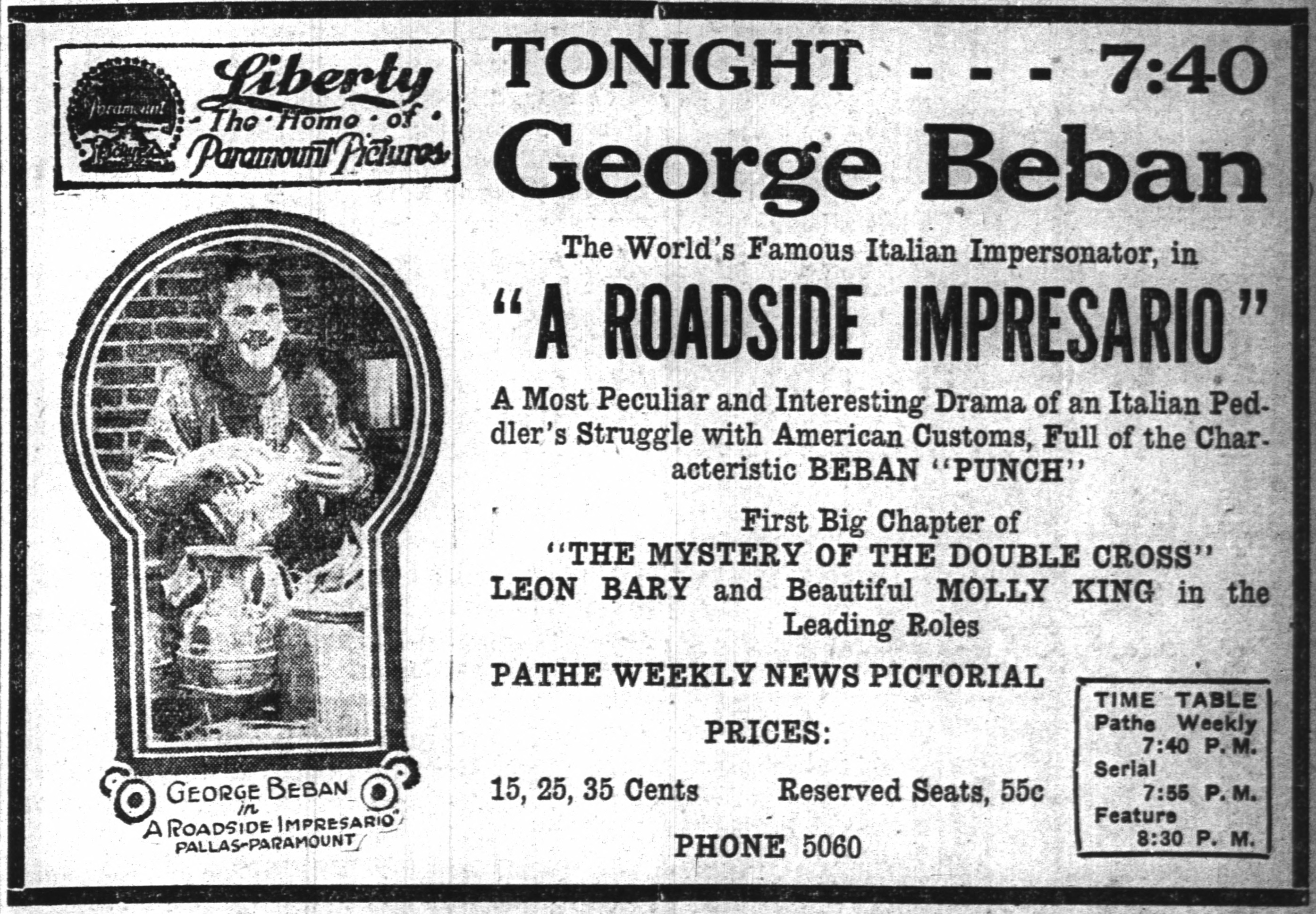
George Beban’s A Roadside Impresario is the kind of film that arrives like a tattered postcard fished from a dead man’s coat—its edges singed, its ink blurred, yet the image still scalds the retina.
Shot on fog-softened Jersey backlots doubling for both the Tyrrhenian coast and the manicured wilds of Vandergrift’s American apiary empire, this 1921 one-reel expansion of Beban’s stage vehicle grafts Dickensian coincidence onto a fable so primal it feels exhumed from folklore. The result is a silent mosaic of salt, wax, and unpaid debts.
Franchini’s world begins in a dusk-streaked Ligurian fishing hamlet where laundry snaps like failed treaties between houses. Beban—face a furrowed map of Mediterranean grief—lives inside a lean-to propped against a ruined belvedere, its stucco flaking like stale parmesan. His companion, a Eurasian brown bear named Bruno, wears a frayed cravat and drinks wine from a tin cup, an image so casually surreal it bypasses whimsy and lands in the territory of sacrament. The daughter, Francesca, is introduced via iris-in: a pair of obsidian eyes reflecting the sea that will soon steal her father. When Giuseppe spots a limp figure clinging to driftwood, the rescue is staged in one unbroken take: camera on a rowboat, bobbing like a lost hat, as Beban dives, surfaces, dives again—each disappearance a rehearsal for his own social death.
The narrative jump that follows—months of exile, the wife’s heartburst, the child abducted by the very life Giuseppe preserved—lands like a guillotine. Beban dissolves from heroic to derelict without a title card of transition; we simply confront him later, beard matted, coat weighted with barnacle grit, trudging toward an America that doesn’t yet know it owes him a daughter.
New Jersey, photographed through a diopter smeared with Vaseline, becomes an oneiric suburb of castles and smokestacks. The Vandergrift estate—part San Simeon, part beehive—gleams under early Technicolor tinting: honey-amber skies, cyan lawns, mauve shadows. Giuseppe and Bruno, sniffing the oleander-scented air, are arrested for trespass and “assault on private honey.” The bear’s incarceration is played for pathos but slyly satirizes Prohibition xenophobia; the jail bars cast striped shadows that convert Bruno’s fur into a prisoner’s uniform. Meanwhile, Giuseppe’s first glimpse of Adelaide (Jose Melville, luminous in pearls and a rebellious bob) is staged as a reverse Pietà: he stands below a marble balcony, arms instinctively out, unaware he is beholding his own flesh.
John Slade’s roadhouse, a sagging clapboard palace strung with Edison bulbs, functions as both cabaret and smoke-filled caucus room. Here Beban’s script pivots from familial tragedy to political noir: Slade (Fred Huntley, all sidewhiskers and oleaginous grin) plots to plant doctored photos of Adelaide’s fiancé, Craig Winton, in a Chinatown opium dive—an echo of the anti-yellow journalism panic seen in Drugged Waters. Giuseppe, now busking between burlesque acts, overhears the scheme while strumming a tarantella on a dented mandolin. The juxtaposition of Neapolitan folk melody with Tammany Hall graft creates a frisson that anticipates Coppola’s Godfather wedding montages.
Adelaide—no wilting heiress—enters the roadhouse unchaperoned, cigarette glowing like a fuse. Melville plays her with flapper insouciance masking a suffragette spine; she trades barbed quips with Slade, then softens on discovering Giuseppe’s battered dossier of evidence. Their silent exchange—close-ups cross-cut at eye-level—carries the erotic charge of two people recognizing shared moral cartilage.
Bruno, off-screen for the midsection, returns for a courtroom set-piece that rivals Scopes for absurdity. Chained beside a bailiff, he reacts to testimony with alternating growls and yawns, his insert shots punctuating moral hypocrisy like a hairy title card. When Giuseppe slaps down the fine—earned via tips from drunks who’d rather hear Verdi than foxtrot—Bruno’s release is filmed in slow iris-out, the beast shambling into a shaft of light that suggests both resurrection and the impossibility of true freedom under capital.
The climactic unmasking occurs not in a grand salon but a apiary at golden hour. Giuseppe, clutching Adelaide’s gloved hand, sees in her eyes the same tidal fleck that haunts his memory of Francesca. A close-up—Beban’s face trembling between confession and restraint—holds for an eternity of intertitles. He chooses silence, pocketing the locket that would prove paternity. Their final tableau is a reverse-angle Departure of the Son: Adelaide framed against honeycomb light, Giuseppe retreating into silhouetted furrows, the bear lumbering beside him like a portable mountain of regret. It is a moment of ethical renunciation so rare in American cinema that it feels European—Bresson before Bresson.
Cinematographer friend of Beban (unnamed in surviving prints) employs a vocabulary of diffusion: nets stretched across lenses, beeswax smeared on filters, creating halation that turns gaslight into liquid amber. Night scenes are bathed in cobalt, echoing the Mediterranean loss; interiors flicker between sickly green—signifying corruption—and honey-yellow denoting fleeting grace. The palette anticipates the emotional color-coding later refined in Kindling and The Clown.
Beban, known for ethnic caricature in vaudeville, here undercuts shtick with geological weariness. Watch the way he removes his hat: not a flourish but a surrender, the brim trembling like a leaf in November. Melville matches him with micro-gestures—Adelaide’s thumb rubbing the satin edge of her sash whenever she lies, a tic that vanishes once she confronts Slade. Their chemistry is so quiet it feels like eavesdropping on a diary.
Harrison Ford—not the later icon but a 1920s character stalwart—plays Craig Winton with the stolid rectitude of a Lincoln statue. His stiffness serves the plot: we believe the smear campaign precisely because Winton appears too marble to be real.
Surviving prints are accompanied by a Beban-supervised score for mandolin, pump organ, and contrabass. Themes mutate: the Ligurian lullaby becomes a foxtrot in Slade’s bar, then reprises as funeral dirge plucked on solo mandolin during the farewell scene. The motif of musical theft—folk culture devoured by urban machinery—mirrors Giuseppe’s own narrative of rescue turned calamity.
Where The Hoosier Schoolmaster valorizes pedagogical uplift and Barbarous Mexico wallows in colonial sadism, Impresario occupies a liminal moral zone closer to Godsforvalteren’s Lutheran guilt. Its refusal of paternal conflation anticipates the bleak determinism of Scandinavian silents like Nattens datter II, while its political subplot nods toward the muckraking exposés in Simon, the Jester.
For decades the film was a ghost, referenced only in Moving Picture World squibs. A 16 mm dupe surfaced at a Turin flea market in 1998; UCLA restored the bilingual intertitles in 2014. As of 2024 it streams on Criterion Channel under the Silent Immigrants collection, paired with Beban’s earlier The Italian. A new 4 K scan reveals textures previously lost: the honeycomb lattice of Adelaide’s dress, the salt crystals on Giuseppe’s coat hem.
Great art often arrives disguised as melodrama; A Roadside Impresario wears that disguise like a wolf in sheep’s clothing, then peels the fleece to reveal something rawer. It is a film about the cost of rescue, the price of silence, and the bearish burden of love that chooses anonymity over claim. In an era when fathers swagger and daughters obey, Beban gifts us a patriarch who rescues his child from the very knowledge of him. That renunciation stings sweeter than any embrace. Seek it out, but pack gauze for the spiritual paper cuts.
Verdict: 9.2/10—essential for devotees of silents that bruise the soul.

IMDb 5.5
1923
Community
Log in to comment.