DbcultAccessing Vault...
Cult Review
Senior Film Conservator
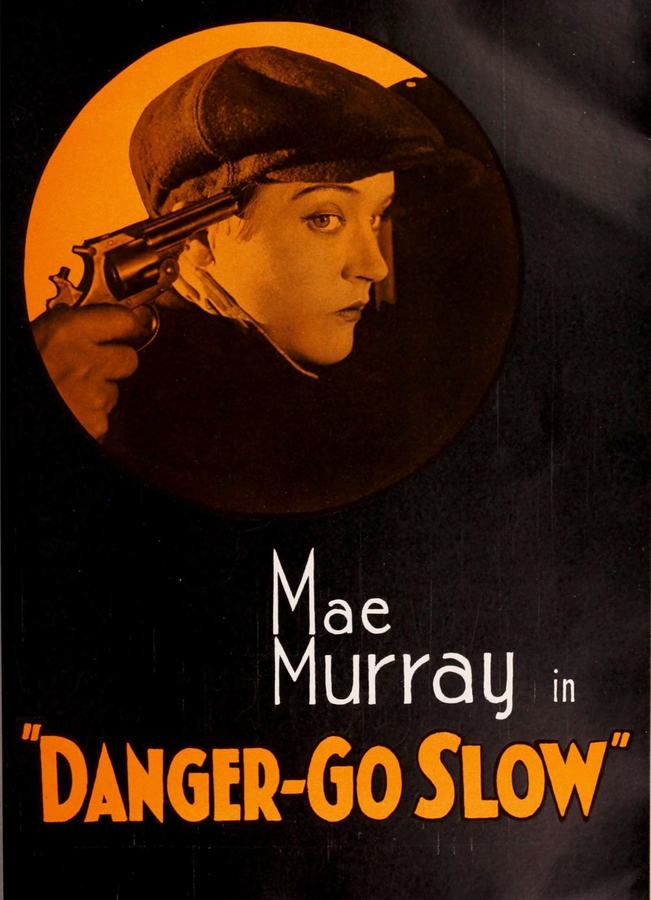
Stepping into the flickering world of early 20th-century cinema, one encounters a fascinating tapestry of evolving narratives, nascent star power, and a bold willingness to experiment with societal norms. Robert Z. Leonard's 1918 silent drama, "Danger, Go Slow," featuring the magnetic Mae Murray, stands as a compelling artifact from this transformative era. It's a film that, despite its age, resonates with themes of identity, redemption, and the surprising power of an unconventional heroine. Far from being a mere period piece, it offers a window into the cultural anxieties and aspirations of its time, all wrapped in a narrative that, while perhaps simplistic by modern standards, possessed a profound emotional punch for contemporary audiences.
At the heart of "Danger, Go Slow" is Mae Murray's captivating portrayal of Muggsy Mulane, a character whose very existence challenges the rigid gender expectations of the early 20th century. Muggsy isn't merely a tomboy; she is a creature forged in the crucible of urban grit, adopting male attire not just for disguise, but as an expression of her agency and defiance. Her flight from the city, prompted by the arrest of her criminal mentor, Jimmy "the Eel," isn't an act of cowardice but a pragmatic survival instinct. Murray imbues Muggsy with a vibrant energy, a blend of street-smart cunning and an underlying, perhaps unacknowledged, yearning for something more. Her movements are fluid, her expressions nuanced, conveying a complex inner life that transcends the typical damsel-in-distress trope prevalent in many films of the era. She's a protagonist who drives the narrative through sheer force of will, a refreshing departure from heroines who are acted upon rather than acting.
Muggsy's abrupt arrival in the pastoral village of Cottonville sets the stage for a classic city-versus-country dichotomy, a trope often explored in silent cinema, but here, given a unique twist. Instead of finding a naive, easily manipulated environment, Muggsy encounters Aunt Sarah (Lydia Knott), a figure of benevolent wisdom whose kindness offers a stark contrast to the harsh realities Muggsy has known. This initial bond is pivotal, as it humanizes Muggsy, allowing her to shed some of her hardened exterior. The revelation that Aunt Sarah is Jimmy "the Eel"'s mother serves as a powerful narrative pivot, intertwining Muggsy's past with her present and creating a moral imperative for her actions. The film subtly suggests that while the city might breed cunning, the country fosters a deeper sense of community and familial connection that even a hardened criminal can't ignore. This dynamic echoes themes found in other films exploring displacement and adaptation, such as The Land of Promise (1917), though "Danger, Go Slow" injects a distinct criminal underworld flavor into its rural escape.
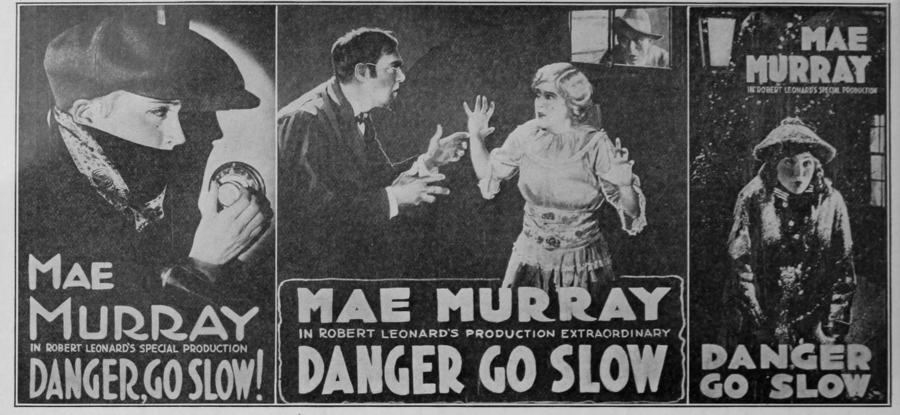
The film truly ignites when Muggsy confronts Judge Cotton (Alfred Allen), the embodiment of small-town corruption and avarice. Judge Cotton's plan to foreclose on Aunt Sarah's property for personal gain is a classic villainous maneuver, but Muggsy's response is anything but typical. Instead of appealing to his conscience, she employs the very tactics she learned in the underworld: blackmail. This scene is a masterclass in silent film performance, with Murray's expressive face conveying both threat and strategic calculation. It's a delightful subversion of expectations, as the "delicate" heroine uses her wits and knowledge of dark arts to outmaneuver a powerful, seemingly untouchable figure. This confrontation highlights Muggsy's moral ambiguity; she uses questionable means, but for a righteous end, making her a compellingly complex character. The stark contrast between the judge's legalistic greed and Muggsy's extralegal justice provides much of the film's dramatic tension, reminding us that justice isn't always found within the confines of the law.
Muggsy's resourcefulness doesn't stop at blackmail. Her subsequent act of selling a portion of Aunt Sarah's property for an exorbitant sum showcases her sharp business acumen, albeit one honed in the less-than-scrupulous world of urban dealings. This demonstrates her ability to adapt her skills for legitimate, albeit highly profitable, purposes. It's a testament to the idea that talent, regardless of its origin, can be redirected. However, the film's ultimate triumph lies in Muggsy's successful persuasion of Jimmy "the Eel" (Richard Cummings) to abandon his criminal life and return to his mother. This isn't just a plot resolution; it's a profound statement on the power of familial love and the redemptive influence of a strong, principled (if unconventionally so) individual. The film argues that true reform comes not from punishment, but from connection and the promise of a better life. This moral arc, where a character from the criminal fringes facilitates the redemption of another, is a powerful narrative device, distinguishing it from simpler morality plays.
While Mae Murray is undeniably the gravitational center of "Danger, Go Slow," the supporting cast plays a crucial role in grounding the narrative. Lydia Knott's Aunt Sarah is the epitome of maternal warmth, providing the emotional anchor for both Muggsy and the audience. Richard Cummings' portrayal of Jimmy "the Eel" is understated yet effective, conveying a sense of weariness with his criminal life that makes his eventual conversion believable. Alfred Allen's Judge Cotton is suitably odious, a clear antagonist whose downfall is satisfyingly orchestrated by Muggsy. The film also features notable appearances by Lon Chaney, Joseph W. Girard, Martha Mattox, and Hoot Gibson, each contributing to the rich tapestry of Cottonville's inhabitants.
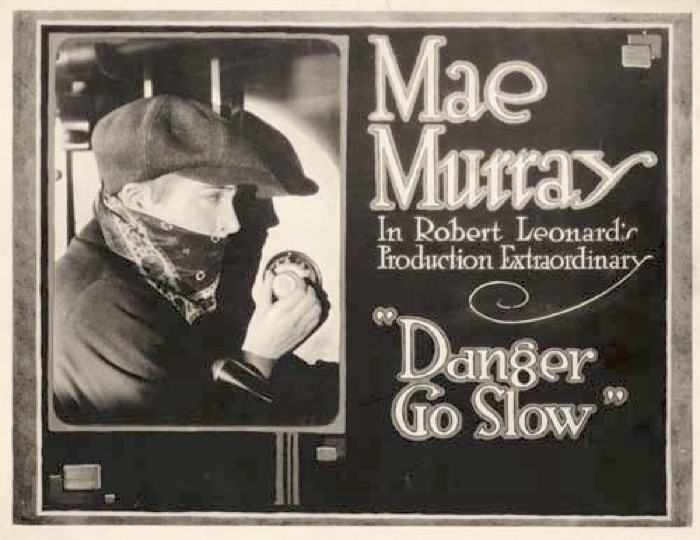
Robert Z. Leonard, as director, demonstrates a keen understanding of silent film storytelling. His pacing is deliberate, allowing scenes to breathe and emotions to register without feeling sluggish. The cinematography, while perhaps not groundbreaking for its time, effectively uses close-ups to emphasize character reactions and wider shots to establish the contrasting environments of the city and the country. The visual language is clear, ensuring that even without spoken dialogue, the narrative flows seamlessly. Leonard and Murray, who also contributed to the writing, clearly had a strong vision for Muggsy's character, creating a heroine who felt both authentic and aspirational. This collaborative spirit between actor and director/writer often yielded compelling results in the silent era, allowing for a deeper exploration of character nuances.
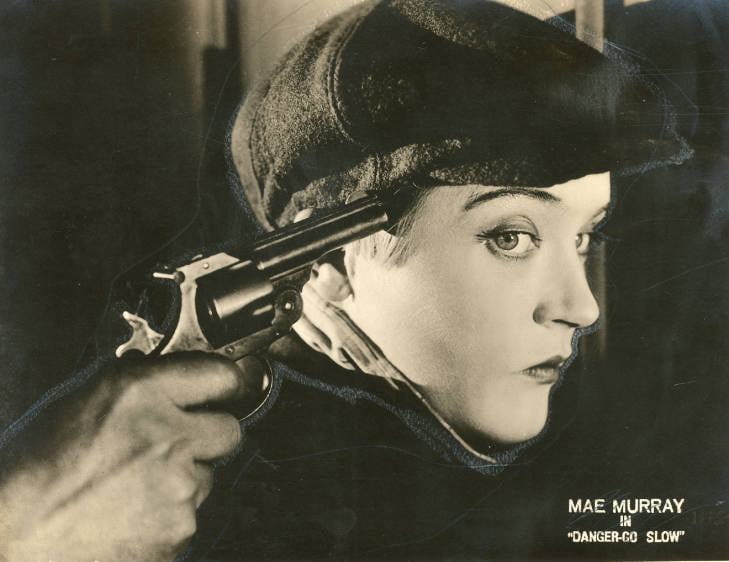
"Danger, Go Slow" is remarkably progressive in its exploration of gender roles, particularly through Muggsy's attire and demeanor. Her boy's clothing isn't just a gimmick; it's a statement of independence and a practical choice for navigating a world that might otherwise constrain her. This visual motif subtly challenges societal expectations, suggesting that competence and agency are not exclusive to one gender. In a broader sense, the film is deeply concerned with transformation – Muggsy's own journey from a life of crime to one of altruism (albeit with a pragmatic edge), and her role in transforming Jimmy's life. It posits that individuals are not irrevocably defined by their pasts, and that environment and relationships can profoundly alter one's trajectory. This thematic depth elevates the film beyond a simple melodramatic plot, inviting viewers to consider the fluidity of identity and morality.
Like many films of its vintage, "Danger, Go Slow" possesses both the undeniable charms and the inherent limitations of silent cinema. The reliance on intertitles can sometimes feel a bit clunky to modern viewers accustomed to seamless dialogue, but they also offer a poetic brevity that is often lost in sound films. The acting styles, while expressive, can occasionally veer into theatricality, a common characteristic of the era as actors adapted stage techniques for the screen. However, Mae Murray largely avoids this, delivering a performance that feels surprisingly naturalistic for its time. The film's narrative arc, while satisfying, might strike some as overly neat, with conflicts resolving perhaps a little too conveniently. Yet, this simplicity was often a strength of silent films, allowing universal themes to shine through without getting bogged down in intricate subplots.
Comparing it to other works of the period, one might find echoes of its thematic concerns in films like The Burden of Proof or even Moral Suicide, both of which grapple with questions of ethics and the consequences of past actions. However, "Danger, Go Slow" distinguishes itself with its central character's agency and proactive role in shaping her destiny and that of others. It’s less about societal judgment and more about individual initiative. The comedic elements, subtle as they are, also provide a lighter touch compared to the often grim realism found in some European productions of the time, such as En Søns Kærlighed or Expeditricen fra Østergade, which often explored darker social commentaries.
Mae Murray, often dubbed "The Girl with the Bee-Stung Lips," was a significant star of the silent era, known for her vivacious screen presence and distinctive dance moves. "Danger, Go Slow" provides an excellent showcase for her acting range, allowing her to embody a character that is both tough and tender, cunning and compassionate. Her performance here cemented her status as more than just a glamour icon; she was an actress capable of conveying complex emotions and driving a narrative with conviction. The film itself, while perhaps not as widely remembered as some other blockbusters of the era, is a testament to the diverse storytelling prevalent in early Hollywood. It's a charming, engaging, and subtly subversive film that deserves rediscovery by modern audiences interested in the evolution of cinema and the fascinating figures who shaped its early years.
In conclusion, "Danger, Go Slow" is more than just a historical curiosity; it is a vibrant narrative propelled by a memorable performance from Mae Murray. It expertly weaves together themes of crime and redemption, city and country, and the power of individual agency to forge a new path. The film stands as a testament to the innovative spirit of silent cinema, offering a protagonist who defies conventions and ultimately triumphs through a combination of wit, grit, and an unexpected capacity for good. It's a reminder that sometimes, the most dangerous path is the one that leads to true self-discovery and the redemption of others.
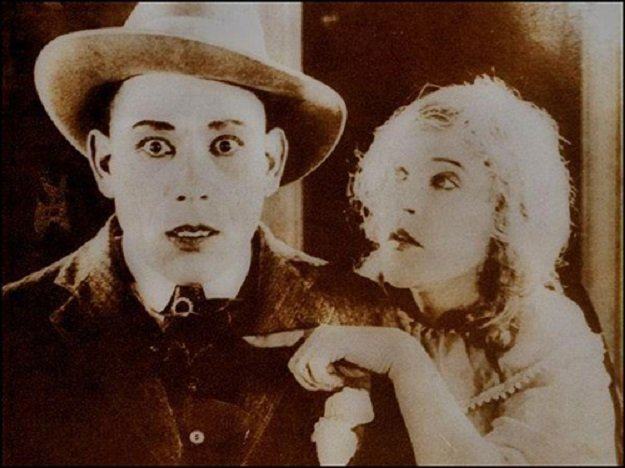
The film’s approach to character development, particularly Muggsy’s, is remarkably progressive for its time. She isn't a passive figure awaiting rescue or moral instruction; instead, she is the architect of her own salvation and that of others. This proactive stance, combined with her unconventional presentation, makes her an enduring figure in cinematic history. While the film's title might suggest a cautionary tale about taking risks, the narrative ultimately celebrates the calculated risks Muggsy takes, proving that sometimes, bold action is the only way to steer oneself and others towards a better future. The interplay of light and shadow, both literal in the cinematography and metaphorical in the character's moral journey, creates a rich viewing experience. It invites viewers to ponder the origins of morality and the capacity for change, even in the most unlikely of individuals.
The journey from the grimy, dangerous city to the idyllic, yet financially threatened, countryside provides a powerful visual metaphor for Muggsy's internal transformation. Her initial instincts are purely self-preservation, a legacy of her life with "the Eel." However, her genuine affection for Aunt Sarah awakens a different kind of drive – one rooted in protection and justice. This shift is subtly portrayed through Murray's performance, moving from guarded suspicion to determined benevolence. The film is a quiet rebellion against fatalism, asserting that even those seemingly destined for a life of crime can find a path to decency, often through the most unexpected catalysts. The resolution feels earned, a culmination of Muggsy's unique blend of street smarts and burgeoning compassion. It's a narrative that, while rooted in the sensibilities of its time, continues to speak to universal desires for change and acceptance.
The depiction of Judge Cotton further cements the film’s nuanced take on morality. He is not a mustache-twirling caricature but a figure whose greed is rooted in the respectable façade of the legal system. This makes Muggsy’s challenge to him all the more potent, as she exposes the hypocrisy lurking beneath the veneer of authority. Her methods, while unorthodox, cut through the red tape and societal deference that would otherwise protect the judge. This makes "Danger, Go Slow" a surprisingly relevant commentary on power dynamics and the different forms justice can take. It’s a film that asks us to look beyond appearances and conventional roles, to find heroism in unexpected places, and to appreciate the transformative power of an individual who dares to defy the status quo. The subtle social critique woven into the melodrama is one of the film's enduring strengths, making it more than just an entertaining romp.
The film also subtly touches upon the economic realities faced by many rural communities, with Aunt Sarah's vulnerability to foreclosure highlighting the precariousness of life outside the bustling urban centers. This adds a layer of social commentary, making Muggsy's intervention not just a personal triumph but a small victory for the common folk against systemic exploitation. Her ability to leverage her street smarts to navigate and exploit the very systems that threatened Aunt Sarah is truly remarkable. It's a story of empowerment, not just for Muggsy herself, but for the community she inadvertently comes to protect. "Danger, Go Slow" is, in essence, a testament to the resilience of the human spirit and the unexpected ways in which kindness and cunning can intertwine to create positive change.
IMDb 6.1
1933
Community
Log in to comment.