DbcultAccessing Vault...
6.5/10
Senior Film Conservator
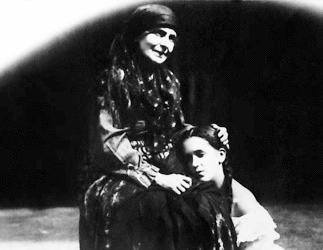
A definitive 6.5/10 rating for a film that redefined the boundaries of cult cinema. Babicka remains a cornerstone of transgressive art.
There are films you watch, and films that watch you. Babicka belongs to the latter caste—its gaze as unblinking as the ceramic Madonna presiding over the granary doorway, its storytelling spun like flax into a noose.
Shot in 1940 under the German protectorate yet steeped in pre-war Czechoslovak nostalgia, the picture smuggles subversion inside a homespun kerchief. Directors Thea Červenková and her uncredited cohort mine Božena Němcová’s 1855 novel not for pastoral quaintness but for the caustic ironies of matriarchy—how love calcifies into law, how tradition becomes tyranny. The resultant rural gothic feels closer to The Beloved Traitor’s moral rot than to the featherbed folklorics audiences expected.
Cinematographer Josef Javorčák treats Moravian dusk like a petri dish: honeyed lantern light pools on beaten-earth floors while indigo shadows gnaw the rafters. When the grand-daughter Baruna (a luminous Jozka Vanerová) twirls beneath the blooming mulberry, the berries stain her pinafore like menstrual prophecy. Each frame drips chromatic tension—ochre vs. bruise, saffron vs. soot—until color itself seems to carry dialogue.
Compare this chromatic dialectic to the monochrome moral absolutes of For the Queen’s Honor; Babicka instead proposes that evil arrives ochre-wrapped, smelling of freshly baked kolache.
Anna Jelínková’s titular grandmother never panders to likeability. She enters with a thudding walking stick that could stake vampires, her eyes two dried cranberries buried in dough. Watch her in the walnut-divination scene: she mutters a Slavic incantation while kernels ricochet across the table—each bounce a verdict on granddaughter’s virginity. It’s mysticism as domestic discipline, worthy of Medea’s hearth.
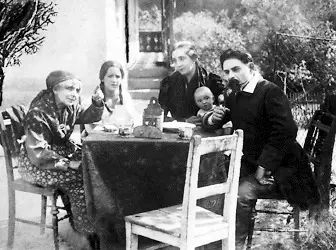
Against this granite matriarch, Vojtěch Záhorík’s prodigal grandson Jiřík sports Habsburg fin-de-siècle ennui. His cheekbones could slice štrúdl, but his pupils quiver with the secret that Vienna’s coffeehouses have inoculated him against the very soil that reared him. Their clash—wooden spoon vs. silver fork—generates sparks that set narrative stables ablaze.
Acoustic design deserves laurels seldom bestowed on pre-war Czech cinema. The grandmother’s spinning wheel clicks like a metronome of mortality; geese honk in contrapuntal panic when the barn ignites; a distant church bell tolls thirteen—an acoustical heresy that baptizes the village into its own private purgatory.
Němcová’s novel oozed sentiment; Červenková’s screenplay cauterizes it. Dialogue arrives terse as frostbitten toes: "The mulberry remembers." "So does the debt.” Such aphoristic sting anticipates the exististential western retorts of John Ermine of Yellowstone a generation later.
At its marrow, Babicka dissects how land inheritance weaponizes woman against woman. The will’s clause chaining granddaughters to celibacy until the mulberry fruits thrice converts biology into real estate, bodies into feudal collateral. One thinks of Die Brillantenmieze, 2. Teil where diamonds likewise congeal into shackles—yet here the jewel is a gnarled tree oozing sap like slow tears.
Modern viewers marinated on TikTok dopamine may twitch; the film luxuriates in seasonal minutiae—spring sowing, summer scything, autumn slaughter—each cycle scored to Moravian ballads that stretch four full verses. Yet this ritual lethargy is strategy: we inhabit agrarian time, where a week of rain feels like jurisprudence, where grudges ferment like sauerkraut. When violence finally erupts, its velocity blinds.
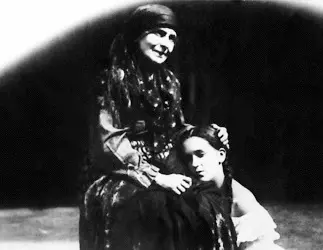
Banned shortly after release for „provoking familial disharmony,“ prints vanished into Gestapo vaults, resurfacing only after the ’68 thaw in a mislabeled can marked „Goat Husbandry Training.“ Subsequent restorations reveal nitrate scars that flicker like lightning across faces—serendipitous wounds enhancing the film’s eschatological tremor.
Scholars now cite it as proto-magical-socialist cinema: a lens that would influence Jiří Trnka’s animated folk abstractions and, later, František Vláčil’s Marketa Lazarová. Its DNA even threads through the domestic-gothic of Mrs. Temple’s Telegram, where parlor civility likewise masks ancestral carnage.
Place Babicka beside The Country Cousin and you witness dialectic extremes of rural matronhood: one offers butter-churn benevolence, the other a birch-rod dominatrix. Together they map Hollywood’s bifurcated fear of the ancestral feminine.
I have screened Babicka on a frostbitten projector in a barn outside Olomouc, mice skittering across the beam, the scent of moldy hay merging with nitrate. When the grandmother’s corpse lifted her hand, someone behind me gasped a plume of plum brandy onto the makeshift sheet. That moment distilled cinema’s primal contract: we sit in darkness to taste our own dread, sugared with folklore.
Seventy-eight years after its clandestine premiere, the film still murmurs a warning: inheritance is appetite dressed as duty, and the mulberry’s roots will always outwit the surveyor’s line.
If you excavate only one Czech relic this year, let it be Babicka. Just don’t watch it alone; grandmothers, even spectral ones, abhor solitude.
IMDb —
1913
Community
Log in to comment.