DbcultAccessing Vault...
4.4/10
Senior Film Conservator
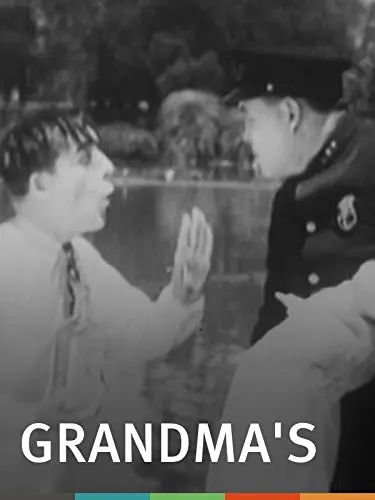
A definitive 4.4/10 rating for a film that redefined the boundaries of cult cinema. Grandma's Child remains a cornerstone of transgressive art.
Is 'Grandma's Child' worth watching today? For silent film aficionados and those curious about the roots of American slapstick, the answer is a resounding yes, but with caveats that temper its initial frantic charm.
This two-reeler is a fascinating, if slight, historical artifact that will appeal to viewers interested in the evolution of comedic timing and performance, yet it will likely test the patience of anyone seeking deep narrative or modern comedic sophistication.
Released in an era brimming with comedic talent, Grandma's Child, a 1920s silent comedy starring Bobby Ray, offers a unique window into a specific vein of early film humor. It’s a film that exists in a peculiar space: both a product of its time and, in its underlying cynicism, surprisingly contemporary. It works. But it’s flawed.
Early cinematic works often serve as more than just entertainment; they are cultural timestamps. Grandma's Child, despite its brevity and seemingly simple premise, inadvertently provides a commentary on societal expectations, financial dependence, and the lengths to which individuals would go to maintain a façade. It’s a testament to the fact that human foibles and comedic desperation transcend generations.
This film works because of its audacious premise for the era, its brisk pacing, and the unbridled physical comedy of its lead, Bobby Ray. It’s a spectacle of escalating absurdity that, for a two-reeler, rarely drags.
This film fails because its humor, while often energetic, can feel repetitive, relying heavily on a single gag stretched thin. The characters, while comically desperate, lack any real depth, making emotional investment nearly impossible.
You should watch it if you appreciate silent film history, enjoy broad physical comedy, or are simply curious about the careers of forgotten stars who contributed to cinema's foundational years.
The film opens with a rather cynical declaration: “Some people have bright futures; others are married.” This sets an unexpectedly dark, yet playfully mischievous, tone for what follows. We are introduced to Bobby Ray’s character and his flapper wife, a pair living a life of leisure, funded entirely by cheques from the wife’s mother. These funds, however, are explicitly earmarked for the support of a grandchild that exists only in the mother’s hopeful imagination.
The core conflict ignites when the suspicious mother-in-law announces an unannounced visit. This revelation propels the couple into a frantic, increasingly desperate search for a baby to present as their own. The sheer audacity of this premise, even for a silent comedy, is remarkable. It’s a testament to writer Al Martin’s willingness to push boundaries, however gently, with a story built on deception and social pressure.
The plot, while straightforward, serves as a robust framework for a series of escalating comedic mishaps. From their initial, comfortable obliviousness to the sheer panic of impending exposure, the narrative expertly builds momentum. The tension isn't about whether they'll get caught, but how spectacularly their charade will unravel.
It's a delightful exploration of situational irony, where the very source of their comfort (the cheques) becomes the catalyst for their greatest panic. The film doesn't waste time on exposition; it throws the audience directly into the comedic fray, trusting in the universal understanding of desperation.
Bobby Ray, as the frantic husband, is the undeniable engine of Grandma's Child. His performance is a whirlwind of physical comedy, broad gestures, and exaggerated facial expressions typical of the era. Ray, who began as a juvenile star before transitioning into an 'antic male-ingenue' comedian, possesses an unpolished yet undeniable energy.
His brand of humor leans heavily into slapstick, with a frantic pace that often mirrors the narrative's escalating chaos. There’s a particular scene where he attempts to 'bond' with the hastily acquired infant, displaying a comedic ineptitude that is both endearing and hilarious. It’s not the refined, almost balletic grace of a Chaplin or Keaton, nor the everyman appeal of a Lloyd, but something more raw and improvisational.
Ray's career, as the film's context notes, was short-lived in front of the camera, transitioning to a long and successful stint as an assistant director. This film, then, serves as a rare, tangible piece of his acting legacy. One can’t help but wonder what he might have achieved had he continued performing, given the sheer force of his presence here.
His performance, while effective, also highlights a potential weakness: a slight lack of nuance. While his frantic energy perfectly suits the plot, there are moments where a touch more subtlety could have elevated the humor beyond mere physical antics. Compare his approach to, say, the more character-driven physical comedy seen in a film like Here He Comes, and you see the distinction.
Al Martin, as the director, embraces the conventions of silent comedy with gusto. The film is a masterclass in visual storytelling, relying entirely on exaggerated actions, clear sight gags, and intertitles to convey its narrative. There’s a simplicity to the cinematography, with static shots and clear blocking that prioritize the comedic action.
One standout moment involves the couple's desperate attempts to 'baby-proof' their apartment, transforming it from a bachelor pad into a nursery overnight. The rapid-fire visual gags, as they clumsily arrange furniture and props, are genuinely funny and demonstrate Martin's understanding of comedic timing for the silent screen. The frantic energy is expertly captured through quick cuts and a relentless pace.
The use of close-ups, particularly on the wife’s mother, effectively conveys her suspicion and stern demeanor, creating a palpable sense of dread for the protagonists. This visual emphasis on character reactions is crucial in silent film, and Martin uses it to great effect, building tension without a single spoken word.
However, the visual style, while efficient, rarely breaks new ground. It’s functional, serving the comedy without adding significant artistic flourish. It’s a film that prioritizes laughs over lingering imagery, a common trait in two-reelers designed for quick consumption.
The pacing of Grandma's Child is, as the plot summary suggests, frantic. From the moment the mother-in-law's visit is announced, the film rarely lets up, propelling its characters from one desperate scheme to the next. This relentless energy is one of its greatest strengths, ensuring that the audience remains engaged, if not always deeply invested.
The two-reeler format, typically around 20-25 minutes, is perfectly suited for this kind of high-octane, single-concept comedy. There’s no time for unnecessary subplots or character development; it's all about the gag and its immediate resolution. This brevity is a blessing, preventing the central premise from overstaying its welcome.
The tone, despite the overarching comedic intent, carries an undercurrent of the 'bleak sentiment' hinted at in the opening title. There's a subtle, almost cynical edge to the humor, born from the characters' blatant opportunism and moral flexibility. It’s a comedy rooted in desperation, which can be surprisingly dark for a film of its type.
Yet, this darker tone is often diluted by the broadness of the slapstick. While the premise suggests a biting social commentary, the execution often opts for the easiest laugh, sacrificing deeper thematic resonance for immediate comedic impact. This tonal inconsistency isn't a fatal flaw, but it does leave one wondering what a slightly more refined approach might have yielded.
My unconventional observation: The true genius of 'Grandma's Child' isn't its jokes, but its accidental prescience. It skewers the performative aspects of modern life, where appearances are maintained at all costs, even if it means 'borrowing' a baby.
Absolutely, for the right audience. Grandma's Child is a delightful, if minor, piece of silent film history.
It serves as an excellent example of early 20th-century slapstick comedy.
Bobby Ray's performance alone makes it worth seeing for those interested in forgotten talents.
The film offers a simple, effective comedic experience without demanding much intellectual heavy lifting.
It’s a quick, entertaining watch that provides insight into the evolution of cinematic humor.
However, if you're looking for profound storytelling or sophisticated character arcs, this isn't your film.
Its dated humor and reliance on physical gags might not resonate with all modern viewers.
Grandma's Child is a fascinating curio from the silent era, a testament to the raw energy and often audacious humor of early cinema. It’s a film that, despite its brevity and simplicity, manages to leave an impression through its frantic pace and Bobby Ray’s committed performance. While it might not hold the same universal appeal as the works of the silent giants, it offers a valuable and often hilarious insight into a specific niche of comedic filmmaking.
For those willing to engage with its historical context and embrace its particular brand of slapstick, Grandma's Child is more than just a forgotten two-reeler; it’s a vibrant, if slightly unrefined, piece of cinematic history that still manages to elicit chuckles and provoke thought about the timeless nature of human deception. It’s not a masterpiece, but it’s certainly worth the short runtime for the curious cinephile.
IMDb —
1928
Community
Log in to comment.