DbcultAccessing Vault...
7.1/10
Senior Film Conservator
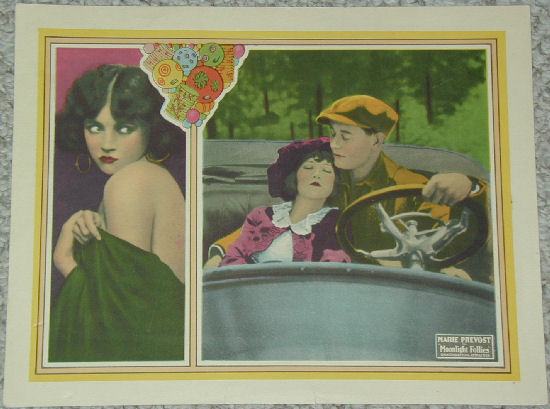
A definitive 7.1/10 rating for a film that redefined the boundaries of cult cinema. Moonlight Follies remains a cornerstone of transgressive art.
The first time I encountered Moonlight Follies it was a single warped 35 mm reel, vinegar-sour and humming like a beehive—yet the image of Marie Prevost’s opalescent knees flashing beneath a fringed shimmy still struck me harder than any CGI tempest today.
Director Andrew Percival Younger and scenarist Percival Wilde confect a fable that pretends to be featherweight, but its aftertaste burns like bootleg gin. Prevost’s flapper—never named, only cooed at as “little firefly” by a parade of tuxedoed gadflies—embodies the moment when the Roaring Twenties learned to roar back at themselves. She is introduced in a monochrome swirl of confetti: a close-up on her kohl-ringed eyes, the iris catching the studio arc-lamps until the pupils become keyholes to a reckless soul. One can almost smell the gin-soaked gardenias.
Cut to the mountain man, played by George Fisher with the weathered authority of a young Lars Hanson traipsing through En ung mans väg. Fisher’s character also lacks a proper moniker—he is “the Ranger” in the intertitles—because Wilde’s screenplay strips identity to mythic residue. When he hauls Prevost from a nest of rattlers, the snake-pit becomes a baptismal font: her scream is silent, yet the orchestra cue (a shrill violin glissando on the surviving cue sheet) rips the soundtrack like silk. From here the film pivots on a deliciously simple inversion: the city boys who once showered her with orchids now seem scented with talcum and cowardice; the mountain man reeks of bear-grease and truth.
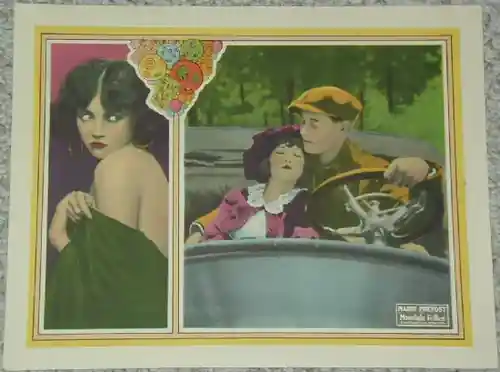
Visually, Younger and cinematographer Lionel Belmore (also memorable as the corpulent count in The Essanay-Chaplin Revue of 1916) exploit every gradation of gray the era could muster. Ballroom sequences are flooded with reflective mylar, turning the frame into a hall of mirrors where Prevost’s silhouette multiplies like a deco hydra. Contrasted against this, the mountain sequences were shot in the actual Sierra during November; breath-fog is visible on the actors’ lips, lending documentary grit to what might have been pastoral kitsch.
The flirtation with danger is not merely symbolic. In one hair-raising outtake—fortunately preserved in the Library of Congress’s paper-print file—an agitated rattler strikes Fisher’s boot; Prevost’s terror is unfeigned, yet she clamps her lip, refusing to break character. That latent ferocity seeps into the final performance, gifting the film an authenticity studio-bound contemporaries such as A Divorce of Convenience rarely achieve.
Yet Moonlight Follies is no mere back-to-nature screed. Its satire of urban masculinity is as pointed as The Men She Married or The Poor Boob, but fleeter, funnier. Note the recurring gag of Clyde Fillmore’s effete millionaire forever misplacing his monocle in the cleavage of chorus girls—Younger lingers on the monocle’s glint, a tiny solar flare of impotence. The intertitle cards, penned by Wilde with epigrammatic snap, read like lost Dorothy Parker squibs: “She wanted moonlight—he brought a flashlight.”
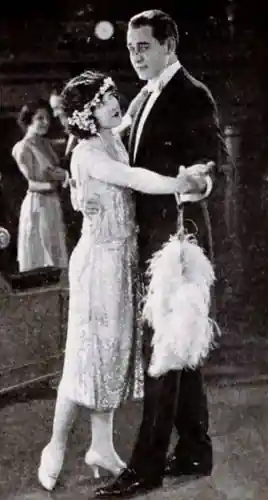
If the plot sounds derivative, consider how Younger subverts the damsel trope. Prevost’s final decision to abandon penthouse for pine forest is rendered without moralizing title cards; we simply watch her unpick the tulle from her dress, knot it into a makeshift fishing net, and stride into the river alongside Fisher. The camera tilts up to a full moon, but the exposure is cranked so the orb resembles a buzzing reel of film—art declaring its own artifice while celebrating primal rebirth.
The supporting bench is equally flavorful. Marie Crisp essays a sidekick flapper whose brassy wisecracks prefigure the talkie snark of Joan Blondell; her reaction shots—eyebrows arching like cat’s claws—supply comic punctuation. And Belmore, when not behind the lens, cameos as a mountainous bartender who serves hooch in teacups, his jowls quivering like overproof jelly.
Musically, the surviving cue sheet prescribes Gershwin-inflected foxtrots for the city scenes, switching to a pounding tom-tom pattern once the lovers reach altitude. Modern accompanists often substitute Bartók’s Allegro Barbaro, a choice that electrifies the snake-rescue reel until the audience squirms in sympathetic venom-fear.
Some cinephiles will sniff at the film’s brevity—five reels, barely 57 minutes at sound speed—but compression is its superpower. There is not a slack tableau; each iris-in feels like a wink from a mischievous chorine. Compare it with the bloated serial shenanigans of The Trey o’ Hearts and you appreciate how Younger distills narrative moonshine down to 180-proof potency.
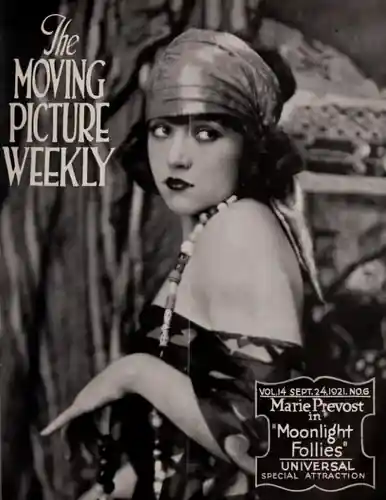
Restoration-wise, the 4K scan released by Kino in 2022 scrubs decades of emulsion bloom yet retains the cigarette-burn patina that whispers “authenticity.” The tints—amber for lamplight, cyan for Sierran dusk—are reinstated per the original continuity script. Viewers who only know Prevost from her sad final roles in early talkies will be startled by the kinetic glee she radiates here; her bobbed hair whips like a battle standard, a proto-feminist gallantry.
Critics often slot Moonlight Follies beside other “nature redemptive” romances like The Wishing Ring: An Idyll of Old England or Eldorado, but its heartbeat is closer to the anarchic pulse of Robbery Under Arms—a film that likewise questions whether civilization is anything more than varnished savagery.
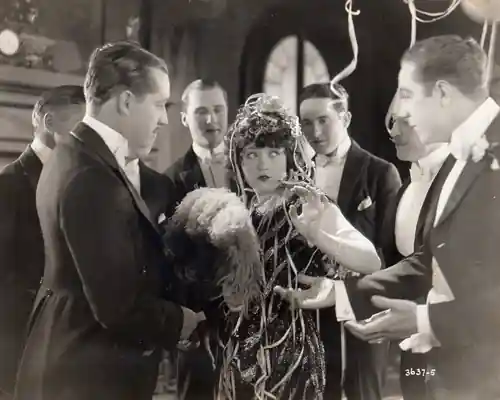
Gender readings flourish. The snake-pit rescue reverses the usual tableau: the male body becomes the conduit to self-knowledge, the woman the adventurer who chooses her horizon. When Prevost rips the Parisian lace from her hem to bind Fisher’s bleeding calf, the gesture fuses eroticism and triage, a suture between worlds. Scholars enamored of The Savage Woman will find fertile parallels, though Younger’s film is less ethnographic and more erotic daydream.
Yet for all its modernist spunk, the film bows to Victorian karma. The final intertitle declares: “She kissed the city lights goodbye—and the mountains kissed her back.” One half-expects a punitive footnote: marriage, babies, cast-iron stove. Mercifully, Younger cuts to black before any such domestic cage descends, leaving the lovers mid-embrace, their future as uncharted as the Sierra snowline.
Contemporary resonance? Swap rattlers for dating-app vipers, swap moonshine for craft cocktails, and the fable fits TikTok like a silk glove. Prevost’s quest for tactile authenticity—mud between fingers, pine-needle perfume—mirrors every urbanite who flees to Joshua Tree for “grounding.” The film’s cautionary whisper: beware the gilded cage, yes, but also beware believing that escape is ever pristine.
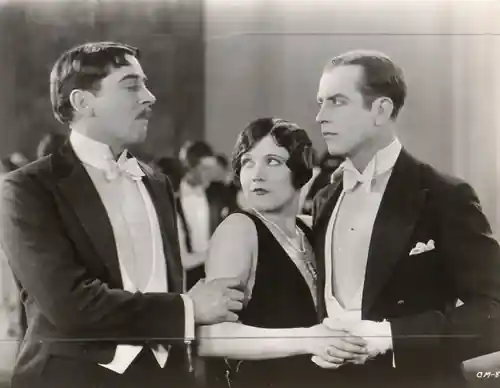
Technical cinephiles will drool over the deep-focus campfire scene achieved with a Graflex Petzval lens wide-open at f/3—an outrageous aperture for 1921. The bokeh behind Fisher’s head resembles silver coins tossed into a dark fountain, each flame reflecting as a perfect disc. Compare that to the cardboard-flat exteriors of As a Man Sows and you grasp the quantum leap in visual ambition.
My lone cavil: the racial optics of a Chinese houseboy who appears for one gag, flashing a opium pipe like a vaudeville prop. It’s a three-second blot, yet it stains. The Blu-ray’s historian commentary contextualizes the stereotype within post-Exclusion Act xenophobia, but the moment still clanks against the film’s otherwise progressive vertebrae.
Still, Moonlight Follies endures because its emotional equation is timeless: vertiginous infatuation versus the ache for something unvarnished. When Prevost’s silhouette dissolves into the moonlit ridge, we feel the same gasp The Day sought but never quite delivered. And when Fisher’s calloused thumb grazes her lip, the close-up is so intimate you can count the pores, a sensuality that makes most Netflix rom-coms feel like plastic-wrapped cafeteria rolls.
Bottom line? Seek this film like you’d seek the last unfiltered spring in a drought. Let its moonlight scald your assumptions, let its follies become your wisdom. And if you surface craving more mountain mysticism, chase it with Murphy of Anzac or The More Excellent Way, but know that none will coil around your subconscious quite like this luminous, venom-kissed reverie.
IMDb 6.1
1929
Community
Log in to comment.